Exploring Gaya Culture: Special Exhibitions at the Gimhae National Museum and Daeseong-dong Tombs Museum
190 Gaya-ro, Gimhae-si, Gyeongsangnam-do
국립김해박물관




Embark on a profound journey through time with two exclusive special exhibitions in Gimhae. Currently, the National Gimhae Museum (국립김해박물관) and the Daeseong-dong Tombs Museum (대성동고분박물관) are hosting commemorative showcases that bridge ancient history with modern perspectives. These exhibitions provide a unique lens into the "brilliant" iron culture of Gaya and the poetic, photographic memories of Gimhae from a century ago.
From large-scale media art portraying the life of Gaya's ruling class to rare black-and-white photographs and Joseon-era poetry, these programs allow visitors to reflect on the identity of the region. Whether you are interested in archaeological treasures like gilt-bronze crowns or the vanished landscapes of "Geumneung," these museums offer a rich cultural experience that connects the past, present, and future of Gimhae.
Coexistence of Time: The Essence of Gaya Culture
The National Gimhae Museum is hosting a blockbuster exhibition titled "Coexistence of Time: Gimhae Daeseong-dong Tombs." This event marks the 2nd anniversary of Gaya's inscription as a UNESCO World Heritage Site and the 35th anniversary of its excavation. For the first time, archaeological materials spanning over three decades of research are brought together in a dynamic setting featuring large-screen displays and immersive media art.
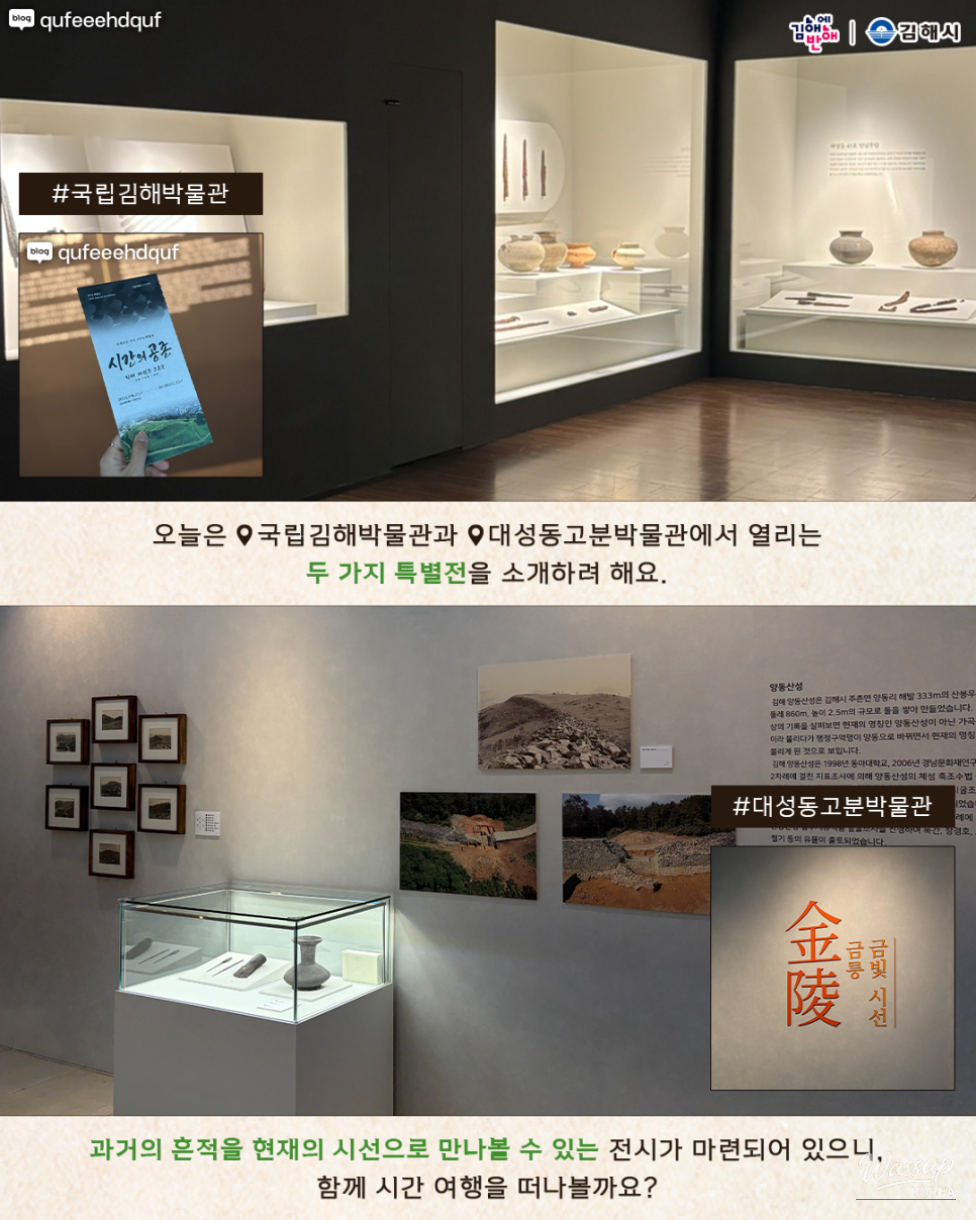
The exhibition is structured into four parts, detailing the "Garakguk" kingdom's rise as an East Asian trade hub. Visitors can witness ornate earrings, spears, and scale armor that reveal the Gaya people's technical prowess and aesthetic sense. The discovery of animal remains and trade goods from Japan and China further proves Gaya’s role as a maritime powerhouse and provides a glimpse into their sacred beliefs regarding the afterlife.
Traces of the Ruler and Symbols of Power
The artifacts on display are more than just items; they are symbolic expressions of authority. Part 1 and 2 of the exhibition focus on the "Symbol of Power" revealed on Aegu Hill, the site of the Daeseong-dong Tombs. By observing the specific grave goods buried with the deceased, visitors can infer the hierarchy and worldviews of the Gaya elite who once dominated this region with their iron and gold.
Geumneung, Golden Gaze: Gimhae 100 Years Ago
At the Daeseong-dong Tombs Museum, a different kind of time travel awaits. The "Geumneung, Golden Gaze" exhibition examines Gimhae—then known as Geumneung—through the eyes of two historical figures from 100 years ago. This special collection features roughly 100 photographs by Seiichi Yatsui and the delicate poetry of Damun Kang, a female poet from the late Joseon Dynasty.

The exhibition contrasts the "realistic gaze" of the photographer with the "emotional gaze" of the poet. By comparing maps of Yatsui’s survey routes with the "Gimhae-bu" maps that inspired Kang's poems, visitors can witness how much the landscape has shifted over the last century. It is a rare opportunity to see vanished scenery and the remaining "gaze" of ancestors who loved this land.
Interactive Experiences and Nostalgic Postcards
To make the journey even more engaging, the museum has prepared a photo zone for commemorative snapshots and an experience zone. Here, you can create your own postcards using 100-year-old photos of Gimhae. It is a meaningful way to take home a piece of history and reflect on the enduring beauty of our local cultural heritage.

Photogallery: A Journey Through Time and Memory


From the iron weapons of Gaya to the poetic verses of Geumneung, Gimhae’s history is a tapestry of powerful stories. Which of these two journeys would you like to take first—a high-tech exploration of Gaya’s ruling class or a nostalgic walk through the photographs of a century ago? If you’re planning a visit this weekend, would you like to know about the best local restaurants near the museum district to complete your cultural day out?
No comments yet.