A Trip to Woljeongsa Temple in Odaesan Mountain, Pyeongchang, Gangwon-do
374-8 Odaesan-ro, Jinbu-myeon, Pyeongchang-gun, Gangwon-do
월정사



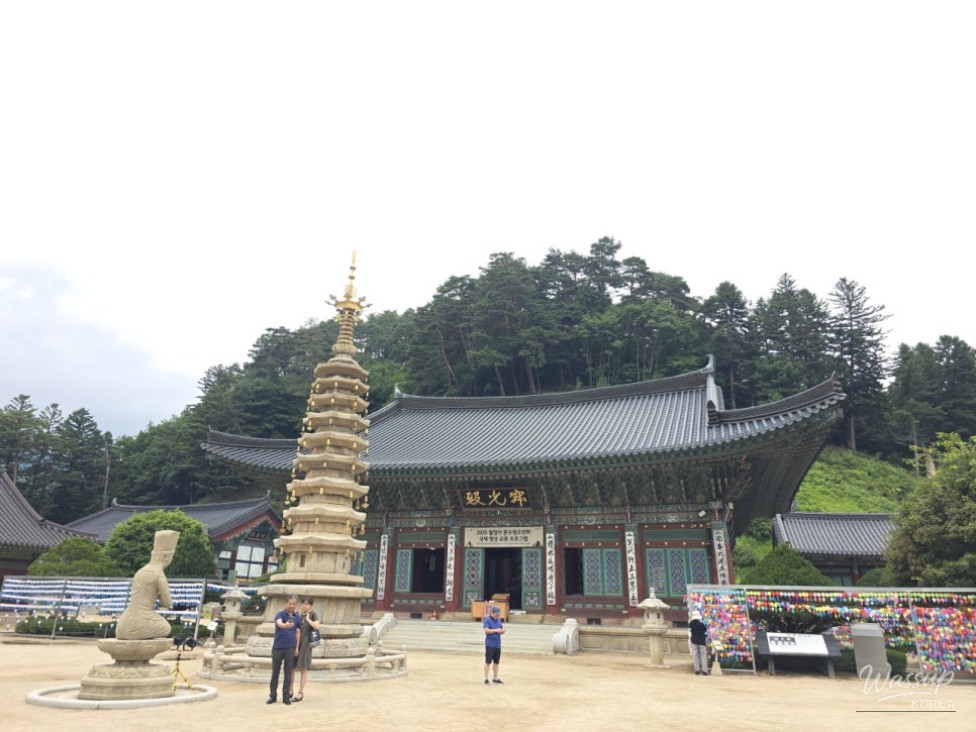
Woljeongsa Temple (월정사) in Pyeongchang is more than just a temple; it is a sacred sanctuary nestled within the majestic Odaesan Mountain, which is unique in South Korea for being considered an entire Buddhist holy site. Founded in 643 AD by the monk Jajang Yulsa, this temple is dedicated to Manjusri, the Bodhisattva of Wisdom. For many travelers, it is a place of deep memories and spiritual healing, especially beautiful during the serene winter months or when the vibrant greenery of spring takes over the valley.
The temple grounds offer a profound encounter with Korean Buddhist history, featuring National Treasures like the Octagonal Nine-Story Stone Pagoda and the Seated Stone Bodhisattva statue. Whether you are walking through the famous Fir Tree Path or admiring the newly renovated Jeokgwangjeon Hall, Woljeongsa provides a tranquil escape that resonates with people of all ages. It is a destination where history, art, and nature harmonize perfectly, making every visit a valuable experience for the soul.
The Sacred Heart: Jeokgwangjeon and the Octagonal Nine-Story Stone Pagoda
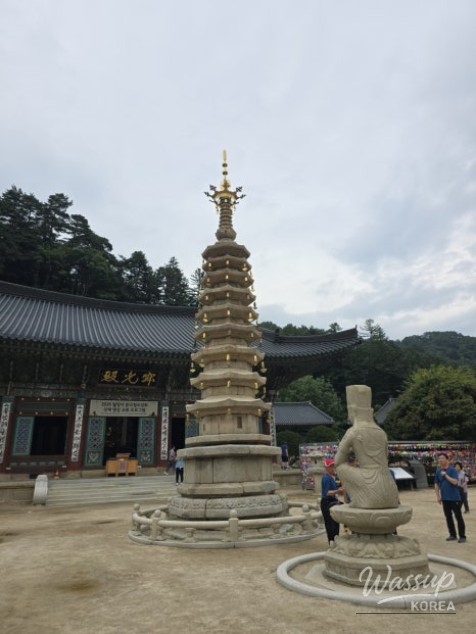
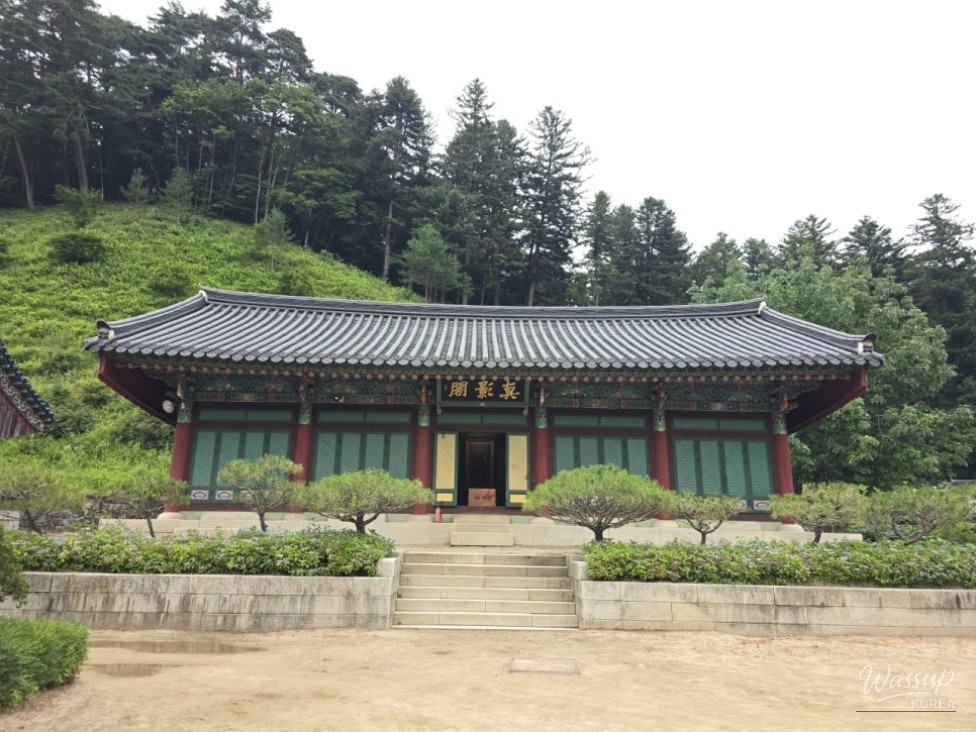
The centerpiece of Woljeongsa is the Jeokgwangjeon Hall, situated where the powerful energy of Manwolsan Mountain gathers. This majestic Dharma hall features a hip-and-gable roof style and houses a statue of Sakyamuni Buddha, which is a unique deviation from the typical Vairocana Buddha usually found in Jeokgwangjeon halls. Standing in front of this hall, one can truly feel the weight of centuries of spiritual devotion.
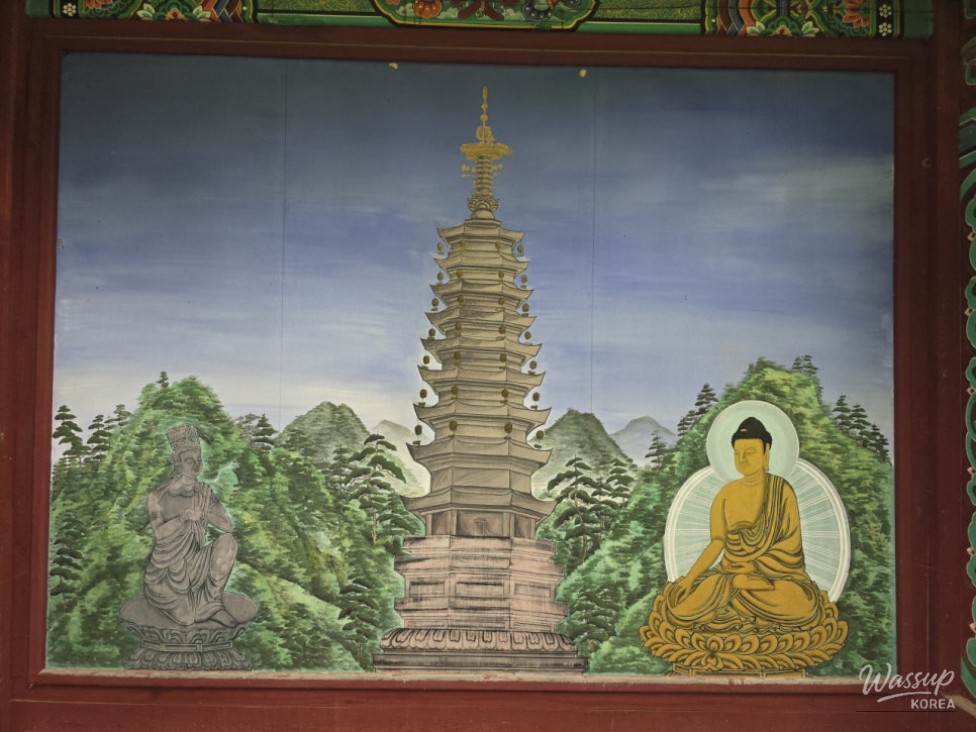
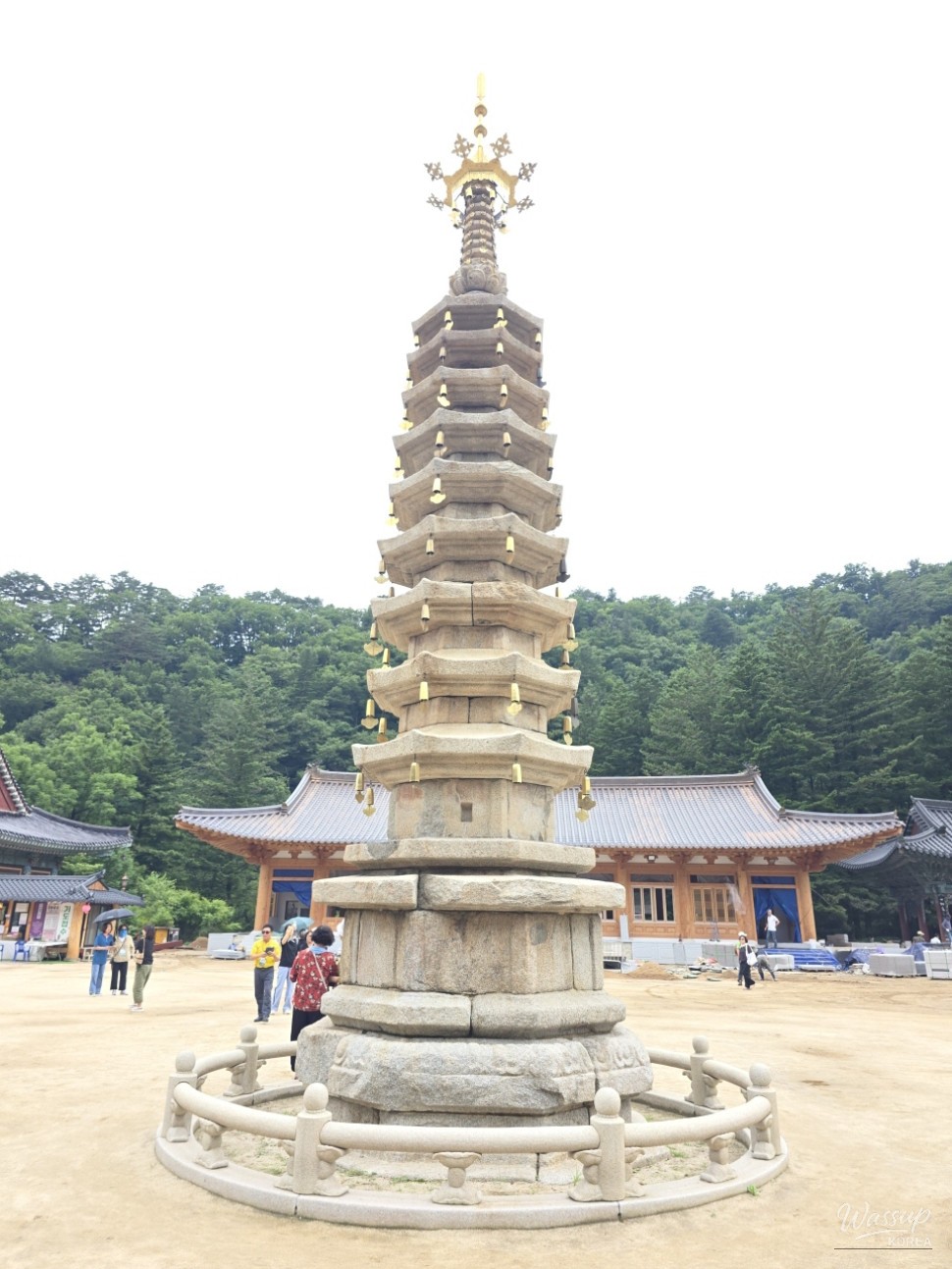
Directly in front of the main hall stands the Octagonal Nine-Story Stone Pagoda (National Treasure No. 48). This 15.2-meter tall masterpiece dates back to the early Goryeo Dynasty and enshrines the Buddha's relics. After a period of renovation, the screen has been removed, allowing visitors to once again admire its stable foundation decorated with lotus patterns and its elegant bronze finial decorations.
National Treasure No. 48-2: The Seated Stone Bodhisattva
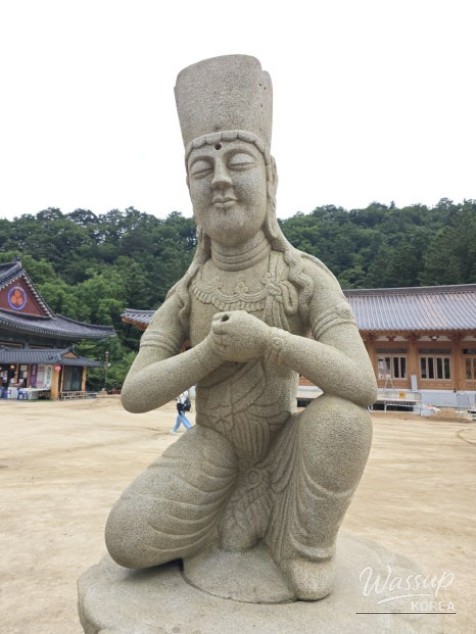
Accompanying the grand pagoda is the Seated Stone Bodhisattva statue. Kneeling on its right knee in a gesture of utmost respect and humility, the 1.8-meter-tall figure gazes toward the pagoda with a gentle, serene smile. This placement symbolizes the Bodhisattva offering reverence to the Buddha's relics, creating a scene of profound peace and religious devotion.
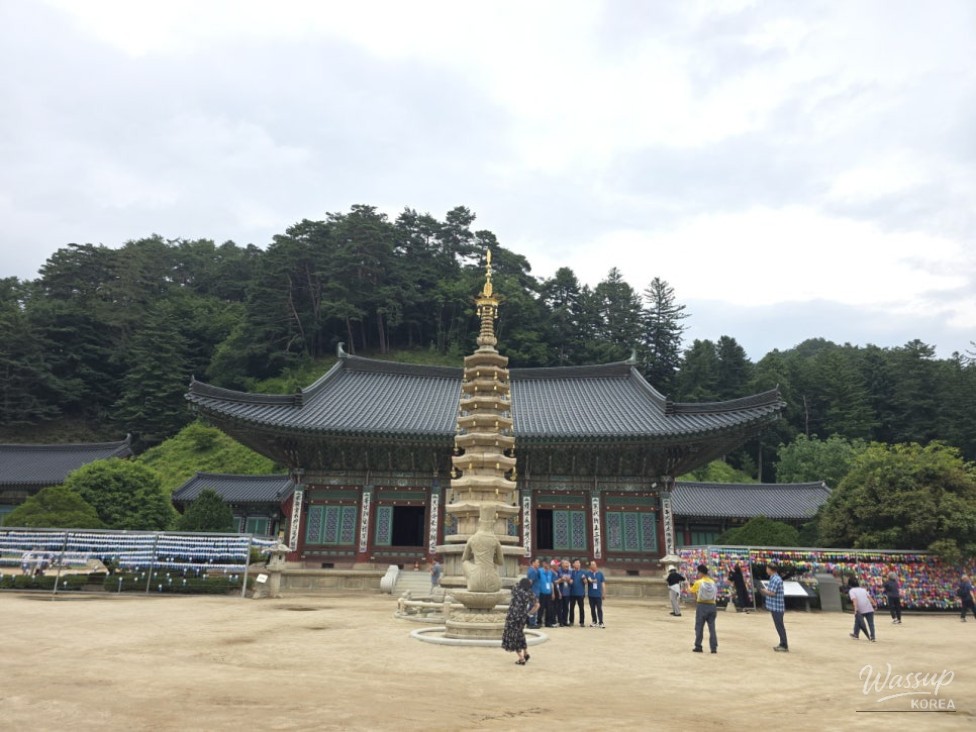
Exploring the Temple Grounds and Symbolic Gates
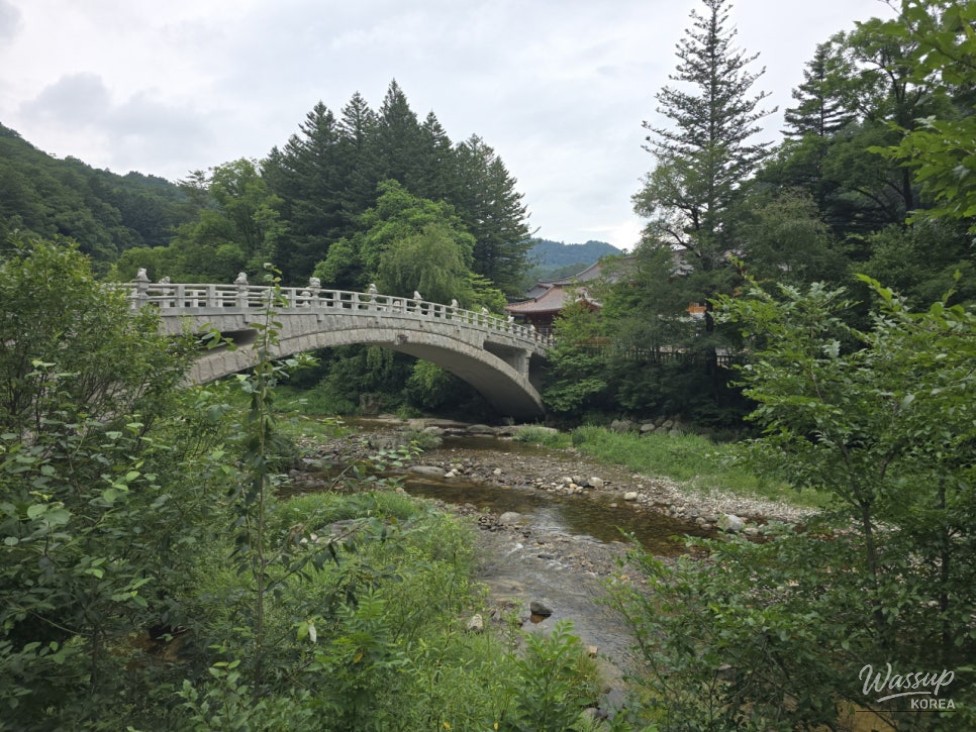
Entering Woljeongsa is an experience in itself. The bridge leading into the temple features pillars carved with the twelve zodiac animals, adding a touch of traditional folk belief to the journey. Crossing this upper bridge provides a unique perspective of the valley below, which remains beautiful even when the water levels are low. The temple layout is a representative example of how Buddhism absorbed and harmonized with local folk beliefs, as seen in the Samseonggak (Three Saints Shrine).
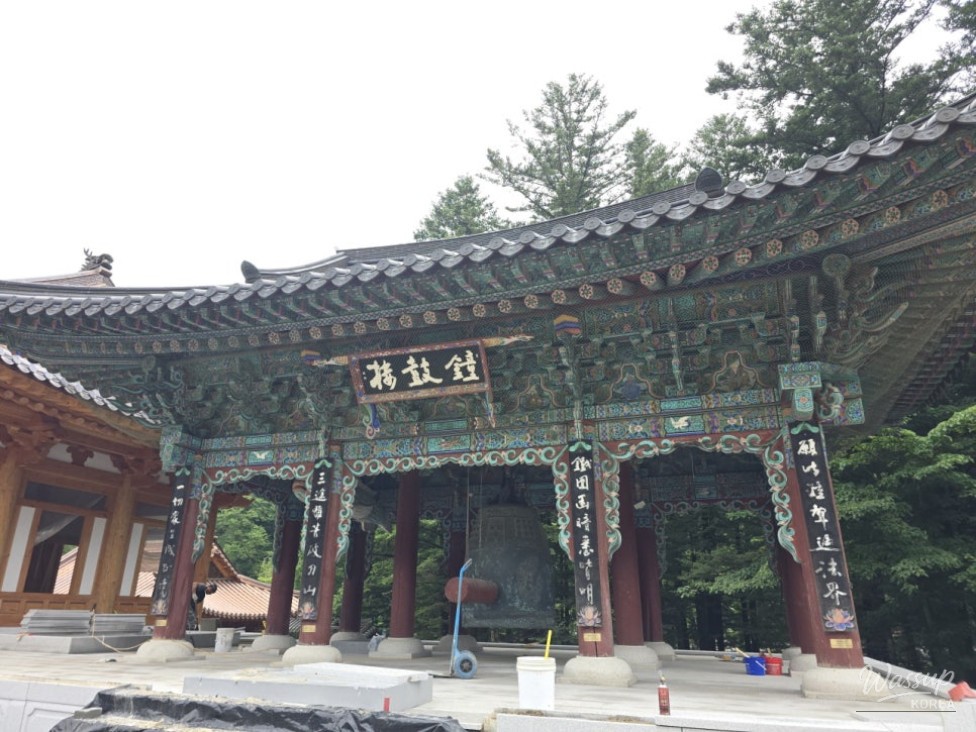
Further exploration reveals the Geumgang Gate, which stands in place of the usual Bulimun. Here, the diamond warriors Narayeon and Miljeok hold their clubs, guarding the sacred space and the Buddha. The rhythmic construction and preservation efforts around the Beomjongru (Bell Pavilion) show the ongoing commitment to maintaining this historic site.
Rest and Reflection at Cheongnyu Dawon
After paying respects at the various halls like Jinyeonggak and Muryangsajeon, visitors can find a moment of rest at Cheongnyu Dawon, Woljeongsa's traditional tea house. Located near the Heavenly Kings Gate, it is the perfect spot to sit with a cup of tea and absorb the tranquil mountain atmosphere before heading back to the bustling world.
Photogallery: Memories of Odaesan
Odaesan Woljeongsa Temple is a place that offers something new with every visit, regardless of the season. Have you ever walked the famous Fir Tree Path in the early morning mist, or witnessed the stone pagoda glowing under the winter moon? If you're planning a trip to Pyeongchang, would you like to know more about the best local tea recommendations at Cheongnyu Dawon or the nearby hiking trails that lead to the five peaks of Odaesan?
No comments yet.