Haman Hyanggyo: A Must-Visit Autumn Destination in Haman


Hello!
In this post, I'd like to introduce one of the best fall foliage spots in Haman, Gyeongsangnam-do, which makes me think, 'November should be designated as the month to visit Haman!'
In fact, it's already so famous that it's among the top five places to visit in Haman during autumn.
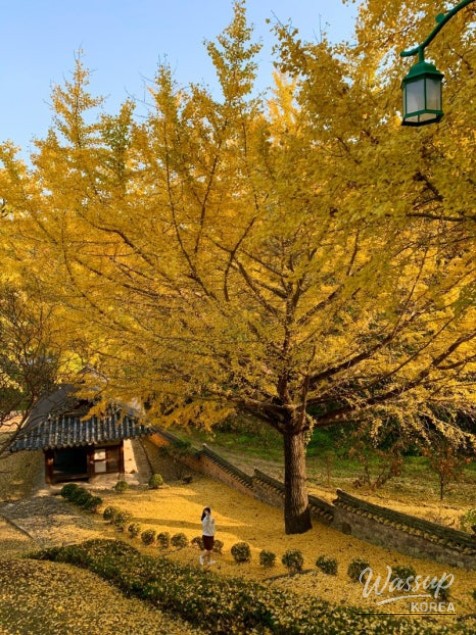
It's Haman Hyanggyo, a place where the yellow leaves of ginkgo trees, over 500 years old, create a beautiful scene.
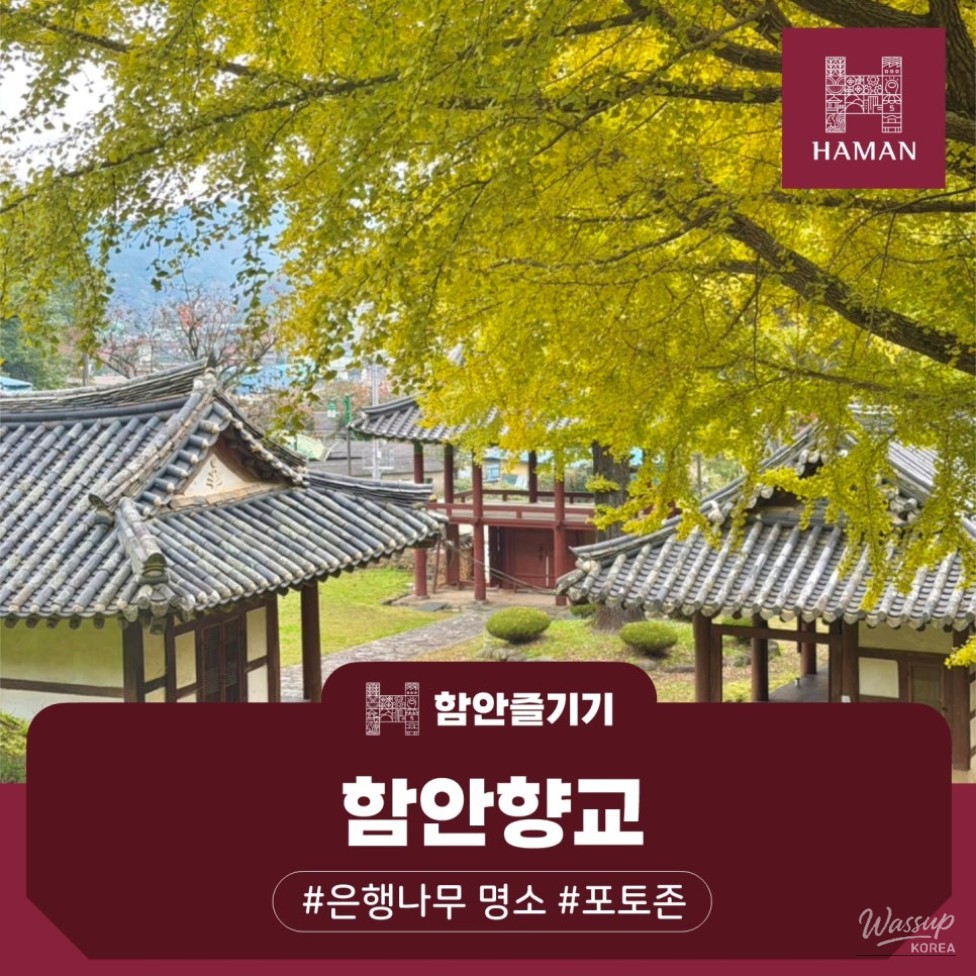
Haman Hyanggyo
Location: 103 Deokam-gil, Haman-myeon, Haman-gun, Gyeongnam
Admission: Free
Parking: Available in front of Hyanggyo
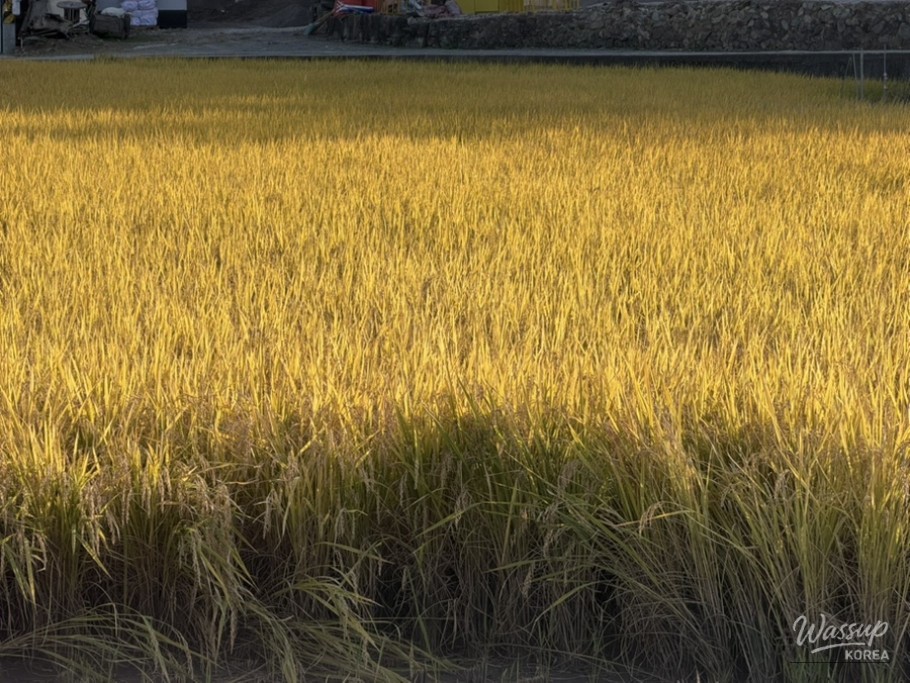
The scenery of Haman in full autumn is truly beautiful. As you leisurely enjoy the road to Haman Hyanggyo, you'll see golden fields ready for harvest. The journey to Hyanggyo, surrounded by such natural scenery, is simply delightful.
Haman Hyanggyo is close to Haman Station, making it convenient to visit by public transportation. It's only about 2km away, so it's easily walkable.
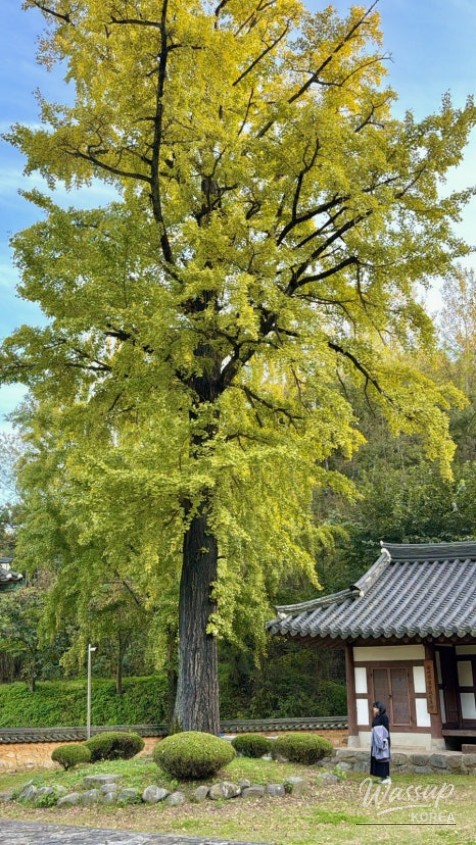
Upon arriving at Haman Hyanggyo, the first thing that overwhelms visitors is the representative ginkgo tree! It's a protected ginkgo tree that's over 540 years old. It's recorded to be 32m tall and 6.3m in circumference. It's even more enormous in person! 32m is about the height of a 10-11 story apartment building, so it's really tall, right?
Next to the ginkgo tree at the entrance, there's a red gate called Hongsalmun. The Hongsalmun is a boundary that divides the secular world from the sacred precinct. It is a sacred entrance for Confucian rituals and embodies the ceremonial meaning of serving sages with reverence.
Passing through the Hongsalmun, you'll find ample parking space. During peak foliage season like now, many group tourists visit. Tourist buses have a separate designated parking area outside the village, so please keep that in mind! The path leading to Hyanggyo isn't very wide.
This is Haman Hyanggyo as seen from the front after parking. The two-story pavilion at the entrance is called Punghwaru. Haman Hyanggyo's Punghwaru is a gate of edification where the wind of Confucian ethics spreads. It is the main gate and symbolic building that marks the beginning of Hyanggyo.
Hyanggyo were national education institutions established in local areas, responsible for education at the level of today's middle and high schools. They taught poetry, composition, Confucianism, and history, and held ancestral rites for the sages of Korea and China.
It is said that Haman Hyanggyo was founded in 1392 with the founding of the Joseon Dynasty, but this is not certain. However, it is estimated to have been established in the early Joseon period, as a Gyodo (敎導), an educational official of Hyanggyo, was dispatched to Haman in 1426 (the 8th year of King Sejong's reign). It is said to have been moved to its current location in 1595. In 1906, Chilwon-hyeon was integrated into Haman-gun, and it was merged with Chilwon Hyanggyo, but separated in 1961. The Hyanggyo was destroyed during the Korean War in 1950, but has been continuously repaired to reach its current state.
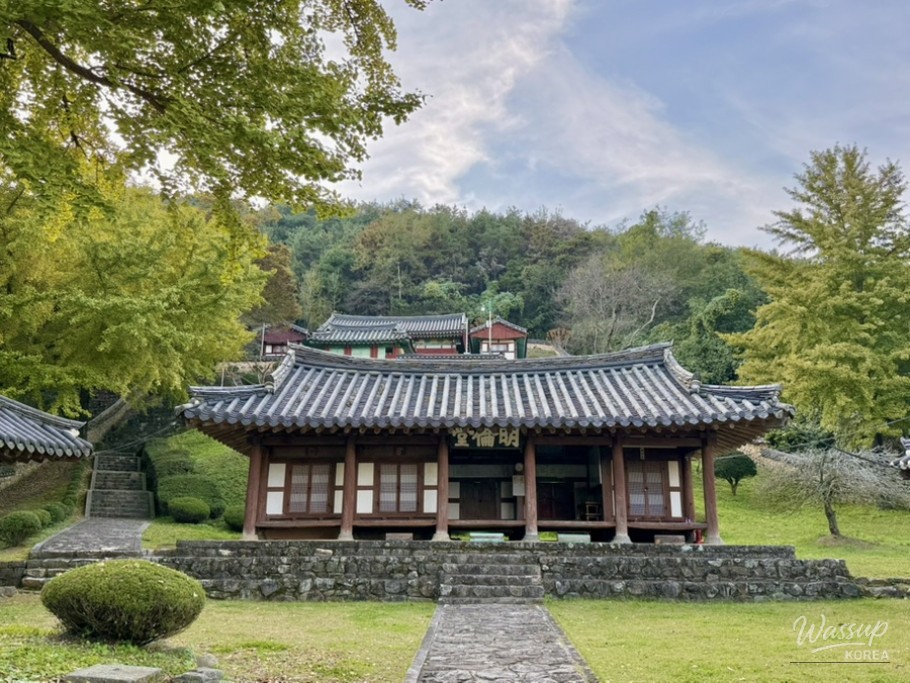
In Haman Hyanggyo, the Myeongnyundang (明倫堂), an educational space, is located on flat ground, and the Daeseongjeon (大成殿), a ritual space, is located on a slope to emphasize reverence. At the entrance of Hyanggyo is Punghwaru (風化樓). 'Myeongnyun' means to clarify the principles of humanity through education. As the meaning of the building's name suggests, 'Myeongnyundang' is an educational space. 'Daeseongjeon' refers to Confucius, and the Daeseongjeon houses the ancestral tablets of Confucius, as well as Chinese sages and 18 Korean sages. They also conduct character education for students to revive the educational function. Ancestral rites are held every year on May 11th and September 28th.
This is the back of Punghwaru as seen from the inside.
Now, let's pass under Punghwaru and take a full tour of the inside of Hyanggyo.
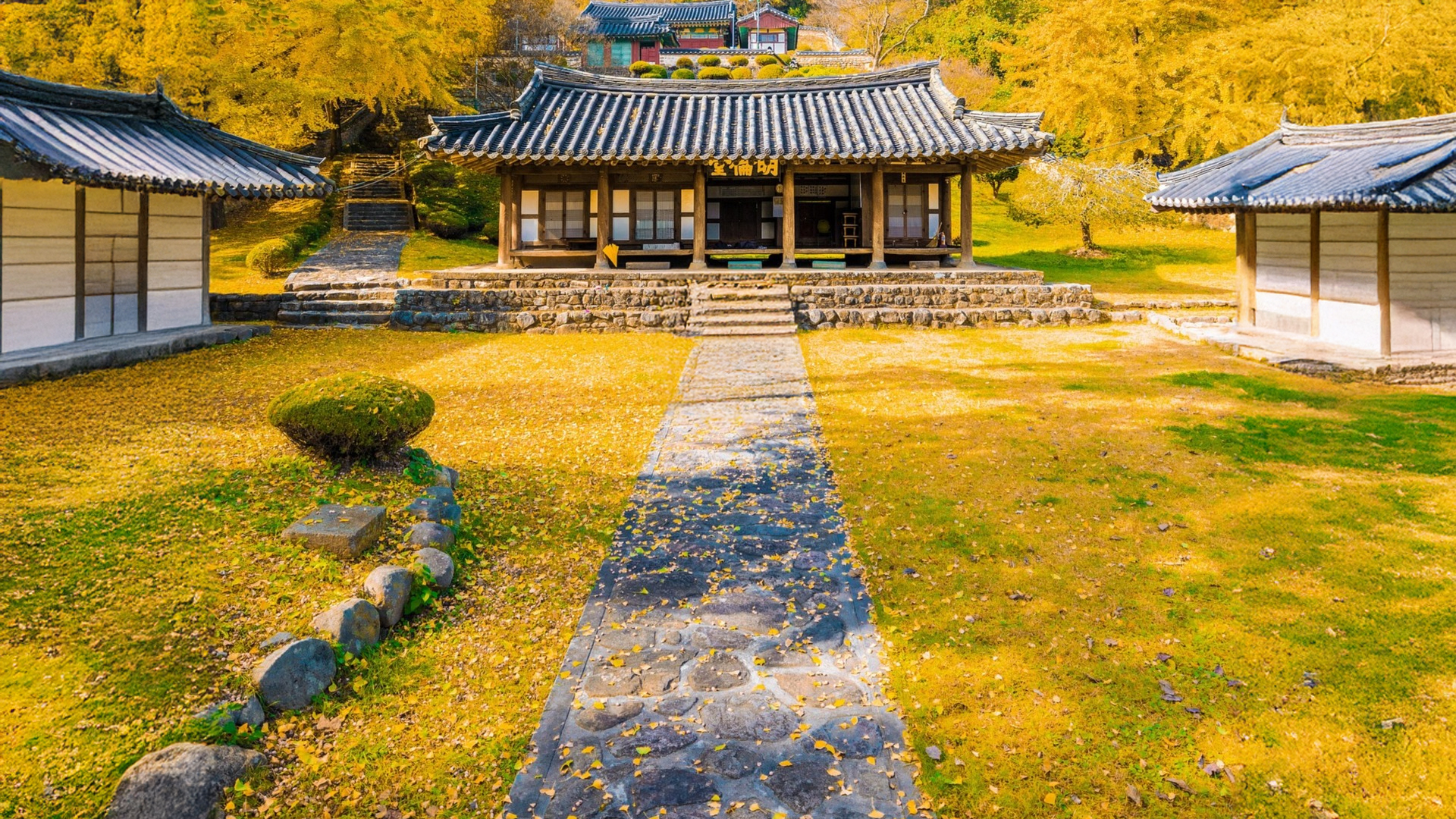
The first building you see directly in front is Myeongnyundang. You can think of Myeongnyundang as the equivalent of a school classroom today.
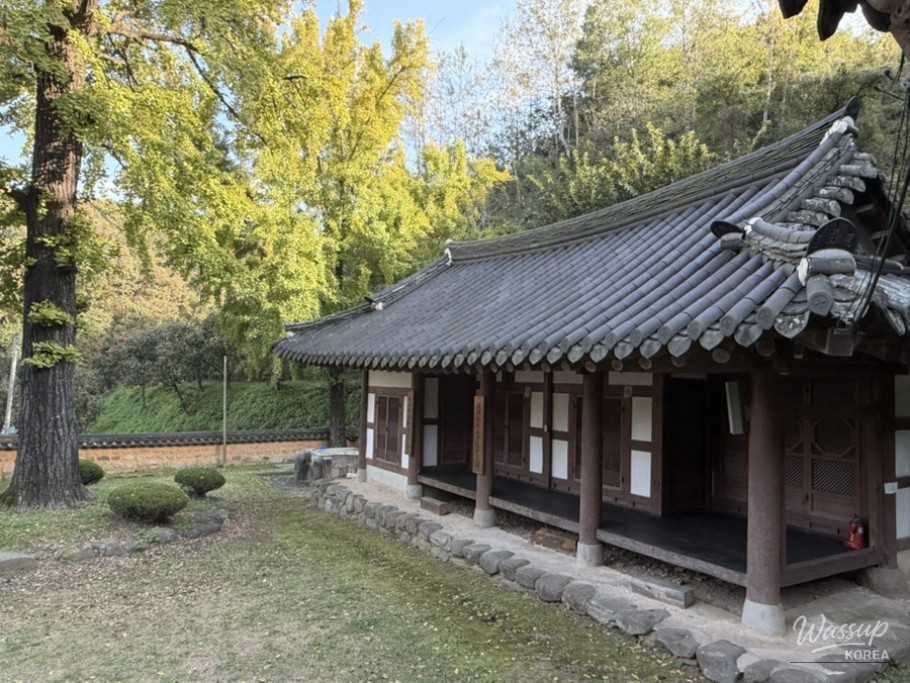
The buildings on both sides of the courtyard with Myeongnyundang are Seojae and Dongjae, which were probably spaces like dormitories for the Confucian students. In particular, the ginkgo tree located next to Seojae also boasts an enormous height. There are also a lot of ginkgo nuts underneath.
The trees are so big that people look small.
Ah, the date I visited was November 4, 2025! When I came around this time a few years ago, the yellow leaves had already fallen, but the foliage seems to be a bit late this year. Overall, it was still quite green.
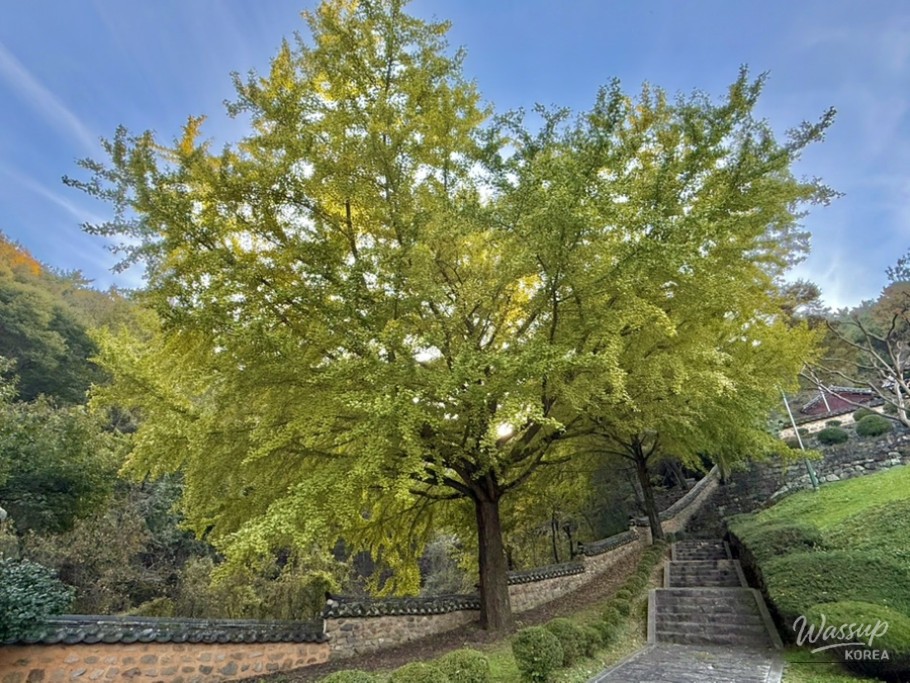
If you go up the stairs next to Myeongnyundang, there's another wonderful ginkgo tree. I personally think this is the prettiest spot to take pictures! The shape of the tree is very beautiful.
As expected, green is still dominant, but it is said that the first frost must fall for the ginkgo trees to turn yellow and drop their leaves. However, the ginkgo trees in Haman Hyanggyo are old, so when they turn yellow, they fall quickly. It's important to time your visit well! I recommend visiting within a week of the first frost.^^
Also, be careful when walking on these stairs because there are many ginkgo nuts! Aside from the smell, the nuts can be slippery if you step on them. It's especially dangerous when the fallen leaves cover the stairs, so be sure to walk slowly.
This is the view of the back of Myeongnyundang, Dongjae, and Seojae from the top of the stairs.
The ginkgo tree seen from the top of the stairs is also really pretty, and you can take great pictures here!
It looks good, right? Even though the leaves haven't fallen yet, when it's at its peak, it's like a yellow carpet is spread out.
At the end of the stairs, there's a three-section gate called Naesammun. Inside is Daeseongjeon, which is the final gateway to the ritual space. It confirms the completion of preparations for the ritual officiants and Confucian students, and symbolizes the division between the secular world and the sacred precinct.
This is Daeseongjeon. It is one of the core buildings of Hyanggyo and the central space for Confucian rituals. Daeseong means to honor the achievements and virtues of Confucius. Daeseongjeon is a sacred place to honor Confucius and the sages and to complete the practice of learning and etiquette.
Daeseongjeon is located behind Myeongnyundang on a slope. This structure is also a traditional Hyanggyo structure. In Joseon Dynasty Hyanggyo, the harmony of Confucian education and ancestral rites was considered most important. The structure expresses the flow from learning in the front to reverence in the back. This structure is called 'Jeonhak-humyo'.
Haman Hyanggyo isn't very large, so you can look around quickly. After taking a big look around, you can take your time to look around again and discover hidden places. You can sit on the veranda and enjoy the weather, or find pretty places to take pictures.
On the way out of Hyanggyo and back to the parking lot, I take one more look at the magnificent protected ginkgo tree.
Right next to Haman Hyanggyo is Pasugotgam Village. Perhaps that's why there are so many persimmon trees around. It's a season where the plentiful persimmons are so tempting!
It doesn't end here. I was disappointed that the ginkgo trees were too green, so I revisited on November 8th.
It was a cloudy day with rain, so the colors are faded, but it seems like it will take a few more days for them to turn completely yellow. It's really hard to time the foliage viewing.
Still, it seems like they've turned quite yellow in 5 days. This year, it looks like you'll be able to see completely yellow ginkgo trees and fallen leaves around mid-November.
It's a place where the yellow leaves fluttering in the wind are so beautiful. The first frost has fallen this week, so you'll be able to see a perfect yellow carpet this weekend.
Searching through my photo album with regret, I found a past autumn scene of Haman Hyanggyo. If you go in the late afternoon, the sunlight is pretty, so it naturally corrects the yellow ginkgo trees to a deeper color.
It's a good place to recommend visiting in Haman in November, right?
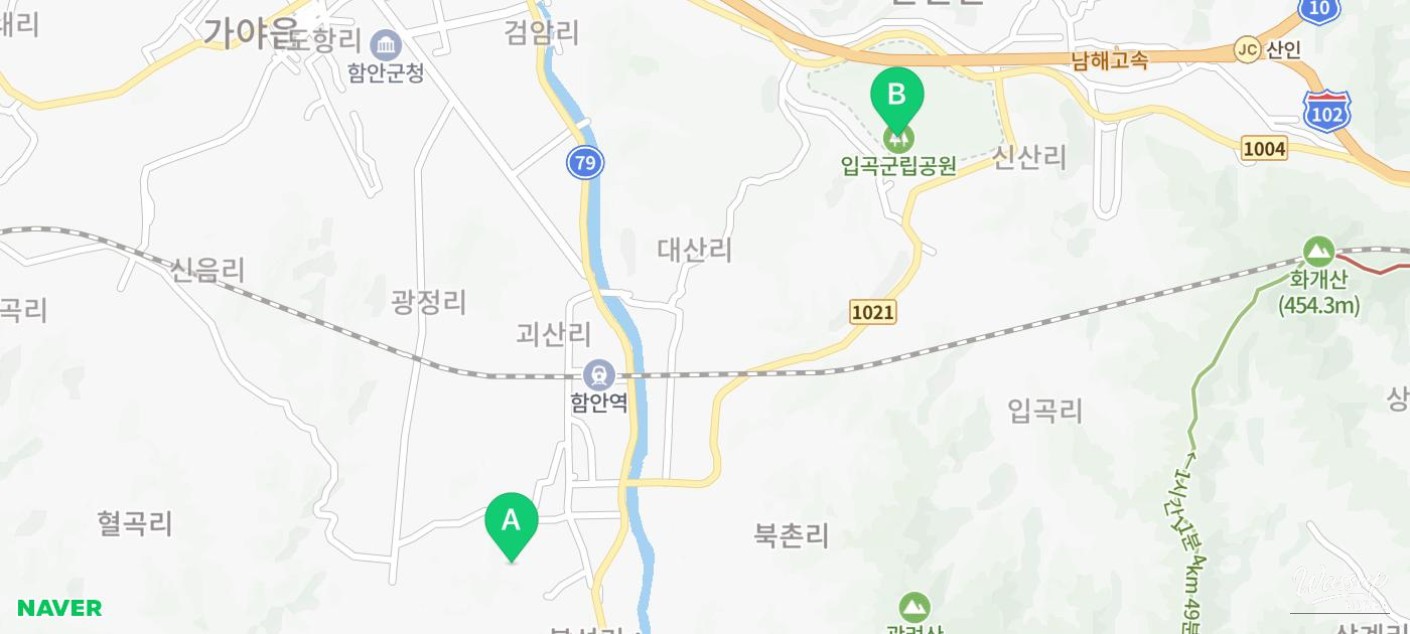
In Haman, there's also Ipgok County Park, where colorful maple trees are beautiful. The two places are close to each other, about a 5-10 minute drive away, so it's good to visit them together. If you come to Haman in the fall of November, be sure to visit these two places!
Come and enjoy the autumn scenery of Haman!
Then, I'll finish this post because I have to go find another foliage spot. Thank you for reading.









Source :https://blog.naver.com/arahaman/224075167278
No comments yet.