Exploring UNESCO World Heritage Site: Musung Seowon



Musung Seowon, a UNESCO World Heritage site, is located in the peaceful village of Chilbo-myeon in Jeongeup, Jeollabuk-do. This historical site has roots that stretch from the Silla Dynasty to modern times.
Designated as a UNESCO World Heritage site in 2019 as one of the 'Korean Seowon', Musung Seowon embodies the spirit of scholarly pursuit and community engagement. Here, we will explore the serene landscapes and historical significance of this remarkable institution.
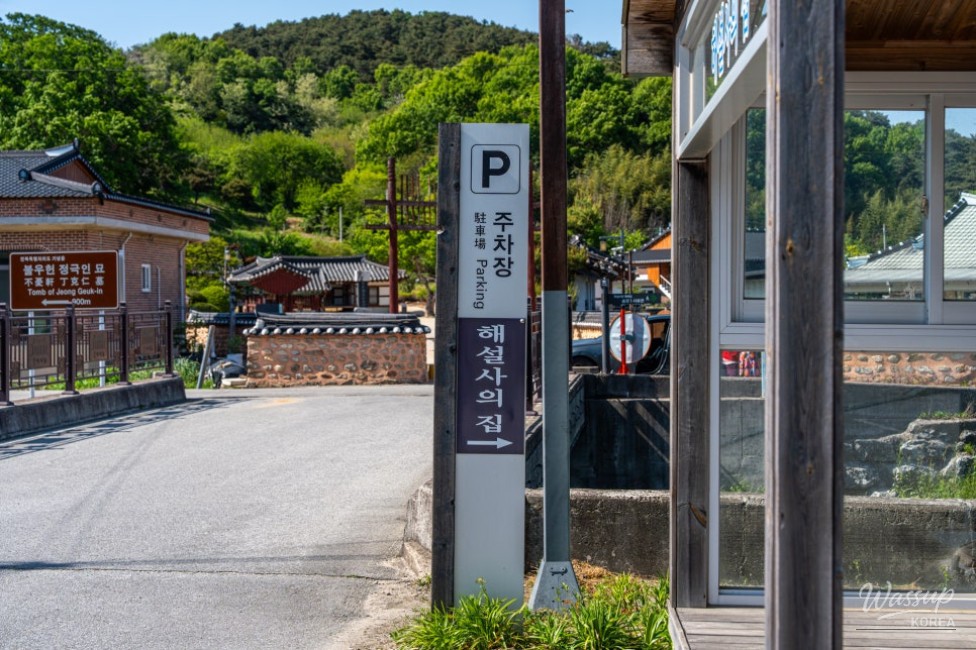
Upon arriving at Musung Seowon, visitors are welcomed by a spacious parking area. Adjacent to the parking lot is the 'Interpreter's House', designed to enhance understanding of the seowon's history and cultural heritage. Cultural interpretation programs are available, so it is advisable to check with the Jeongeup City tourism office for details prior to your visit.
Before diving into the main attractions, visitors can locate the 'Buruheon Jeonggeun's Tomb' using the directional signs. Jeonggeun is known as the author of 'Sangchun-gok', the first lyrical poem in Korean literature.
After retiring from public service, Jeonggeun settled in this area, dedicating his life to educating future generations and promoting the local community through the 'Donggak Hyangyak', a local governance initiative.
Musung Seowon's landscape differs significantly from other seowons nestled deep in the mountains. It was intentionally built at the heart of the village, blending harmoniously with the local community. A sign at the entrance clearly marks this site as a UNESCO World Heritage site. In 2019, Musung Seowon, along with eight others, was recognized for its universal value in Confucian education and rural enlightenment during the Joseon Dynasty.
The architecture of Musung Seowon emphasizes simplicity and elegance, avoiding elaborate decorations. The spacious courtyard and the arrangement of buildings create a calm and cozy atmosphere, likely a deliberate design choice.
One notable historical site within the seowon is the 'Byeong-o Changui Miracle Monument', which commemorates the 1906 uprising against Japanese colonial rule led by prominent figures such as Choi Ik-hyeon and Lim Byeong-chan.
The 'Gangsujae', once a dormitory for students, features an asymmetrical design, a unique characteristic of Musung Seowon compared to other seowons that typically have symmetrical layouts.
Continuing past Gangsujae, visitors enter the main academic area, highlighted by 'Myeongryundang', where students gathered to study. The building's traditional structure consists of a spacious main hall and adjoining ondol rooms.
The inscription hanging from Myeongryundang reads 'Musung Seowon', a title granted by the king in 1696, symbolizing the institution's role in promoting Confucian values within the community.
Beyond Myeongryundang lies 'Taesan Shrine', a serene space that honors the legacy of Choi Chi-won, a prominent scholar from the Silla period. The shrine was established to commemorate his virtuous governance while he served as the governor of Taesan.
Musung Seowon is not characterized by grandiosity or opulence. Instead, it reflects the philosophy of scholars who sought to practice learning in close connection with the community, and the history of patriots who stood firm in the face of national crises. The harmonious architecture and accumulated historical narratives within Musung Seowon embody the true value of practical scholarship.
This May, a visit to Musung Seowon is highly recommended for those seeking to connect with Korea's rich history.


Source :https://blog.naver.com/jbgokr/224293228977
No comments yet.