Exploring the Wonders of the Hwaseong Dinosaur Egg Fossil Site



[Reporter Lee Jae-hyung]
Today, we set out to explore the Hwaseong Dinosaur Egg Fossil Site, a world-class geological tourism destination in Gyeonggi Province.
Beyond mere sightseeing, Gyeonggi Province aims to cultivate our precious geological heritage into a core asset for education and tourism.
We visited the site to witness this ambitious plan in action.
Join us for a special walk through 100 million years of history at the Hwaseong Dinosaur Egg Fossil Site.
Gyeonggi Province is not only committed to protecting geological resources but also to utilizing them as a vital asset that combines education and tourism through the "Geopark Operation Support Project."
A geopark is a system that preserves areas of high geological value while promoting education and tourism to revitalize the local economy.
The Hwaseong Dinosaur Egg Fossil Site, where the first horned dinosaur in the Korean Peninsula was discovered, is a treasure of the West Coast.
Currently, there are 16 certified national geoparks in South Korea, including the "Hantan River UNESCO Global Geopark" and the "Hwaseong National Geopark," which was certified as the 16th in February last year.
Notably, the Hwaseong National Geopark features eight geological attractions such as the Gojungri Dinosaur Egg Fossil Site, Jebudo, and Ueumdo, making it a repository of marine and coastal geological heritage.
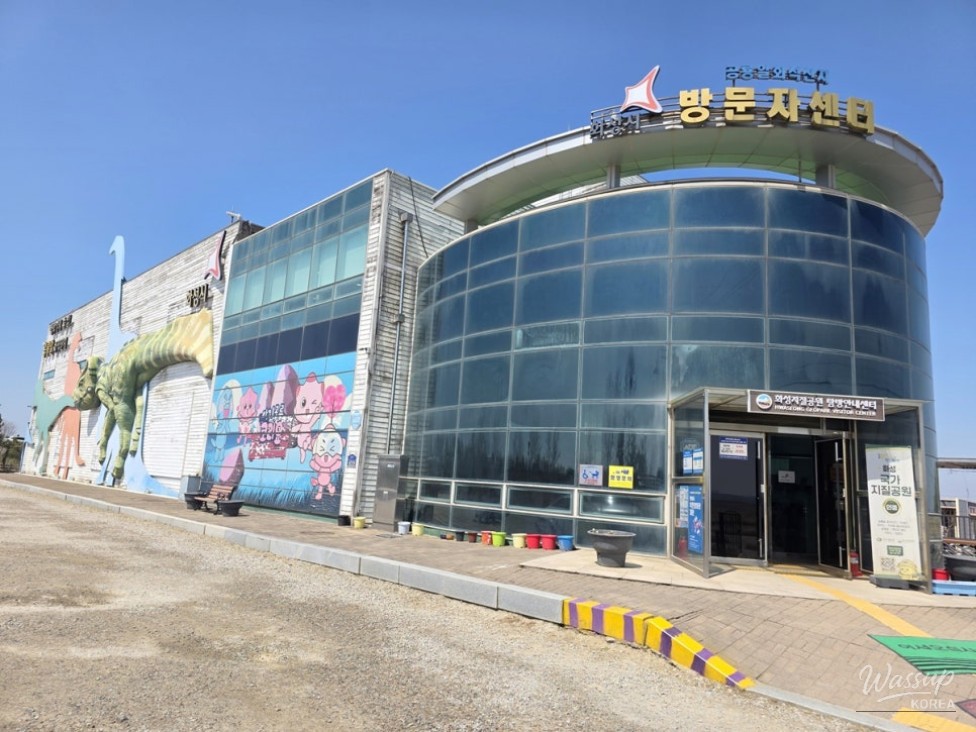
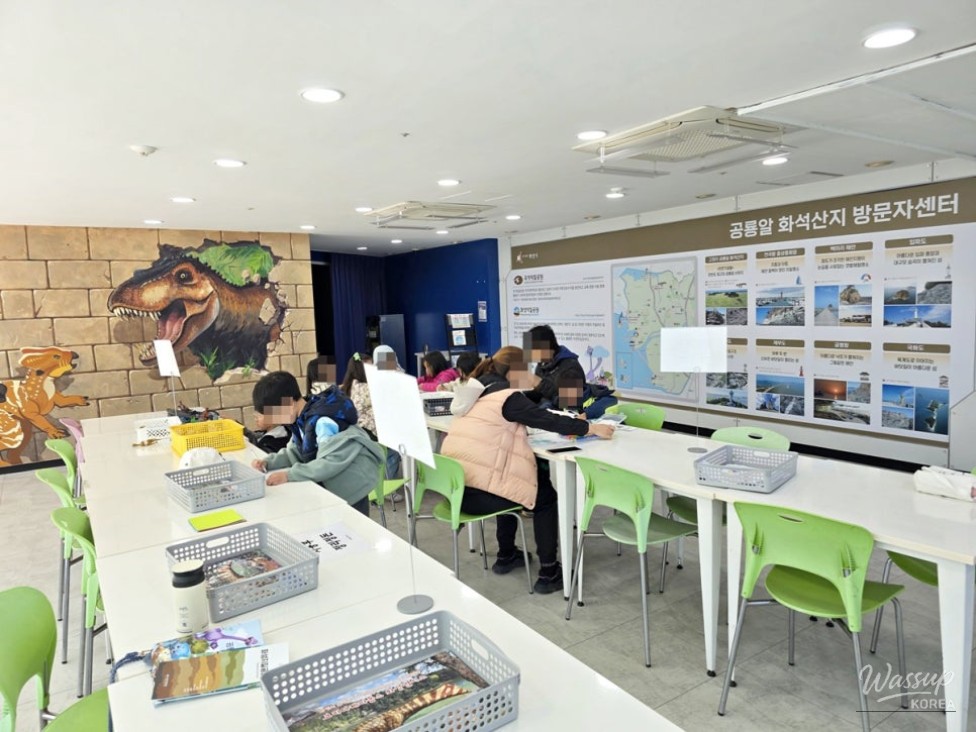
Before exploring the Dinosaur Egg Fossil Site, a must-visit is the Visitor Center located in Songsan-myeon, Hwaseong City.
This center serves as the starting point for a 1.5 km trail and a learning space where visitors can experience the Cretaceous environment from 100 million years ago.
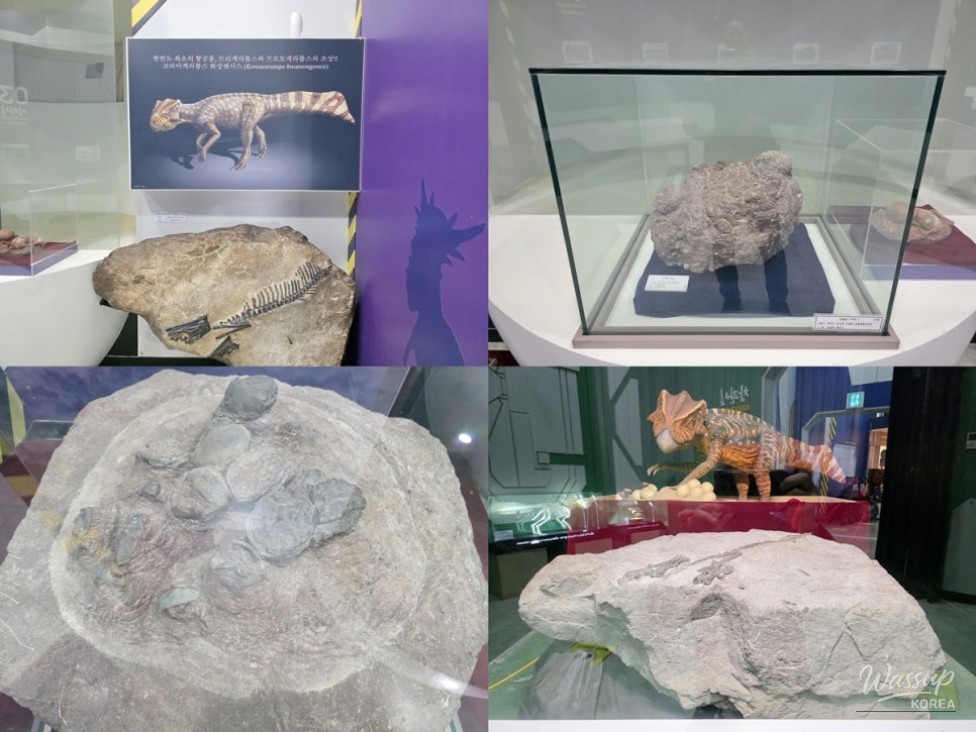
Inside the Visitor Center, there are many exhibits, including fossils of the Koreaceratops hwaseongensis and over 30 nests and 200 dinosaur egg fossils discovered in the Gojungri area.
The Koreaceratops hwaseongensis, discovered in 2008 at Jeongok Port, is a unique dinosaur believed to have swum well due to its developed neural spines on its tail.
After observing the life-sized restoration, one can feel the vibrancy of that era.
The Visitor Center also offers free activities such as dinosaur puzzles and coloring, allowing children to immerse themselves in the world of dinosaurs.
Once well-prepared with knowledge about the Koreaceratops and dinosaur eggs, it’s time to explore the fossil site itself.
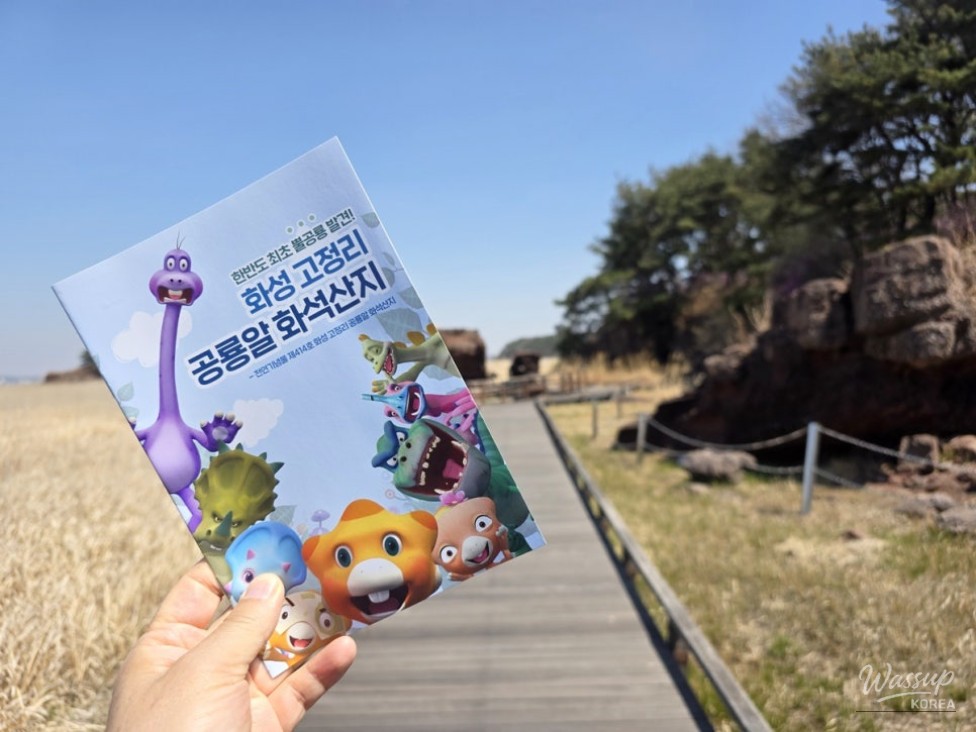
As you walk the trail, which is designed to be accessible for everyone, you will encounter fascinating geological features like sea caves and mysterious rock formations.
The viewpoint offers a stunning vista of the reed fields of the Shihwa Lake, reminding us that this area, once a sea, now holds the traces of dinosaurs.
Along the path, you will discover three key observation points: the red-hued nude rock, the sea cave, and the unnamed island.
The nude rock showcases dinosaur egg fossils embedded in its surface, while the sea cave features fossils that have been flattened by pressure over time.
The unnamed island, newly named during the trail's construction, offers a chance to spot dinosaur egg shapes on its backside.
This introduction to the Hwaseong Dinosaur Egg Fossil Site is just the tip of the iceberg. With systematic support from Gyeonggi Province, the site is evolving into a geological tourism hub where everyone can comfortably enjoy and learn.
This weekend, consider embarking on a special journey with your family to walk alongside dinosaurs from 100 million years ago.

Source :https://blog.naver.com/gyeonggi_gov/224245822321
No comments yet.