Exploring the Mural Alley of Bongsung Village
- Original source
- blog.naver.com



By Lee Sang-hyun, SNS Reporter, 15th Term
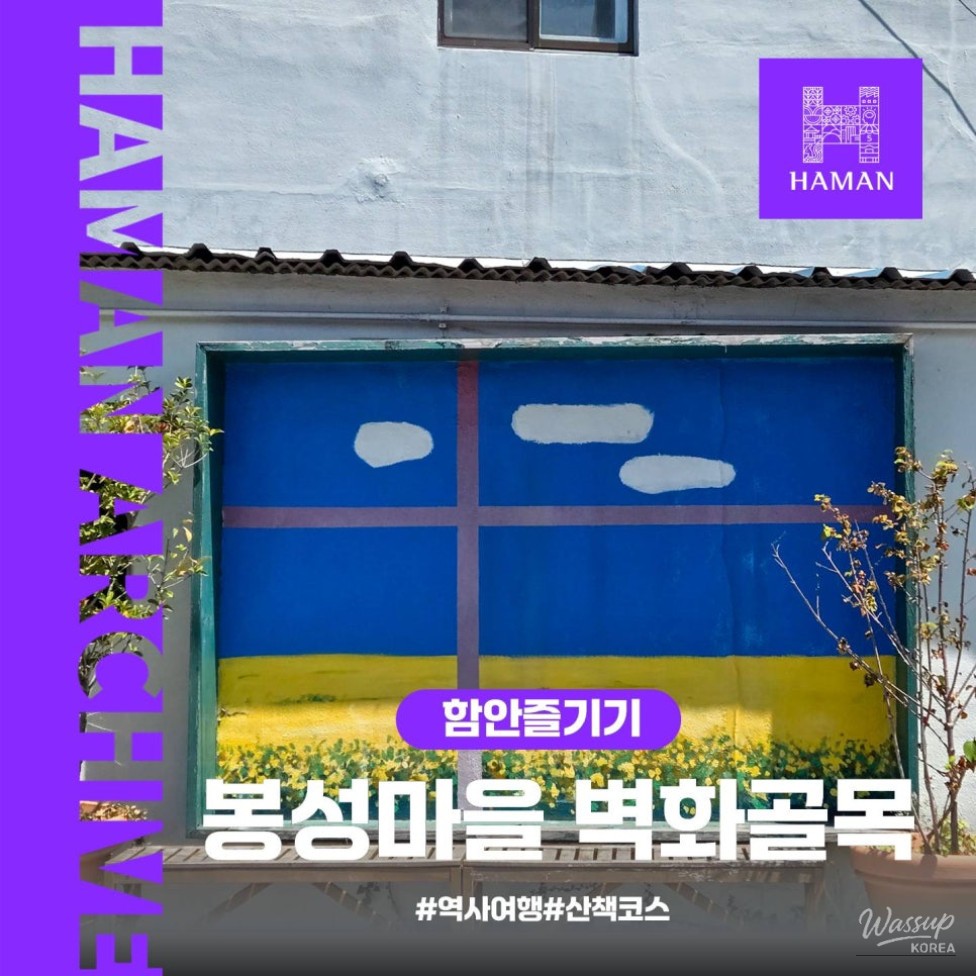
Bongsung Village Mural Alley
Located in Bongsung-ri, Haman-myeon, Haman-gun, Gyeongnam
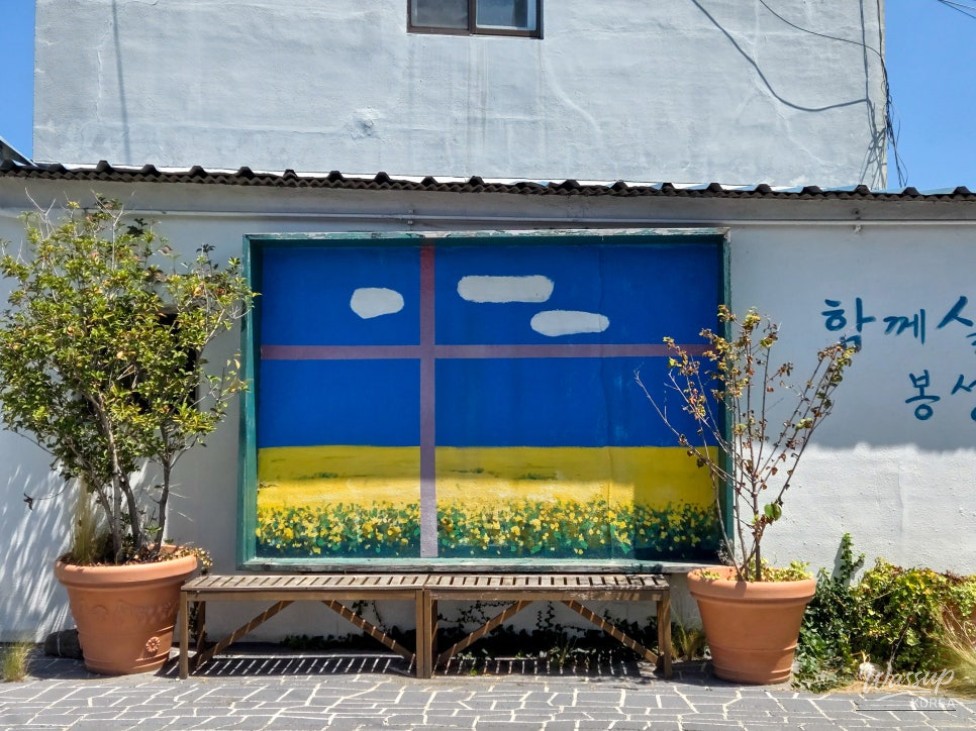
I paused for a moment to admire the murals painted in the old alleys of this village. They were simply beautiful!
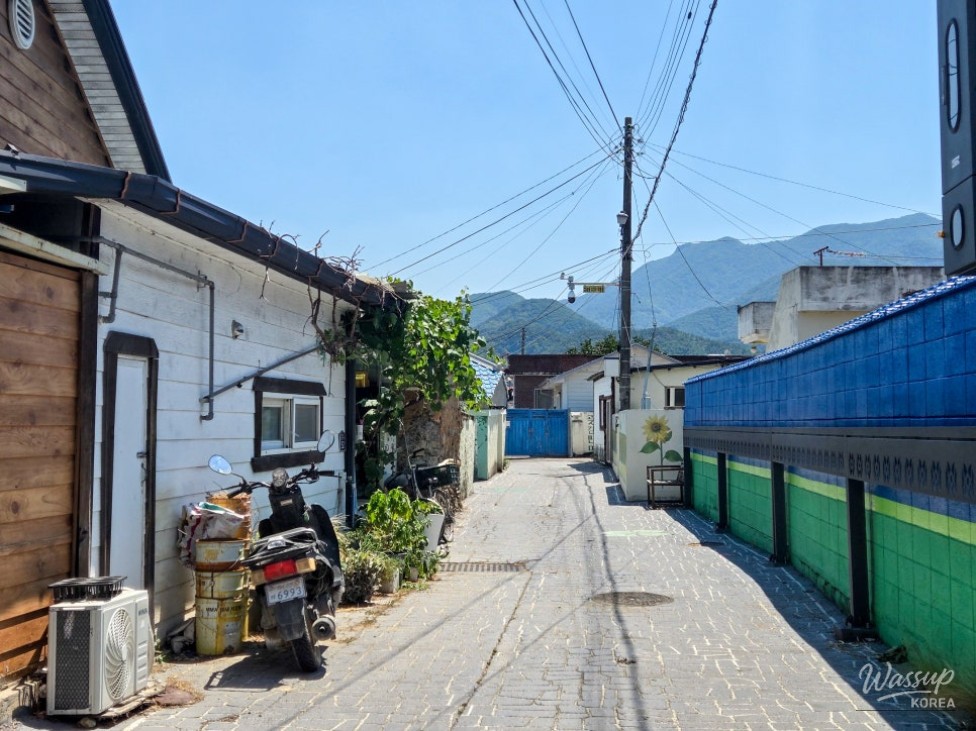
As the path continued inward, I decided to walk aimlessly, enjoying the fun of discovering each mural painted on the walls.
This is the mural alley of Bongsung Village, where stories of Haman Fortress still linger.
I started my journey next to the gas station across from Haman-myeon Office. It’s easy to find as Haman Middle School is nearby.
The green mural on the wall reminded me of the curved pottery from the ancient kingdom of Ara, and the lotus flower painting naturally brought to mind the Ara Hong-ryeon.
Having visited the Haman Museum and the Lotus Theme Park, I felt a connection between the paintings and my memories, which was delightful.
As I walked deeper into the village, I found myself wondering, 'Have I explored Haman a bit?' The murals felt like a kind of quiz for me.
Bongsung Village is connected to the area where the old Haman Fortress once stood. Although the center of Haman-gun is now in Gaya-eup, this area used to be the administrative hub. Perhaps that's why remnants of the past seemed to linger as I walked through the alleys.
By chance, I discovered a unique decoration on a roof that resembled rabbit ears. I wonder if there’s a specific meaning behind such embellishments on the roof tiles. It’s these small discoveries that add to the charm of exploring the alleys.
From the rare blue iron door to the old walls and the vines growing between them, each step revealed something new. The murals are newly painted, yet the village retains its old character, allowing a sense of history and present to coexist beautifully.
One side of the alley even had a short poem written on it, which seems especially relevant in today's world.
This mural is likely recognizable to others as well. Upon seeing it, I immediately thought of the Haman Nakwha Festival. Interestingly, there are records that this festival was also held in the Haman Fortress area during the Joseon Dynasty. One mural leads to such historical tales.
The paths are not particularly complicated. They lead to a main road as you walk. True to Haman-myeon, known for its dried persimmons, there is even a mural depicting the sale of dried persimmons, which is amusing.
As I walked through, it felt like I had briefly stepped into someone else's daily life.
Following the village path, I found myself heading towards Haman Middle School. After walking through the narrow alleys, emerging onto a wider street felt like a significant change in atmosphere.
I decided not to stop here but to head back to the starting point.
The reason is that there is another mural alley towards the Haman-myeon Office. To my surprise, I discovered a large guide map of Haman Fortress painted on the wall. It was my first time seeing such a big map, making it an intriguing and fascinating find!
The Haman Fortress was a castle that served administrative and defensive functions during the Joseon Dynasty. Although the old structure is no longer fully visible, the painted guide map allowed me to imagine what it might have looked like back then.
Nearby, you can find Yeohang Mountain and Bongsung Reservoir, making it a great idea to plan a route to explore. While it’s not a large mural village, it’s a place where you can slowly walk along quiet alleys and discover the old stories of Haman. If you ever visit Haman-myeon, I hope you remember to check out Bongsung Village!

Source :https://blog.naver.com/arahaman/224448954364
More from Place


No comments yet.