Exploring the Hometown of Joseon Figures Hwang Hee and Nongae in Jangsu, Jeonbuk


Currently, I am walking in Jangsu County, the hometown of Hwang Hee and Nongae.
Known as the 'Chamonix of Korea,' Jangsu County in Jeonbuk has recently emerged as a haven for trail running, with about 75% of its terrain being mountainous. While one might expect that the region's tourism is primarily focused on its natural landscapes, Jangsu is also rich in historical significance, particularly with figures from the Joseon Dynasty like Hwang Hee and Nongae.
As I stroll through Jangsu-eup, I will introduce tourist attractions related to Hwang Hee and Nongae. If you follow the order of the sites I personally visited, you will discover an excellent route.
Bangchon Park
Hwang Hee, a prominent minister during the Joseon era, was born in Jangsu, and his ancestral home is also in this area. He even spent time in exile in the current Jangsu Janggye-myeon. Therefore, there are several sites related to Hwang Hee throughout Jangsu. Let's start at Bangchon Park.
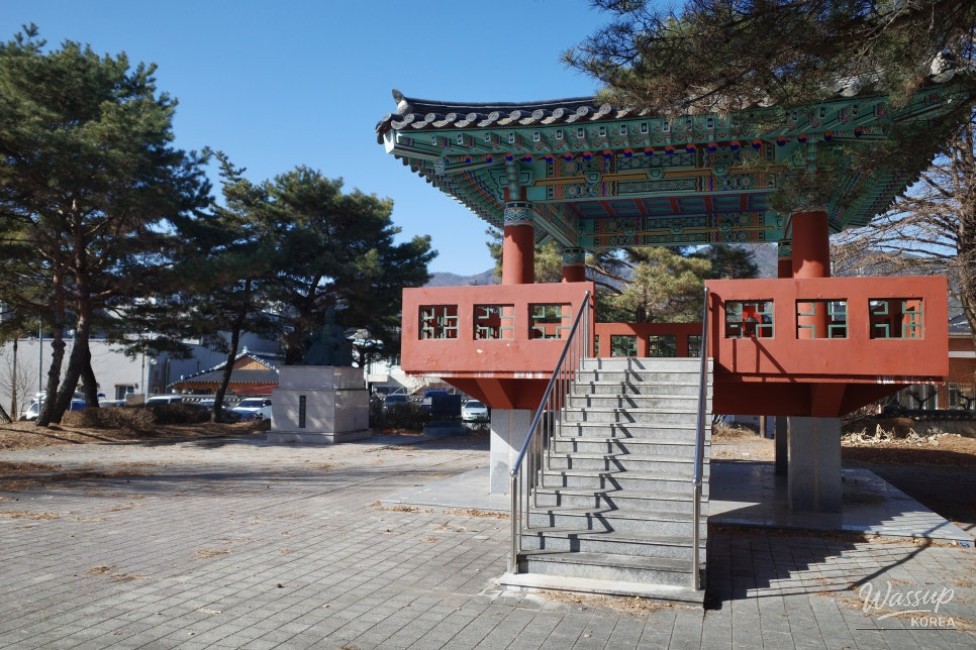
Located less than a five-minute walk from Jangsu Bus Terminal, Bangchon Park is named after Hwang Hee's pen name, 'Bangchon.' The park features a simple pavilion and a statue of Hwang Hee, which adds to the winter solitude. However, the unembellished atmosphere creates a sense of comfort.
Nongae Shrine
If you walk from Bangchon Park to Nongae Shrine, there is a shortcut that allows you to reach the shrine entrance quickly. Using a map app on your phone will guide you to the shortest route.
Nongae is known for embracing a Japanese general during the Imjin War and leaping into the Namgang River. Like Hwang Hee, she was also born in Jangsu, and her birthplace is located here.
The shrine houses a portrait of Nongae, along with an exhibition hall. The background music in the exhibition hall can be overwhelming at times, prompting a deeper reflection on Nongae and the shrine. The exhibition hall is not very large, making it easy to explore.
Upon reaching the top of the shrine, you will face Nongae's portrait. When encountering the spirits of martyrs, I often ponder what choices I would have made in their moments of decision. As I ascend the stone steps from the entrance to the top, I pay tribute to Nongae's nobility.
Jangsu Hyanggyo
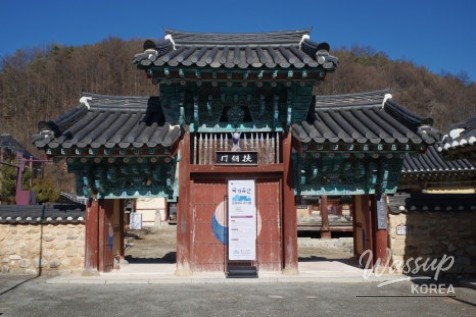
Returning to the path, I head to Jangsu Hyanggyo, located next to the Jangsu County Office. Among the hyanggyo I've visited, Jangsu Hyanggyo seems to have the lowest color saturation, but it is the oldest hyanggyo in Korea, preserving its original architectural style. I will visit a seowon next, and while both hyanggyo and seowon are Confucian institutions established during the Joseon era, their differences are clear. Hyanggyo is a state-funded and operated educational institution.
Most hyanggyo were destroyed during the Imjin War and the Second Manchu invasion, but Jangsu Hyanggyo has survived thanks to a slave named Jeong Gyeong-son, who steadfastly protected it.
Notably, the Daeseongjeon within Jangsu Hyanggyo is designated as a national treasure, making it a highly significant building. It is over 600 years old, making it the oldest Daeseongjeon among the many hyanggyo in Korea. This site also houses the tablets of 27 Confucian sages, adding to its value.
Uiam Song
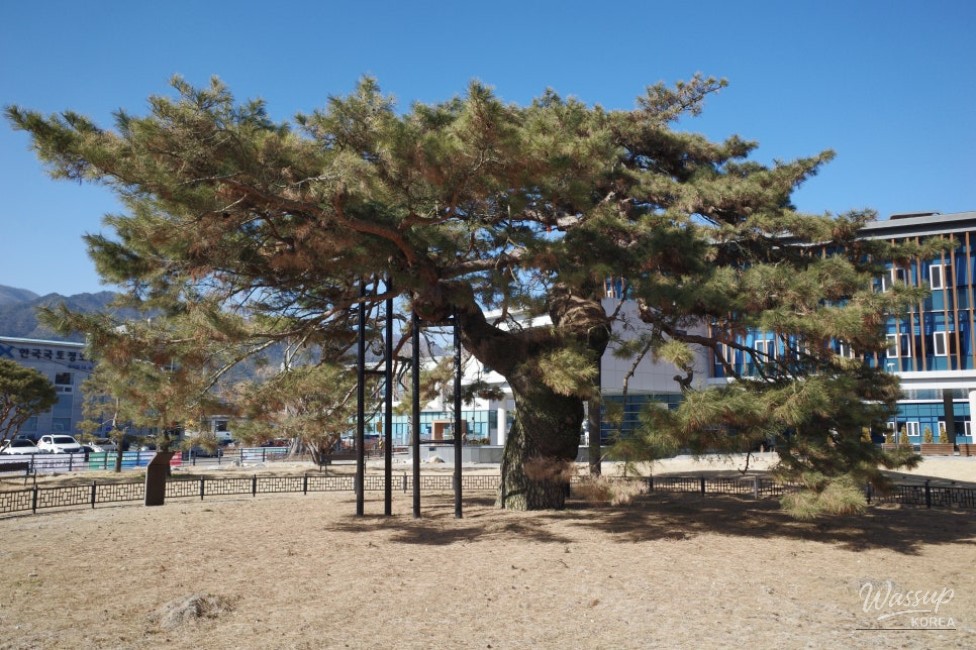
Exiting Jangsu Hyanggyo, I head towards the Jangsu County Office, where a 400-year-old pine tree stands majestically in front. At a height of 9 meters, it is equivalent to a 3-4 story building. It is said to have been planted in the late 1500s by Jangsu's governor Choi Gyeonghoe and Nongae, making it historically significant.
Noha Forest
The distance from Uiam Song to Noha Forest is about 1.2 km. Although it feels a bit far, the route passes through the town, offering enjoyable sights of buildings, signs, and mountains.
Noha Forest was established by Hwang Hee's father, Hwang Gun-seo, when he served as the governor of Jangsu. With over 600 years of history, this site is also of great historical value. The forest is dense with ancient zelkova and oak trees, providing a pleasant visual barrier.
There are simple sports facilities and benches scattered throughout the area. A barrier-free sharing path deck has been created for visitors with mobility challenges, enhancing accessibility. Most notably, Noha Forest features several clay paths, perfect for walking barefoot.
Changgyo Seowon
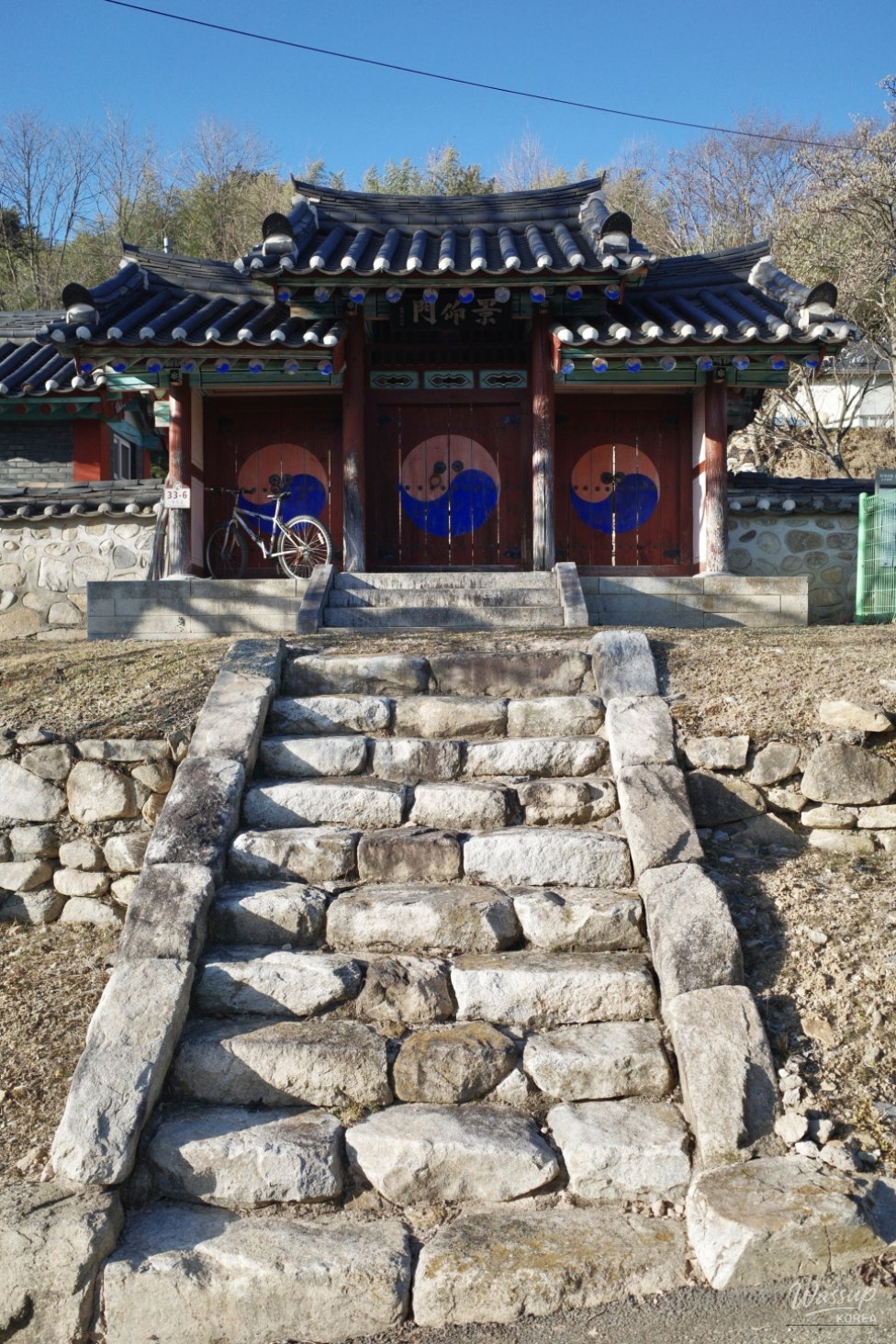
Finally, I will head to Changgyo Seowon, located about 1.6 km from Noha Forest. Unlike the earlier Jangsu Hyanggyo, which was established by local Confucian scholars during the Joseon era, seowon is a private educational institution.
Changgyo Seowon is the oldest among various seowon in Jangsu County. Established during the reign of King Sukjong, it was closed due to the reform orders by Heungseon Daewongun during King Gojong's reign but was later rebuilt. It houses the tablets of several sages, including Hwang Hee.
Starting from Bangchon Park to Changgyo Seowon, I have explored six historical tourist sites in Jangsu, tracing the footsteps of Hwang Hee and Nongae. All six sites are within walking distance from Jangsu Bus Terminal, so I encourage you to take a leisurely walk while breathing in the winter air.









Source :https://blog.naver.com/jbgokr/224162528092
No comments yet.