Exploring the Historical Significance of Boseong School in Ulsan



Hello, this is Kim Soon-jeom from Ulsan Nuri.
As May approaches with its vibrant greens, I found myself at the heart of this color.
This month's article shares my experience of visiting the sea at Ilsanjin in Ulsan's Dong-gu, inspired by the beautiful spring.
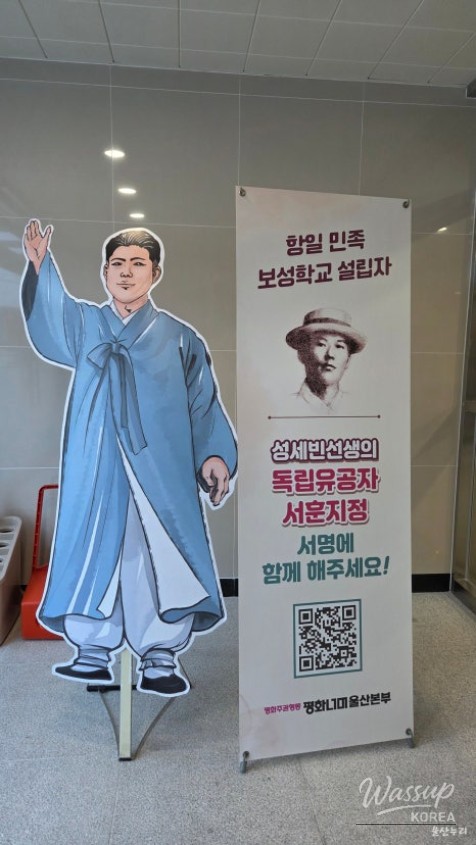
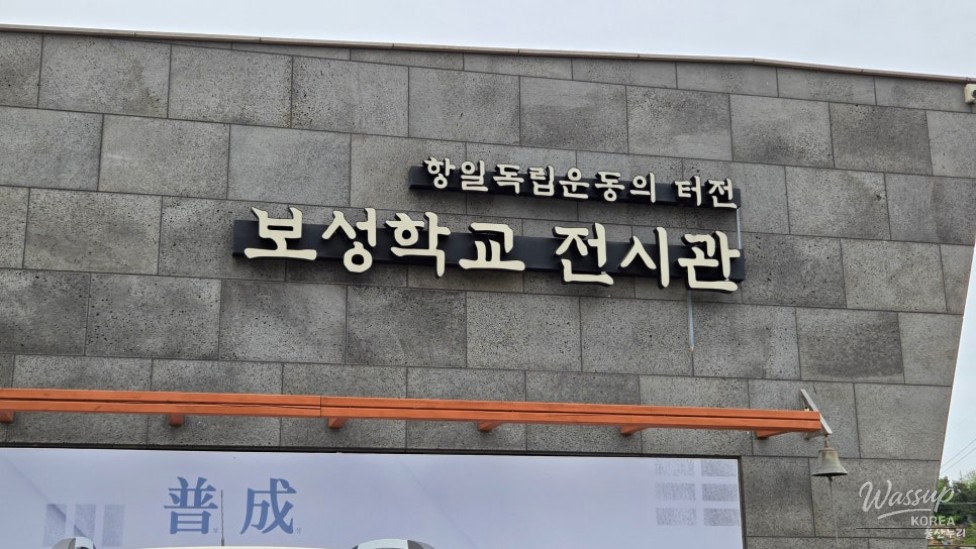
While wandering along the clear skies and blue coastline, I stumbled upon the Boseong School Exhibition Hall, a place that evokes memories of the past related to Boseong School and Seong Se-bin.
This venue was previously a senior citizens' center and has now been transformed into a historically significant exhibition hall through the Saetul project.
Let's first explore the meaning of Boseong.
普成: It signifies the idea of broadly opening up to achieve humanity.
According to the pamphlet, Boseong was named by Emperor Gojong of Korea for the first independent vocational school. Following the Eulsa Treaty, which led to the seizure of diplomatic rights by Japanese imperialism, our education was controlled, and elementary schools were referred to as common schools. In response, national leaders established private schools across the country under the name Boseong, nurturing national enlightenment and anti-Japanese sentiment.
Boseong School, a hub for the anti-Japanese movement in Dongmyeon (now Dong-gu), was established twice—in 1909 and in the 1920s. The first establishment in 1909 was closed due to regulations imposed during the Japanese occupation.
The second establishment occurred in 1920, during a time of heightened independence movements following the March 1st Movement, initiated by Seong Se-bin's suggestion. The re-establishment was a response to the increased national consciousness after the movement in 1919.
As a center for the anti-Japanese movement, Boseong School's teacher, Seo Jin-mun, who crossed over to Japan to engage in independence activities, was arrested in 1928 and died on November 7 due to torture-related complications, with his remains returned on January 11.
After a unified funeral held by the teachers and students of Boseong School, the Japanese authorities began to intensify their oppression.
Seong Se-bin, the founder of the private Boseong School, returned to Dongmyeon after ten years of lamenting the situation in Korea and established a youth association, gathering the impoverished for three years to teach at a night school. He dedicated years to building the Boseong Academy, ultimately accommodating over 200 students for education.
According to excerpts from Gyeongsang Ilbo, the Saetul Village project in Ilsanjin aims to improve living conditions in a 63,652 square meter area that suffers from poor housing. The project, under the Ministry of Land, Infrastructure, and Transport, involves a total investment of 7.2 billion won to enhance the living environment.
A friend who spent their childhood in Ilsanjin mentioned earning pocket money from the sea.
According to the Dong-gu place name history, it is said that the old name of Ilsanjin was also known as Haetgaebi or Nalmang.
While taking photos, I instinctively wanted to say that the scenery resembles Yangsan.
There is a fishing center in Ilsanjin, and when I walked to the end of the breakwater-like path in front of it, the sea appeared like the rounded top of an umbrella.
During the day, you can head to Daewangam Park or the Suldoro, and conversely, you can visit Namnok or Jujeon Mongdol Beach.
The Boseong School Exhibition Hall in Dong-gu, Ilsanjin, contributes to children's historical education and offers a place to create healthy memories with family by the sea. I highly recommend it!



Source :https://blog.naver.com/ulsan_nuri/224290149206
No comments yet.