Exploring the Beauty of Baengnongnamu at Musansa Temple



By Ok Nayul, 15th SNS Reporter Group
Musansa Temple
Mureung-ri, Chilsseo-myeon, Haman-gun, Gyeongnam
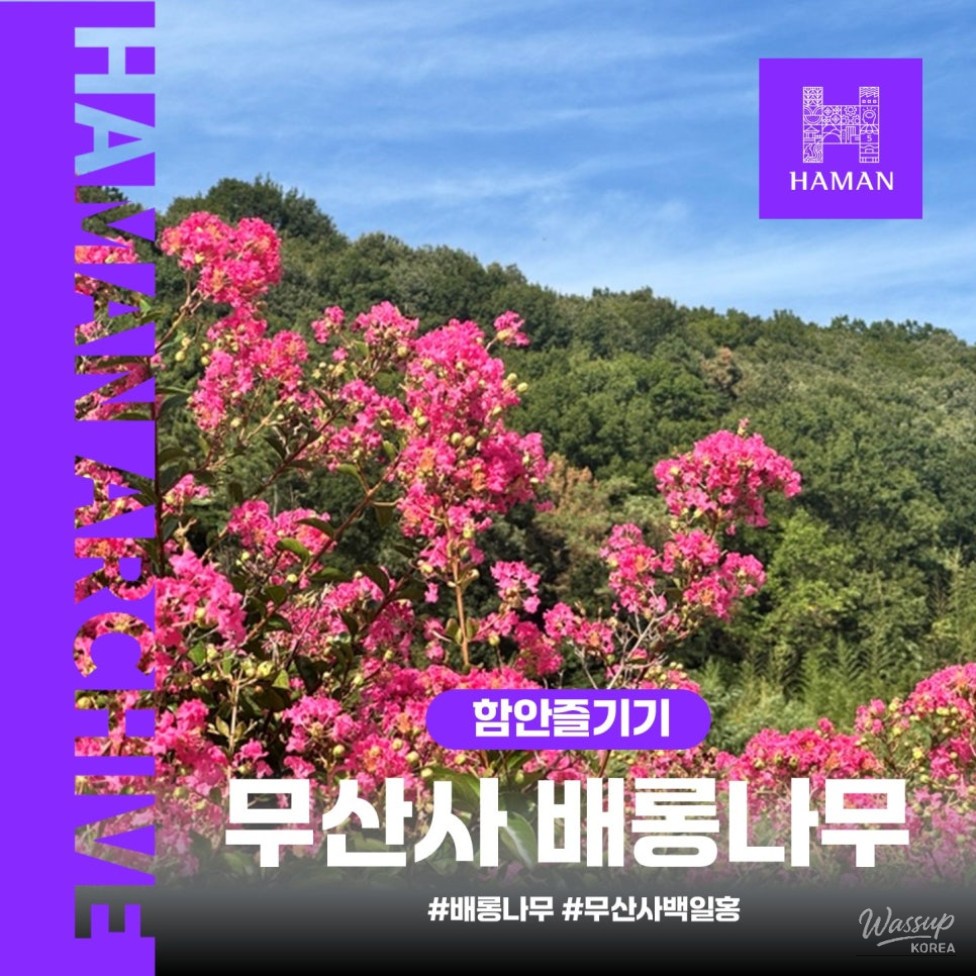
As summer unfolds, the lush green of the mountains and fields deepens, and among this greenery, the Baengnongnamu (Lagerstroemia) stands out vibrantly. In Haman, there are two renowned spots for Baengnongnamu in summer, beloved by photographers and travelers alike: the Goryeodong Historic Site and Musansa Temple.
Avoiding the weekend crowds, I visited Musansa Temple on a relatively quiet weekday. There is a parking area near the entrance, making it convenient to explore.
Musansa Temple is an important site in our history, housing the portrait and relics of the prominent scholar Shin Jae-bung, who established the first Confucian academy in Korea, Baegundong Seowon, during the Joseon Dynasty.
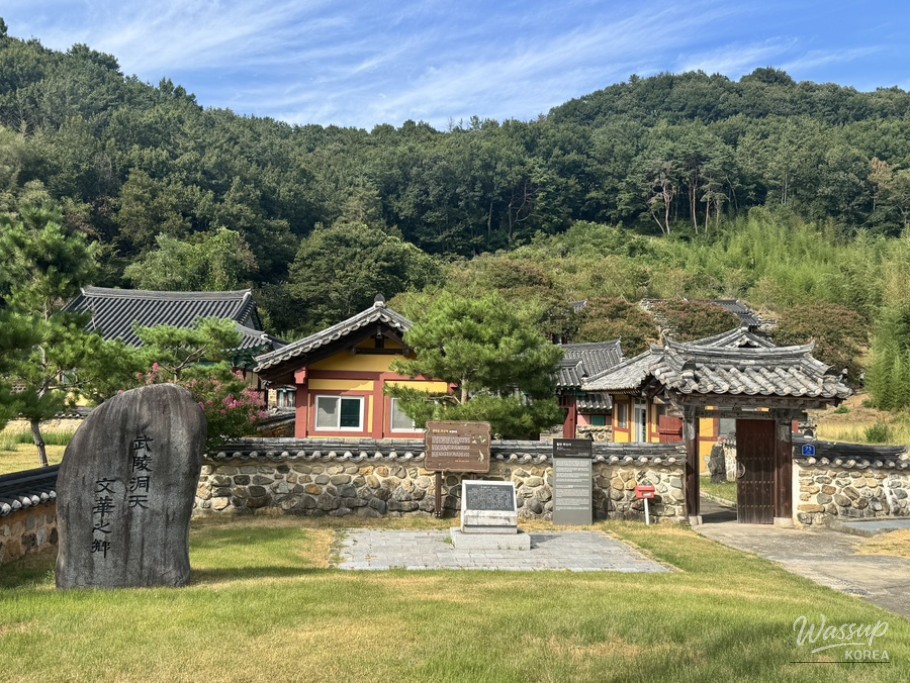
Upon entering, you are greeted by serene traditional Korean buildings, including the Gwangpunggak where Shin Jae-bung's portrait is enshrined, and the Jangpangak that stores wooden printing blocks. The entire area exudes an elegant and antique atmosphere, reflecting the scholarly pursuits of past scholars.
Visiting Musansa Temple on a weekday, I experienced tranquility and quietude. With few visitors, I could fully appreciate the sound of leaves and petals swaying in the wind.
Before embarking on your summer journey in Haman, you may encounter a common question at various destinations:
"Is this flower a Baekilhong (Crepe Myrtle) or Baengnongnamu?"
To clarify, the flowers adorning Musansa Temple and the Goryeodong Historic Site are indeed Baengnongnamu (Lagerstroemia). Baekilhong is a one-year herbaceous plant from the Asteraceae family, growing about 60-90 cm tall, while Baengnongnamu is a tree from the Lythraceae family that can grow up to 8 meters tall.
Let's take a closer look:
🌸 Baengnongnamu (Lagerstroemia)
Commonly referred to as Baekilhong because the flowers bloom for 100 days, it is botanically classified as a tree rather than a herb. It features smooth, attractive stems and clusters of red or pink flowers blooming in summer.
🌼 Baekilhong (Crepe Myrtle)
This flower is commonly found in gardens or along roadsides. It has a structure where a single flower blooms at the end of the stem, showcasing a variety of colors including red, yellow, and orange.
The greatest charm of the Baengnongnamu at Musansa Temple lies in its perfect harmony with the traditional Korean architecture. The heavy tiled roofs, earthen walls, and the rich wood tones of the buildings create a picturesque scene with the vibrant red Baengnongnamu flowers.
As you stroll slowly along the earthen wall path of Musansa, you can spot Baengnongnamu branches peeking over the fence. The combination of the blue summer sky, neat stone walls, and delicate pink flower clusters creates a stunning photo opportunity.
For the best experience, visit on a weekday morning or afternoon to enjoy the unique tranquility of the traditional Korean setting. While capturing beautiful photos is wonderful, please be mindful not to shake or break the branches.
Before summer ends, consider taking a light stroll to Musansa Temple, where the warmth of Shin Jae-bung still lingers. The smooth branches adorned with red flowers will add a touch of elegance and deep memories to your summer days.

Source :https://blog.naver.com/arahaman/224388847903
No comments yet.