Exploring Mujinjeong: A Winter Retreat in Hamyang


14th SNS Reporter Jo Yoon-hee
Mujinjeong (무진정)
- Address: 25, Gwaesan 4-gil, Hamann-myeon, Hamyang-gun, Gyeongnam
- Public Parking Address: 273-16, Hamann-daero, Gaya-eup, Hamyang-gun, Gyeongnam
As the year 2026 begins, time seems to pass swiftly, and I decided to take a moment to visit Mujinjeong in winter. The once vibrant ginkgo trees have returned to their essence, creating a serene winter landscape.
The public parking lot at Mujinjeong is conveniently located right off the road, making it easy to miss. Upon arrival, you'll find a quiet parking area along with a tourist information board. Usually, it’s not crowded, allowing for ample parking space.
From the blooming cherry blossoms in spring to the vibrant summer blooms and the rich autumn foliage, Mujinjeong offers a different face with each season. It was delightful to stroll through this space, which changes with the seasons while the pond remains constant, providing a tranquil presence.
Located about 2.4 km from the Hamyang County Office towards Jindong, Mujinjeong is a small but picturesque spot surrounded by centuries-old trees. It is popular for wedding photography among couples and has become a renowned site for the traditional fireworks festival, Nakwha, held around the fifth day of the lunar month.
Built in 1567 by scholar Jo Sam (조삼) as a place for teaching and relaxation, Mujinjeong was named after his pen name. Historical texts indicate that there were several pavilions named Il Sujeong, I Sujeong, and Sam Sujeong established every five li around Mujinjeong.
While there is no disagreement about Mujinjeong's beauty, there are differing opinions about the locations of Il Sujeong and I Sujeong. I sought out various materials to clarify these points.
Regarding the name I Sujeong, some believe that the term 'su' refers to 'swamp' or 'pond.' However, interestingly, some sources suggest that 'su' can also mean 'bush' or refer to large trees, which fits well considering the ancient trees surrounding Mujinjeong.
As I reflected on Mujinjeong, I found it to be a special place, particularly as a descendant of the Jo family. Jo Sam, a notable figure in the early Joseon period, served as a local governor and later retired to compose poetry and build Mujinjeong, where he often welcomed visitors.
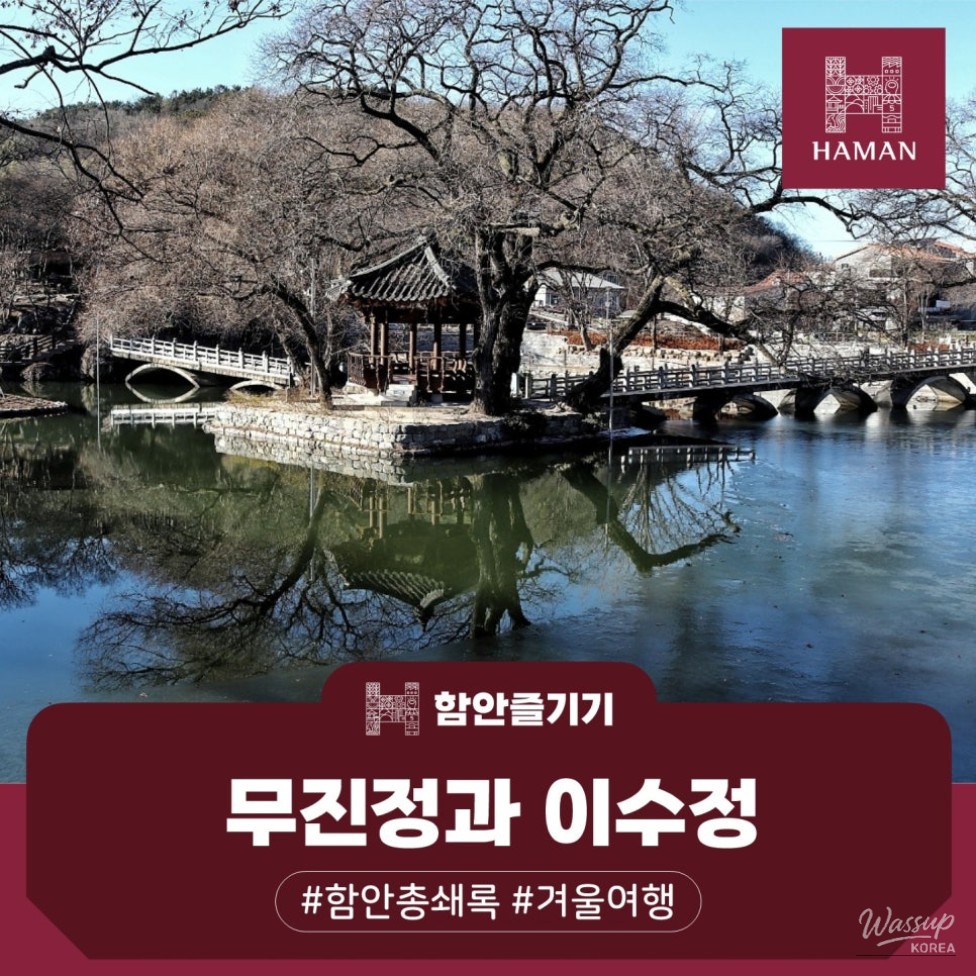
Stepping through the entrance, I was greeted by the wooden pavilion, a charming structure with a thatched roof, surrounded by a serene pond. Even in winter, the place exudes warmth, with sunlight filtering through the windows, creating a cozy atmosphere.
Sitting on the porch of Mujinjeong, I admired the elegant branches of the trees that had become part of the winter scenery. It was a moment of peace, a reminder of the beauty in stillness.
Crossing the stone bridge that connects the islands, I reached Yeongsongru, a pavilion that signifies the welcoming and sending off of guests. This area, once a meeting and parting spot for travelers, now serves as a resting place for visitors.
As the caretaker fed the fish in the pond, the ripples on the water broke the winter silence, offering a lively contrast to the stillness around me. Mujinjeong stands as a testament to the beauty of winter, inviting those who wish to plan their year ahead to take a leisurely stroll here.


Source :https://blog.naver.com/arahaman/224139695720
No comments yet.