A Spring Concert Experience in Ulsan



On a day filled with the breath of spring, I headed to the Hamwol Hall at the Ulsan Jung-gu Cultural Center.
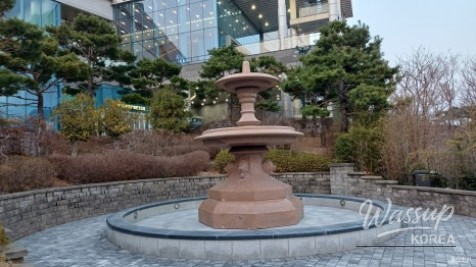
The air was light for no particular reason, and the scent of flowers wafted gently through the courtyard.
This post covers the chamber music festival titled 'When the Azaleas Bloom.'
Experience the fragrance of music that arrived before the season.
The Cultural Center in Jung-gu, located in the Innovation City, serves as a space that enriches the lives of its citizens.
Established to provide diverse cultural experiences through performances, exhibitions, and education, the center opened its doors in 2014.
Each floor radiated a different light. The building comprises a basement level and three above-ground floors.
The underground small performance hall, the first-floor Starry Sky and Sound Hall, the second-floor Hamwol Hall and Moonlight Terrace, and the third-floor restaurant and Sky Garden all contribute to a cityscape that unfolds like another performance.
The surroundings of the building invite one to embrace the beauty of art.
As I entered the lobby with members of the literary and art club, the space felt truly like a temple of art.
The mascot of Jung-gu, the Ulsan Big Baby sculpture, greeted the audience with a friendly smile.
The artworks displayed on the walls silently awakened the senses.
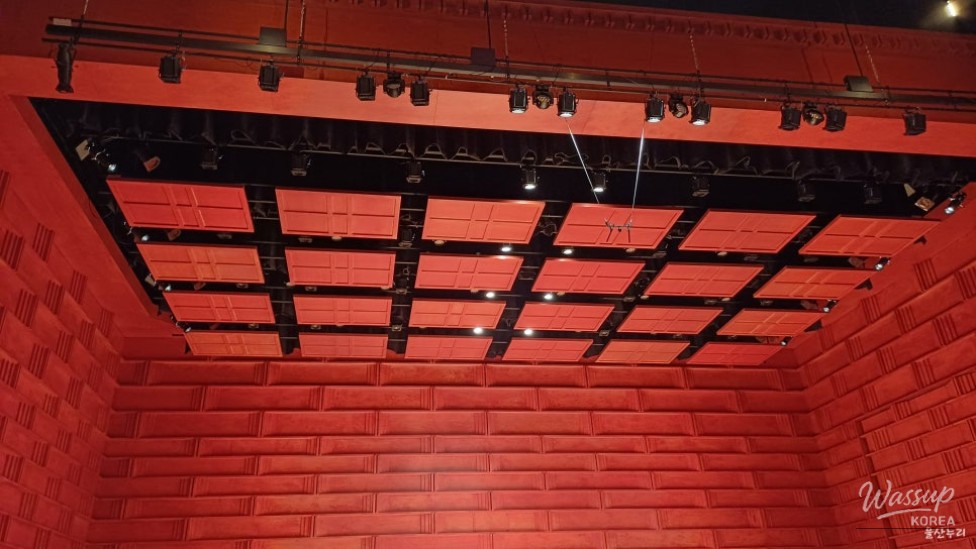
Ascending to the second floor via the stairs, I was greeted by 499 seats arranged in soft curves.
The seating was designed to allow music to flow evenly from the stage, resembling a vessel that captures sound while also serving as another instrument.
The hall was equipped with adjustable sound systems, stage transitions suited for performances, and staggered seating arrangements that provided a clear view of the stage.
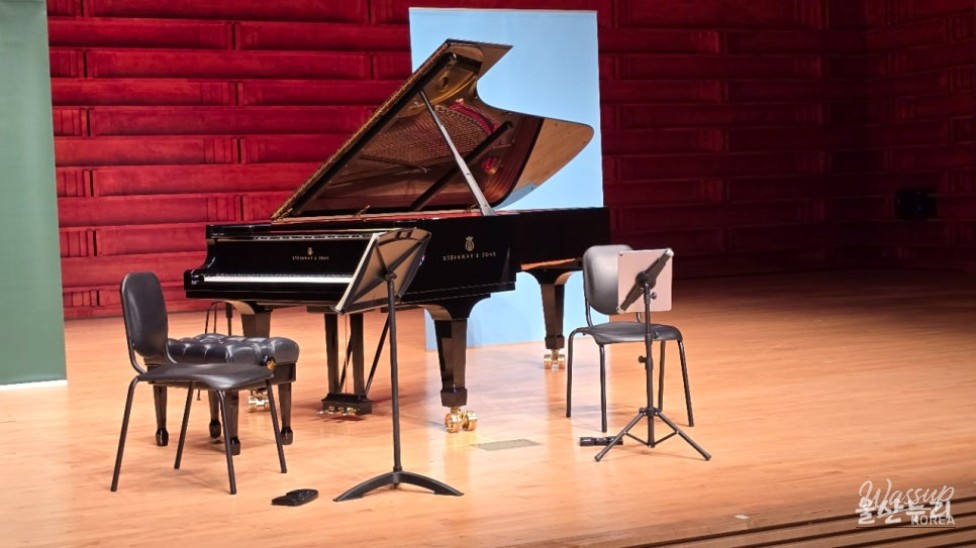
Before the performance began, the venue was already quietly holding its breath.
The stillness was not empty; it was filled with the tension of waiting for the music to resonate.
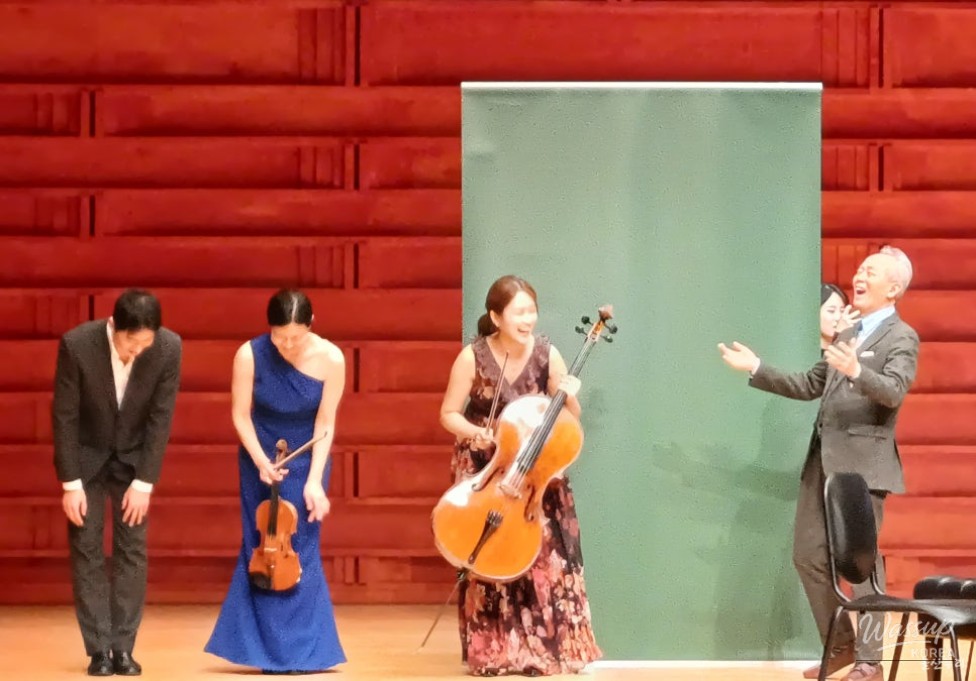
Eventually, an announcement was made, and the world-renowned conductor Geum Nan-sae stepped onto the stage.
His appearance brightened the air in the space like a signal.
With his unique humor and warm voice, he engaged the audience and opened the door to the music.
Classical music, which had seemed unfamiliar and difficult, gradually revealed its texture through his explanations.
The explanations served as a pathway into the essence of the music.
I realized that the act of listening transcended mere auditory experience, becoming a profound journey.
Geum Nan-sae is a pioneering conductor who has paved the way for the popularization of classical music.
He was awarded third place in the Karajan International Conducting Competition and has had a dazzling career abroad with orchestras like the German Kammer Orchestra.
He has conducted various regular and special concerts, including as the principal conductor of the National Symphony Orchestra.
Starting from scratch, he founded the first private orchestra and recorded over 140 performances with an audience of 120,000 within eight years.
In this concert, the interplay of narration and performance created a seamless flow.
The vitality of young performers shone brightly in the space optimized for chamber music.
As Joseph Haydn's 'Gypsy Rondo' began, the lively rhythm shook the audience.
Frédéric Chopin's Mazurka spread lyrical waves like gentle ripples.
Paul Schoenfield's 'Café Music' was a moving performance that blurred the boundaries of classical music.
Between pieces, Geum Nan-sae's commentary served as a guiding thread.
The audience savored the depth of the music, healing their hearts under his guidance.
What impressed me most were the moments when the three instruments connected as one breath.
The intervals between the notes were intricately intentional, and even the flowing silence became part of the music.
The harmony achieved in chamber music, respecting each other's sounds, was extraordinary.
Their performance transcended musical technique, embodying a depth of thought and emotion.
The 'Trio Hermann' was an ensemble of three performers who had walked different paths but came together as one.
Their performance was not merely three instruments placed side by side; it breathed like a single organism.
The melody flowed uninterrupted, embracing each other's sounds.
The name 'Trio Hermann' is derived from the Hermann statue, a symbolic architecture in Detmold, Germany.
All members hail from Busan and studied in Germany through different paths, gaining performance experience.
They gained recognition by winning awards at the Jeju International Chamber Music Competition.
Pianist Jo Min-hyun, violinist Lim Jeong-eun, and cellist Ahn Soo-bin completed a single sentence in their own languages.
Lim Jeong-eun's violin soared with agile and graceful melodies, cutting through the space.
Ahn Soo-bin's cello enveloped those melodies with deep, resonant tones.
Jo Min-hyun's piano delicately wove the sounds together like a bridge, achieving balance.
They did not overshadow each other but rather illuminated one another, completing a singular piece of music.
The performance, lasting just over an hour, felt much shorter.
Even after the last note faded, the audience found it hard to return to reality.
Applause for an encore echoed for a long time, and when they returned to the stage, they left a brief but deep aftertaste.
Though the music had ended, its resonance lingered somewhere in the air.
As I left the concert hall, I felt the power of music.
Music is an arrangement of sounds yet an invisible touch that caresses the fabric of the heart.
In that moment, I paused to reflect on my hurried inner self.
Music took us to another world and then brought us back to our place.
Certainly, the place we returned to was not the same as before.
Chamber music was fantastic, intricate, and profoundly moving.
Three different instruments came together to tell a story and concluded it beautifully.
It reminded us that our lives, too, are completed by the harmony of countless notes.
Like the title 'When the Azaleas Bloom,' the melody quietly settled in a corner of my heart.
It remained as a flower that would not wither for a long time.








Source :https://blog.naver.com/ulsan_nuri/224276203261
No comments yet.