Inside the Unique Culinary World of Seonjae Nun


Interest in Seonjae Nun has surged following her appearance on Netflix’s Black and White Chef 2, where her vegetarian temple cuisine left a powerful impression.
Through simple dishes crafted with deep intention, she demonstrated how restraint and philosophy can rival the most elaborate fine dining.
This article explores Seonjae Nun’s culinary journey, her temple location, the food seen on the show, and her surprising family connection.
Why Seonjae Nun Captivated Viewers Worldwide
Seonjae Nun is not simply a chef appearing on a popular program.
She is regarded as a living symbol of Korean temple cuisine, carrying decades of practice, philosophy, and lived experience.
Her presence on Black and White Chef 2 felt quiet yet overwhelming, standing shoulder to shoulder with world-class fine dining chefs.
A Life Changed by Temple Food
In her youth, Seonjae Nun was diagnosed with cirrhosis.
Facing a turning point in her life, she adopted temple food as a way of healing, both physically and spiritually.
This choice not only restored her health but became the foundation for her lifelong study of food and mindfulness.
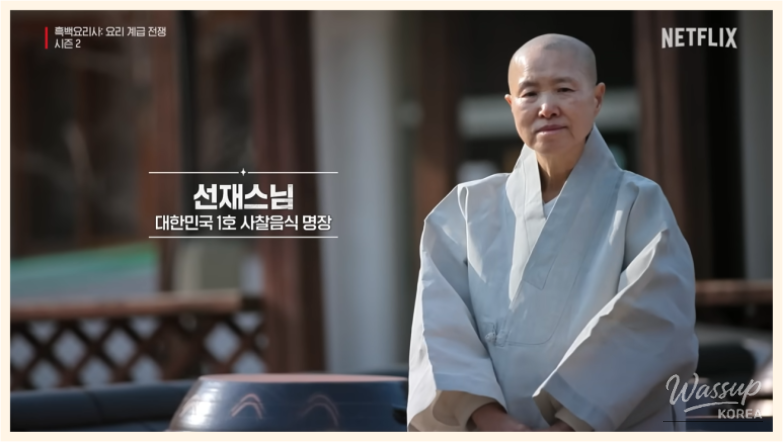
A Pioneer of Korean Temple Cuisine
Her achievements speak volumes.
She became South Korea’s first officially recognized master of temple cuisine in 2016.
She later served as chairperson of the Korean Food Promotion Institute and has lectured internationally on food philosophy and sustainability.
The Power of Simplicity on Black and White Chef 2
On the show, many chefs presented intricate multi-course menus filled with advanced techniques.
Seonjae Nun, however, quietly placed a bowl of carrot noodles and carrot pancakes on the table.
The contrast was striking.
When Restraint Becomes Mastery
Her dishes contained no meat, no garlic, no artificial seasoning.
Yet the depth of flavor surprised both judges and viewers, proving that true culinary skill is revealed through clarity rather than excess.
This moment placed her among the top seven chefs, not through spectacle, but through essence.
Where to Experience Seonjae Nun’s Food
Many viewers naturally wonder where her food can be tasted.
Seonjae Nun is primarily based at the Seonjae Temple Food Cultural Research Institute in Yongin, Gyeonggi Province.
This is not a commercial restaurant.
Not a Restaurant, but a Place of Learning
The institute opens only during specific educational programs, lectures, or special events.
Visitors must check schedules in advance, as it is a space dedicated to research and transmission rather than casual dining.
A Surprising Family Connection
An unexpected detail further fueled public interest.
Seonjae Nun is the great-aunt of Lee Chang-seob from the boy group BTOB.
He personally confirmed this relationship during a fan signing event, delighting fans and adding warmth to her story.
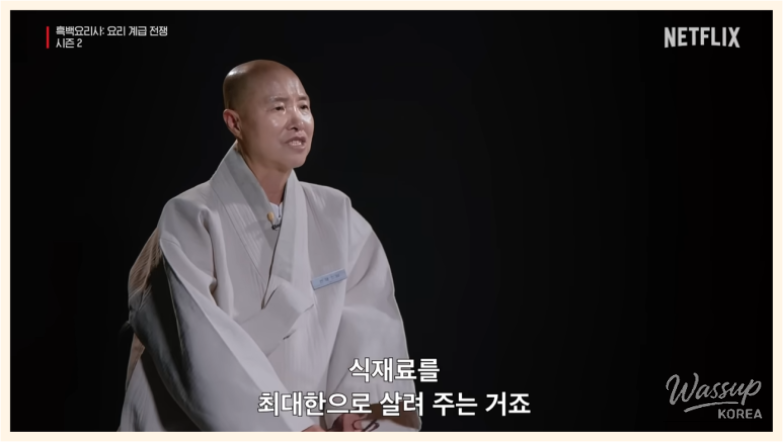
Why Her Food Tastes So Profound
Seonjae Nun’s cooking may appear simple, but every element carries intention.
The soy sauce she uses is aged for ten years, developed as a premium fermentation product.
Vegetables are carefully sourced from top-tier markets, ensuring purity and balance.
Flavor Rooted in Time and Care
Her food is not designed to impress instantly.
Instead, it leaves a clear, grounded, and deeply lingering impression.
Many believe this is the true reason her dishes feel more powerful than complex fine dining creations.
The Quiet Strength of True Culinary Talent
Seonjae Nun reminds us that cooking is not about decoration or trend.
It is about understanding ingredients, respecting time, and preparing food with sincerity.
Even in silence, her cuisine speaks louder than words.
For many viewers, Black and White Chef 2 was not just a competition, but an introduction to a deeper way of thinking about food.
Want to reserve this place?
Use WassupKorea’s reservation service
to book your preferred time easily.
Ask the AI below. 👇
No comments yet.