Find Peace in the Mountains: A Quiet Temple Retreat at Songhaksa
전북특별자치도 완주군 구이면 원기리 955 116-12 구이면 원기리 954-3
송학사



Introduction to Songhaksa Temple
A place where tranquility resides, Songhaksa Temple in Guimyeon, Wanju
Songhaksa Temple, located on the eastern ridge of Moaksan Mountain in Guimyeon, Wanju, is affiliated with the Daehan Buddhist Taego Order and has long been known as a place for prayer and wish fulfillment.
Students, businesspeople, and those seeking peace of mind often visit this temple for spiritual cultivation and prayer.
The temple also operates a memorial hall where offerings can be made in honor of the deceased.
The Origin and Leadership of the Temple
The name "Songhaksa" was inspired by a dream of its founder, Master Myeongsan, who dreamt of five cranes ascending to the heavens from a pine tree, leading to the temple's auspicious name.
Currently, the head monk, Master Muryang, has been leading ceremonies here since 2009 after training at Seonamsa Temple.
Entering the Temple Grounds
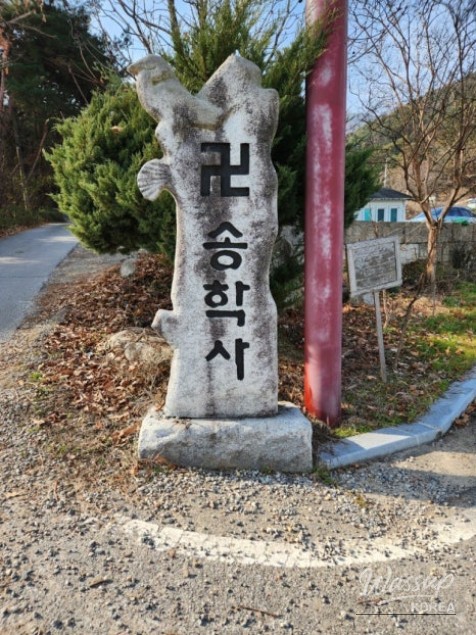
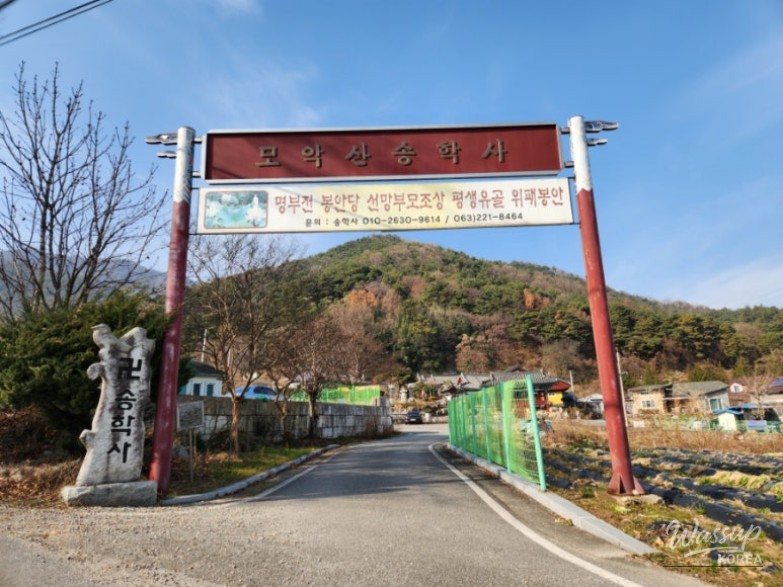
Visitors are greeted by a stone monument and an entrance gate inscribed with "Songhaksa". A spacious parking lot ensures convenience for guests.
Upon crossing a bridge, a serene view of the temple nestled below the gentle slopes of the mountain unfolds, with a large bell housed in a bell pavilion on the right and an informational signboard on the left.
The left side features a stone monument supported by a lotus pedestal, while the right side displays another monument with a dragon as its base.
The temple entrance showcases a majestic pine tree, symbolizing strength, alongside the charming view of Songhaksa.
Main Hall and Sacred Spaces
In front of the main hall, large stone lanterns illuminate the courtyard at night, providing light for worshippers.
Inside the main hall, larger than typical halls in other temples, are statues of the Pure Dharma Body Vairocana Buddha, the Complete Body Nohsana Buddha, and the Shakyamuni Buddha.
Wall paintings depict scenes of a boy playing a flute while riding a cow, watched by a wise figure in the distance.
Myeongbujeon and Memorial Practices
In front of the Myeongbujeon hall, a three-story stone pagoda stands out, with all doors painted in a striking gold color.
Inside Myeongbujeon, beneath a splendid golden enclosure, are seated the Bodhisattva Ksitigarbha and his attendants, dedicated to memorial services for the deceased.
The murals in Myeongbujeon, adorned in golden robes, radiate a warm glow, bringing peace to visitors.
Upper Grounds and Symbolic Elements
Ascending the stairs leads to the Eoseonggak, which appears to serve a role similar to that of a mountain spirit shrine, featuring a large tiger mural that seems to guard the temple.
A large stone Buddha is supported by a lotus pedestal in the front yard, alongside a small lotus pond, which, although bare now, blooms beautifully in summer.
Quiet Details and Resting Spaces
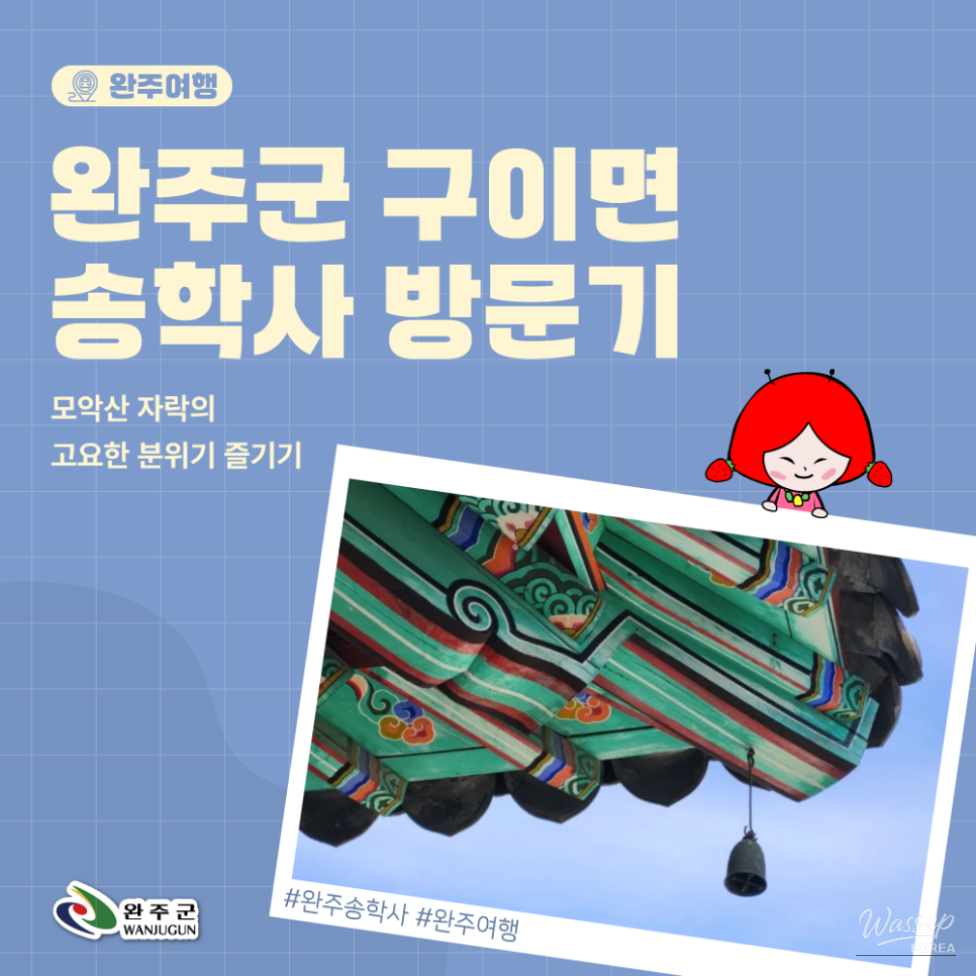
The temple office features wind chimes at its eaves, creating a serene sound that resonates throughout the temple grounds when the wind blows.
Lastly, the beautiful Eungjeonggak pavilion offers a peaceful resting spot for visitors, surrounded by large hibiscus trees.
A Place for Reflection and Rest
Songhaksa Temple, nestled in the tranquility of Moaksan Mountain, provides a calming atmosphere, making it a perfect place for prayer, meditation, and a break from daily life.
It is highly recommended for those seeking a serene escape.
No comments yet.