The Transformation of Obong Reservoir into an Ecological Retreat
- Original source
- blog.naver.com



The Obong Reservoir in Sinpyeong-myeon, Dangjin-si, is finally transforming into an ecological retreat.
In mid-October, a groundbreaking ceremony for the installation of natural environment conservation facilities took place.
Excited by this long-awaited news, I rushed to enjoy the final scenery.
Obong Reservoir, an artificial reservoir, is located in Sang-o-ri, Sinpyeong-myeon.
Completed in 1922, it has long supplied agricultural water to the Sinpyeong area and attracted winter migratory birds like swans, geese, and mallards.
However, in recent years, the lotus flower beds have overgrown, leading to a decrease in the diversity of aquatic plants.
During my visit, I noticed that the area was mostly covered with dry lotus stems, with only reeds extending beneath the embankment.
By 2028, Obong Reservoir is set to become a true ecological retreat.
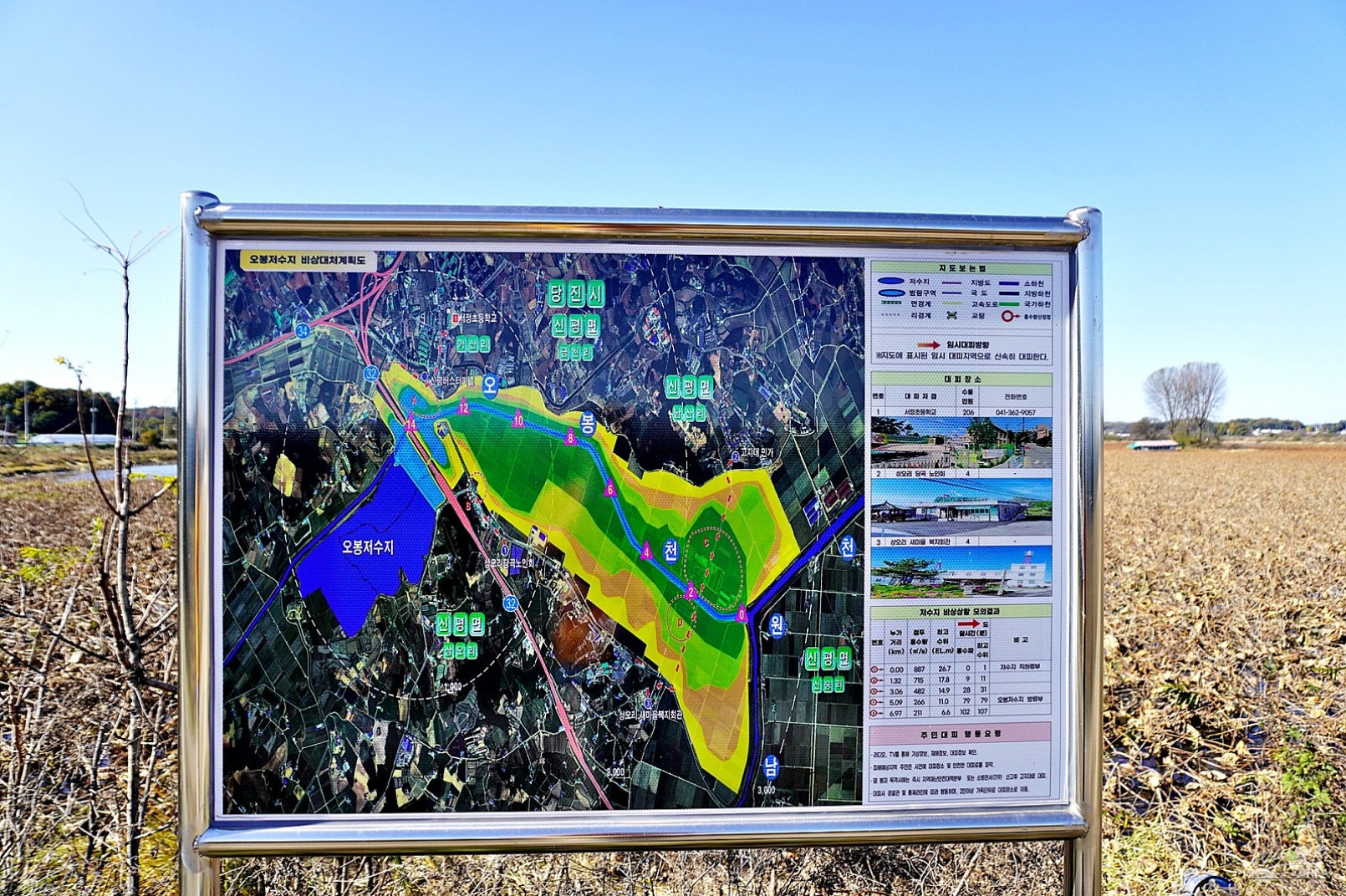
Conveniently located near the Dangjin IC on the West Coast Expressway, it is bordered by a national road that stretches across agricultural fields.
The reservoir runs alongside Obongcheon, with the nearby apple village of Sinpyeong-myeon.
With this backdrop, the restoration of the ecosystem, which once hosted winter migratory birds and diverse aquatic plants, is anticipated.
At the entrance of the reservoir, a dirt path separates the reservoir from the fields.
After the autumn harvest, only the long winter silage remains in the fields.
The national road is bustling with speeding cars and visible apartment complexes across the way.
Obong Reservoir spans 223,000 pyeong, covering areas in Sang-o-ri, Cheonggeum-ri in Songak-eup, and Bonggyeo-ri.
As I ventured beyond the road into the village, I discovered the water's surface revealed by the cleared lotus stems and signs of the conservation facility project.
I began to appreciate this final view.
Many birds were visible on the reservoir, which had thick lotus stems cleared.
While I couldn't confirm whether they were winter visitors or year-round residents, the sight of them congregating in the water was heartwarming.
A waterway connecting the village to the reservoir was visible, with the surrounding land compacted.
A container, presumably a resting area, was also nearby.
It seemed that construction had just been completed the day before.
However, the construction site was quiet during the weekend.
Obong Reservoir is widely spread along the road, the village, and Obongcheon.
Except for the embankment adjacent to the farmland, accessibility is limited.
From within the village, the reservoir appears as a distant landscape, gradually becoming closer as I approach Obongcheon.
In between lies the apple village of Sinpyeong.
As November approaches, the apple orchards are still laden with fruit, suggesting a late harvest.
The sight of ripening apples and golden fields alongside Obong Reservoir will surely be spectacular.
In 2021, Obong Reservoir was selected as a site for the installation of natural environment conservation facilities in Chungcheongnam-do.
Since then, feasibility studies, planning, interim reports, and gathering local residents' opinions have been conducted, with the groundbreaking ceremony finally held in October 2026.
The project aims for completion by 2028.
By then, the landscape of the village, with the expansive Obong Reservoir, Obongcheon, and agricultural lands, is expected to change significantly.
The ecological park will feature walking paths, resting areas, parking lots, and an ecological playground, along with a central island, pedestrian bridge observation deck, and nature trails at Obong Reservoir.
Restoring the ecosystem, which hosted diverse aquatic plants and winter migratory birds, is a top priority.
Accessibility to Obong Reservoir will also improve.
In the fall of 2026, the transformation of Obongcheon, which runs through Sinpyeong, and the rural village will begin.
As we leave behind the current view filled with lotus stems, I look forward to the new transformation of Obong Reservoir, which will embrace ecological culture, natural scenery, and functions for healing and leisure.


Source :https://blog.naver.com/dangjin2030/224483103277
More from Travel





No comments yet.