Discovering the Hidden Charms of Okcheon, South Korea: Gungchonjae Observatory and Sangchunjeong Pavilion


As the autumn season deepens, many people are taking trips. Today, I'd like to introduce two charming yet relatively quiet spots in Okcheon, North Chungcheong Province.
Cheongseong-myeon, home to Gungchonjae Observatory and Sangchunjeong Pavilion, is the largest township in Okcheon-gun according to its official website.
Gungchonjae Observatory
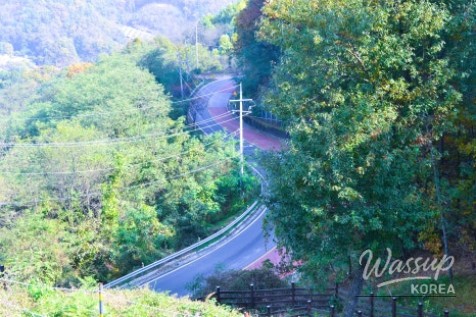
Located at 43-13, Gungchon-ri, Cheongseong-myeon, Okcheon-gun, Chungcheongbuk-do, Gungchonjae Observatory sits on a hillside at an altitude of 230 meters. Its roadside location makes it easily accessible for drivers, and it features a small parking area and restroom.
Completed recently in 2021, Gungchonjae Observatory may not be widely known, but it's said to be famous for its beautiful views of the Bocheongcheon Stream, the Sanggye Deul fields, and the misty scenery in spring and autumn.
The observatory is accessible via a pedestrian overpass that crosses the road, reachable within a 10-minute walk.
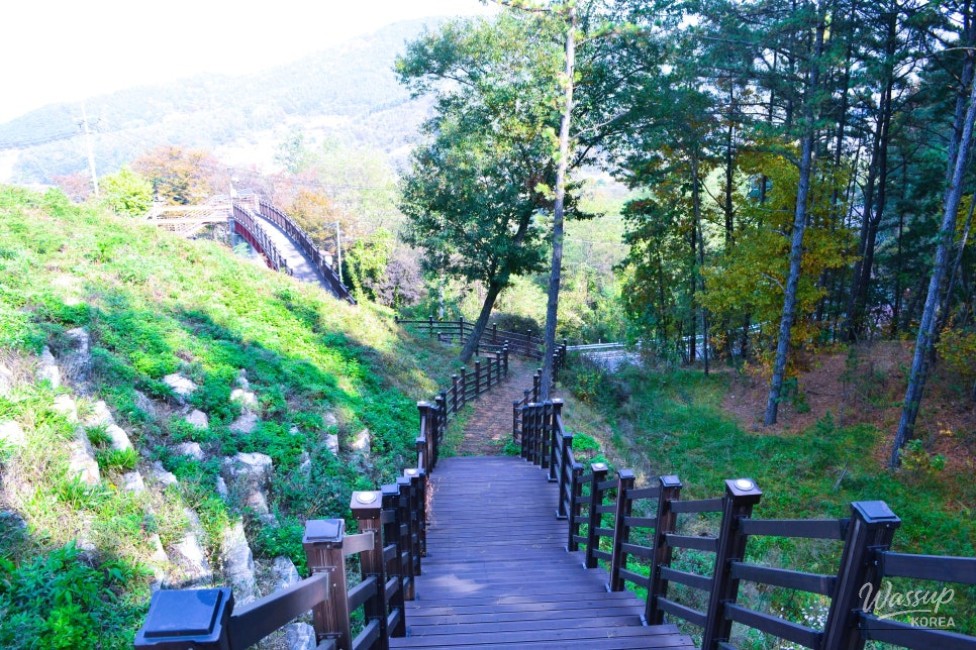
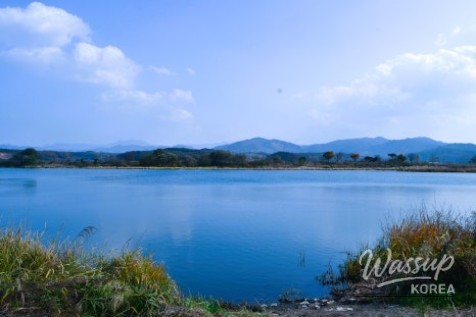
The scenery from the deck is captivating. I visited in early November, so I imagine it's even more stunning now.
The deck at the starting point, as seen from the last step.
According to the information provided, the observatory offers views of the mountain ranges of Samsungsan (576 meters), Paleumsan (771 meters), and Baekhwasan (933 meters). Visitors can also witness the misty landscape in the morning and the stars in the night sky. Even during my daytime visit, the view was magnificent.
The heart-shaped swing, with its spacious and safe seating, allowed me to relax and take in the panoramic views of the beautiful mountains.
(Note: The telescope and bow mentioned in the information guide were missing, reportedly damaged and stolen shortly after installation. However, the bow has been re-erected near the observatory's parking lot.)
The streetlights at the observatory, with their combination of insect and plant motifs, are also interesting to observe.
Generally, observatories are located at high altitudes, making the climb challenging in the summer heat. However, this observatory is situated on a low hillside, making it an easy ascent.
The bow sculpture, re-installed in the parking lot after being damaged.
This bow sculpture, which would have been even better located at the observatory itself, seems to be a symbol of this place.
The different sizes and heights suggest that it was designed for both children and adults to pose with.
The name Gungchonjae seems to originate from the name of the village, Gungchon (弓村), which means "bow village." The old name of this village was "Hwalgol," named after the mountain behind the village that resembles a bow.
The parking lot features a small pavilion offering views of the mountains, and it is also a stop on the Okcheon Hyangsu 200-ri bicycle path.
(The certification stamp was well-maintained.)
At approximately 79 kilometers, the 200-ri path is not too challenging for cyclists and can be enjoyed as a day trip. Cyclists can also visit attractions like this observatory along the way.
Many famous observatories in various regions offer the charm of connecting mountains, rivers, fields, seas, and villages into a single landscape. While the scenery from Gungchonjae Observatory may not be a world-renowned vista, it provides a glimpse into the unique characteristics of the region.
Next, I will introduce Sangchunjeong Pavilion, a popular spot for photography, located near Gungchonjae (approximately 3.4 kilometers).
Sangchunjeong Pavilion
Located at 1115-39, Sanggye-ri, Cheongseong-myeon, Okcheon-gun, Chungcheongbuk-do, Sangchunjeong Pavilion stands proudly on Dokseon, a low mountain, along the Bocheongcheon Stream, which originates from Mt. Songni and flows through the easternmost villages of Okcheon, Cheongsan and Cheongseong-myeon, before joining the Geum River.
According to the Okcheon-gun tourist information, Sangchunjeong (常春亭) is a pavilion whose name means "always like spring," referring to the surrounding scenery. It was built in the 1970s.
The low mountain (20 meters) on which the pavilion stands, Dokseon, is said to have been part of Mt. Songni but was carried away by a flood, according to legend.
It was difficult to find the exact location of the famous Sangchunjeong using the address found online.
Also, I couldn't reach the pavilion because I would have had to cross a weir. (According to a local I met nearby, you need to cross when the water is low.)
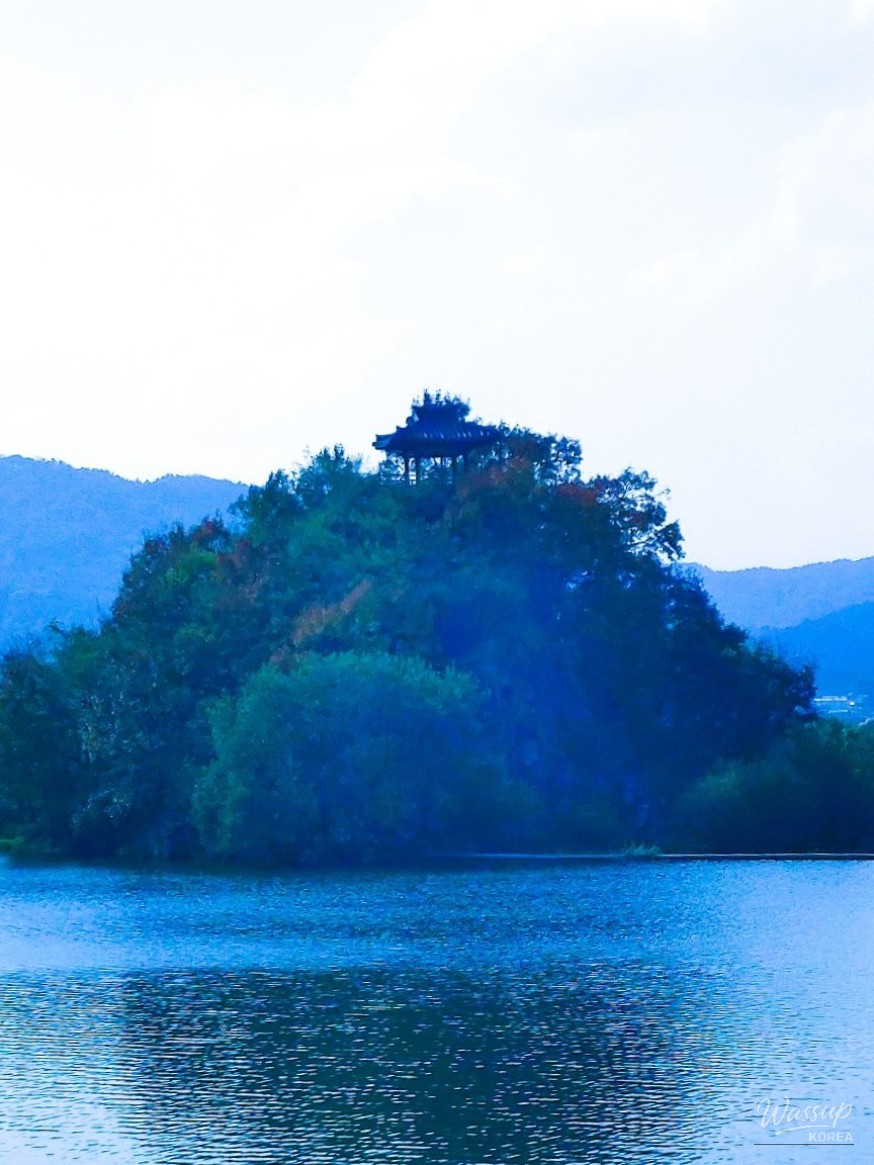
Sangchunjeong and the weir.
The Dokseon and Sangchunjeong, combined with the Milky Way in the night sky, are popular among photographers. However, it was disappointing that there was no parking space, so caution is needed.
There are several photo spots for photographers. Many people seem to visit 67-15, Jangwi-ri, Cheongsan-myeon, Okcheon-gun, Chungcheongbuk-do, to see the Milky Way.
This point is also connected to stairs leading down to the Bogwangcheon Stream and a bicycle path.
I also saw people fishing in the Bogwangcheon Stream, which was overgrown with reeds.
Dokseon and Sangchunjeong stand alone and serenely in the Bogwangcheon Stream.
It's called Sangchunjeong, meaning "always like spring," but autumn at Sangchunjeong is also beautiful.
I wonder what the Milky Way would look like from here at night.
Sangchunjeong during the day has a special charm depending on the time and viewing location.
Sangchunjeong, as seen while walking along the deck bicycle path, also offers a wonderful view. (There were some sections of the bicycle path that were restricted.)
Dokseon and Sangchunjeong reflected in the water.
Gungchonjae and Sangchunjeong are filled with the atmosphere of autumn.
Escape to the beautiful scenery offered by Okcheon, North Chungcheong Province, as autumn deepens.









Source :https://blog.naver.com/cbkb21/224083118087
No comments yet.