Discover the Unique Mokgulam Temple in Jecheon's Bakdaljae, South Korea


In Bakdaljae, Jecheon, Chungbuk, there's a special temple called Mokgulam.
The monk, Seonggak, personally carved wood to create various artworks.
From small pieces to grand sculptures, the diverse exhibits attract many visitors.
Admission is free.
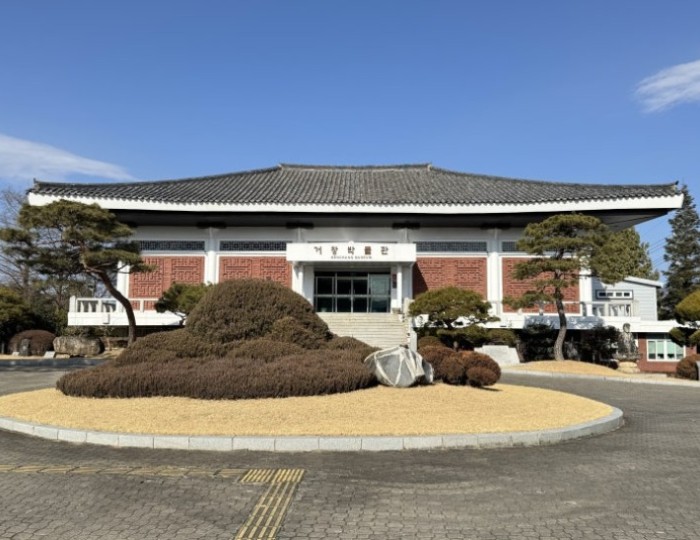
Upon arriving at Mokgulam, you'll find Cheonnyeon Mokchal, a surprisingly modern building.
There's ample parking in front and alongside the temple, so you likely won't have to worry about parking.
Visiting hours are set, and they vary depending on the season (summer and winter), so please keep that in mind when you visit.
First is Mokgulam itself.
It measures 8m in circumference and approximately 6.5m in height, and its creation took about 3 years and 2 months.
It is said that a withered tree was brought from Chungju, a cave was carved into the wood, and Amitabha Buddha was sculpted inside.
Inspired by the sad love story of Bakdal and Geumbong, associated with Bakdaljae,
the artwork expresses the wish for their souls to continue for a thousand years with the power of Buddha.
At the top of Mokgulam, there's a lotus flower made by carving branches.
It is said to represent the wish for the souls of Bakdal and Geumbong to reach Nirvana, like a lotus flower blooming beautifully in the mud.
Photography inside is prohibited, so I didn't take pictures of the Amitabha Buddha sculpted inside.
Inside, there is a gold-plated Amitabha Buddha.
To carve Amitabha Buddha after hollowing out the inside of a tree and refining the surface... it's truly an amazing work.
You can't see the real thing without going inside the tree, so wait your turn and be sure to go inside.
Next to Mokgulam is the Five Hundred Arhat Hall.
This work can be appreciated from the outside.
The feeling is very different when viewed up close compared to from a distance.
If you look closely, you can see many faces.
It is said that five hundred Arhats and three Buddhas (past, present, and future) are carved into a thousand-year-old Zelkova tree.
Looking up the meaning of the Five Hundred Arhats, it says, 'Five hundred Arhats who gathered to compile the teachings left by Sakyamuni.'
It's hard to imagine how much devotion went into carving each one of these into the wood.
In front of the building, there are also sculptures of the twelve zodiac animals displayed in a row.
I don't like snakes, but this snake sculpture is cool.
On the first floor, there is a wood carving calligraphy experience exhibition hall.
The second floor can be accessed by stairs, and it really feels like an exhibition hall, so you can look around more comfortably.
Don't miss the dragon holding a Yeouiju (a wish-fulfilling orb) in front of the exhibition hall.
I personally liked this dragon sculpture quite a bit.
This is the second-floor exhibition hall where you can see various works.
Instead of just glancing around and passing by, it's prettier if you take a closer look at the works that blend in with the wood grain.
Most of the works do not have names written on them separately.
There is a fortune toad, and although not certain, there are pheasants and mandarin ducks, etc.
And there is also a wooden mallet that the monk used when making the artwork.
One Hundred and Eight Agonies means that there are 108 kinds of agonies that sentient beings have, which virtually means all agonies.
The monk expressed the one hundred and eight agonies in this way.
The location of Jecheon Mokgulam is right near Bakdaljae Sculpture Park and close to Resom Forest,
so I recommend stopping by if you have the chance.









Source :https://blog.naver.com/cbkb21/224087491937
No comments yet.