Bongseosa Temple: A Serene Retreat in Chungcheongnam-do



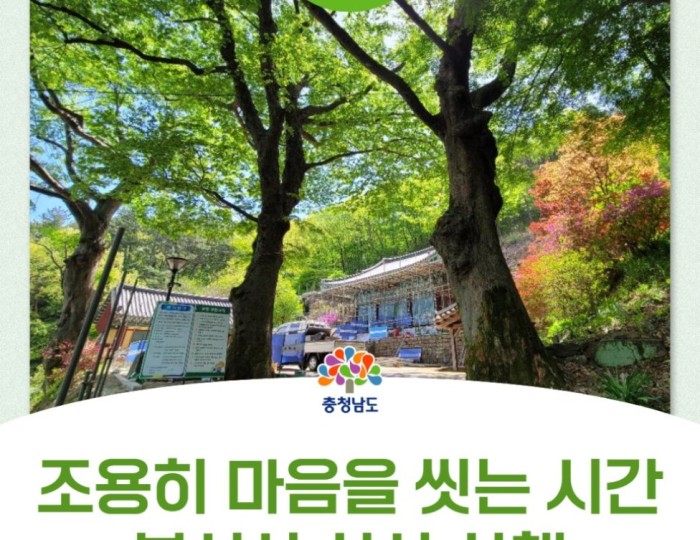
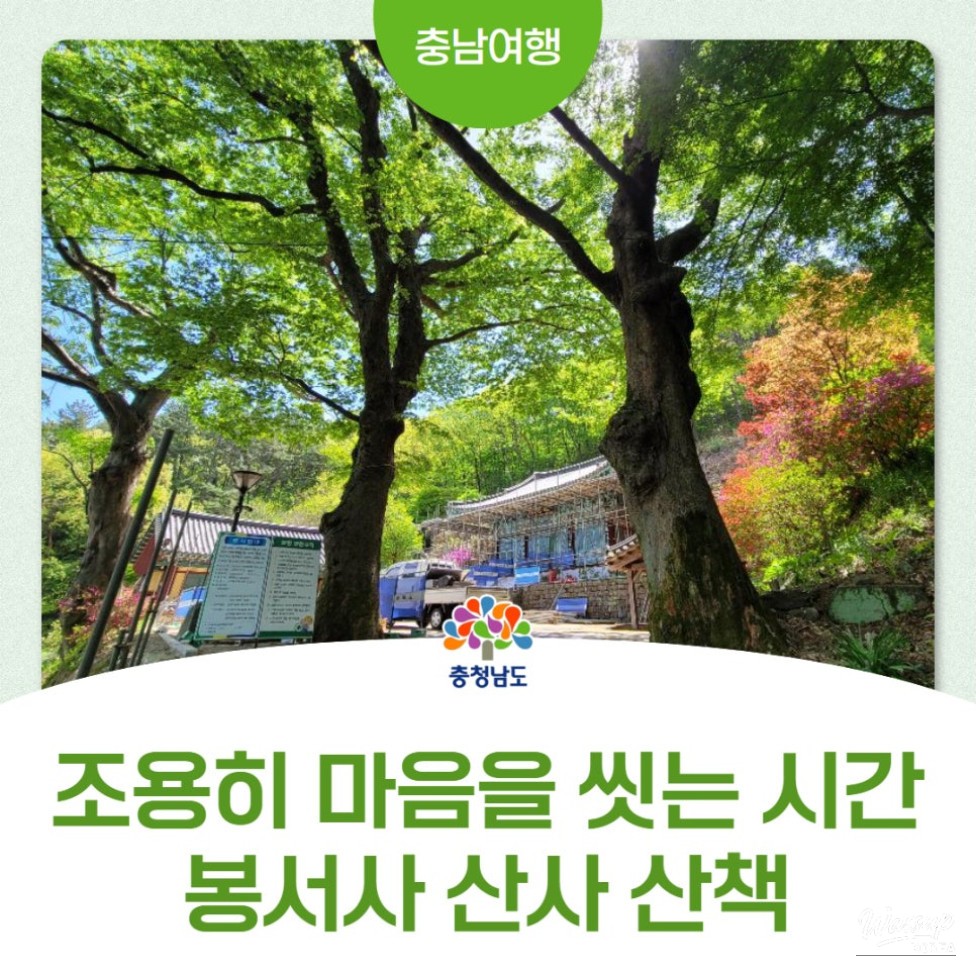
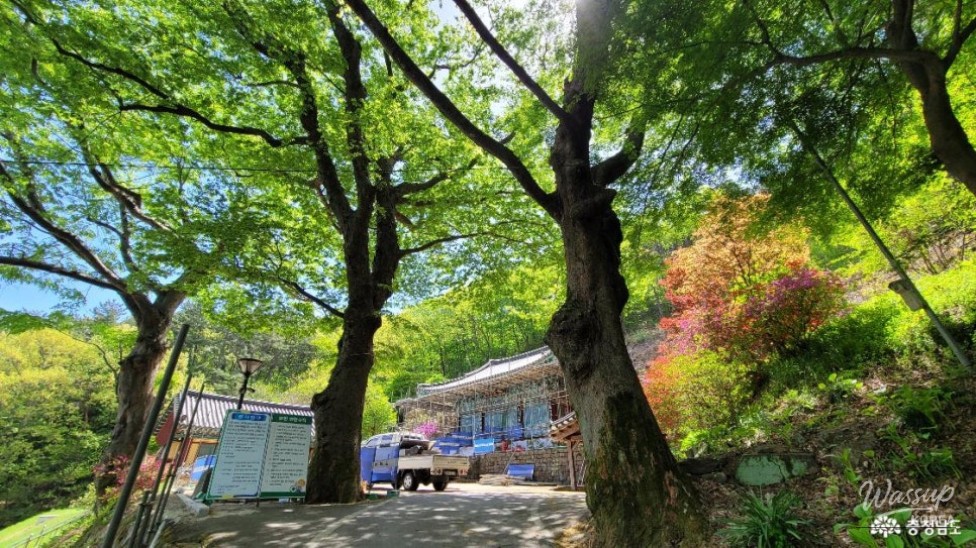
▲ Traditional temple Bongseosa in Seocheon, Chungcheongnam-do. Two ancient trees serve as the gate, guarding the temple.
As the spring sunlight pushes away the morning mist over Geonjisan Mountain, Bongseosa silently embraces the day's breath.
Two five-hundred-year-old zelkova trees stand as a gate, one facing the wind and the other holding silence, maintaining their place for a long time.
The spring breeze that passes through that gate gently caresses the stone steps, scattering spring flower petals leisurely into the courtyard of the Gukrakjeon.
Bongseosa, where the phoenix has made its nest, holds the beauty of stillness over flight.
Even without soaring, there is a deepening heart, and without sound, the waves within the chest calm down.
The tranquil breath of the Simgeomdang and the shaded prayers of the Samsunggak, along with a bell sound carried by the wind, quietly wash my distant yet close heart.
Although large-scale renovations are underway to repair the roof, the tranquility remains when the light of Amitabha lingers at the eaves, revealing that this emptiness is not a void but a warm place that has been preserved for a long time.
Located at 122 Geonjisan-gil, Hansan-myeon, Seocheon-gun, Bongseosa is a traditional temple belonging to the Jogye Order of Korean Buddhism, situated at the foot of Geonjisan Mountain (127m), where the phoenix has made its nest.
It is also famous as a place where independence activist Lee Sang-jae (1850-1927) and poet Sin Eung-sik (1909-1975) from Seocheon stayed and studied.
While the exact date of establishment is unknown, records after 1799 indicate that it has continued its existence since the mid-Joseon period.
Some argue that Bongseosa was built by relocating Yeongmoam, but this claim remains questionable.
According to the Seocheon County History (1989), it records that Bongseosa was established in 1682 by moving Yeongmoam from Gisan-myeon, but previous records list Bongseosa and Yeongmoam as separate temples.
Yeongmoam no longer exists, but it is mentioned in historical texts, indicating that a temple existed in the early 16th century.
Bongseosa's layout centers around the Gukrakjeon, with other structures like Samsunggak and Simgeomdang. Most buildings, except for Samsunggak, have been newly constructed.
Two protected zelkova trees over 500 years old stand at the entrance, spreading their branches like a gate.
Gukrakjeon features a three-bay front and two-bay side with a gabled roof. The calligraphy on the signboard is by the late Joseon scholar Sin Gwang-su (1712-1775).
Inside, the main altar houses Amitabha Buddha, flanked by Avalokiteshvara and Mahasthamaprapta Bodhisattva. Amitabha leads souls to the Pure Land, Avalokiteshvara symbolizes compassion, and Mahasthamaprapta represents salvation.
The statues of these three deities include inscriptions from 1619, providing valuable data for the study of Buddhist statues from that period.
▲ Images of Bongseosa Temple

Source :https://blog.naver.com/sinmunman/224269720895
No comments yet.