A Journey to Magoksa Temple: Serenity in Nature



As the season deepens, I took a moment to set aside my weary daily routine and sought complete rest at Magoksa Temple in Gongju.
Magoksa is a representative temple of Chungcheongnam-do and has been proudly listed as a UNESCO World Heritage site under the name 'Sansa, Korean Mountain Monasteries' since 2018. Upon entering, a large stone monument greets visitors, conveying the deep history of this millennium-old temple.
Founded by the monk Jajang in the 41st year of King Mu's reign (640 AD), Magoksa has maintained its presence for over 1,400 years.
The name 'Magok' comes from the time of Goryeo's King Myeongjong, when the monk Bojo rebuilt the temple. It is said that people gathered to hear his teachings, filling the valleys like rice fields.
This suggests that for a long time, Magoksa has been a sanctuary for countless souls.
As I stepped inside the temple, I was overwhelmed by the spacious and tranquil atmosphere.
Walking from the parking lot through the entrance gate was a soothing experience, the path being flat and cozy.
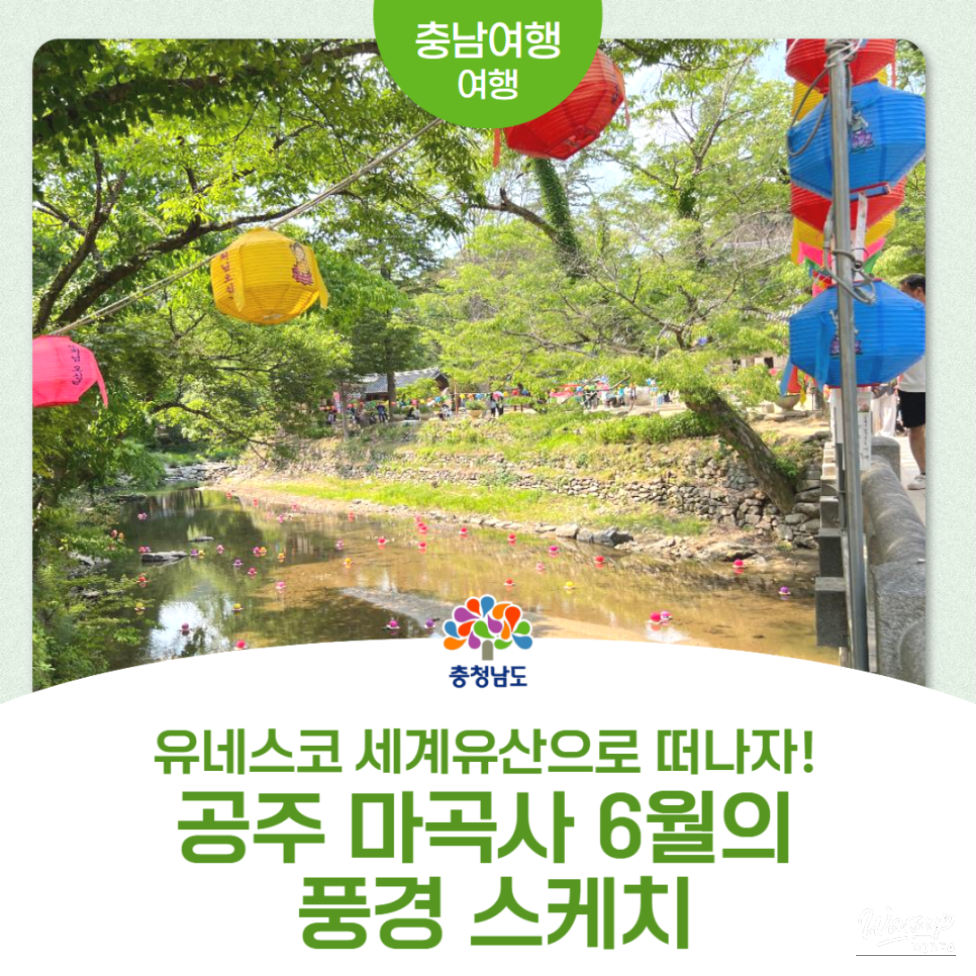
Passing through a vibrant green tunnel, I arrived at 'Geukrak Bridge,' connecting the southern and northern sections of Magoksa.
Colorful lanterns adorned the bridge, creating a picturesque scene against the blue sky and lush trees.
Lotus flowers floated peacefully on the water, enhancing the serene ambiance.
Crossing Geukrak Bridge, the magnificent 'Bongjongru' caught my eye, its elegant curves and colorful decorations harmonizing beautifully with the sky.
Interestingly, the lower level of this impressive bell tower operates as a Buddhist goods and souvenir shop.
Inside, I found charming bracelets, calming incense, and various Buddhist items, making for an enjoyable browsing experience.
After leaving the shop, I encountered 'Gwanumjeon,' which houses the Bodhisattva of Compassion, Avalokiteshvara.
With its long tiled roof, neatly arranged courtyard, and green window frames, it exuded a calm yet profound resonance.
Next to it, a simple stone wall and a small wooden gate revealed the hidden charm of this ancient temple.
The alley leading to Yeongsanjeon was my personal favorite spot in Magoksa.
The weathered wooden pillars and rough earthen walls stretched alongside, and walking on the cozy mat laid out between them felt delightful.
At the center of Magoksa, the majestic treasure 'Daegwangbojeon' captured my attention.
Despite the passage of time, the intricate window designs and splendid architectural style showcased the grandeur of this ancient temple.
Entering with excitement, I found the unique seated statue of Vairocana Buddha facing east beneath the dazzling lanterns.
The exquisite details of the back wall painting and the gentle smile of the Buddha created a truly majestic atmosphere.
It was a wondrous space where one could feel the living history in every corner, with people engaged in prayer.
Next to Daegwangbojeon, I encountered 'Baekryeondang,' a place imbued with the legacy of Kim Gu.
Simply gazing at the clear sky, green mountains, and calm valley waters provided a perfect conclusion to my healing experience in nature.
Magoksa Temple, where a millennium of history and vibrant nature coexist, is a must-visit when you seek true rest and solace amidst a busy life.
I highly recommend it as a place to enjoy genuine relaxation and happy moments in nature.


Source :https://blog.naver.com/sinmunman/224323754322
No comments yet.