A Journey to Guinsa Temple via Bobaljae Pass in Danyang




To get to Guinsa Temple from Danyang-eup, you need to drive along the Namhan River and over Bobaljae Pass.
In autumn, many tourists visit Bobaljae Pass to see the winding road and the maple trees planted along the roadside.
A high observation deck has been built to allow visitors to enjoy the autumn foliage from a higher vantage point. Although the leaves haven't fully changed yet, the peak season is expected to be in early November when the temperature drops further.
A sculpture commemorates the 2004 Danyang International Tourism Academic Conference.
As you descend Bobaljae Pass, you'll find the Guinsa Temple parking lot on the right. You need to park here and enter.
After parking and paying the 3,000 won parking fee, you can take a shuttle bus to the temple. If the bus schedule doesn't suit you, you can walk up.
Walking takes about 15 to 20 minutes, but it's a continuous uphill climb, so taking the bus is recommended.
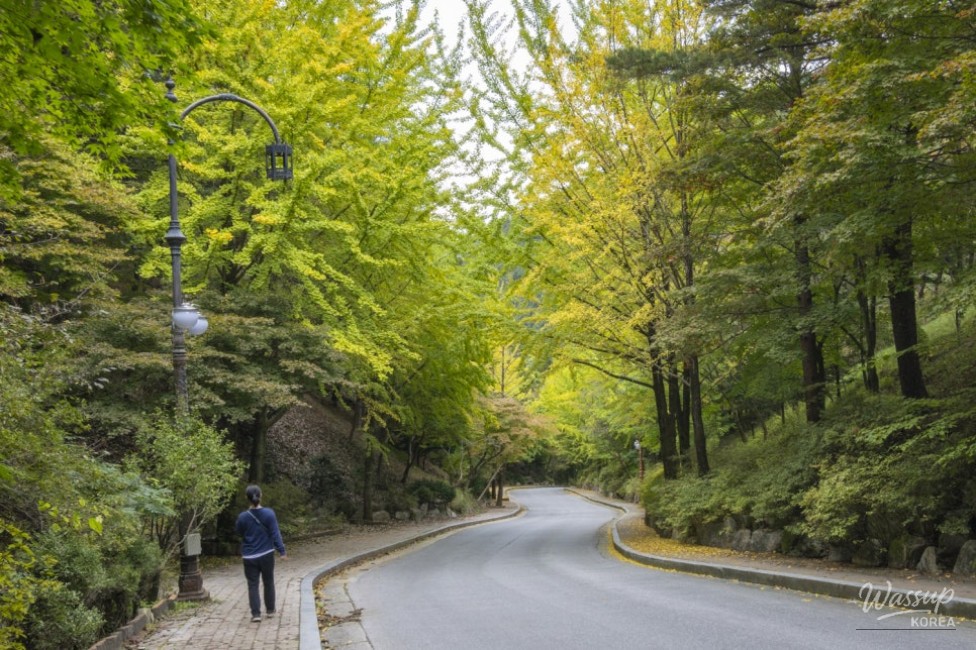
The ginkgo trees lining the path from the entrance are starting to turn yellow.
Guinsa Temple is located in a narrow valley, so walking all the way up can be physically demanding. However, walking slowly and breathing the fresh mountain air can be beneficial for your health.
If you continue past the general parking lot, you'll find the intercity bus stop for Dong Seoul, Danyang, and Jecheon. This indicates the temple's popularity.
A little further up from the intercity bus stop, you'll pass through the Iljumun Gate with a sign that reads "Sobaeksan Guinsa," and you'll encounter various parts of Guinsa Temple along the valley.
Guinsa Temple is the headquarters of the Cheontae Order of Korean Buddhism. It was founded on Dano Day in May 1945 by Sangwol Wongak Daejosa, starting with a small hermitage. It is now a large temple with approximately 50 buildings, including a five-story main hall.
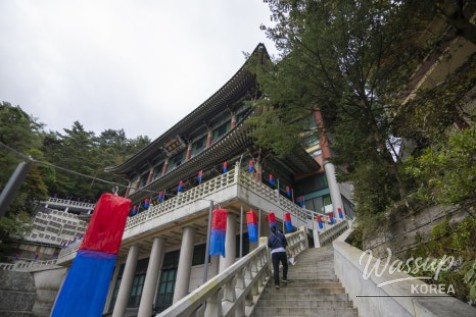
The main buildings of Guinsa Temple include Seolbeopbojeon, the five-story Dharma Hall, as well as Gwaneumjeon, Gwangmyeongjeon, the Cheontae Order's Hall of Past Patriarchs, and Daejosajeon.
Looking from the overpass leading to the five-story Dharma Hall, you can see Daejosajeon at the top in the distance. It seems like there's still a long way to walk.
As you walk, you'll encounter a modern-style building. This is the seven-story Gwangmyeongjeon.
I didn't realize it when I was walking up to Daejosajeon, but when I came down, I saw that there was an elevator next to Daejosajeon Plaza that you could use to go up and down.
It's tiring to walk up the cement path and stairs, but there was an easy way to get up here. I walked up the stairs next to Gwangmyeongjeon and took the elevator down.
I finally arrived at Daejosajeon at the very top.
Daejosajeon was started in 1992 and completed on November 5, 2000, after about nine years of construction. The roof tiles are a unique color, with about 40,000 gold tiles used. The dancheong (traditional Korean decorative coloring on wooden buildings) is known to have been lacquered 12 times and gilded for flame and insect resistance.
Daejosajeon is where the statue of Sangwol Wongak, the reviver of Korean Cheontae Buddhism, is enshrined.
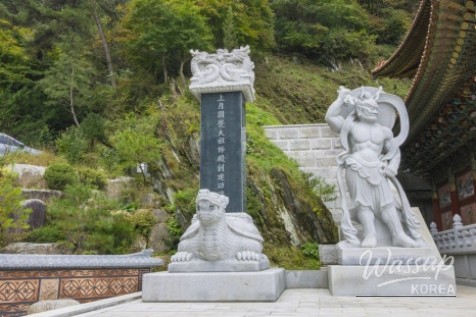
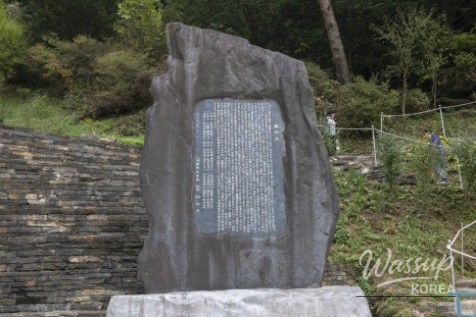
To the left of the Daejosajeon building is the Sangwol Wongak Daejosa Jeon Architectural Achievement Monument and stone statues of the Four Heavenly Kings. To the right is Sangwol Wongak's teaching inscribed on a rock.
There is a large plaza in front of Daejosajeon.
At the end of the plaza is an observation deck where you can see a panoramic view of Guinsa Temple.
This is the view of Guinsa Temple from the observation deck in front of Daejosajeon. It's still mostly green, but it's starting to turn slightly red. The autumn foliage needs a little more time.
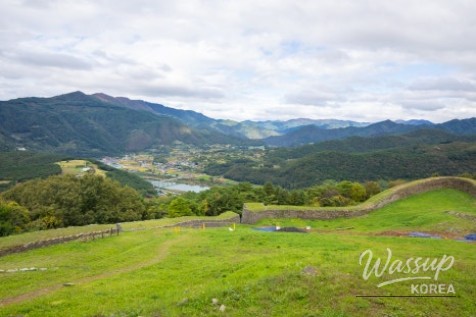
Ondal Tourist Park and Ondal Mountain Fortress are located near Guinsa Temple. At Ondal Tourist Park, you can explore the theme park and Ondal Cave. If you have time, you can climb Ondal Mountain Fortress and take a break while looking at the winding Namhan River and the golden-colored Yeongchun downtown area.
The Danyang Ondal Cultural Festival will be held at Ondal Tourist Park from October 24th to October 26th. If you visit Danyang this weekend, you can feast your eyes and enjoy the festival, making it a rewarding trip.












Source :https://blog.naver.com/cbkb21/224050765346
No comments yet.