YG's History: G-Dragon and BLACKPINK, Shining Again at the Heart of K-Pop Evolution



YG Entertainment has once again rewritten K-pop history.
From Executive Producer Yang Hyun-suk to G-Dragon, BIGBANG, and BLACKPINK—a massive lineup worthy of being called the 'Heart of K-Pop'—all made it onto the 'Golden Disc Powerhouse 40' list, symbolically proving the trend of Korean popular music.
This list wasn't just a simple awards list; it was a record of K-pop's 40-year evolution and the 'YG DNA' at its center.
[1] YG History, G-Dragon and BLACKPINK: Yang Hyun-suk, the Man Who Designed K-Pop's Structure
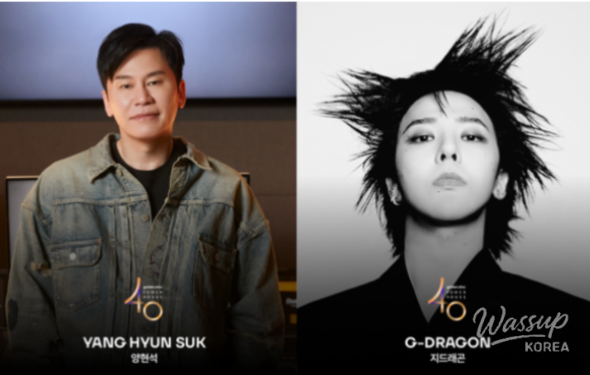
At the beginning of every story is Yang Hyun-suk. Back in the 'Seo Taiji and Boys' era of the 1990s, he was an innovator during a time when the Korean music industry was first understanding the concept of 'performance.' After establishing YG Entertainment, he was regarded as 'the person who combined the music industry with art and systems.' He wasn't just a producer who debuted singers but an architect who created the operating principles of the K-pop industry. As a producer and strategist, he established YG's identity—'a company where philosophy exists before music'—through numerous groups like BIGBANG, 2NE1, WINNER, iKON, and BLACKPINK. 'Experimentation and sincerity' coexisted in all of YG's content. The result of that experimentation is G-Dragon and BLACKPINK, and the YG brand itself.
[2] YG History, G-Dragon and BLACKPINK: BIGBANG's Presence, Sustaining the Brand for 20 Years
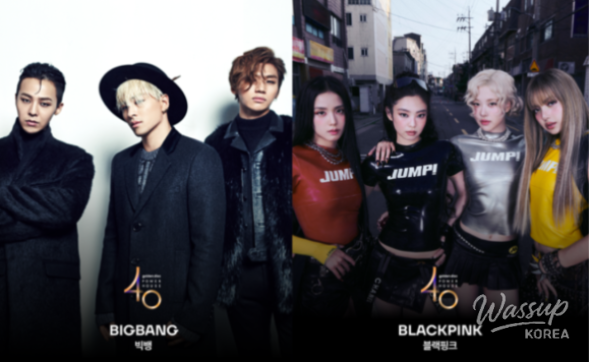
BIGBANG, a group called the 'pillar of K-Pop,' was an entity that created a turning point in the music industry. 'Lies,' 'Haru Haru,' 'FANTASTIC BABY'—these songs resonated with the youth of not one but two generations. Self-composed music, artist-type idols who directly participated in production—this concept itself started with BIGBANG. Even after more than 20 years, their music still appears on streaming charts, and at concert venues, fans from different generations sing along in unison. They remained as a 'cultural archetype,' not just 'idols.' When talking about YG's history, BIGBANG isn't just a group but a standard.
[3] YG History, G-Dragon and BLACKPINK: G-Dragon, a Symbol That Blurs the Boundaries Between Art and the Public
The most notable name in this 'Golden Disc Powerhouse 40' was G-Dragon. He was the only dual protagonist selected as both a BIGBANG member and a solo artist. His music, including 'Heartbreaker,' 'Crooked,' was always called 'the language of a new era.' His actions, encompassing fashion, art, and social awareness, went beyond the realm of a simple singer and presented a 'direction for culture.' G-Dragon is YG's identity and proof that K-pop has expanded into a global culture. He isn't just evaluated by his music; his existence is a brand and a gateway through which Korean popular culture connects with the world.
[4] YG History, G-Dragon and BLACKPINK: BLACKPINK, the Epitome of K-Pop Globalization
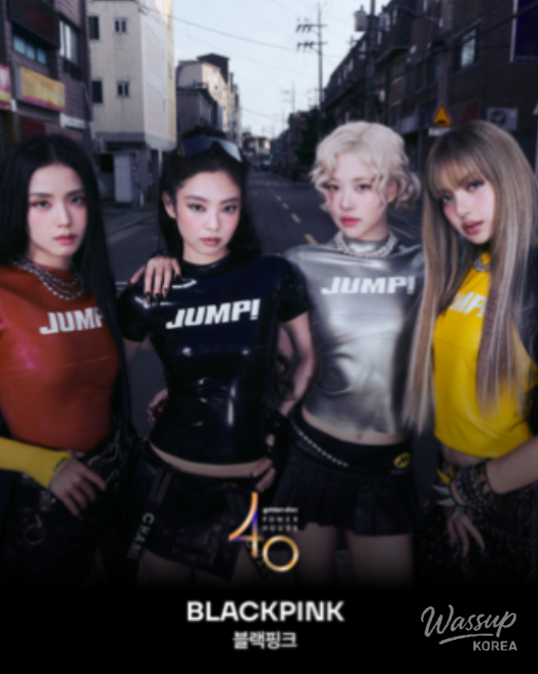
The four-member girl group BLACKPINK has now become a symbol of K-pop and stands at the center of global trends. 'DDU-DU DDU-DU,' 'Kill This Love,' 'How You Like That'—these three songs alone can explain how K-pop conquered the global market. Their music videos were the first Korean content to surpass 2 billion views on YouTube, and individual members are active as the faces of global luxury brands like Louis Vuitton, Chanel, and Dior, blurring the lines between culture and industry. BLACKPINK isn't just a 'Korean girl group' but a 'global brand chosen by the world.' YG's production system has evolved them from mere 'idols' into 'icons.'
[5] YG History, G-Dragon and BLACKPINK: YG DNA, Penetrating 40 Years of K-Pop
This list, announced as the 'Golden Disc Powerhouse 40,' wasn't just an awards ceremony list. It was a 'map of influence' that created Korean popular music over the past 40 years. At its center was always YG. Yang Hyun-suk's production philosophy, BIGBANG's autonomous creation, G-Dragon's artistic sense, and BLACKPINK's globalization strategy. These four axes come together, and YG has established itself as a 'cultural ecosystem.' Their music didn't simply follow trends but created them. This is the identity of 'YG DNA.'
[6] YG History, G-Dragon and BLACKPINK: Golden Disc 40th Anniversary, and the Next Generation
On January 10, 2026, the '40th Golden Disc Awards' will be held at the Taipei Dome in Taiwan. This 'Powerhouse 40' list officially shows that YG is still at the center of K-pop. Fans are already saying on social media: 'YG isn't just an agency but the history of Korean music itself.' 'If G-Dragon and BLACKPINK are on the same stage, it will be a total collection of an era.' That's right. YG's story isn't over. They are still designing the next generation of K-pop through new artists. The system designed by Yang Hyun-suk, the standards set by BIGBANG, the culture expanded by G-Dragon, the globalization proven by BLACKPINK—the only sentence created by connecting all of this is: 'YG's history = the history of K-pop evolution.'
Summary: YG History, G-Dragon and BLACKPINK
| Category | Item A | Item B |
|---|---|---|
| Announcement | October 26, 2025 | Release of 'Golden Disc Powerhouse 40' List |
| Key Figures | Yang Hyun-suk, BIGBANG, G-Dragon, BLACKPINK | YG Entertainment |
| Symbolism | YG = K-Pop Evolution | Philosophy, System, Globalization |
| Representative Hit Songs | Lies, Haru Haru, DDU-DU DDU-DU, Crooked | Total Collection of Famous Songs by Era |
| Keywords | YG DNA, Global Icon | Fusion of Art and Industry |
| Meaning Summary | 40-Year Influence Map | Historical Restoration of K-Pop Center |
“YG isn't just an agency, but a philosophy where Korean music has expanded to the world. At its center were always real artists.”
YG History, G-Dragon, BLACKPINK is more than just a list. It is 40 years of K-pop and a blueprint for a new era.
What do you think?
Now the next generation of YG, what voices will continue this history?



Source :https://blog.naver.com/yooju0913/224054794967
No comments yet.