Exploring the Winter Beauty of Sobaeksan National Park
- Dates
- Place
-
Beopjusa Temple
Beopjusa Temple - Region
- Boeun-gun, Chungcheongbuk-do
- Address
- 405 Beopjusa-ro, Songnisan-myeon, Boeun-gun, Chungcheongbuk-do
- Original source
- blog.naver.com


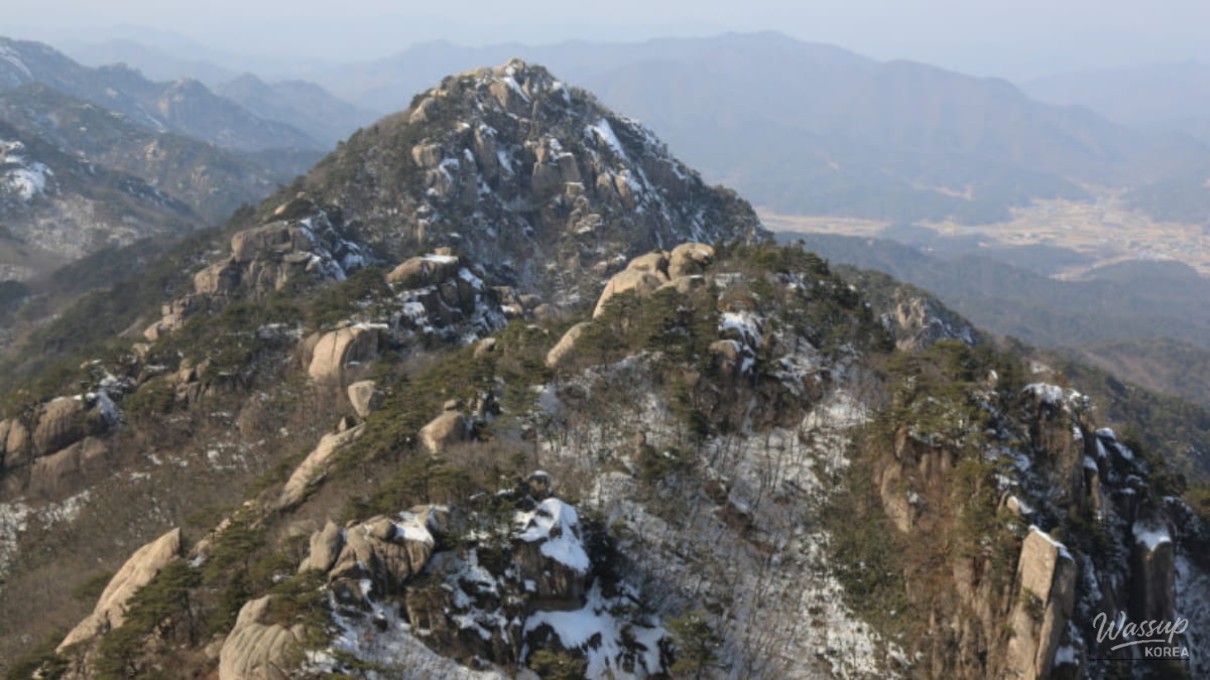
In January, Sobaeksan transforms into a white world where sharp rock formations and quiet forests meet deep winter silence.
From gentle forest walks to thrilling viewpoints above the clouds, the mountain offers winter courses for every pace.
This is a place to let go of busy thoughts and feel the steady comfort that only snowy mountains can give.
Sobaeksan in January, A Mountain Draped in Snow
When winter deepens, Sobaeksan reveals a majestic and slightly mysterious face.
Jagged rocks are wrapped in white snow, and the stillness of the season makes every view feel heavier and calmer.
The mountain offers a rare balance of accessibility and grandeur, even in the coldest month.
Sejo Trail, An Easy Winter Walk
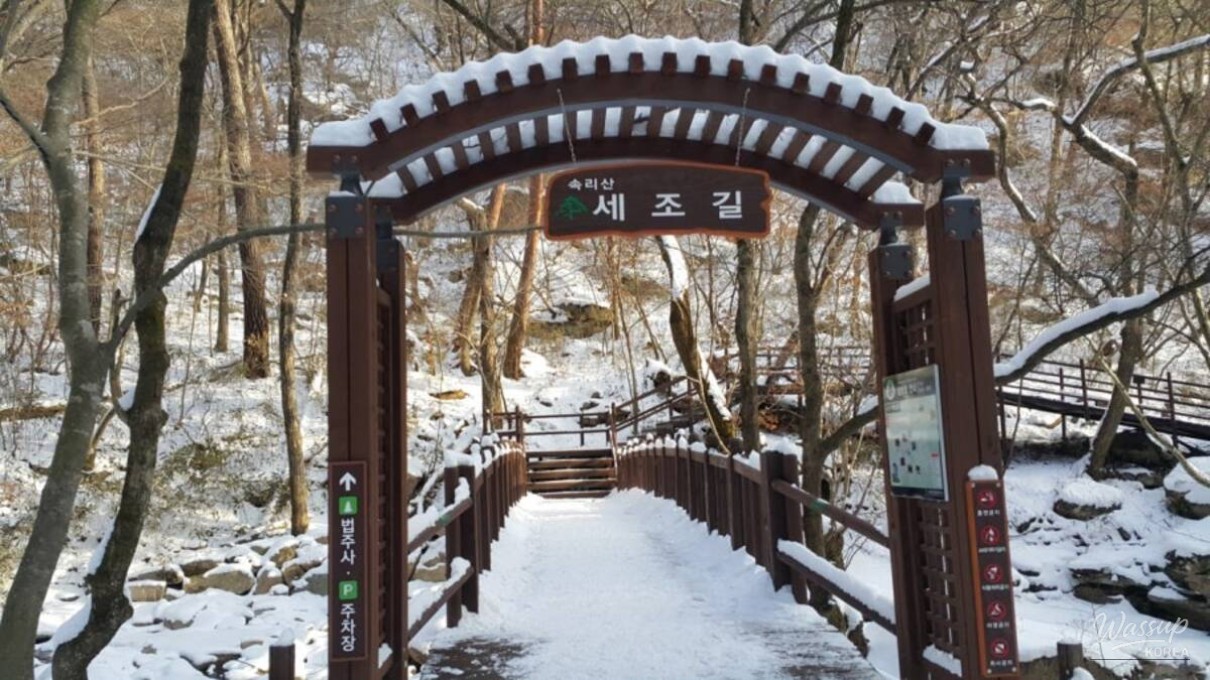
The Sejo Trail stretches about 2.4 km from Beopjusa Temple(법주사) to Seosimjeong.
Its flat terrain allows for a comfortable walk even in light sneakers, making it ideal for beginners or casual winter walkers.
A Trail Once Walked by a King
This path is known as a place where King Sejo of Joseon once came to rest his mind.
Forests and reservoirs blend quietly along the trail, creating a calm rhythm that suits winter perfectly.
In January, frozen valley water and snow-dusted branches keep the scenery engaging from start to finish.
Munjangdae Viewpoint Above the Clouds
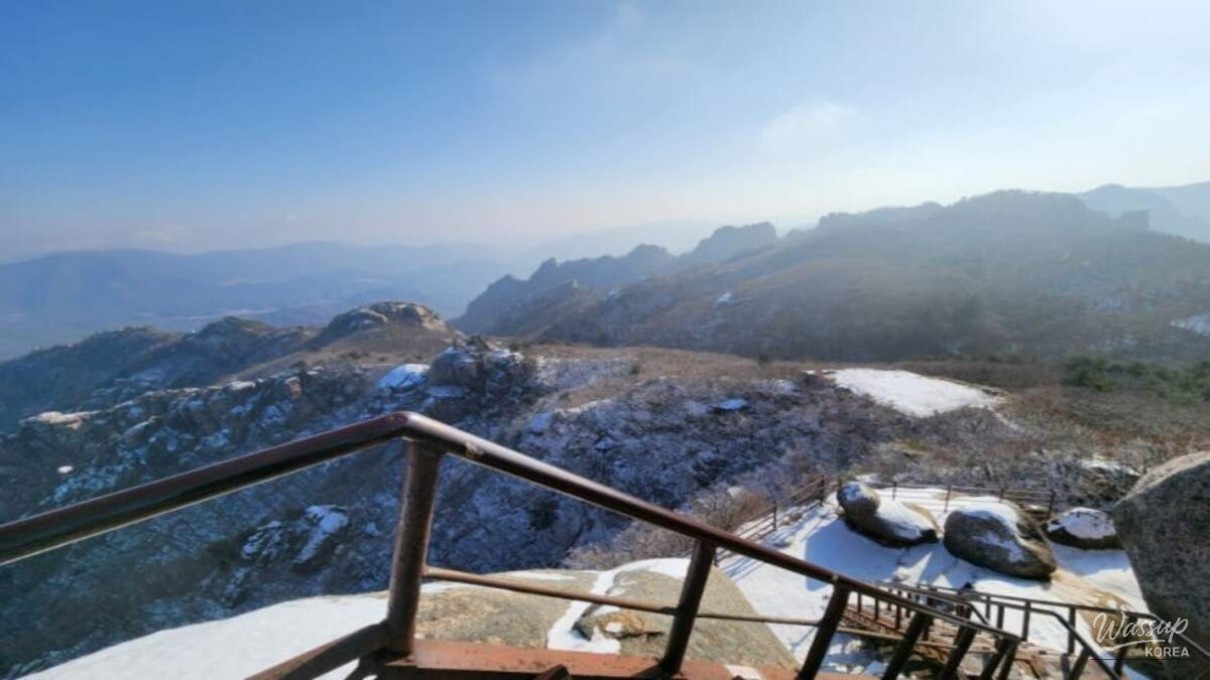
Munjangdae, one of Sobaeksan’s main peaks at 1,054 meters, is famous for its sweeping views.
Climbing the steep iron stairs to the top is demanding, but the reward is immediate and overwhelming.
A Sea of Clouds on Lucky Days
From the summit, the snow-covered ridgeline stretches out like a vast panorama.
On clear days, clouds gather below your feet, creating the surreal feeling of walking above the sky.
The wide-open view and sharp winter air quickly cool the heat of the climb.
Golden Buddha at Beopjusa Temple
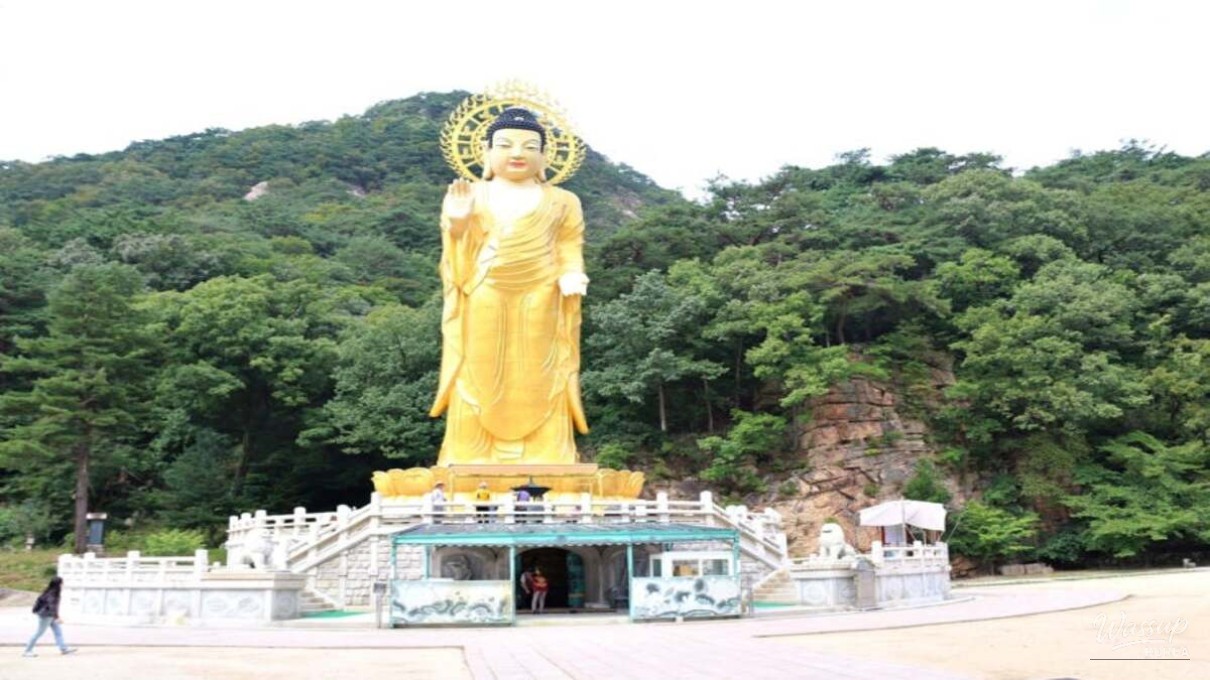
At the starting point of many routes stands Beopjusa Temple, a UNESCO World Heritage site.
Here, a 33-meter-tall golden bronze statue of Mireuksaja rises above the snowy landscape.
A Striking Contrast in Winter Light
In January, sunlight reflecting off the golden statue creates a powerful contrast with the surrounding white snow.
Beyond its spiritual meaning, the sheer scale and visual impact make it an unforgettable photo spot.
The harmony between the quiet temple and winter mountains feels both rare and memorable.
Rock Formations Shaped by Winter
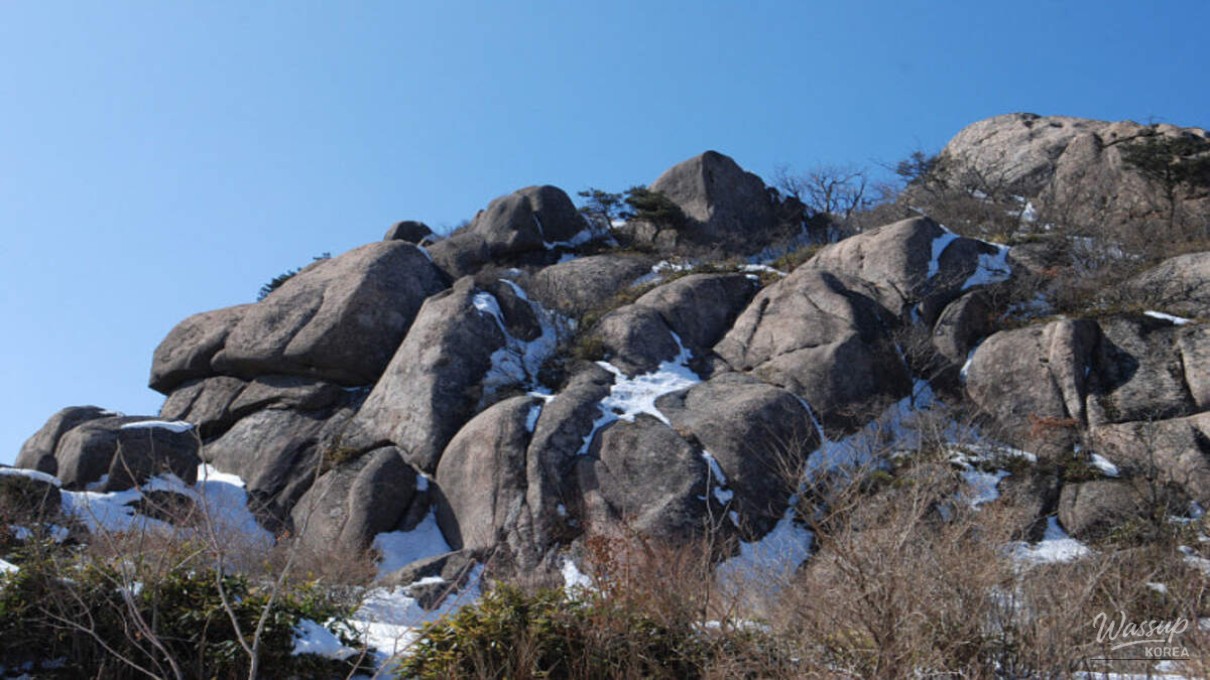
Sobaeksan is known for its rocky character rather than soft soil.
In winter, snow and ice sharpen the outlines of these formations, making their presence even stronger.
A Winter Ink Painting Come to Life
Rock formations such as Ipsukdae and Sinsendae line up like a folding screen.
Gray stone rising against a blue winter sky creates a scene reminiscent of a massive ink painting.
As you walk past these natural sculptures, it’s hard not to stop and capture the moment.
A Mountain That Embraces Winter Quietly
Sobaeksan in January offers more than dramatic views.
It provides space to breathe, walk, and feel the slow comfort of winter mountains.
Whether on an easy trail or a lofty peak, every step carries the calm weight of the season.
More from Hiking
No comments yet.