Dealing with Lovebugs and Other Insect Outbreaks



As summer approaches, certain insects can emerge in large numbers, causing inconvenience in daily life.
In particular, from June to July, lovebugs, also known as the red-eyed fly, can appear in large quantities.
This article provides information on the characteristics of lovebugs and how to manage their presence effectively.
What are Lovebugs?
The official name of lovebugs is the red-eyed fly.
Lovebugs do not bite humans or transmit infectious diseases, and they play a beneficial role in the ecosystem by helping to decompose organic materials.
However, their mass emergence during specific times can cause discomfort around homes and vehicles.
Main Characteristics of Lovebugs:
- They do not bite people.
- They do not transmit infectious diseases.
- They typically emerge in large numbers from June to July.
- They are active for about two weeks.
- They are attracted to light.
How to Deal with Lovebug Outbreaks:
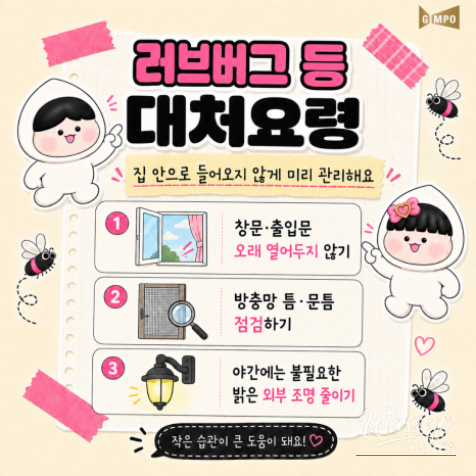
Preventing Indoor Invasion:
- Check door gaps and window screens to prevent them from entering your home.
- Use weather stripping tape to seal gaps.
- Install sticky traps to catch them.
Adjusting Lighting:
Since lovebugs are attracted to light, reduce indoor and outdoor lighting at night and close curtains to prevent light from spilling outside. If necessary, replace regular bulbs with yellow bulbs.
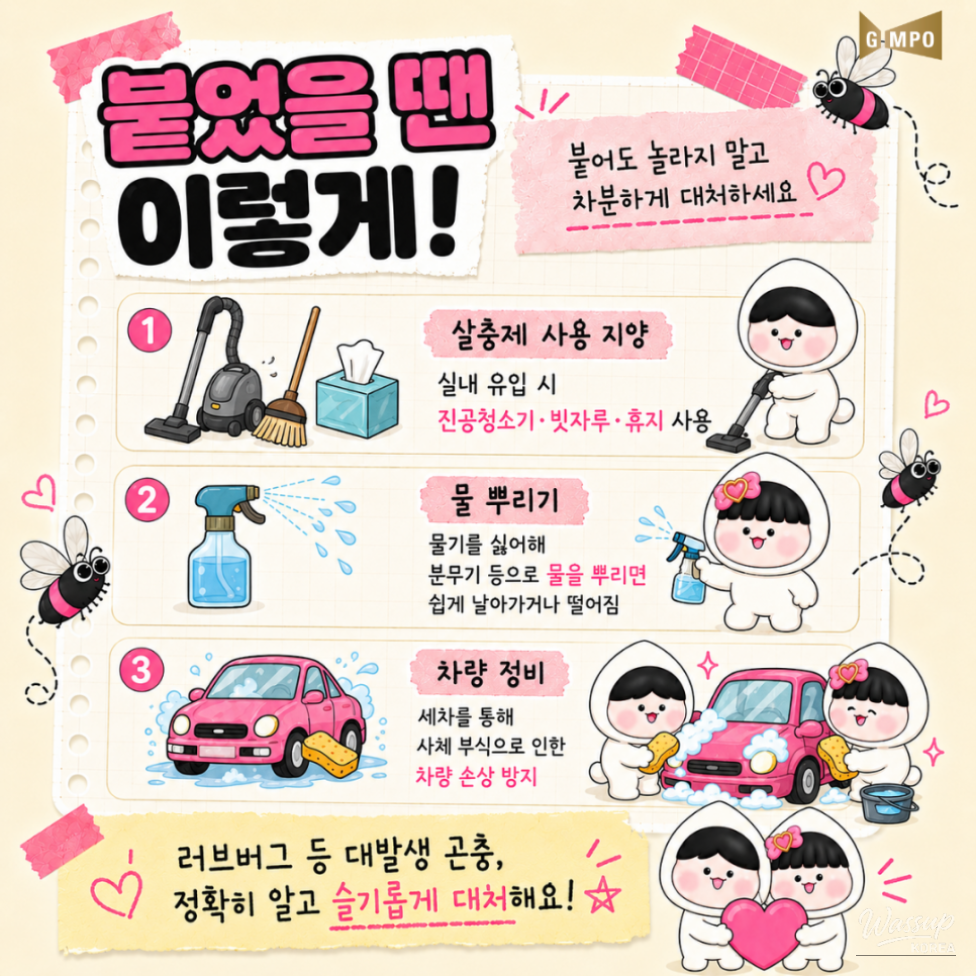
Avoiding Pesticides:
Since lovebugs do not pose a direct threat to humans, try to minimize the use of pesticides. If they enter your home, use a broom, tissue, or vacuum cleaner to remove them.
Using Water:
Lovebugs dislike moisture. Spraying them with water can easily make them fly away or fall, making it a simple solution.
Taking Care of Your Vehicle:
If lovebug carcasses remain on your vehicle for too long, they can damage the surface. If they accumulate, wash your car as soon as possible to prevent damage.
Lovebugs do not bite or transmit diseases, but their large numbers can cause inconvenience. Use simple methods to manage their presence and create a pleasant living environment.



Source :https://blog.naver.com/gimpo2010/224292588002
No comments yet.