Comprehensive Guide to Marathon Schedules in Korea: From Full Courses to Local Festivals



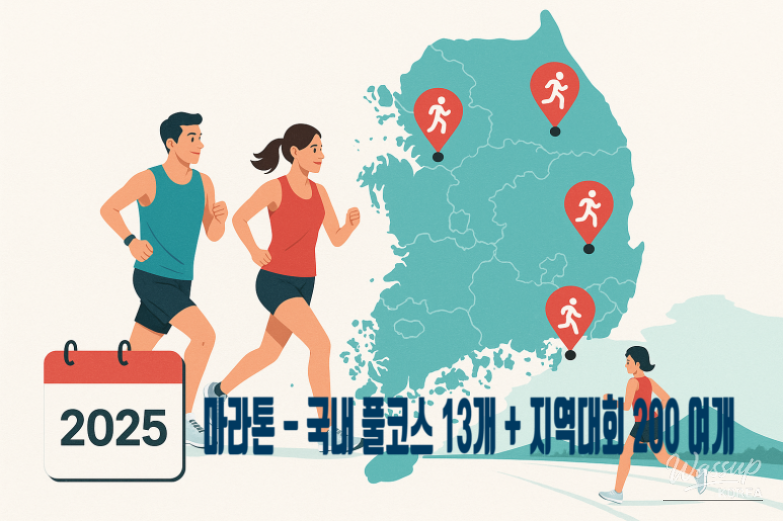
South Korea hosts over 200 marathon events annually!
From 13 major full-course races to over 200 local festival-style marathons, here's a comprehensive guide to marathons across the nation, easily accessible for beginner runners.
Many people likely watched the Gyeongju International Marathon broadcast today (October 18th).
The sight of thousands of runners at the starting line, shouting and running forward, was a human drama in itself.
During the broadcast, the commentator mentioned that "there are over 200 marathon events nationwide," which sparked curiosity: "Is that really true?"
Upon researching, it's surprising to find that there are indeed over 200 marathon events, both large and small, across the country, with at least 13 of them being full-course (42.195km) races.
While I've had a general understanding of marathons, today, let's delve a bit deeper.
1. The Origin of the Marathon - Delivering 'Victory News' at the Risk of One's Life
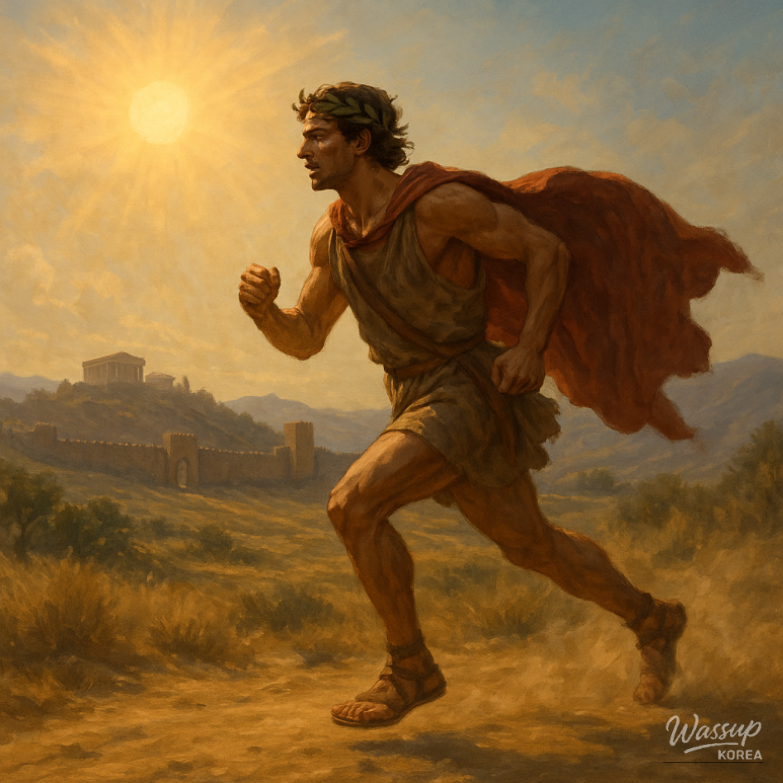
The origin of the marathon dates back to 490 BC, to the Battle of Marathon in ancient Greece.
Greek soldier Pheidippides is said to have sprinted approximately 40km from Marathon to Athens to deliver the news that they had defeated the Persians.
He reportedly shouted, "We have won! (Νενικήκαμεν)" and collapsed and died on the spot.
Inspired by this story, the first official 42.195km marathon race was held at the 1896 Athens Olympics.
Some have said, "Iran is reluctant to participate in the competition due to historical reasons related to the origin of the marathon because Iran used to be Persia."
But upon investigation, it was found that this was not true.
The Iranian government has never banned marathons, and marathon events are held in the country, and athletes participate in international competitions.
In other words, it has been confirmed that the claim that 'they do not participate for historical reasons' is merely a rumor.
Thus, the marathon is ultimately not just a simple run but a symbolic sport born from the "human will to convey sincerity."

2. Runners, Why Do They Voluntarily Endure Such Hardship?
"You can get there quickly by car, why bother running?"
This is probably an honest question in most people's minds.
But when you look at people who run marathons, there seems to be something more than just 'running.'
Even in the pouring rain or under the scorching summer sun, they run silently.
Today, it rained at the Gyeongju Dong-A Marathon, though not heavily.
Perhaps for them, running is more of a promise to themselves than a 'competition of records.'
No one is forcing them to do it, and the prize money isn't significant, but they seem to gain a strange sense of accomplishment and peace from the process of keeping the goals they set for themselves.
3. South Korean Marathon - An Era of 200 National Events
South Korea is said to be a veritable marathon powerhouse.
The table below is a summary of major national events as of 2025, categorized into 'International Standard Full Course / Full Course (Non-Label) / Half & Festival Type.'
Category
Event Name
City
Date
Distance
International Certification / Status
International Standard Full Course
Gunsan Saemangeum International Marathon
Gunsan, Jeollabuk-do
April 6th (Sun)
Full / Half / 10km / 5km
World Athletics Label Certified
International Standard Full Course
Gyeongju International Marathon
Gyeongju, Gyeongsangbuk-do
October 18th (Sat)
Full / Half / 10km
AIMS (Association of International Marathons and Distance Races) Member Event
International Standard Full Course
JTBC Seoul Marathon (JoongAng Seoul Marathon)
Seoul
November 2nd (Sun)
Full / Half / 10km
AIMS Member Event
International Standard Full Course
Chuncheon International Marathon
Chuncheon, Gangwon-do
October 26th (Sun)
Full / Half / 10km
AIMS Member Event
International Standard Full Course
Daegu International Marathon
Daegu
February 23rd (Sun)
Full Course
World Athletics Label Certified
Full Course (Non-Label)
Jeju International Tourism Marathon
Jeju
May 25th (Sun)
Full / Half / 10km / 5km
Regional Festival Type Event
Full Course (Non-Label)
Andong Marathon
Andong, Gyeongsangbuk-do
September 28th (Sun)
Full / Half / 10km
Local City Type Event
Full Course (Non-Label)
Ulsan Taehwagang International Marathon (Spring)
Ulsan
March 29th (Sat)
Full / Half / 10km
Local City Type Event
Half & Festival Type
Ulsan Marathon (Autumn)
Ulsan
October 19th (Sun)
Half / 10km / 5km
Regional Festival Type Event
Half & Festival Type
Gyeonggi International Half Marathon
Suwon, Gyeonggi-do
To be announced
Half (21.0975km)
AIMS Half Certified Event
The table below lists 20 selected regional festival-style marathon events.
No.
Event Name
City
Date
Distance
1
Yeosu Maritime Marathon
Yeosu, Jeollanam-do
January 12th (Sun)
Full / Half / 10K / 5K
2
Cheongju Musimcheon Marathon
Cheongju, Chungcheongbuk-do
February 16th (Sun)
Full / Half / 10K / 5K
3
Winter International Marathon
Yeouido, Seoul
February (Sun)
Full / Half / 10K / 5K
4
Geumsan Marathon
Geumsan, Chungcheongnam-do
March 23rd (Sun)
Full / Half / 10K / 5K
5
Yeongju Sobaeksan Marathon
Yeongju, Gyeongsangbuk-do
April 6th (Sun)
Full / Half / 10K / 5K
6
Unification Prayer Pohang Beach Marathon
Pohang, Gyeongsangbuk-do
April 27th (Sun)
Half / 10K / 5K
7
Gijang Sea Marathon
Gijang, Busan
April 27th (Sun)
Half / 10K / 5K
8
Jeonju Hanok Marathon
Jeonju, Jeollabuk-do
October 6th (Sun)
Possibility of full course included
9
Yangpyeong Yongmunsan Marathon
Yangpyeong, Gyeonggi-do
September 29th (Sun)
Various distance options
10
Suwon Hwaseong Marathon
Suwon, Gyeonggi-do
October 20th (Sun)
Various distance options
11
Gangneung Maple Marathon
Gangneung, Gangwon-do
November 3rd (Sun)
Various distance options
12
Yeosu Night Sea Marathon
Yeosu, Jeollanam-do
November 16th (Sun)
Various distance options
13
Yangcheon Marathon
Yangcheon, Seoul
April 12th (Sat)
Half / 10K / 5K
14
Gumi Park Chung-hee Marathon
Gumi, Gyeongsangbuk-do
March 2nd (Sun)
Half / 10K / 5K
15
Miryang Arirang Marathon
Miryang, Gyeongsangnam-do
February 23rd (Sun)
Half / 10K / 5K
16
Pyeongtaek Port Marathon
Pyeongtaek, Gyeonggi-do
October 19th (Sun)
Half / 10K / 5K
17
Yeoju Sejong the Great Marathon
Yeoju, Gyeonggi-do
October 19th (Sun)
Various distance options
18
Baengnyeong Marathon
Baengnyeong, Incheon
October 19th (Sun)
Mainly 10K
19
Paju Book City Marathon
Paju, Gyeonggi-do
October 19th (Sun)
Half / 10K / 5K
20
Yeongdeungpo-gu Federation President's Cup Athletics Competition Marathon
Yeongdeungpo, Seoul
Same day
Half / 10K / 5K
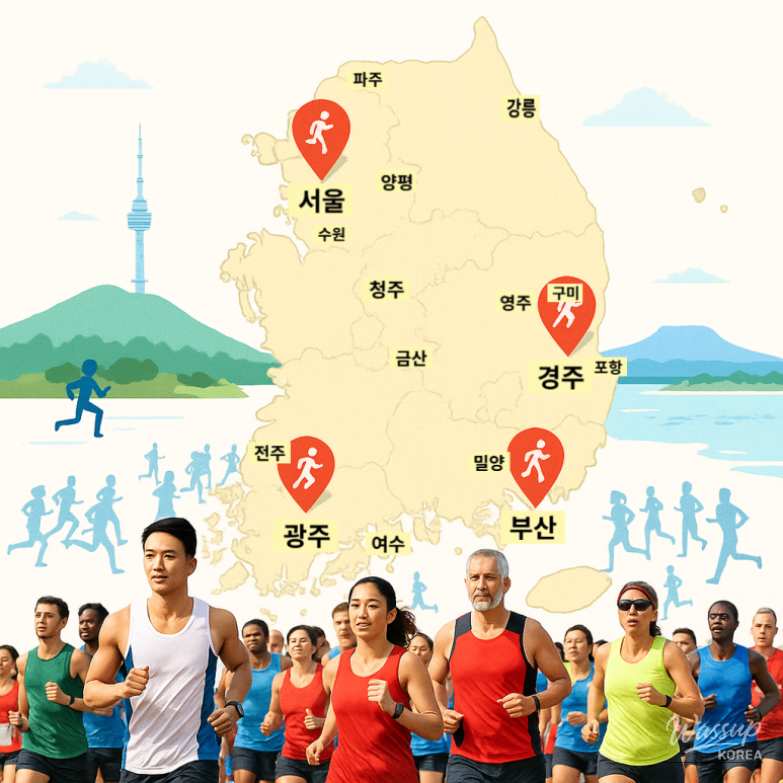
In addition to these, over 180 festival-style marathons are held nationwide, organized by local governments.
The number of participants is approximately 150,000 annually, and the number of club members is estimated to be between 30,000 and 50,000.
"One in every 1,000 Koreans is a marathoner."
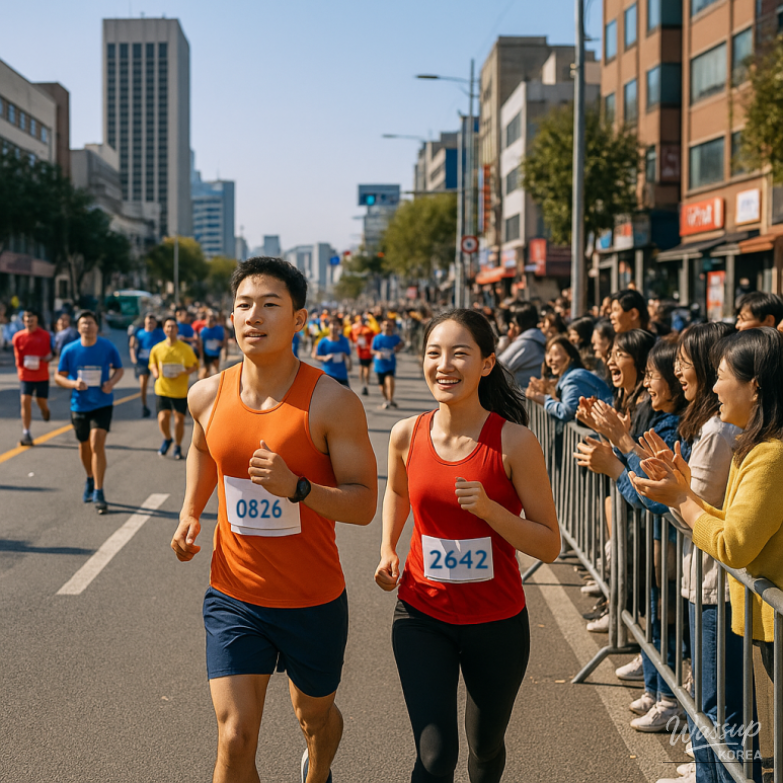
- This statement is not an exaggeration; running has now become a national lifestyle sport.
4. The Face of the City, World-Renowned Marathon Events
The 'Abbott World Marathon Majors,' a series of seven major marathons, is the most famous global marathon series.
Abbott is the name of a U.S.-based global healthcare company, and this company is the official sponsor of the series.
In other words, it is not simply a 'series of 6 famous events' but a world-class elite marathon series brand.
Event Name
City/Country
Characteristics
Tokyo Marathon
Tokyo, Japan
Asia's only major, over 30,000 participants
Boston Marathon
Boston, USA
World's oldest marathon (1897), strict qualification standards
London Marathon
London, UK
Thames River course, entire city is a festival
Berlin Marathon
Berlin, Germany
Famous as a world record course
Chicago Marathon
Chicago, USA
Flat city course, over 40,000 participants
New York City Marathon
New York, USA
50,000 participants, the largest in the world
Sydney Marathon
Sydney, Australia
Newly included in the Major Series from 2025

These events are not just sporting events but have become symbols of the city's pride and cultural festivals.

5. The Real Meaning of Running - Not Speed, but 'Reason'
The value of a marathon is said to lie not in 'how fast you go' but in 'why you keep going.'
Even without running it yourself, the meaning of those words is somehow imaginable.
Some run for their health, some to conquer themselves, and others to overcome something.
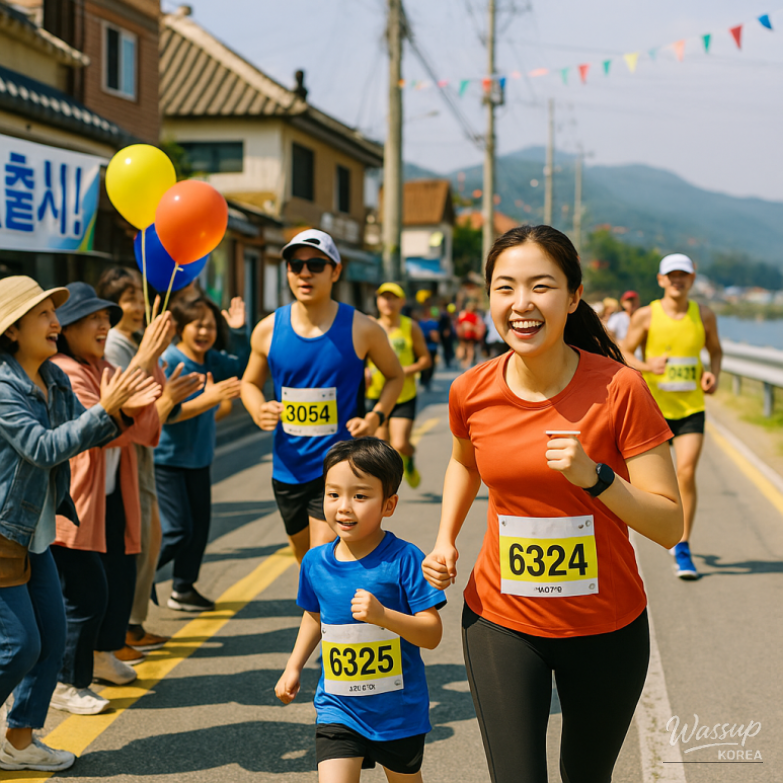
Looking at a marathon is like looking at life.
The starting line is always splendid, but before long, you get out of breath and want to give up.
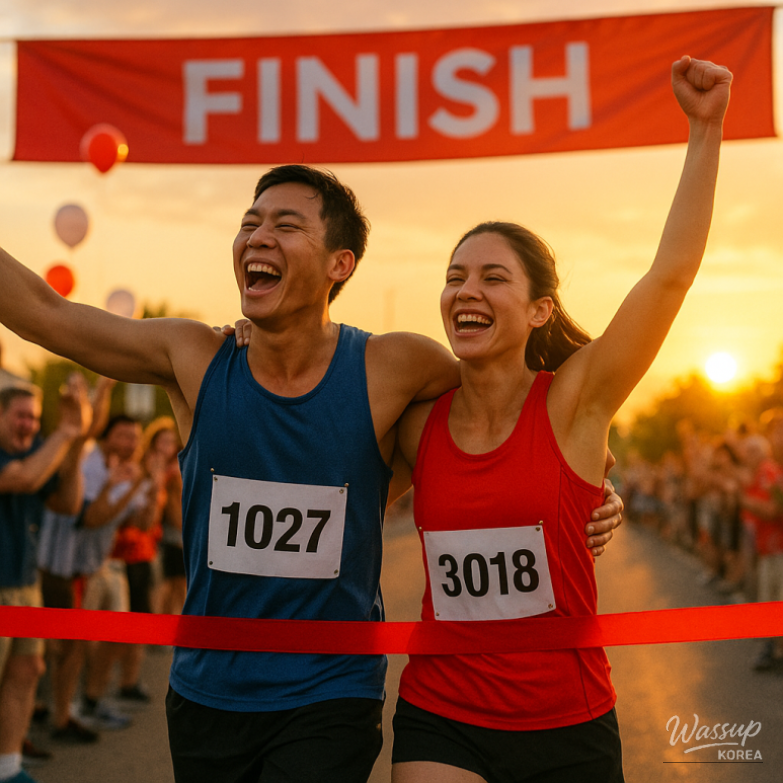
But only those who overcome that moment smile at the finish line.
Perhaps that's why people say, "A marathon is a microcosm of life."
Because it is not speed but the mind that does not give up that makes the finish.
6. The Power of Marathon in Local Areas
There is one fact that I learned for the first time while watching the Gyeongju Marathon this time.
I really didn't know that there were so many marathon events in Korea.
I was surprised to see that more than 200 events are held across the country, in every city and every season.
Cities like Gyeongju, Gunsan, and Chuncheon are temporarily invigorated thanks to this.
Accommodations and restaurants are crowded, and cheering banners are hung on the streets.
Seeing the entire city moving like a festival, I realize that it is not just exercise but a power to bring people together.
On the day when the sound of people running and cheering fills the roads instead of cars,
I think it's the energy of the community that goes beyond economic effects.
I haven't run, but just watching the scene made me feel a surge of energy.
This may be the real charm of the marathon.
7. Conclusion - "Marathoners, Seeing Them Makes Sense"
The roads of Gyeongju today, visible on television, were filled with many people.
Each person had a different reason for running.
Some wanted to overcome their past selves, and some just wanted to "go all the way."
I didn't run, but I had one thought while watching them.
A marathon is closer to a story of the heart that wants to go to the end than a record.
What is more important than speed is the power to keep going your way without stopping.
Cars are fast, but people's steps are slow.
I think the sweat and will contained in that slowness make the marathon more beautiful.
South Korea hosts over 200 marathon events annually! From 13 major full-course races to over 200 local festival-style marathons, here's a comprehensive guide to marathons across the nation, easily accessible for beginner runners.
“One in every 1,000 Koreans is a marathoner.” - This statement is not an exaggeration; running has now become a national lifestyle sport.
No comments yet.