The Legacy of King Jeongjo and Suwon Hwaseong
- Place
- Suwon Hwaseong
- Region
- Suwon-si, Gyeonggi-do
- Original source
- blog.naver.com



The film The King’s Man has deeply touched the hearts of the audience.
The story of the deposed King Danjong, exiled to the mountains of Gangwon Province, and the villagers who stood by him until the end brought tears to many eyes.
Even after the film ended, its lingering impact remained.
People are drawn to Yeongwol, following the tragic narrative of the king, and there they encounter the breath and memories of history once more.
Suwon Hwaseong in Gyeonggi Province also breathes life into the king's story.
This UNESCO World Heritage site is recognized as a major tourist attraction in the region, but it offers more than just stunning views of the fortress walls.
Within its walls lie the dreams of reform and filial piety of King Jeongjo.
Walking along the fortress walls while recalling this narrative allows visitors to create unforgettable memories.
As you stroll along, beautiful flowers bloom, and the lush green trees add vitality to the seasons.
The majesty of the king at Seojangdae and the longing for his father.
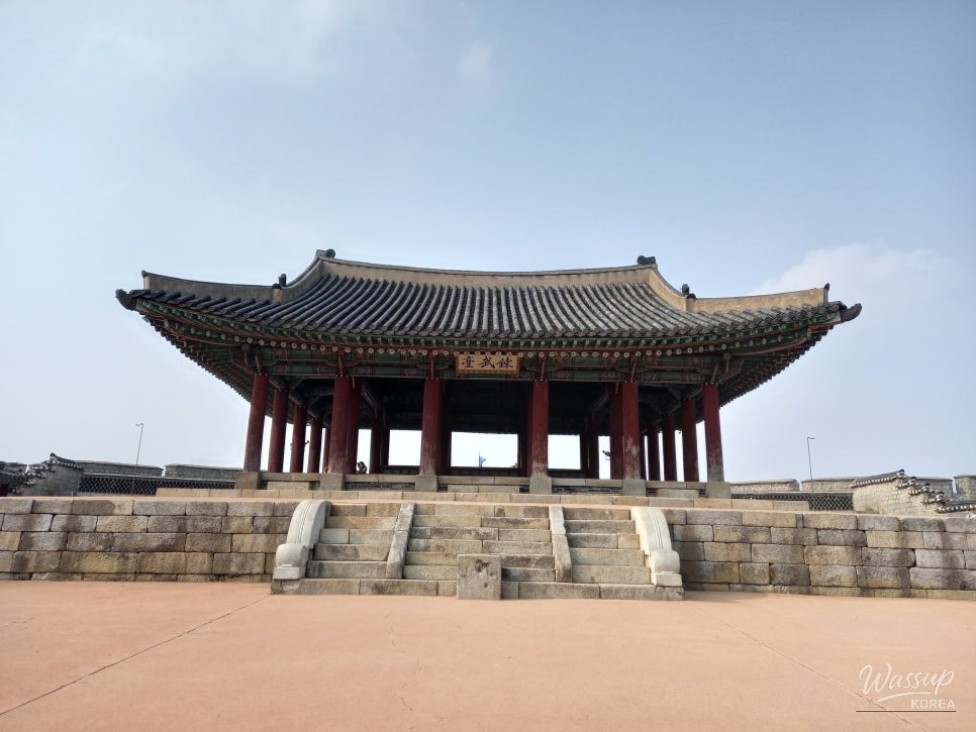
It is recommended to start your walk from Seojangdae.
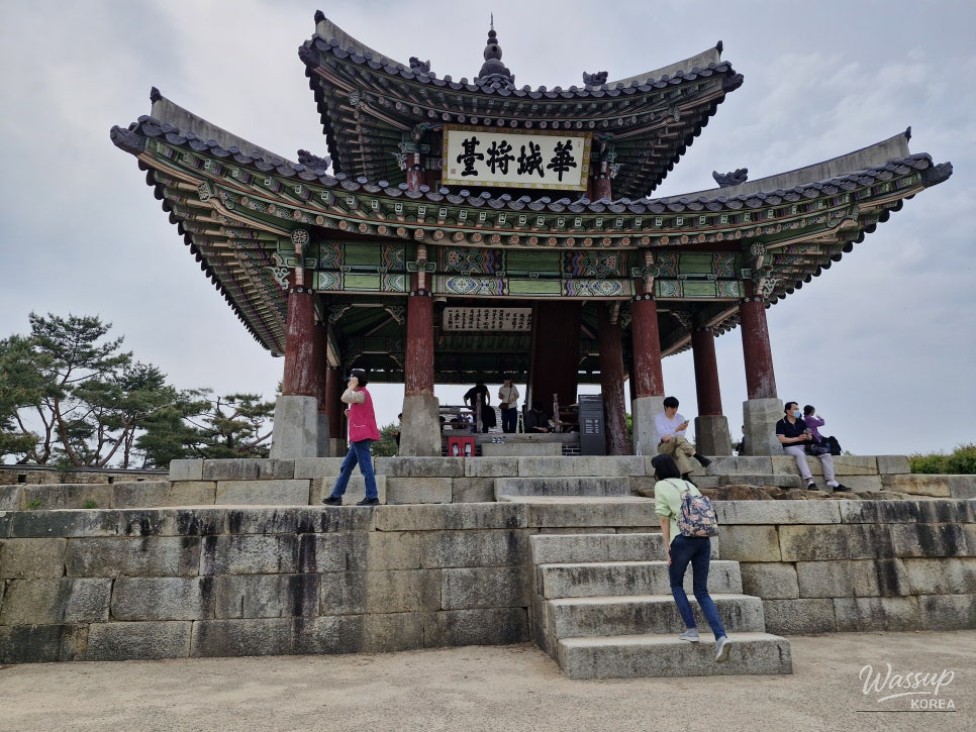
This military command post is located at the peak of Paldalsan Mountain.
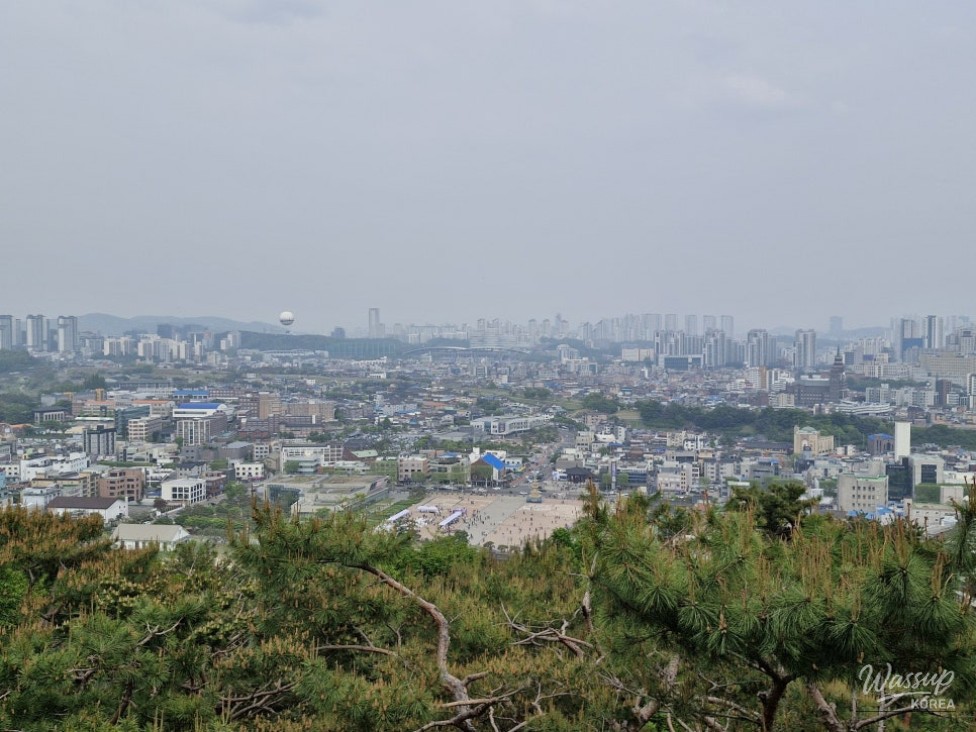
From here, you can overlook Suwon city and the Hwaseong fortress.
A plaque inscribed with 'Hwaseongjangdae' hangs here, written in King Jeongjo's own hand.
The powerful brushstrokes reflect Jeongjo's ideals and dignity that he wished to embody in Hwaseong.
On the fourth day of his visit to Suwon in 1795, Jeongjo conducted military training at Seojangdae.
After the training, he expressed his satisfaction with the grandeur of Hwaseong and the soldiers of the Royal Guard in a poem.
This poem, known as 'Eoje Hwaseongjangdae Si Mun', is displayed on the roof of the first-floor pavilion.
Standing here, one can see Hyunryungwon, where his father rests.
While demonstrating his authority as a king commanding his soldiers, Jeongjo also carried the heart of an ordinary son longing for his father.
Understanding this significance makes Seojangdae an even richer and deeper space.
As you descend to the left from Seojangdae, you will find Hwasoemun.
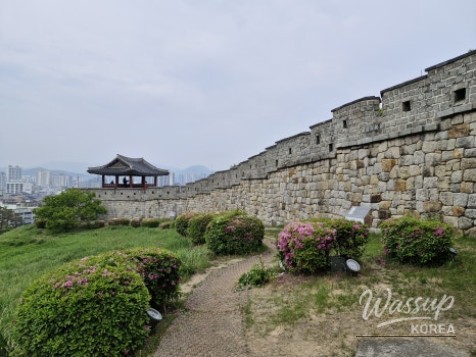
Next to it stands Seobuk Gongshimdon, a proud structure on the northwest wall.
Jeongjo boasted to his officials that Gongshimdon was a facility unique to Korea.
While Suwon Hwaseong was built with reference to Chinese fortifications, it was uniquely adapted to the realities of Joseon.
Seobuk Gongshimdon, serving as both a watchtower for enemy observation and an artillery platform, was a source of pride.
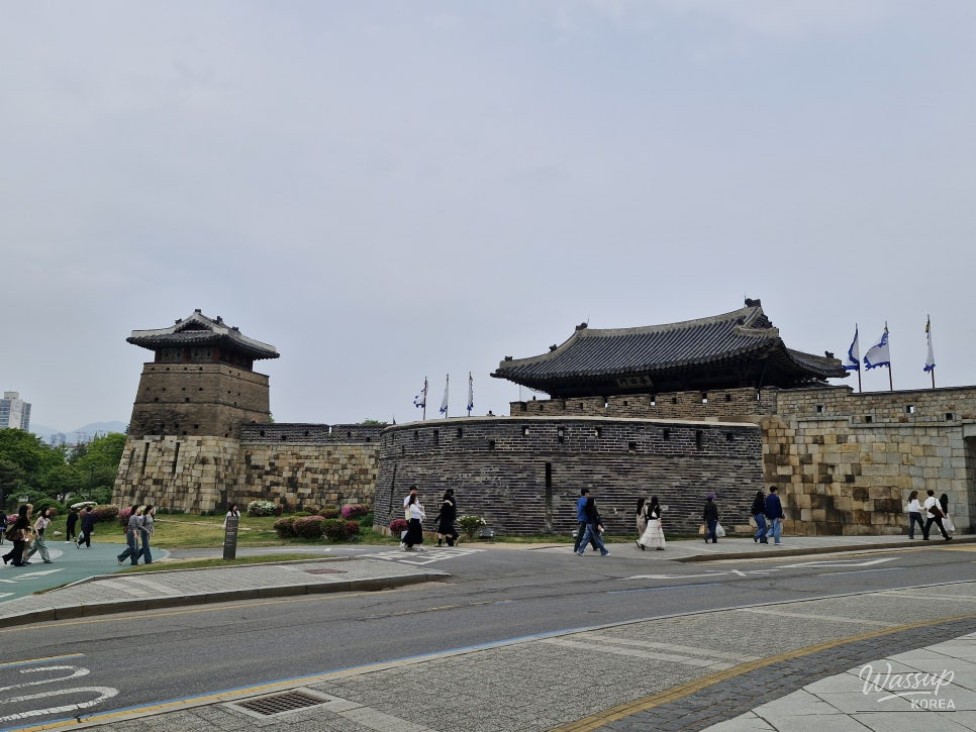
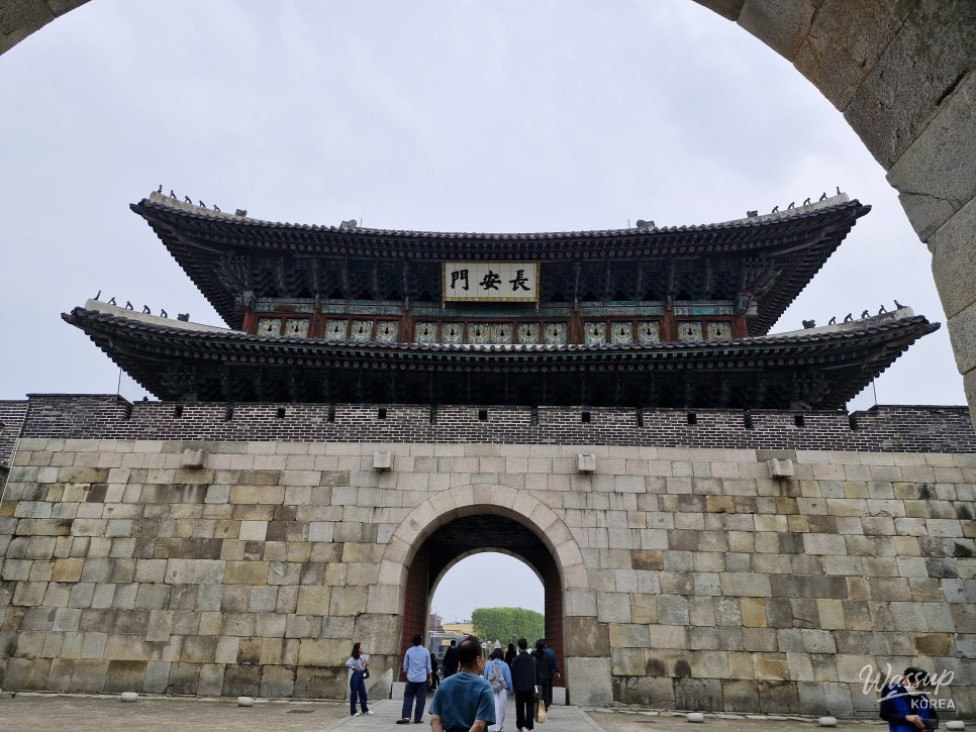
Continuing on, you will encounter the grand Jang-anmun.
Although it is the northern gate, it is the first gate encountered when coming from Hanyang, making it the main gate of Suwon Hwaseong.
Jeongjo interpreted the meaning of Jang-an as a view towards the palace in Seoul to the north and Hyunryungwon to the south, symbolizing eternal peace.
Jang-anmun, along with Paldalmun, features a two-story pavilion structure, larger than Hanyang's Sungnyemun.
This indicates Jeongjo's vision for the significance of Suwon Hwaseong.
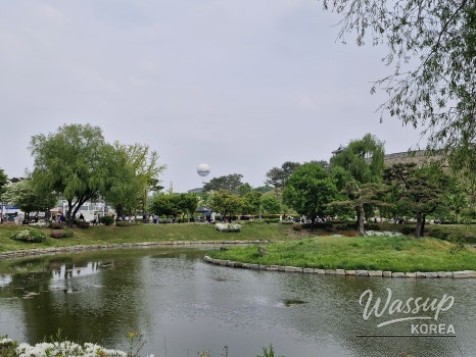
After passing through Jang-anmun, you will find Hwahongmun and Banghasuryujeong, with Yongyeon behind them.
These are the most beautiful spots in Suwon Hwaseong.
In 1794, Jeongjo named the fortress 'Yucheongseong', envisioning it shaped like willow leaves.
The Suwon stream was called 'Yucheon' due to the many willows along its banks.
Banghasuryujeong means 'to seek flowers and play under willows'.
Looking at Yongyeon and Suwon stream from Banghasuryujeong brings the meaning of this inscription to life.
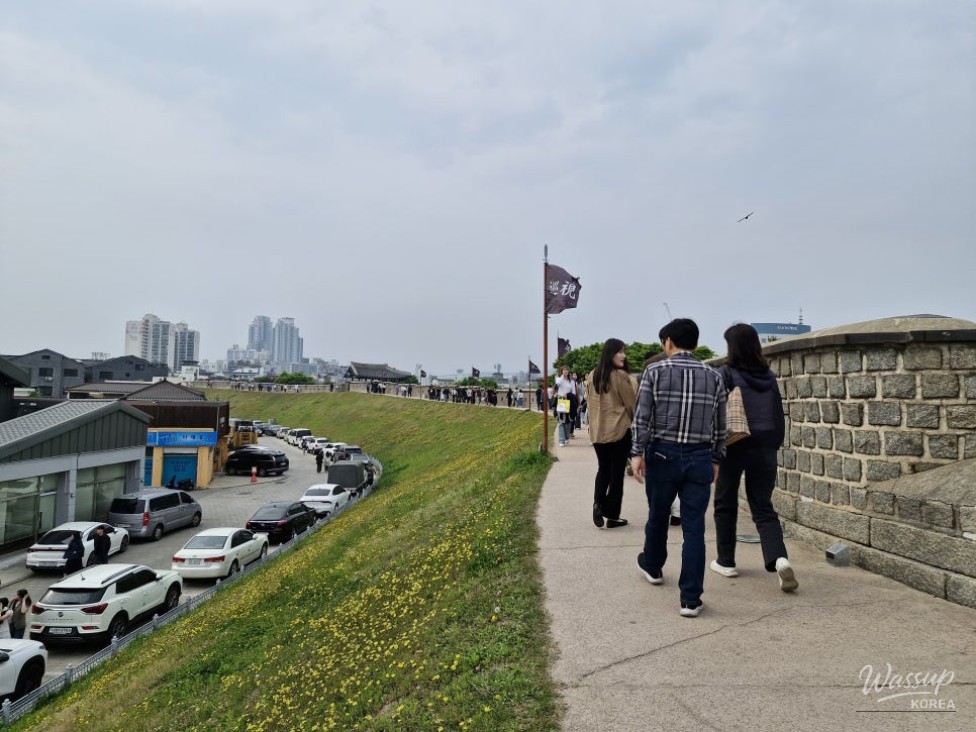
As you continue east, you will reach Dongjangdae, also known as Yeonmuddae, where soldiers train.
Jeongjo remarked that the fortress should be circular to eliminate corners, allowing for proper defense against enemies.
Today, this facility serves as a pleasant walking path for citizens.
Jeongjo's construction of Hwaseong was a project to strengthen royal authority while soothing his deep longing for his father, Crown Prince Sado.
He envisioned a city where people could live comfortably, stating, 'Let every household prosper and every person enjoy happiness.'
He did not merely design Suwon as a military defense city but as a place where the people could live rich and joyful lives.
This vision is reflected in the reservoirs like Manseokgeo and Chukmanje, agricultural development, and markets outside Paldalmun, embodying Jeongjo's philosophy of prioritizing the people.
The beautiful flowers blooming under the stone walls of Suwon Hwaseong add vibrancy to the fortress.
Every stone and breeze carries the breath of history, gently touching the hearts of those who walk the fortress path.
This path comforts weary lives and offers new directions and courage to those living today.
Above all, the aspirations of Jeongjo, who dreamed of a better world, quietly live on here.
Everyone carries a desire for a warmer and better world within their hearts.
Thus, the story of Jeongjo transcends time and leads today’s people back to the path.
If you wish to encounter a beautiful story that lingers in your heart, I recommend taking a walk along the fortress walls of Suwon Hwaseong.
On this path, the past will meet the present, blossoming into another profound narrative.











Source :https://blog.naver.com/gyeonggi_gov/224277593846
More from Place



No comments yet.