The Enchantment of Ulsan's Coastal Beauty



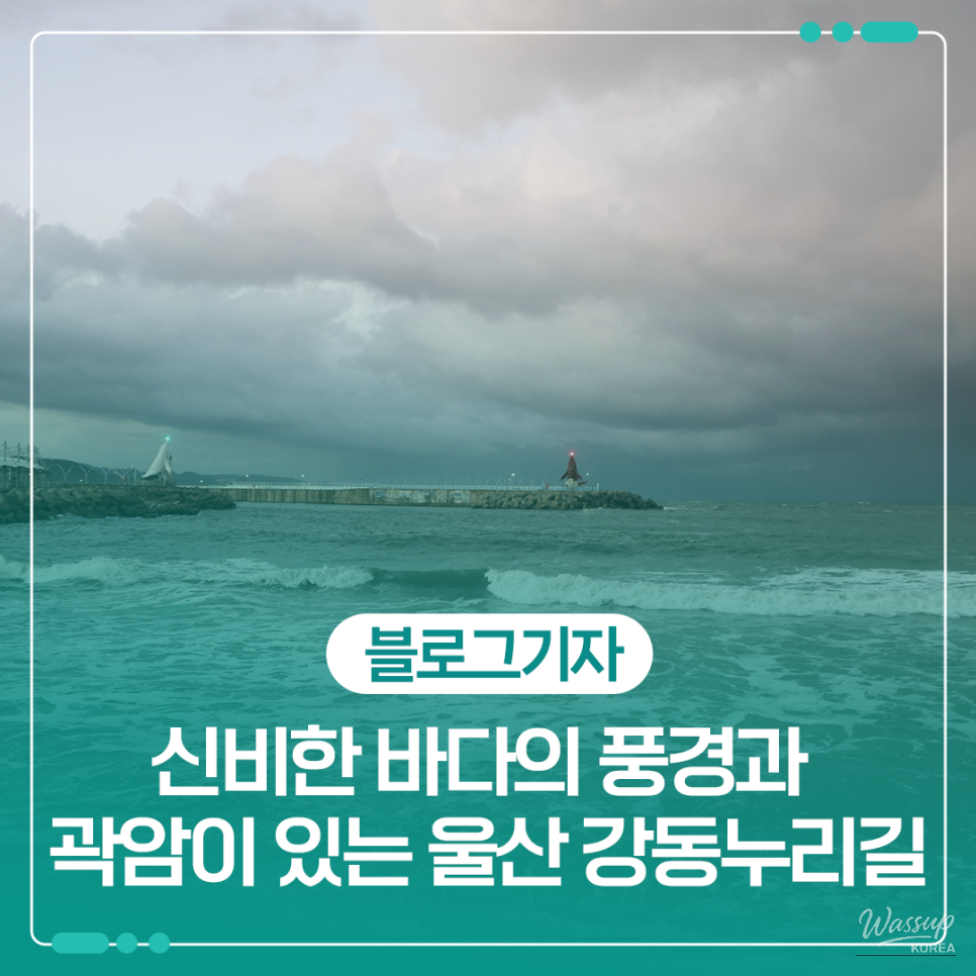
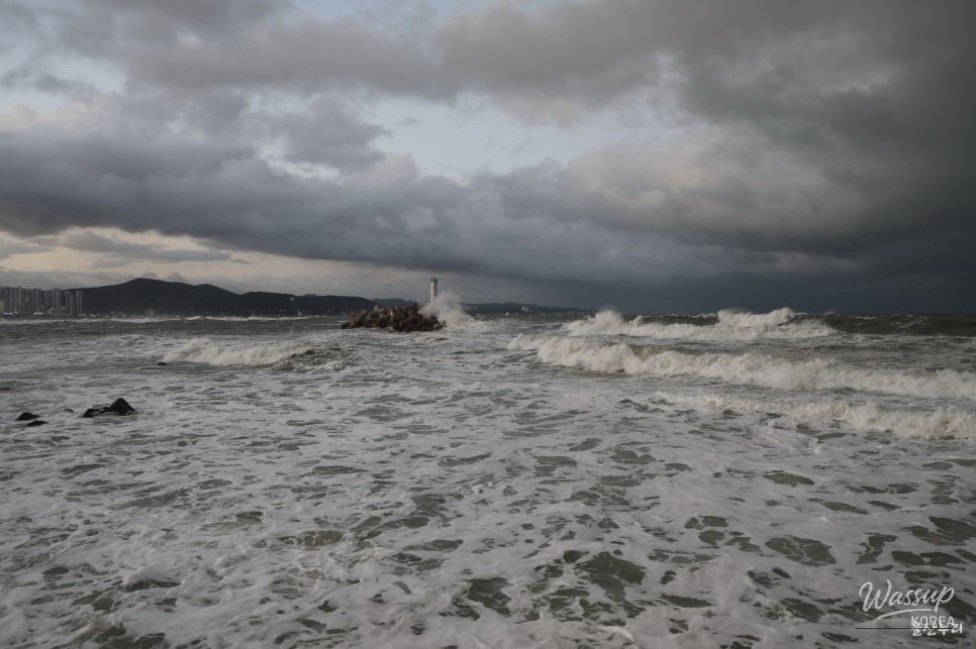
Even on rough and cloudy days, the sea expresses itself in its own unique way.
Standing before the tumultuous winter sea in Ulsan, one cannot help but feel a sense of awe at the immense energy it embodies.
As the sea of Ulsan belongs to the East Sea, it has deep waters that allow for various explorations.
On my way to the marine rock known as Gwakam, located along the Gangdong Nuri Trail in Ulsan, I stopped by a new facility that is set to open. It will be a children's reading experience center, officially operating from 2026.
The Ulsan Children's Reading Experience Center is designed to reflect the developmental stages and interests of students, integrating reading with nature experiences. It will be built on the site of the former Donghae branch school, spanning two floors and covering a total area of 8,405 square meters.
The center will operate temporarily until December 31, opening every week from 9:30 AM to 4:30 PM.
Ulsan is set to develop a Korean-style underwater base, which will be the largest of its kind in the world.
The small fishing village of Sinri, located about 1 km southeast of Sinri Port in Seongsaeng-myeon, Uljin-gun, is expected to have this underwater base installed by 2027, promising an exciting future.
After the rain, the rough waves relentlessly crashed against the shore. The Gangdong Nuri Trail in Ulsan connects five fishing villages and coastal areas within the restricted development zone of Buk-gu, offering unique sights and experiences.
The sea is a treasure trove of various possibilities.
Will underwater cities become a reality in the future?
Once the underwater base is established, residents will enter through the main module's moon pool using diving equipment, undergoing decompression from 4 atmospheres (underwater) to 1 atmosphere (land) before entering the main space.
During my previous visit, I enjoyed sashimi while watching the beautiful sunset over the sea, but this time a different landscape unfolded before me.
Gangdong in Ulsan is home to columnar joints formed by volcanic activity around 20 million years ago, and it has been a center for fishing since the Three Kingdoms period.
As I savor fresh winter sashimi, I can appreciate the unique charm of Ulsan, where the blue sea contrasts with the blackened, flat rocks, creating a stunning landscape.
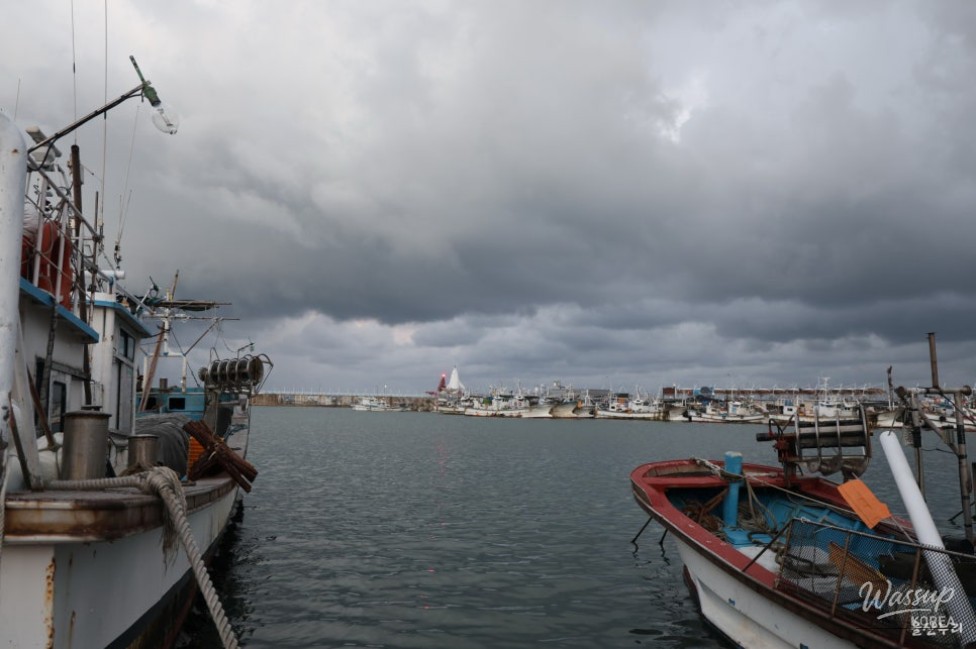
In the Buk-gu area of Ulsan, there were once whaling bases frequented by the ghost whale since prehistoric times. Although whaling is no longer practiced, traces of the past remain in the harbors.
Now that winter is in full swing, the sea appears to be colder.
Millions of years ago, the waters off Ulsan left marks from the flow of magma that paused for a moment.
Columnar joints are formed by the rapid cooling of hot lava or freshly deposited volcanic ash.
Deep in the waters offshore lies the seaweed rock, known as Gwakam.
Gwakam is also referred to as seaweed rock, Yangban rock, and Park Yun rock, named after Park Yun-woong, a local noble during the late Silla period.
He contributed to the founding of Goryeo, and Wang Geon elevated Ulsan to the status of Heungnyeo-bu, appointing Park Yun-woong as Heungnyeo-baek.
He was granted the right to harvest seaweed from 12 seaweed rocks in this area.
In the 27th year of King Yeongjo's reign, the government reclaimed privately held fishing grounds, salt flats, and seaweed fields to compensate for reduced taxes due to the implementation of the military service tax. Gwakam was also reclaimed by the government through Inspector Park Mun-soo.
However, after a series of poor harvests, Inspector Park Mun-soo, hearing the fishermen's grievances, proposed returning one of the rocks. This rock, known for its miraculous properties, is said to have allowed seaweed to flourish abundantly.
Ulsan's seaweed is known for its deep flavor and umami, much like the energy stored in Ulsan's deep sea.





No comments yet.