Hiking Daewunsan Mountain in Ulsan: A Journey Through Forests and Valleys



Daewunsan Mountain, one of the twelve scenic views of Ulsan, is famous as a summer retreat with its beautiful natural scenery and cool valley waters flowing through Naewonam Valley.
Daewunsan is a great place to enjoy valleys and forests, with Naewonam Valley, Ulsan Arboretum, and the Daewunsan Healing Forest.
I hiked Daewunsan Mountain via a course that passes through Ulsan Arboretum and the National Daewunsan Healing Forest, enjoying the autumn foliage.
[Daewunsan Mountain Hiking Course Information]
Ulsan Arboretum Public Parking Lot (Parking Lot 3) → Ulsan Arboretum → Daewunsan Summit → Observatory Rock → Daewunsan Healing Forest → Ulsan Arboretum Public Parking Lot (Parking Lot 3)
Vehicle access to Ulsan Arboretum and Daewunsan Healing Forest is only allowed with prior reservations.
You can park at the Ulsan Arboretum Public Parking Lot at the entrance of Ulsan Arboretum and walk in.
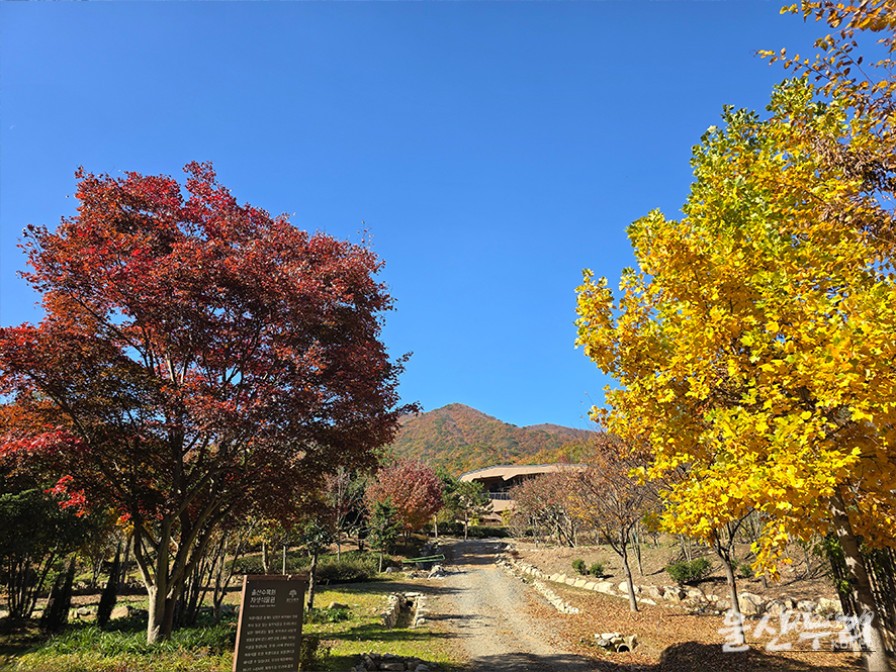
From the entrance of Ulsan Arboretum, the maple trees are ablaze with autumn colors, giving you a full sense of the season.
Ulsan Arboretum, which stretches along Naewonam Valley, allows you to see various types of trees and flowers, including a silver grass field, camellia garden, bamboo garden, aquatic plant garden, exhibition greenhouse, sensory therapy forest experience area, and rock garden.
If you visit in the fall, you can stroll along the trails and see silver grass, red maple leaves, and camellias.
Continuing up Ulsan Arboretum, you will pass through the famous Daewunsan Mongolian oak forest, which turns yellow in the fall.
Hiking Daewunsan directly reveals a forest abundant with broad-leaved trees and oak trees.
At the edge of Ulsan Arboretum, in the native plant center and garden, you can see native plants that grow on Daewunsan.
As you climb towards the summit of Daewunsan, the gentle trails of Ulsan Arboretum give way to steep slopes that continue for a long distance.
When you reach the ridge near the summit, you will see stone towers that have been built.
This hiking trail is not heavily traveled, so I used the hiking ribbons that were visible from time to time as signposts.
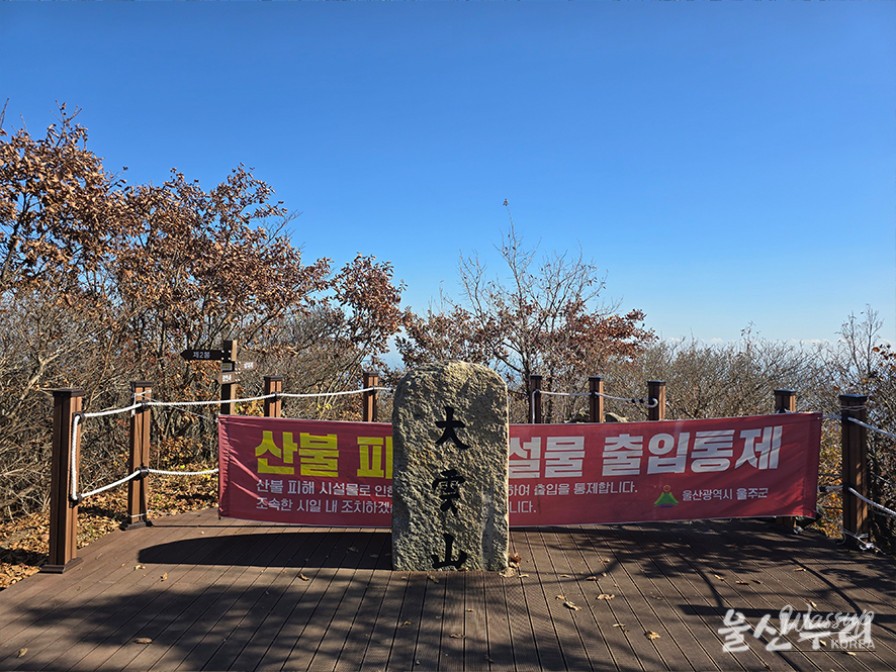
Following the ridge, you will see the summit of Daewunsan Mountain, which is 742m above sea level.
Daewunsan hiking is largely divided into four courses: a loop course that goes around Bulgwangsan and Daewunsan Ridge, the shortest course from the National Daewunsan Healing Forest to the summit via the Observatory Rock, a course that climbs from Naewonam, and a course that passes through Gulbawi and Peaks 1 and 2.
The descent was down the hiking course from the Observatory Rock to the National Daewunsan Healing Forest.
Looking down from the summit of Daewunsan towards Naewonam, you can see Ganjeolgot and the East Sea.
Hiking Daewunsan allows you to see mountains, valleys, and the sea, and it is a great place to watch the sunrise over the East Sea if you hike in the early morning.
Be careful when descending to the National Daewunsan Healing Forest.
Near the summit, there are long stretches of steep slopes, making it a challenging mountain to hike.
When hiking in the fall, when many oak and broad-leaved tree leaves fall, you should be careful.
For safety when hiking Daewunsan, it is recommended to wear hiking shoes and bring hiking sticks.
Following the steep deck road and rope lines, you will come to the Observatory Rock, where you can see the East Sea.
Continuing down the hiking trail, you can descend while enjoying the cool sound of water flowing through Naewonam Valley and viewing Guryong Falls.
Passing through the National Daewunsan Healing Forest, which has a cypress forest perfect for strolling, you will arrive back at the parking lot at Ulsan Arboretum, completing your hike of Daewunsan.
Hiking Daewunsan in Ulsan allows you to see Naewonam Valley, Ulsan Arboretum, and Daewunsan Healing Forest, as well as enjoy the autumn foliage.






Source :https://blog.naver.com/ulsan_nuri/224083312944
No comments yet.