Exploring the Tranquil Jangchunsa Temple in Hamann, Gyeongnam


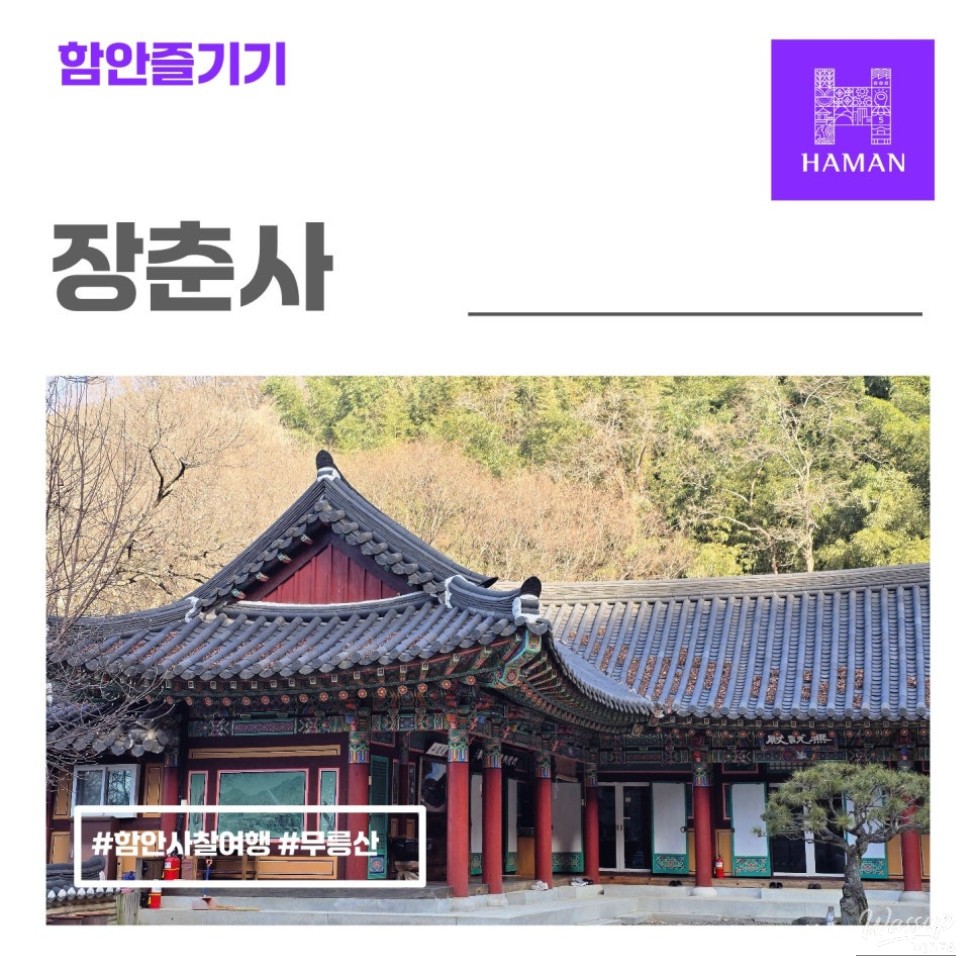
By Park Hyun-sook, 14th SNS Reporter
Traveling to Jangchunsa Temple in Hamann, Gyeongnam
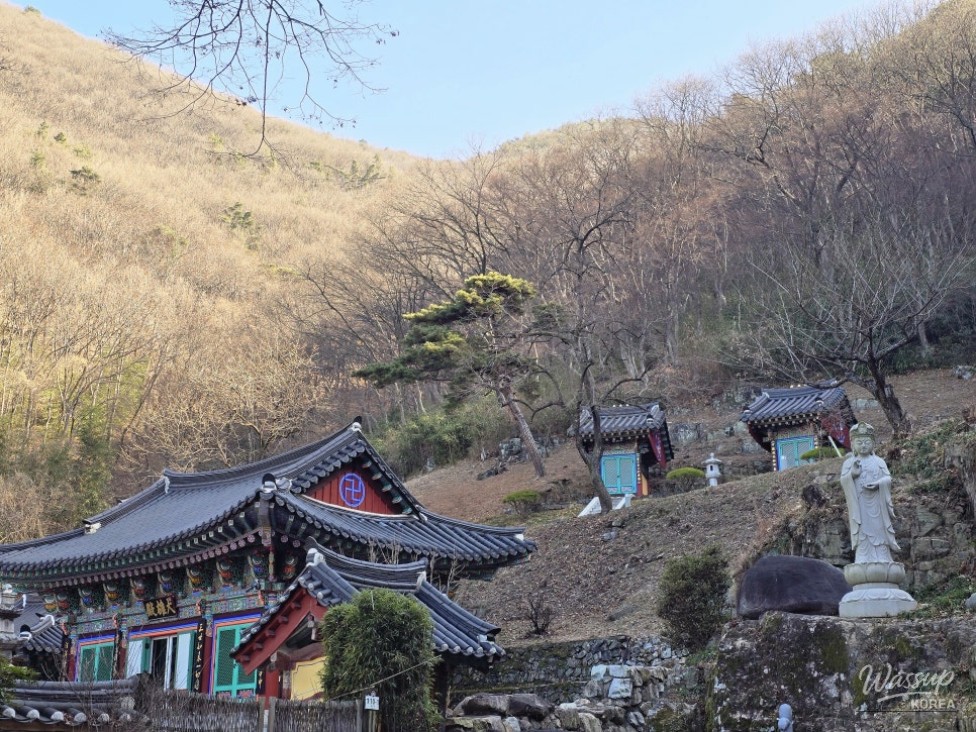
Nestled at the foot of Mureungsan Mountain, Jangchunsa Temple has quietly stood for many years. While not grand or large, it is a place that naturally calms the mind as visitors ascend the mountain path, offering a serene experience to those who visit Hamann.
Jangchunsa Temple is located at 110-1 Bukwon-ro, Chilbuk-myeon, Hamann-gun, Gyeongnam. It sits at the end of a 1.5 km path that follows a valley, making it feel like a small mountain retreat for first-time visitors.
The road to Jangchunsa Temple is well-maintained, with ample parking, making it easy to access even by car. The tranquil atmosphere from the start of the path complements the serene traditional temple. If time permits, it would be lovely to walk meditatively along the forest path. In spring, cherry blossoms line the uphill path, creating a stunning view.
Various legends surround the founding of Jangchunsa Temple. According to one tale, in 815 AD during the reign of King Heondeok of Silla, Monk Muyeom repelled invaders with his spiritual power, prompting the king to establish the temple in his honor.
Another account states that in 832 AD, Monk Murang founded the temple. The Hamann-gun website also supports this narrative. While records regarding the founding date and figures may vary, there is consensus that Jangchunsa is a historically significant temple dating back to the Silla era.
The entrance gate, or Ilju Gate, makes a lasting impression. It features a unique design that requires visitors to bow slightly to pass through, encouraging self-reflection as they enter.
Upon passing through the gate, a modest courtyard unfolds. Although not large, the well-kept space harmonizes with the temple's main hall and five-story stone pagoda, creating a pleasant atmosphere that feels welcoming even for extended stays. Despite being a winter mountain temple, it exudes comfort and coziness.
At the center of the courtyard stands the five-story stone pagoda, designated as a cultural heritage site in Gyeongnam. This pagoda, representing Jangchunsa, originally had five stories but currently retains four due to erosion over time.
The pagoda's elegant proportions and stable structure suggest it was built during the late Goryeo period. Its understated beauty leaves a lasting impression, focusing on simplicity rather than extravagance.
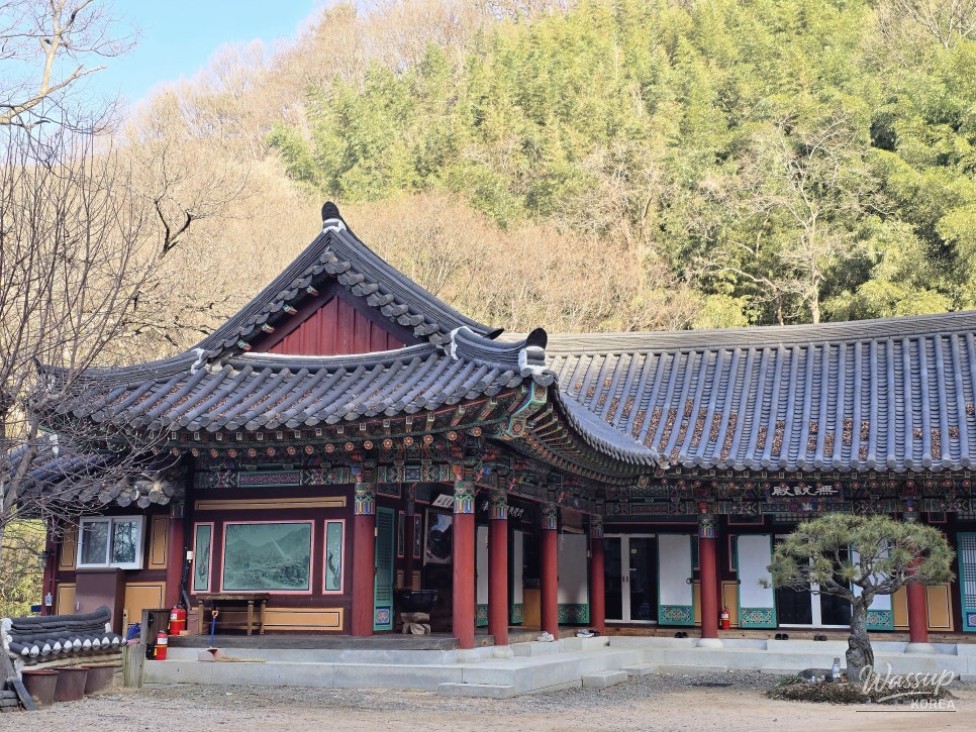
Behind the pagoda is the Daeungjeon Hall, constructed in 1979. It features a traditional hip-and-gable roof and measures three bays wide and two bays deep. Although small, its neat structure and stable proportions fulfill the temple's central role.
Behind the Daeungjeon Hall is a modest Yaksa-jeon Hall, which houses important cultural assets of Jangchunsa. The statue enshrined here, the Yaksa Buddha, is protected as a cultural heritage site in Gyeongnam.
Jangchunsa Temple welcomes visitors with its deep historical ambiance and tranquil atmosphere. It is an ideal place for those seeking to escape the chaos of everyday life and find clarity. Take a moment to pause and enjoy the natural scenery surrounding Mureungsan Mountain.
The changing landscapes and temple views throughout the seasons offer a peaceful and beautiful experience, soothing visitors' worries. The gentle sounds of nature blend harmoniously with the surroundings, providing comfort.
If you wish to experience history, Buddhist culture, and a serene temple stroll in Hamann, take your time walking and reflecting at Jangchunsa Temple.
Source :https://blog.naver.com/arahaman/224163643044
No comments yet.