Exploring the Special Exhibition 'The Red Horse is Coming' at Ulsan Museum



As the new year begins, there's an undeniable hustle in the air.
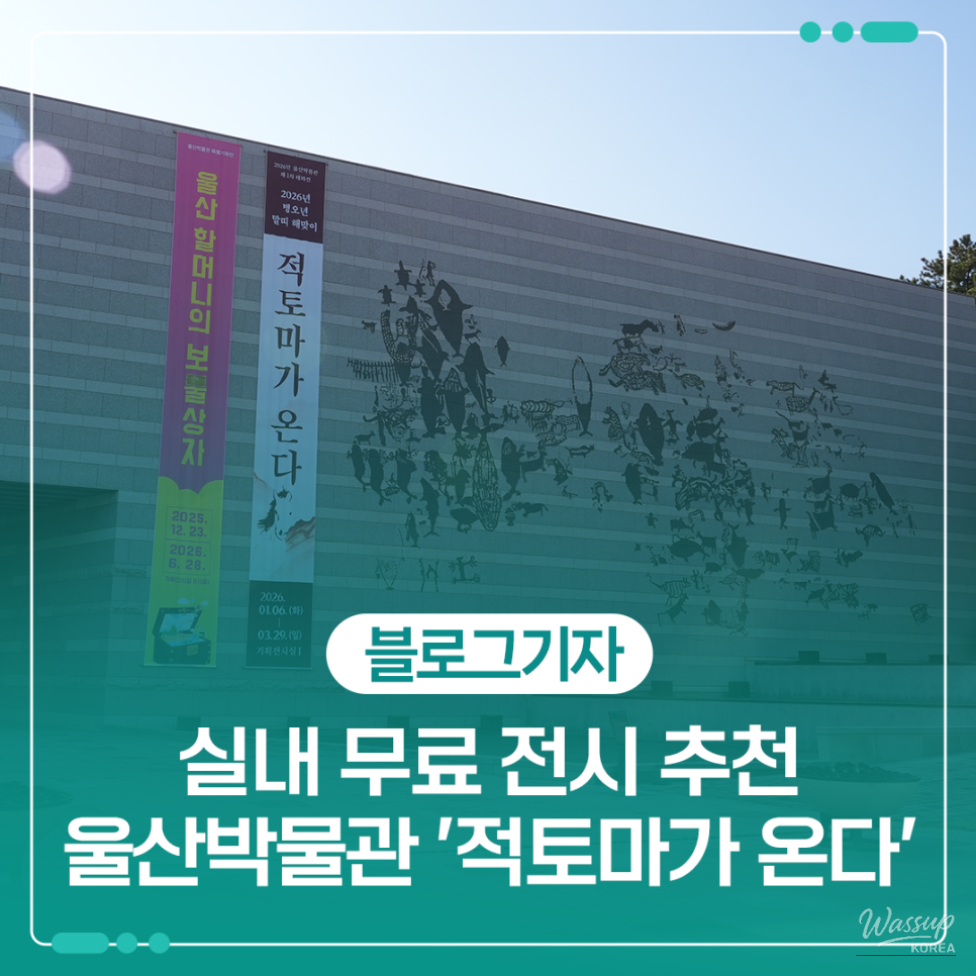
I wanted to take a quiet cultural stroll, so I visited the Ulsan Museum.
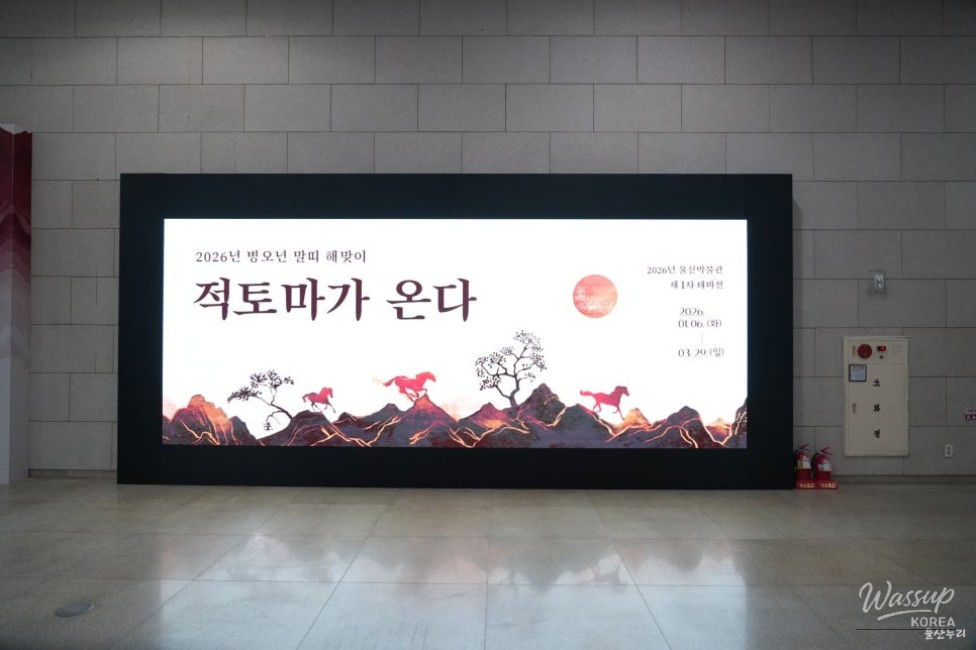
Coincidentally, a special exhibition was being held in celebration of the Year of the Horse in 2026.
Since it was a free exhibition, it was easy to drop by, and the depth of the content was surprisingly engaging, allowing for a leisurely exploration.
What particularly stood out was learning about the historical relationship between the region of Ulsan and horses.
Today, I’d like to summarize my experience at the Ulsan Museum's special exhibition 'The Red Horse is Coming.'
01. Basic Information about Ulsan Museum
Located in the heart of Ulsan, the Ulsan Museum is a public museum where visitors can explore the history and culture of Ulsan at a glance.
In addition to its permanent exhibitions, various themed exhibitions are held throughout the year, making it a meaningful stop for both locals and travelers.
✅ Opening Hours: 09:00 AM - 06:00 PM
✅ Closed: Every Monday
✅ Admission Fee: Free
✅ Exhibition Duration for 'The Red Horse is Coming': Until March 29
The spacious plaza in front of the building is great for a stroll, and the indoor exhibitions are organized by floor, ensuring a comfortable flow for visitors.
Because of these features, Ulsan Museum is a low-pressure space to visit even for a short time during your travels.
02. Special Exhibition 'The Red Horse is Coming'
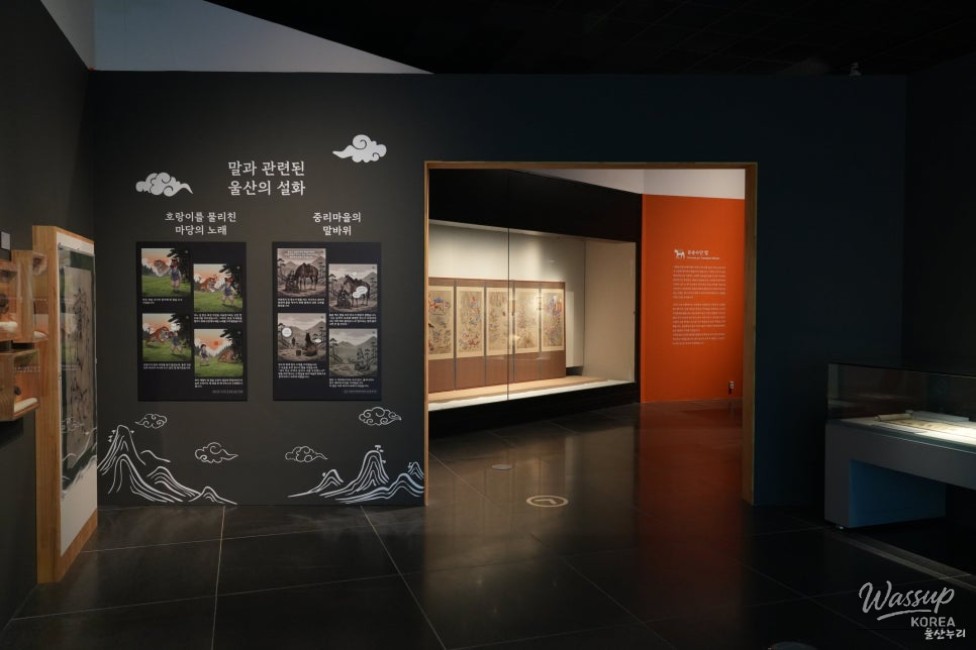
The exhibition is centered around the historical relationship between the Ulsan region and horses.
During the Joseon Dynasty, Ulsan was an important area for managing state horses and served as a strategic military base.
The exhibition was structured around four narrative flows: 'Ignition - Gallop - Endurance - Aspiration.'
It was filled with precious artifacts and records that provide a comprehensive view of the history of horses that have grown on Ulsan's land.
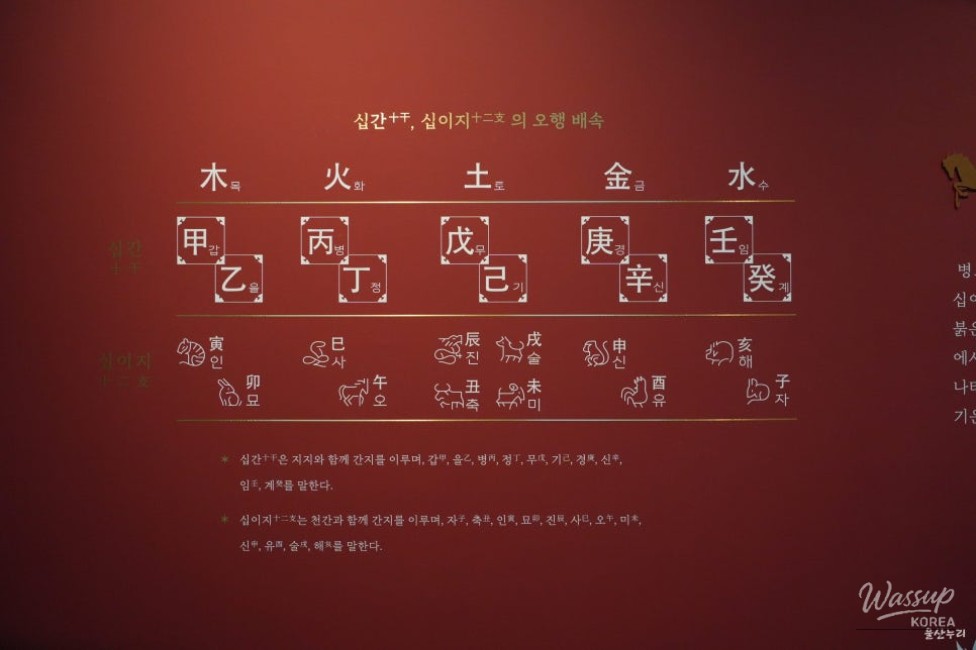
The year 2026 is the Year of the Fire Horse, the 43rd year in the 60-year cycle.
The 'Fire' signifies red in the ten heavenly stems and is associated with the element of fire.
The 'Horse' in the twelve earthly branches also represents fire energy.
Thus, the Year of the Fire Horse is interpreted as a year where the energy of fire overlaps twice, traditionally seen as a time of significant change and activity.
It was intriguing how this meaning was woven into the central narrative of the exhibition.
One of the first artworks that caught my eye in the exhibition hall was the painting of the Joseon Tongsinsa procession.
An important figure in early Joseon diplomacy with Japan, Lee Ye, was from Ulsan.
He managed to return 667 Joseon captives who had been taken by pirates during diplomatic missions to Japan.
The procession painting meticulously depicts the orderly movement of diplomats, including the chief envoy, deputy envoy, and musicians.
This artwork serves as a record of the scale of the diplomatic delegation and the protocols of the time.
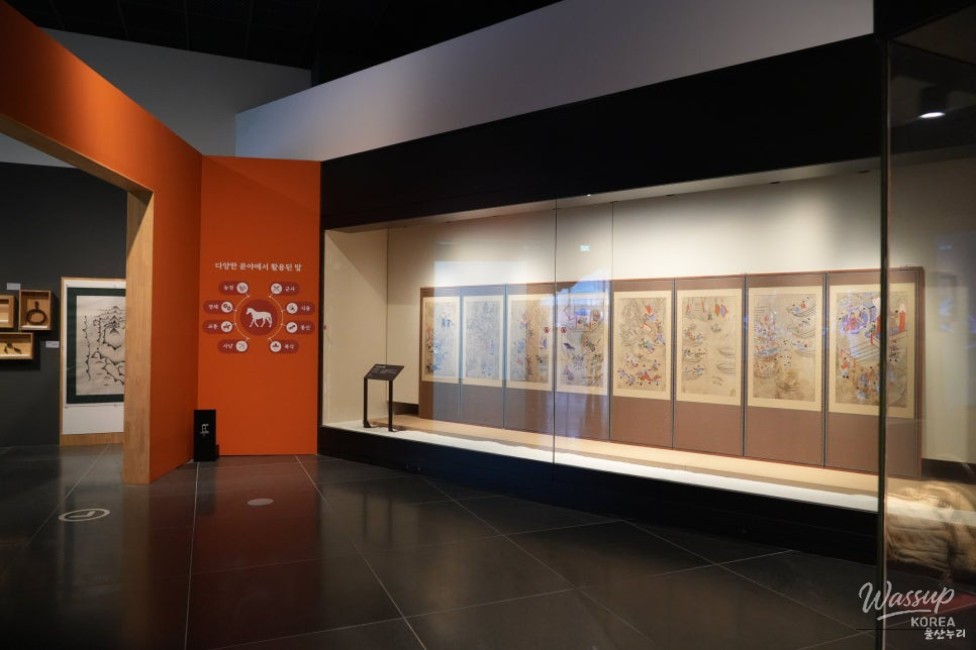
Throughout human history, horses have been essential across nearly all fields, including agriculture, economy, transportation, hunting, attire, and communication.
For instance, the example of King Zhou of the Western Zhou Dynasty granting a fief to a vassal solely for raising horses illustrates the immense influence of horses on state power structures.
Before modern communication technologies, horse relays played a pivotal role in state administration.
Commercially, they facilitated the movement of goods between regions, indicating that horses were synonymous with national competitiveness and economic strength.
In the latter part of the exhibition, the representation of horses in religion and faith was explored.
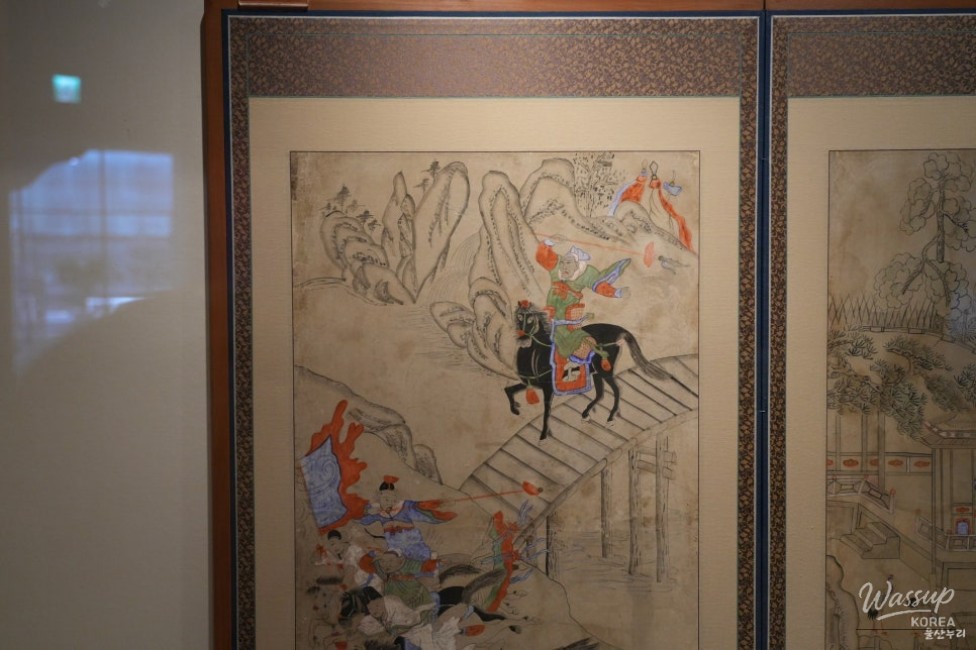
There was also a folding screen depicting heroes from the classic Chinese novel 'Romance of the Three Kingdoms.'
This piece, showcasing the loyalty and strategies of Liu Bei, Guan Yu, and Zhang Fei, was widely produced in the folk art and court painting styles of the late Joseon period.
The image of a horse accompanying a hero, like Guan Yu's red horse, is a remarkable artwork that embodies both decorative and didactic qualities.
Horses, as the seventh animal in the twelve earthly branches, symbolize the energy of sheep representing the south.
In Buddhist art, such as 'The Ten Kings of Hell,' horses appear as protective deities guarding Ksitigarbha Bodhisattva.
Here, horses are viewed as a means of transporting humans towards enlightenment and symbolize strength in progress and diligence.
This section made me feel the mystical status of horses as beings guiding human souls.
03. Stamp Experience
After viewing the exhibition, visitors can find an interactive space at the entrance.
Here, you can complete your own stamp artwork based on the scenes from the 'Romance of the Three Kingdoms' folding screen seen earlier.
By layering multiple stamps in order, a vibrant picture comes to life, captivating both children and adults alike.
After finishing the artwork, there’s a corner to write down your wishes for the new year, which can be hung on the wall.
It was heartwarming to see visitors writing down their heartfelt wishes, borrowing the energy of the red horse.
In summary, I explored the details of the ongoing special exhibition 'The Red Horse is Coming' at Ulsan Museum.
From the deep historical background related to horses in Ulsan to the cultural symbolism woven into our lives, it was a very beneficial opportunity to learn and experience for free.
As we enter the Year of the Red Horse, I sincerely wish that your 2026 is filled with unimpeded galloping and soaring aspirations.
If you are looking for a pleasant indoor free exhibition to visit during the chilly winter, why not consider visiting this place with family or friends this weekend?






Source :https://blog.naver.com/ulsan_nuri/224209607388
No comments yet.