Exploring the Marisan Tombs and Exhibition Hall in Ham-an



By Lee Hyun-joo, SNS Reporter, 15th Term
Where Time Meets Arakaya
Marisan Tomb Exhibition Hall
When talking about Ham-an, the Marisan Tombs are an essential site that cannot be overlooked.
The landscape itself, with its large and small mounds stretching along the ridge, is truly impressive. However, once you learn about the people who lived here and the culture they left behind, the Marisan Tombs begin to look different.
Today, I visited the Marisan Tomb Exhibition Hall, a great place to explore before or after touring the tombs.
Address
91 Samgi-gil, Gaya-eup, Ham-an, Gyeongnam
Opening Hours
March to October: 09:00 - 18:00
November to February: 09:00 - 17:00
Closed on
Every Monday, January 1, Lunar New Year, Chuseok
As you walk along the trail of the Marisan Tombs, you will find the entrance to the exhibition hall. There is also a passage connecting it to the Ham-an Museum, so I recommend visiting both.
The Marisan Tombs, along with other Gaya tombs, were recognized as UNESCO World Heritage Sites in 2023, highlighting their global significance. Currently, Ham-an is steadily expanding its historical and cultural tourism centered around the Marisan Tombs.
While the scenery is beautiful on its own, without understanding the historical background, it may just seem like a series of mounds. Therefore, I personally recommend exploring the exhibition hall along with the tombs.
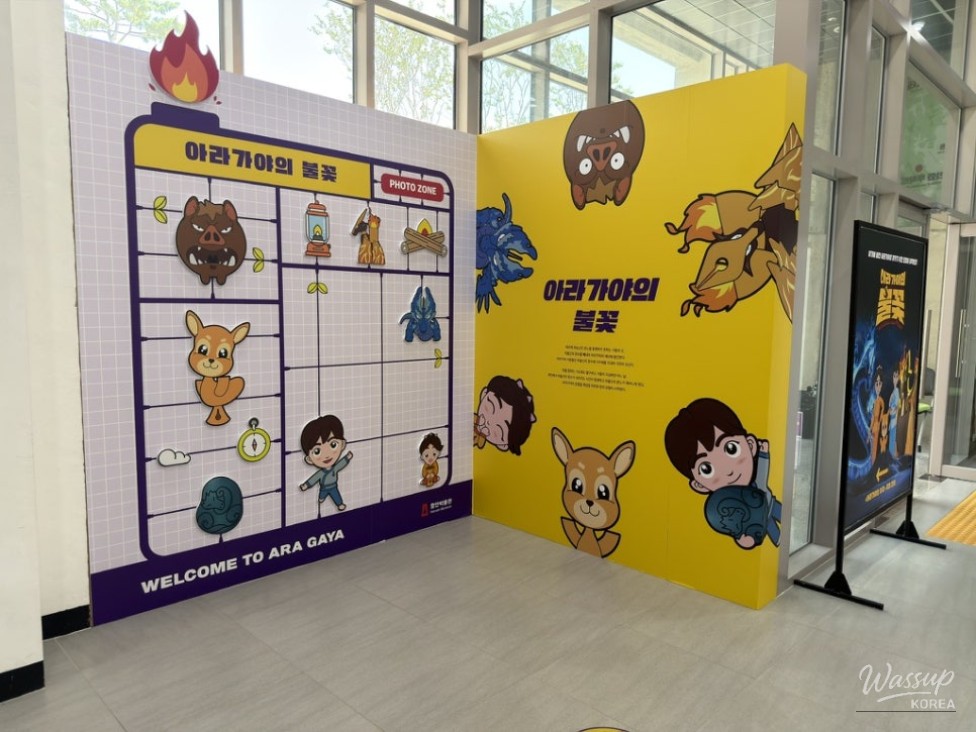
Entering the exhibition hall, you will find a children's experience area themed 'The Flames of Arakaya' on the first floor to the right.
I hope you can take the opportunity to learn about Ham-an's history with your children by referring to the 2026 Ham-an Museum education program information. The museum offers various programs for visitors, especially many that children will enjoy, allowing for both fun experiences and learning.
Inside the exhibition hall, stories about the Marisan Tombs and Arakaya unfold sequentially. You can easily see the locations of the Gaya tombs that are UNESCO World Heritage Sites.
Notable artifacts and the construction methods of the tombs are displayed, allowing visitors to explore how the society of that era can be inferred from the size of the tombs and the artifacts found.
The No. 4 tomb, a pit-style stone burial mound, is believed to be the royal tomb of Arakaya, with 139 pottery pieces and 144 iron artifacts excavated, along with an estimated 5-6 human sacrifices.
We took a tour around the No. 4 tomb, learning about the artifacts found and the burial rituals of the Arakaya era, gaining insights into the cultural exchanges during Arakaya's peak.
In addition to the hands-on experience themed 'The Flames of Arakaya,' an animation based on the Arakaya era was also available, making it easy to understand and enjoyable to watch.
The animation depicts the adventure of Ara and Han as they seek to reclaim the essence of the drought-stricken deity. Characters and symbols are inspired by excavated artifacts, utilizing real historical sites like the Marisan Tombs and Gaya-ri, blending history and fantasy.
There are also auxiliary seats at the entrance, so I recommend taking a moment to enjoy the exhibition.
Additionally, the construction process of the No. 6 tomb, the largest stone chamber tomb in Gaya, is detailed. Thanks to many researchers and excavators, citizens visiting Ham-an can comfortably enjoy the exhibition.
The passage connecting the Marisan Tomb Exhibition Hall and Ham-an Museum is equipped with an elevator for easy access.
Utilize the free umbrellas to enjoy the beautiful scenery of the tombs along the ridge and discover the stories of Arakaya within the exhibition hall. If you're planning a trip to Ham-an, I recommend not just passing by the Marisan Tombs but also visiting the exhibition hall for a meaningful journey that combines the beauty of Ham-an's landscape with the history and culture of Arakaya.


Source :https://blog.naver.com/arahaman/224360986216
No comments yet.