Exploring the Ham-an Watermelon Exhibition Hall



By Jo Yoon-hee, 14th SNS Reporter
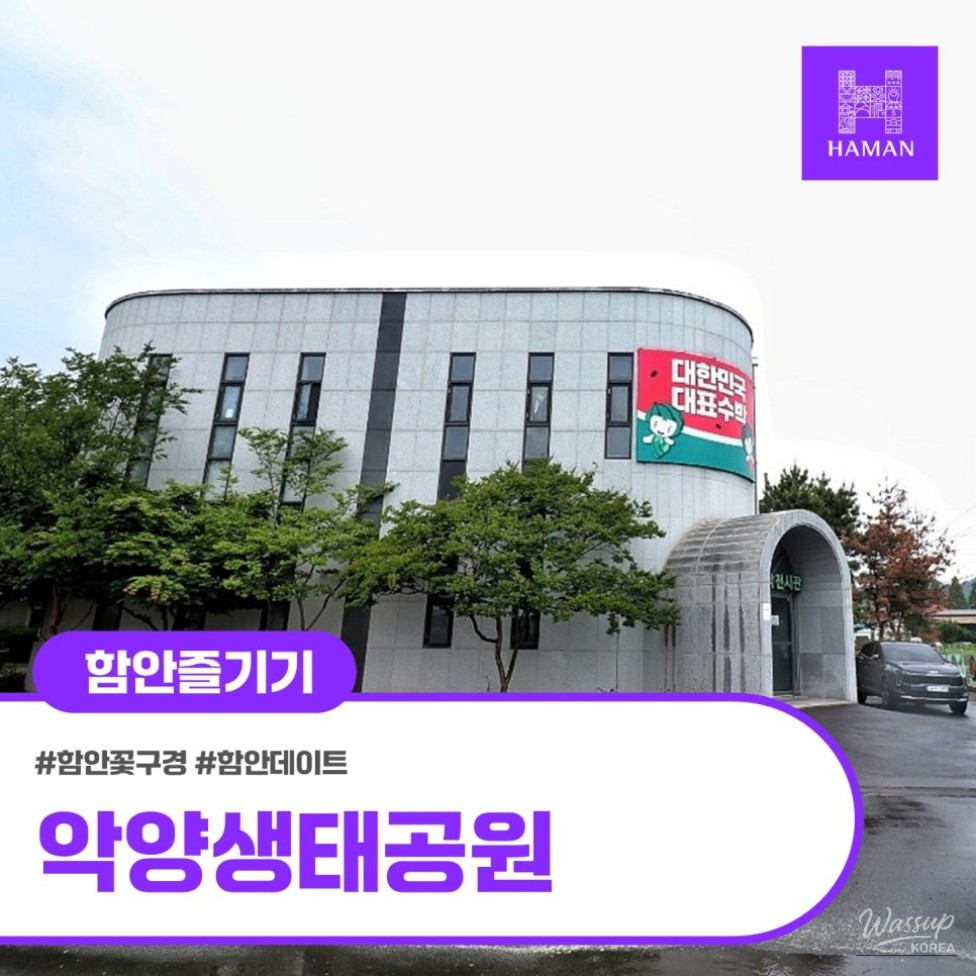
Ham-an Watermelon Exhibition Hall
- Address: 171 Wolchon-an-gil, Gunbuk-myeon, Ham-an-gun, Gyeongnam
- Opening Hours: 09:00 AM - 06:00 PM
- Experience Hours: 10:00 AM - 05:00 PM
- Lunch Break: 12:00 PM - 01:00 PM
- Closed: Every Sunday, Monday, and Public Holidays
We finally arrived at the Ham-an Watermelon Exhibition Hall, a place I have always wanted to show my mother. I was a bit worried because it was raining, but thankfully, it’s an indoor space where we could enjoy ourselves regardless of the weather. Shall we explore the Ham-an Watermelon Exhibition Hall together to learn more about this premium watermelon?
In fact, I visited last week, but the exhibition hall was closed because the staff were out for an event. I was concerned it might happen again this time, but even though the door was closed, I called the contact number and a staff member promptly came to open it for us, even during their lunch break.
Ham-an is located at the confluence of the Nakdong and Nam rivers, where fertile land has formed around the rivers, creating an ideal environment for watermelon farming. The fertile soil, high average temperatures, and abundant sunlight contribute to the photosynthesis process, allowing watermelons to grow sweet and juicy, especially due to the significant temperature differences between winter and early spring.
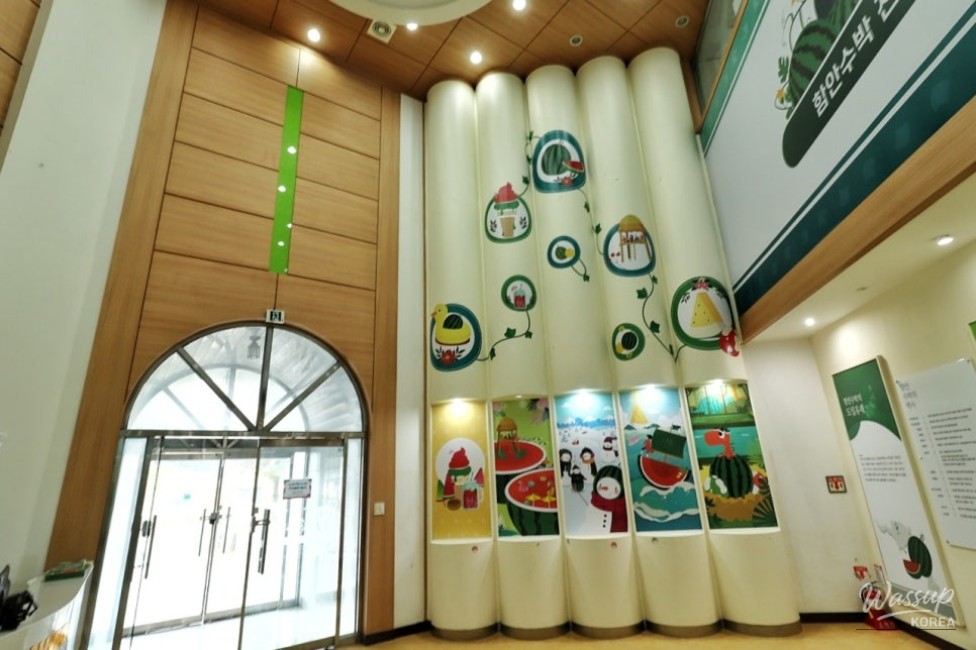
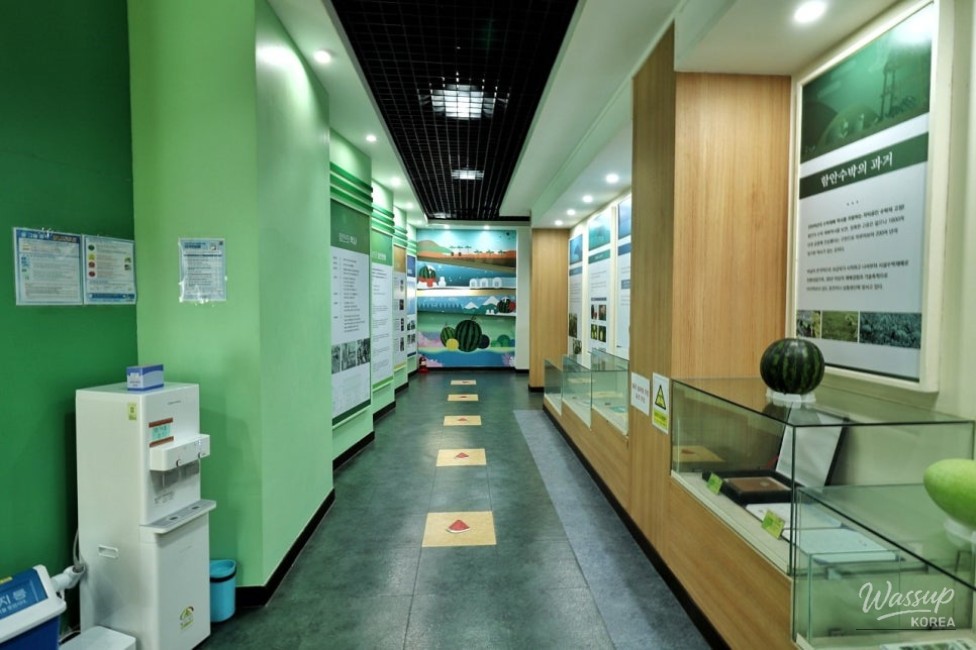
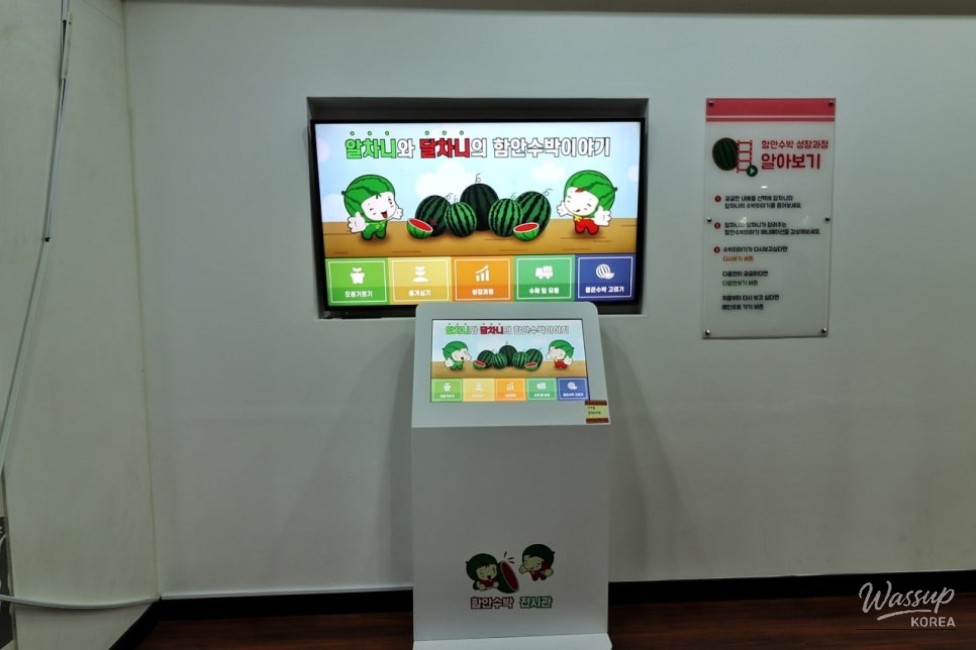
The exhibition hall provides an interactive experience showcasing the history and cultivation process of Ham-an watermelon. You can learn about its 200-year history, the greenhouse cultivation methods, and how it gained national fame, all presented in an engaging manner with cute videos.
Inside the exhibition hall, there is a nostalgic space that captures various scenes, such as women washing clothes by the stream, children splashing in the water, families enjoying watermelon together, and grandfathers calling out to children playing in the frost. It was a moment that brought back memories for my mother, as I saw her eyes reflecting on the past.
The Ham-an watermelon is primarily cultivated in the gentle alluvial plains of the Nakdong and Nam river basins, which have an inclination of less than 15°. The region's long east-west topography allows for ample sunlight, making watermelon cultivation easy. Additionally, there is a map of local specialties that makes it easy for first-time visitors to identify Ham-an's unique products.
The history of Ham-an watermelon dates back about 200 years, beginning naturally due to the fertile plains of the Nakdong River and the mild climate during the late Joseon period. The turning point for its national recognition came during the 1960s and 1970s with the introduction of greenhouse watermelon cultivation.
When selecting a delicious watermelon, consider its appearance, weight, sound, and the condition of the stem. Tips for choosing the best watermelon include looking for a small belly button (the flower scar) and distinct stripes. A well-ripened watermelon typically has a clear contrast between green and black stripes. When tapped, it should produce a clear and resonant sound, indicating optimal ripeness.
After touring the exhibition hall, we stepped outside, but the rain continued, so we sought refuge in the healing garden, which offers a hands-on experience of how watermelons grow inside a greenhouse.
The garden features watermelon vines climbing over a pergola, with particularly eye-catching golden watermelons ripening within heart-shaped molds. There are also charming sculptures of dolls enjoying watermelon that bring joy to visitors of all ages.
Watermelon is rich in nutrients such as Vitamin C, which helps with antioxidant activity and immune function, and Vitamin A, beneficial for skin and eye health. It also contains lycopene, which has antioxidant properties, citrulline for blood circulation, and potassium for sodium balance and hydration.
With over 90% water content, watermelon is perfect for hydration on hot days. Witnessing the tiny watermelons growing reminded me of seeing a newborn baby. The patterns on the skin of baby watermelons were fascinating, and when I reached out to touch them, my mother reminded me not to, as it could harm their growth.
The fertile soil in Ham-an significantly contributes to the sweetness of the watermelons, supported by the region's favorable climate. Did you know there are various types of watermelons grown here?
Golden watermelons have a golden spotted skin and sweet, tender flesh, while black-skinned watermelons are known for their high sugar content and crisp texture. There are also seedless varieties, like the 'Fashion Watermelon,' which is easy to eat, and the elongated 'Pillow Watermelon,' perfect for small households. The 'Black Boss Watermelon' targets one- to two-person households with its yellow flesh and excellent taste.
Seeing my mother's delight reminded me of my first visit to the exhibition hall, and I felt glad to have brought her here. Currently, Ham-an accounts for 15% of the national greenhouse watermelon cultivation area and 64% of Gyeongsangnam-do's watermelon production, dominating over 70% of the winter watermelon distribution in Garak-dong. Experience the rich history and stories of premium Ham-an watermelon at the Ham-an Watermelon Exhibition Hall; you won’t regret it.
Source :https://blog.naver.com/arahaman/224285151380
No comments yet.