Exploring Modern History in Gunsan



During my visit to the Gunsan Modern Art Museum, located at 230 Haemang-ro, Gunsan, Jeollabuk-do, I encountered a significant piece of modern history. This building, once the site of the Japanese 18th Bank's Gunsan branch, carries the painful history of economic exploitation during the Japanese colonial era.
Today, it serves as a unique exhibition space that preserves the original architecture while showcasing works from local artists, allowing visitors to experience both historical lessons and artistic expressions.
Upon entering the indoor exhibition hall, the robust structure and high ceilings reminiscent of a bank greet visitors. The solid walls and architectural remnants echo the overwhelming weight typical of modern financial institutions. Even without seeing the entire exterior, gazing at the sturdy framework and the modern artworks displayed within creates a feeling of stepping into a historical intersection of the past and present.
The main facilities include a hall for permanent exhibitions and a vault room that hints at the bank's former functions. The museum regularly hosts curated exhibitions featuring materials related to Gunsan's modern history and works by local artists, providing a diverse array of experiences for visitors.
The atmosphere within the museum is calm yet resonates with a profound weight. The old bricks and wooden structures visible beyond the exhibited artworks deepen the narrative of the museum's past. Throughout the museum, displays document the building's history and its use as the Japanese 18th Bank's branch.
Notably, informative plaques detail the bank's origins, explaining how it was established in Nagasaki in 1870 and its subsequent operations in Gunsan. Photographs and records depict the exploitation process, where the bank lent money to Japanese merchants at low interest while charging high rates to local farmers, vividly illustrating the economic hardships of the colonial period.
As I walked through the museum, I encountered images of bustling scenes at Gunsan Port, where rice and goods flowed in and out. Explanatory texts accompanying these images calmly narrate the role of the 18th Bank in Gunsan's economy and the suffering endured by local farmers.
After liberation, the building was repurposed as a warehouse and office for Daehan Express, undergoing significant changes. However, the city of Gunsan undertook extensive restoration efforts to preserve its modern history, carefully restoring features like the red brick facade and semicircular windows to their original 1911 state.
Visitors can witness the meticulous restoration process through blueprints and photographs that compare the pre-restoration designs with the current state of the building. The windows on the main facade and the right side were crafted to match the best-preserved left side, preserving the architectural style of the colonial period.
As I examined the exhibited artworks up close, I appreciated the vibrant brushstrokes and bold use of colors like orange and yellow, which invigorate the otherwise serene atmosphere of the exhibition spaces.
At the museum's conclusion, the records of independence activists evoke a heavy sense of history. A poignant letter from the mother of Ahn Jung-geun, urging her son not to beg for life but to die for a greater cause, resonates deeply with visitors, leaving a lasting impression.
After visiting the Gunsan Modern Art Museum, I moved to the adjacent Gunsan Modern History Museum. This specialized exhibition space encapsulates the past and present of Gunsan under the slogan 'History is the Mirror of the Future.' It systematically preserves and exhibits the city's modern cultural heritage and serves as a testament to both its glorious past as a maritime logistics hub and the pains of exploitation during Japanese rule.
Upon entering the museum, visitors are greeted by an impressive lobby connecting Gunsan's past and present, with a thoughtfully organized exhibition flow. The high ceilings and modern design create an overwhelming sense of scale, suitable for showcasing Gunsan's rich history.
The museum features several key facilities, including the 'Maritime Logistics History Hall,' the 'Donor Exhibition Hall' displaying valuable artifacts, and the 'Modern Living Hall,' which recreates the streets of Gunsan in the 1930s.
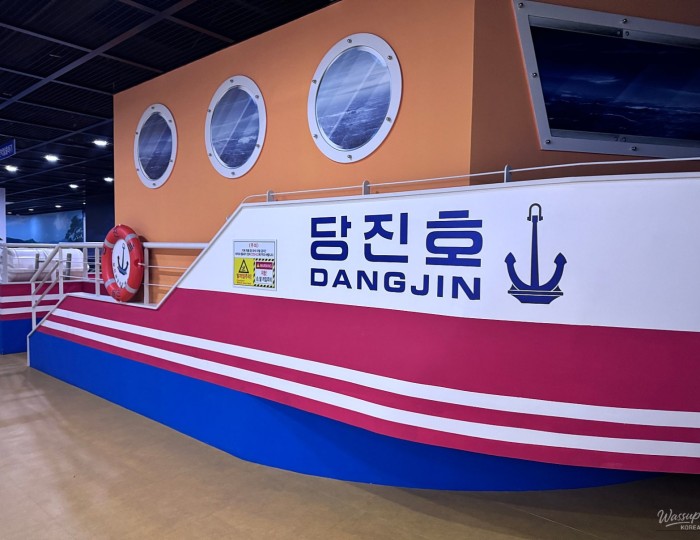
In the Maritime Logistics History Hall on the first floor, artifacts and large models detail how Gunsan Port has functioned as a logistics center in Northeast Asia from prehistoric times to the modern day. The exhibition also highlights the historical significance of maritime trade centered around the Gogunsan Islands.
Source :https://blog.naver.com/jbgokr/224277459811
No comments yet.