Exploring Hongpo Seowon: A Historical Gem in Hamann
경상남도 함안군 칠서면 계내리
홍포서원



Hongpo Seowon: A Joseon-era Seowon Preserving Hamann’s History
14th SNS Reporter Lee Sang-hyun
Hongpo Seowon
66 Gongdanbuk-an-gil, Chilsseo-myeon, Hamann-gun, Gyeongsangnam-do
In Hamann, there is a special place that remembers history. Among the many seowons in Gyeongsangnam-do, Hongpo Seowon is a prominent seowon established during the Joseon Dynasty to honor five members of the Chilywon Yoon clan. It has a deep connection with the figures and history of Hamann, making it an interesting place to visit.
Typically, seowons are located deep in the mountains or in secluded areas, but it is intriguing that Hongpo Seowon is situated within a large factory complex.

A Seowon Inside an Industrial Complex
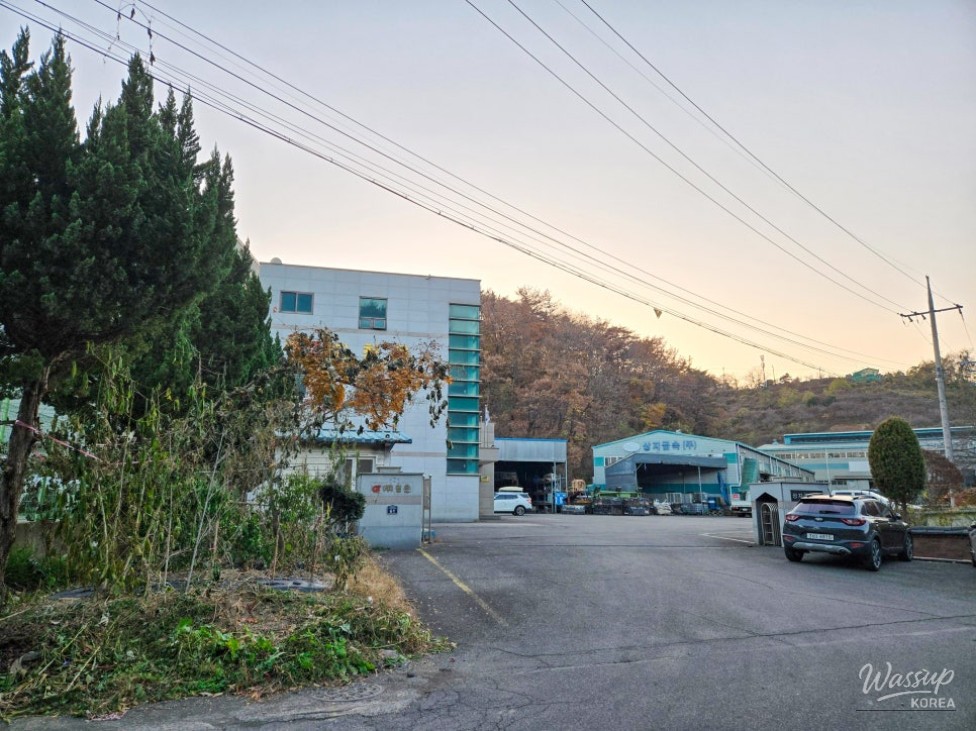
To reach it, you must pass through the Chilseo Industrial Complex. While it is easy to visit by car, the presence of factories rather than mountains and valleys surrounding the area adds a unique twist. It seems to hold many undiscovered secrets.
At the entrance of the seowon, there is a red Hongsalmun gate, symbolizing the boundary between the inside and outside. It marks the beginning of a sacred space, signifying that one should enter with a reverent heart.
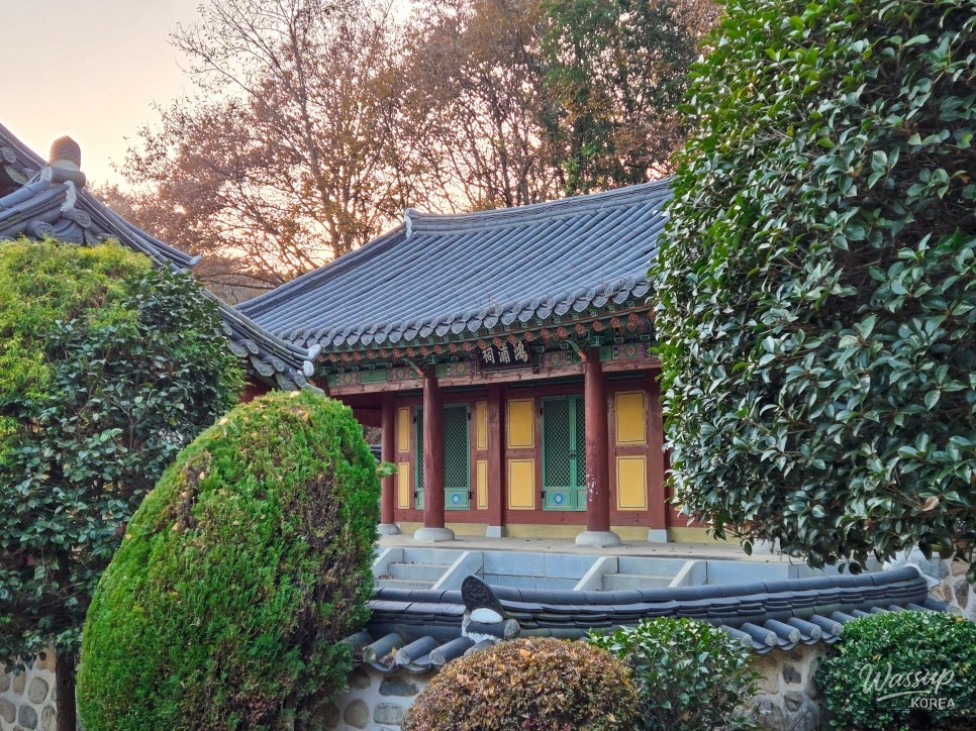
Honoring the Chilywon Yoon Clan
Hongpo Seowon was built in 1782 (the 6th year of King Jeongjo) to honor Yoon Hwan, Yoon Ja-dang, Yoon Ji, Yoon Seok-bo, and Yoon Tak-yeon, the five members of the Chilywon Yoon clan.
Yoon Hwan served five kings during the Goryeo Dynasty, while Yoon Ja-dang is known for contributing to the founding of Joseon. Yoon Ji participated in writing at the Hall of Worthies during the reign of King Sejong, Yoon Seok-bo studied Confucianism, and Yoon Tak-yeon was involved in righteous army activities.

Landscape, Tombs, and Seasonal Beauty
Climbing the stairs in the photo, you can view the tombs of the revered sages. The landscaping is quite well done, with flowers and trees beautifully changing with the seasons, creating a picturesque scenery. The blend of past and present allows one to fully experience the atmosphere of the seowon simply by gazing at the landscape through photographs.
A large ginkgo tree also contributes to the beautiful scenery, although when I visited, all the leaves had fallen. I felt a bit disappointed, wishing I had come a little earlier to see it in its full glory.
There are benches under the tree where one can rest, with yellow ginkgo leaves carpeting the ground like a tapestry. Visiting during the day and basking in the sunlight would surely uplift one's spirits.
Preservation and Legacy of Hongpo Seowon
Passing through the Hongsalmun leads to the inner gate, the Hongpo Shrine, and the lecture hall, all exuding a solemn atmosphere.
As a representative seowon of the Chilywon region, it was demolished during the Seowon Abolition Order but was restored in 1974. It also houses the tomb of Yoon Si-young, the progenitor of the Chilywon Yoon clan. If there are any members of the Chilywon Yoon clan nearby, they may have visited this place at least once.

Most of the Chilseo area was owned by the Chilywon Yoon clan, which produced many prominent figures and had a significant influence. You can find references to this in the history of South Korea. The presence of numerous bamboo behind the seowon suggests wealth, as wealthy households in the past often planted bamboo.
The courtyard features camellia and maple trees, which would be quite a sight when in bloom. The heart-shaped fallen ginkgo leaves may reflect the care of those who maintain the area.
Although many factories have been built around, the area still boasts a generous size when including the surrounding forests. It gives a clean and stable impression, thanks to systematic maintenance over the years.
Hongpo Seowon, with its historical significance and the story of the Chilywon Yoon clan, is a must-visit for anyone wanting to learn more about the figures and history of Hamann.
No comments yet.