A Walking Tour Around Samnye Station




On a beautiful autumn day, I took a trip to Samnye-eup, Wanju-gun. Samnye-eup is home to Samnye Station, making it a great destination accessible by public transportation. I also took the train and enjoyed exploring the area around the station at a leisurely pace. Here are some great walking tour destinations around Samnye Station.
Samnye Station
The journey begins at Samnye Station. Samnye Station opened in 1914 with the opening of the Jeonju Line and was relocated to its current location in 2011. All Mugunghwa-ho trains passing through the Jeolla Line stop at Samnye Station, offering the quaint charm of a small train station.
Samnye Arts and Culture Village
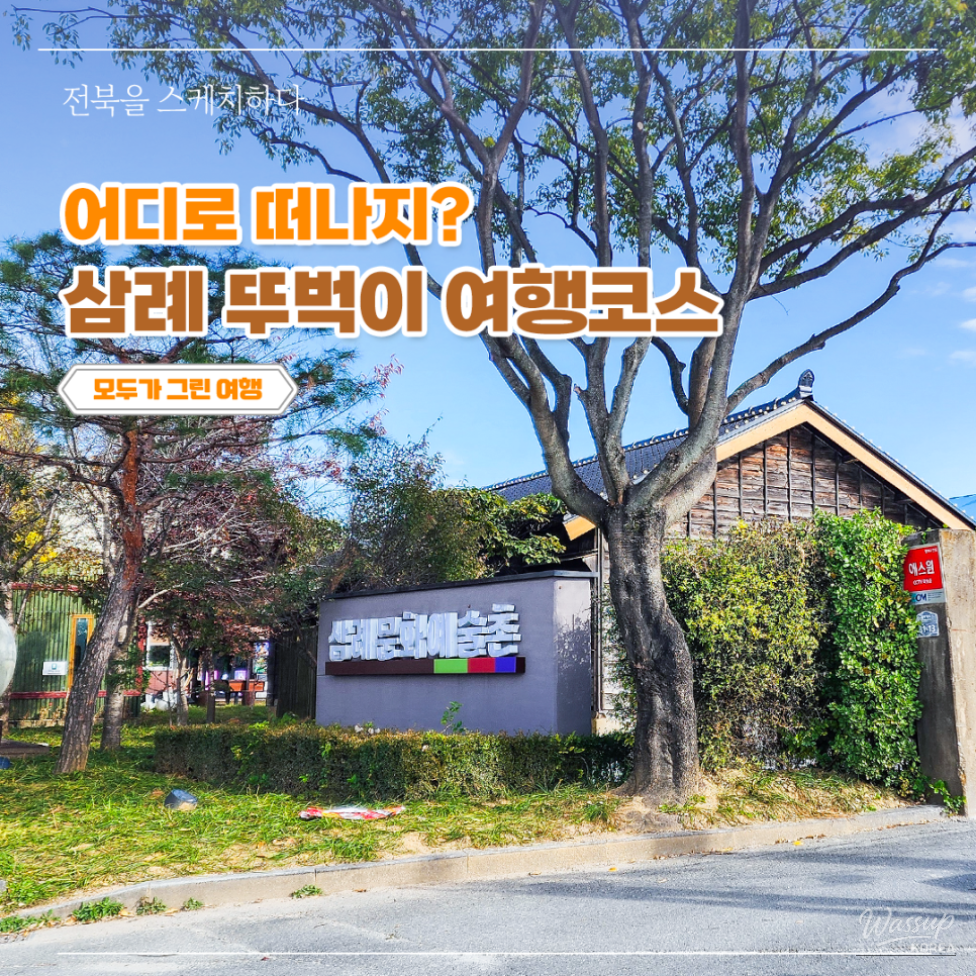
As you exit Samnye Station, you'll find the Samnye Arts and Culture Village to your right, a cultural and artistic space transformed from the Samnye Grain Warehouse. The Samnye Grain Warehouse is estimated to have been built in the 1920s and was used during the Japanese colonial period to store rice plundered from the Honam Plain. It has now been reborn as a complex cultural space, and it is even more special because it retains the form of the old architecture.
Exhibition Hall 1
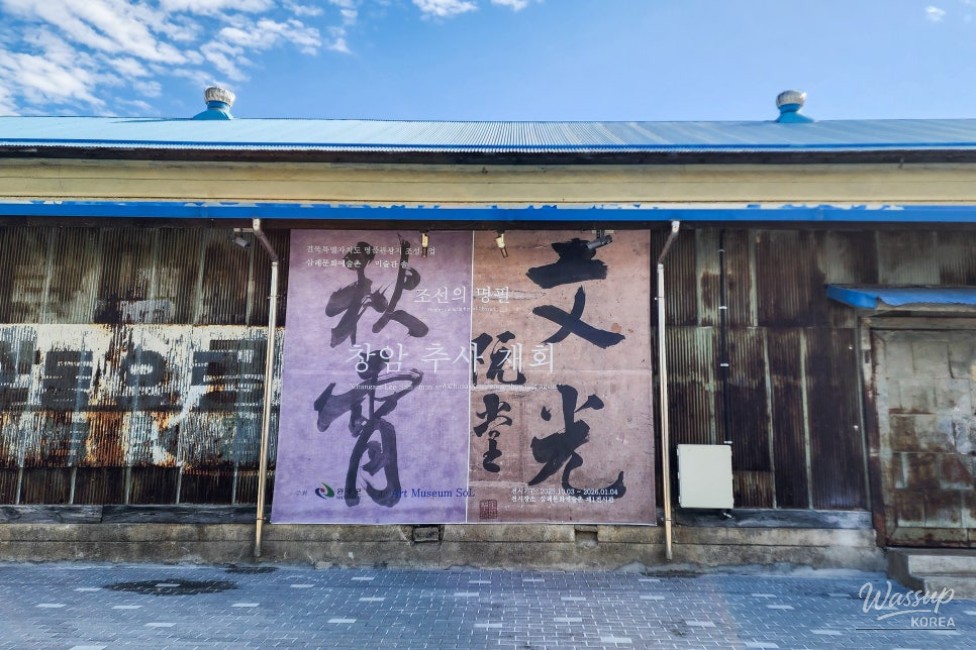
Exhibition Hall 1 is hosting an exhibition called "Reunion of Changam and Chusa, Masters of Calligraphy." The exhibition runs until January 4, 2026, and features the works of Changam Yi Sam-man, a renowned calligrapher of the Joseon Dynasty who was active in Wanju-gun, Jeollabuk-do, and the works of another master calligrapher, Chusa Kim Jeong-hee.
Changam Yi Sang-man spent his entire life as a calligrapher in the Jeollabuk-do region and was skilled in regular script, running script, cursive script, and large characters. He generally wrote powerful and archaic characters, and his cursive script was so fluid that it was called Yusuche, meaning "flowing water style."
Chusa Kim Jeong-hee was a representative calligrapher, epigrapher, and historical researcher of the late Joseon Dynasty. He emphasized high spirituality and, based on the theory of the inseparability of calligraphy and painting, completed Chusache, a style of writing that encapsulates pictorial formative art and is faithful to the laws of calligraphy.
Exhibition Hall 3
Exhibition Hall 3 is hosting the sixth regional artist exhibition, "Play of Lines - dance!!" by Baek Geum-ja. Baek Geum-ja visually expresses the beauty of the human body and artistic rapport based on 23 years of being fascinated by croquis. The exhibition runs until December 30.
This exhibition expresses the rhythm created by the controlled breathing, speed, and strength adjustments according to the model's movements through the theme of 'Play of Lines' and conveys the immersion and passion of the moment. It also showcases various works using hardboard paper and corrugated cardboard drawings, watercolors, acrylic paints, oil paints, ink, and Korean paper.
Exhibition Hall 4
Exhibition Hall 4 is hosting the exhibition "Soil and People, the Art of Resonance" by Jin Jeong-wook, a master potter of Korea, as part of the 2025 Luxury Tourism Site Craft Exhibition in the second half of the year.
Jin Jeong-wook was selected as a master craftsman of Korea in 2025 and is pioneering a new path for ceramics while continuing the tradition in Wibong Village, Soyang-myeon, Wanju-gun. This exhibition features his moon jar series, as well as white porcelain, buncheong ware, and other works that combine traditional techniques with modern sensibilities.
In addition to the exhibition halls, the art village has various cultural facilities such as an outdoor performance hall, an indoor performance hall, and a multi-purpose hall.
On a day with clear skies, outdoor activities are even more enjoyable. There are tables where you can take a break and feel the autumn.
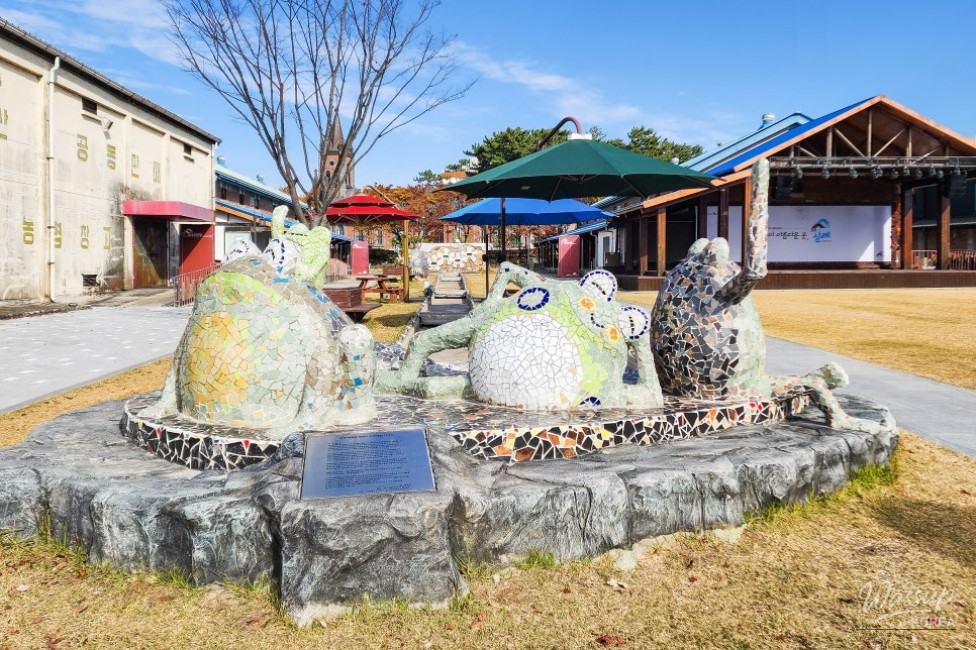
There are also cute sculptures. Before the grain warehouse was built, this place was a habitat with wetlands and small reservoirs leading to the Mangyeong River, and it was an ecological base where oriental fire-bellied toads, frogs, and toads lived. The grain warehouse caused the oriental fire-bellied toads to lose their habitat, but the art village was created and a small pond was created, creating an environment where the oriental fire-bellied toads can live again.
A Christmas tree has been installed in the cafe where the sunlight is pouring in, and you can sit by the window overlooking the outside and drink tea.
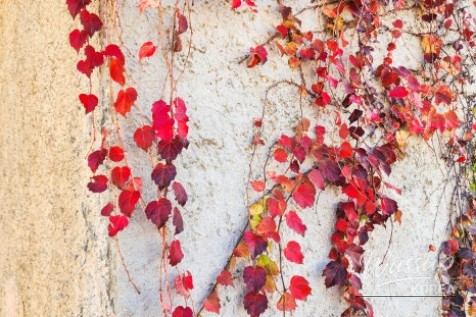
The ivy vines climbing up the walls are dyed red, and the trees are changing into autumn clothes.
Samnye Catholic Church
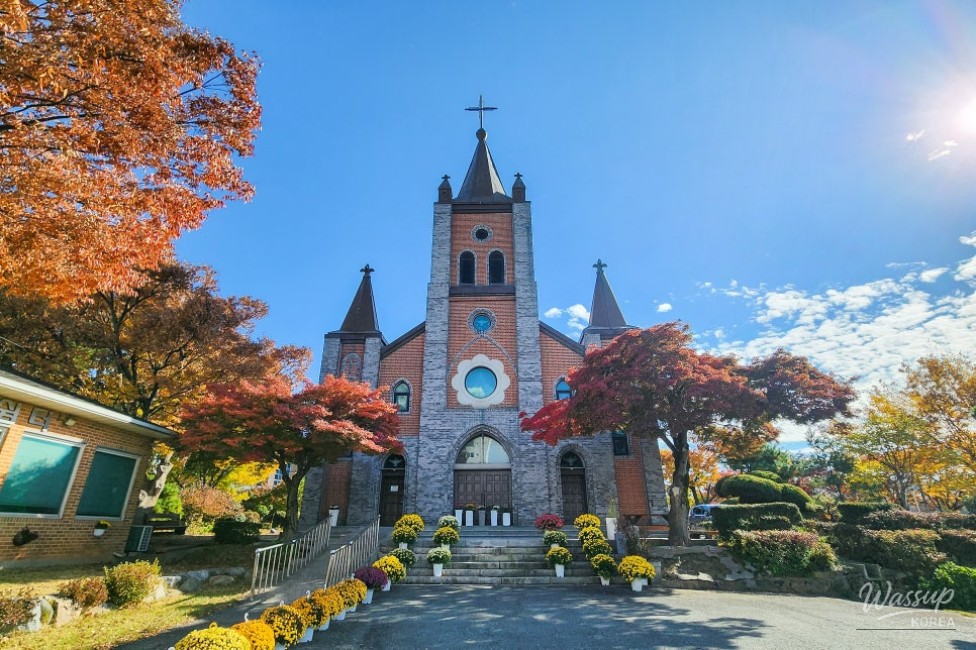
Samnye Catholic Church is located right next to the Samnye Arts and Culture Village, and the scent of chrysanthemums was conveyed from the chrysanthemum pots placed in front of the church.
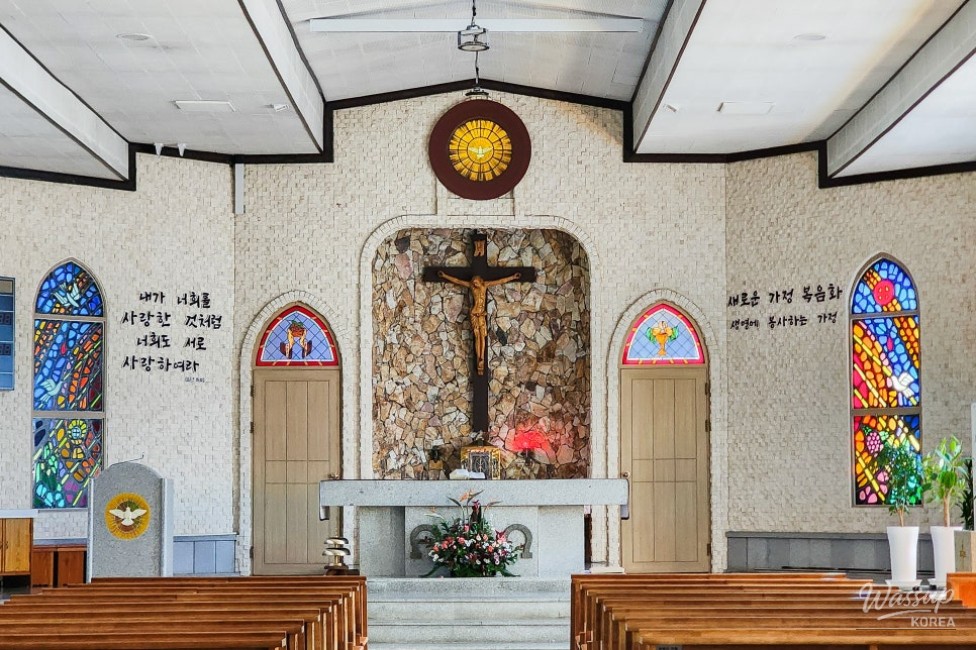
The inside of the church was quiet, and warm sunlight came through the stained-glass windows.
A church with a sacred atmosphere, even if you are not a Catholic, you can stop by and offer a light prayer.
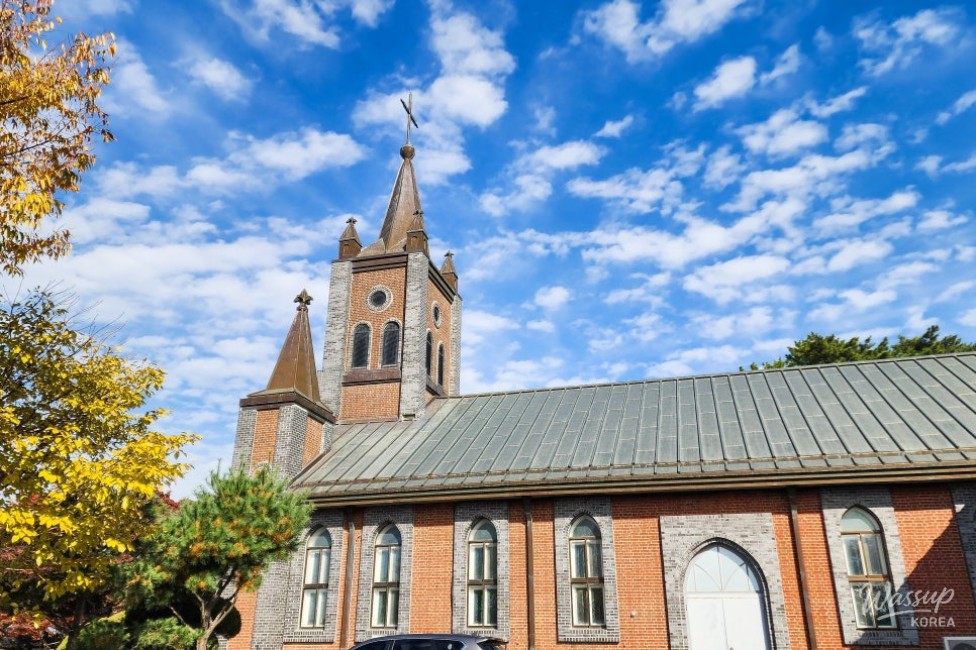
The architecture with the characteristics of the church, the pointed spire, looked even higher under the blue sky.
쉬어가삼[례:] (Take a Rest in Samnye)
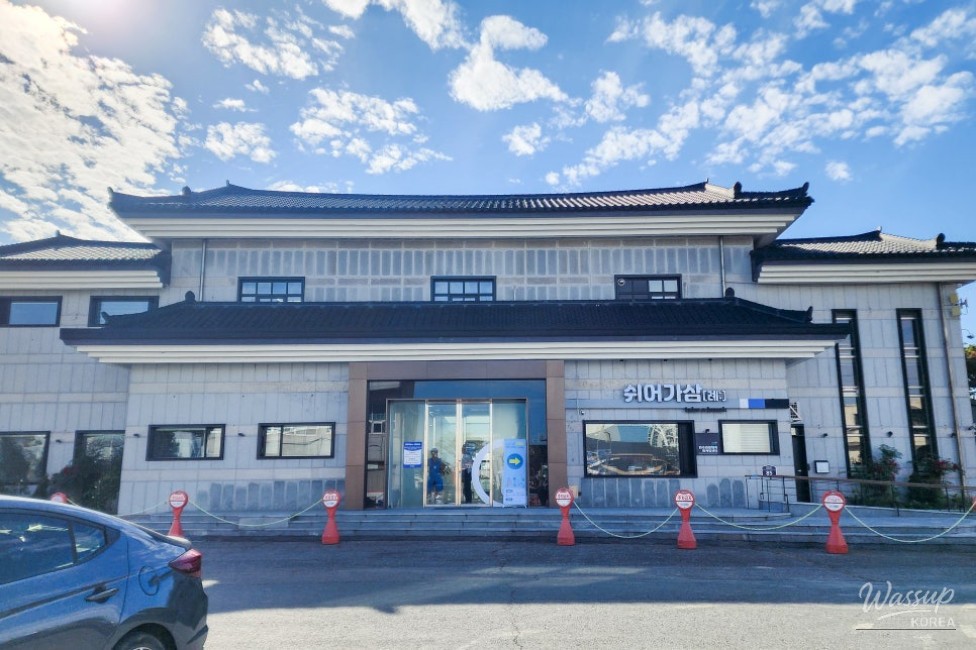
The Samnye Station building, which was used before Samnye Station moved to its current location, has been transformed into a cultural space called 쉬어가삼[례:]. There is an exhibition hall and a traveler's rest area that promotes the history and culture of Samnye, and it is a space that anyone can use freely.
The exhibition hall organizes major historical events in Wanju from the Paleolithic era to the Japanese colonial period by era, and you can also listen to explanations from senior docents.
You can look back on historically important events such as the Ilmunguisa, which produced nine independence activists from one family, the Student Manse Movement, the Samnye Reading Club incident, which resisted Japan with books, the March 1st Movement in Wanju, which shouted for Korean independence, and the Wanju Daedunsan Donghak Resistance, which showed unwavering will with the spirit of righteous soldiers.
One wall is filled with books and comfortable beanbags are placed. Books are freely available for reading, and if you have plenty of train time when using the nearby Samnye Station, you can take a break here.
Samnye Arts and Culture Village, Samnye Catholic Church, and 쉬어가삼[례:], all of which are good travel destinations within walking distance of Samnye Station! In the deepening autumn, take a romantic trip to Samnye Station by train.
Wanju Samnye Romance
Walking Tour Course
By Hwang Eun-mi, Reporter











Source :https://blog.naver.com/jbgokr/224095481605
No comments yet.