A Visit to Gijang Hyanggyo: A Journey Through History and Tradition


By Gijang-gun SNS Supporter, Park Hee-jeong
Today, I visited Gijang Hyanggyo, a place steeped in long history and tradition.
Located about a 5-minute walk from the Gijang Library, it was a pleasant stroll to reach.
Although the parking space in front of Hyanggyo wasn't large, it was sufficient for a brief visit.
Even during the short walk, I couldn't help but feel that this place embodies the tradition and education of Gijang.
Directions to Gijang Hyanggyo
Gijang Hyanggyo was established in 1617, during the 9th year of King Gwanghaegun's reign in the Joseon Dynasty.
It served as an institution that provided education to the local people and held ancestral rites for Confucian sages during the later Joseon period.
(Source: Busan History and Culture Encyclopedia)
Even after more than 400 years, most of the buildings remain in their original form, making it a valuable cultural heritage where you can fully experience the history and tradition of Gijang.
Upon entering Hyanggyo, the 'Outer Three Gates (外三門)' immediately catch your eye.
A signboard with the inscription 'Sesim-mun (洗心門)' hangs above the gate, meaning 'Wash your heart and enter.'
The Outer Three Gates refer to a gate with three sections built on the outer wall.
Currently, direct entry through this gate is not possible, so you must enter Hyanggyo through the entrance in front of the Yurim Hall.
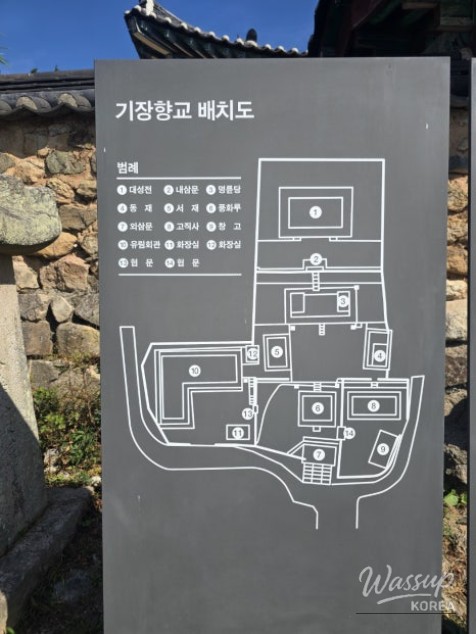
Outer Three Gates and Information Map
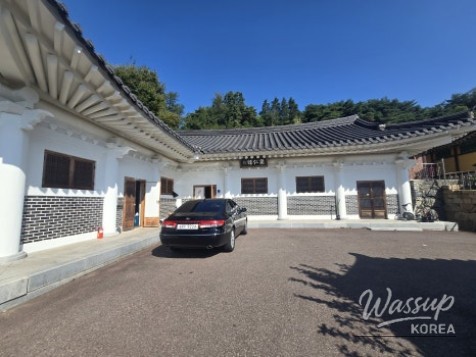
The Yurim Hall, with its stylish tiled roof, enhances the dignity of Gijang Hyanggyo.
Local elders gather here for traditional etiquette education, various lectures, and events.
The quiet and orderly atmosphere gave me the impression that this place has played a central role in local culture for a long time.
After obtaining permission from the staff, I started my tour of Hyanggyo through a small side gate (側門) on the right side of the Yurim Hall.
As I stepped inside, traditional buildings standing neatly in the tranquil air came into view one by one.
Yurim Hall and Side Gate
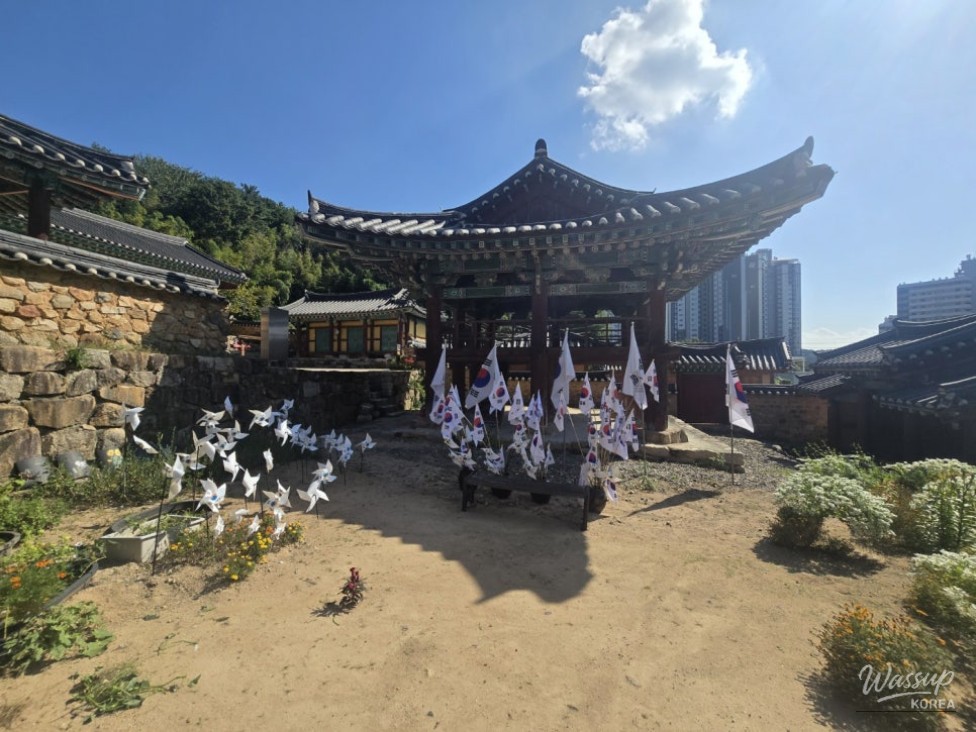
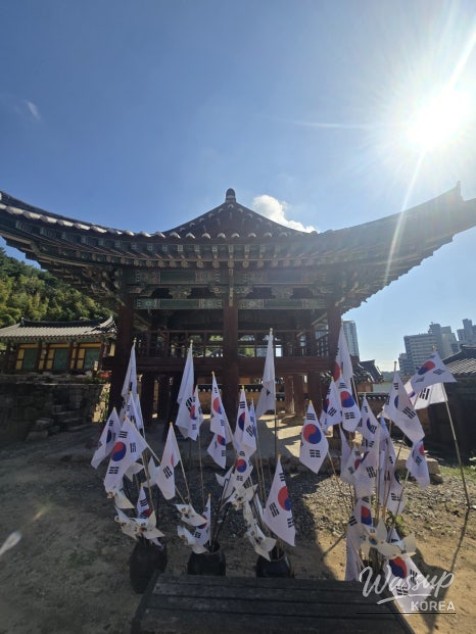
As soon as I entered through the side gate, the first thing that caught my eye was the pavilion 'Punghwaru (風化樓)' and the rows of Korean national flags in front of it.
Seeing the Korean flags gently swaying in the breeze in a quiet Hyanggyo yard, I felt both our unchanging tradition and the spirit of patriotism.
Climbing up to Punghwaru, I had a clear view of Gijang and the entire Hyanggyo.
The buildings with tiled roofs lined up and the neatly manicured yard created a serene atmosphere, as if I were in a Joseon Dynasty Seowon (private academy).
Punghwaru
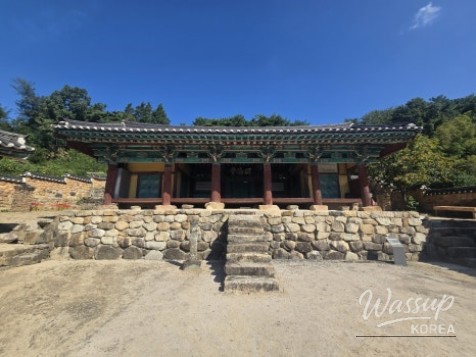
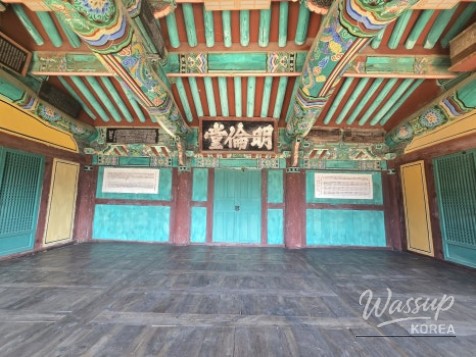
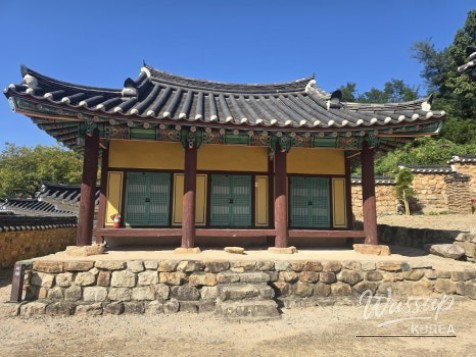
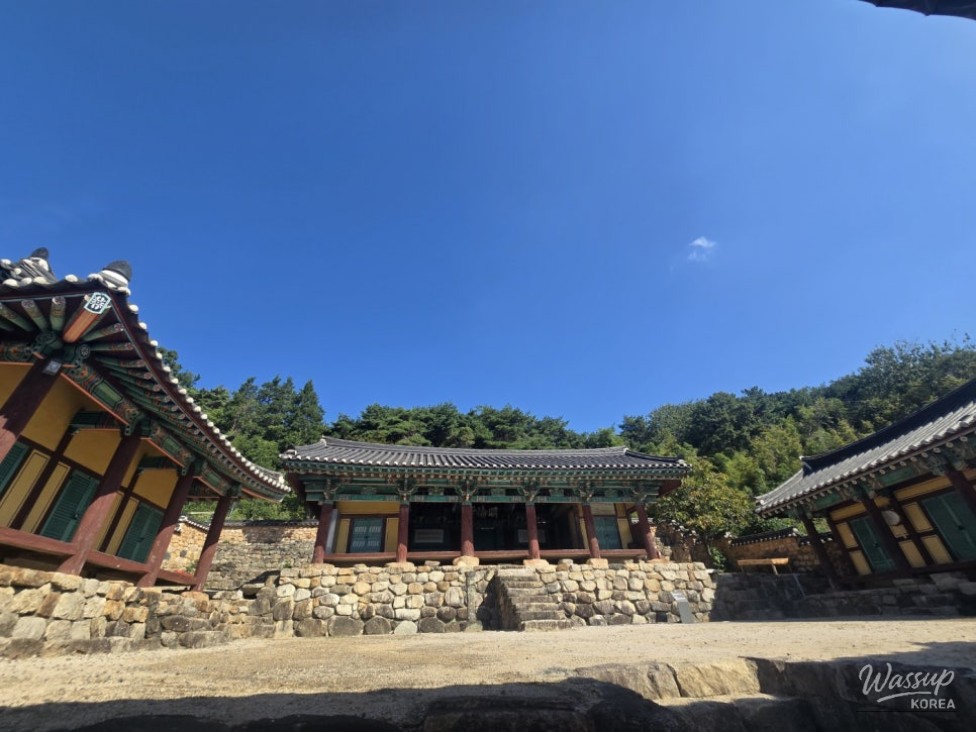
Behind Punghwaru, you'll find Myeongnyundang (明倫堂) at the center, with Dongjae (東齋) and Seojae (西齋) on either side.
Myeongnyundang has traditionally been a space for students to study, discuss, and cultivate their character.
It features a cool wooden floor in the center and warm heated rooms on both sides.
Dongjae and Seojae were used as dormitories and study spaces for students at the time.
Although they are not in use now, the neat tiled roofs and antique wooden structures exude the dignity of the old learning space.
Imagining the students of Gijang learning etiquette and academics here, I realized that Hyanggyo was not just a building but a center of education and a foundation of the spirit.
Myeongnyundang, Dongjae, and Seojae
Walking a little further behind Myeongnyundang, you will see Daeseongjeon (大成殿), the central building of Gijang Hyanggyo.
Daeseongjeon is a space where ancestral tablets of Confucius, the founder of Confucianism, and other sages are enshrined and memorial services are held.
It is the most solemn and sacred place in Hyanggyo.
The doors of Daeseongjeon were locked, so I only looked at its magnificent appearance through the slightly opened door.
Daeseongjeon
While slowly touring Gijang Hyanggyo, I could closely feel the breath of the old scholars and the dignity of tradition.
Although it is not far from the city center, the moment I entered Hyanggyo, my mind became calm as if I were traveling through time.
Especially if you visit with children, it will be a meaningful time to naturally learn about the education culture and the meaning of etiquette in the Joseon Dynasty.
If you look around with the Gijang Library nearby, it is also very good as a day trip course.
Gijang Hyanggyo, which has remained unchanged for a long time, is a valuable cultural heritage containing the history and spirit of Gijang-gun.
Sometimes, it is good to take time to walk through these traditional spaces and look back on our roots and minds.








Source :https://blog.naver.com/bskijang/224057942848
No comments yet.