A Journey Through Time at Banggu-cheon



The heat wave couldn't stop the journey through time at Banggu-cheon.
“A six-year-old walked this path all the way? That's impressive!”
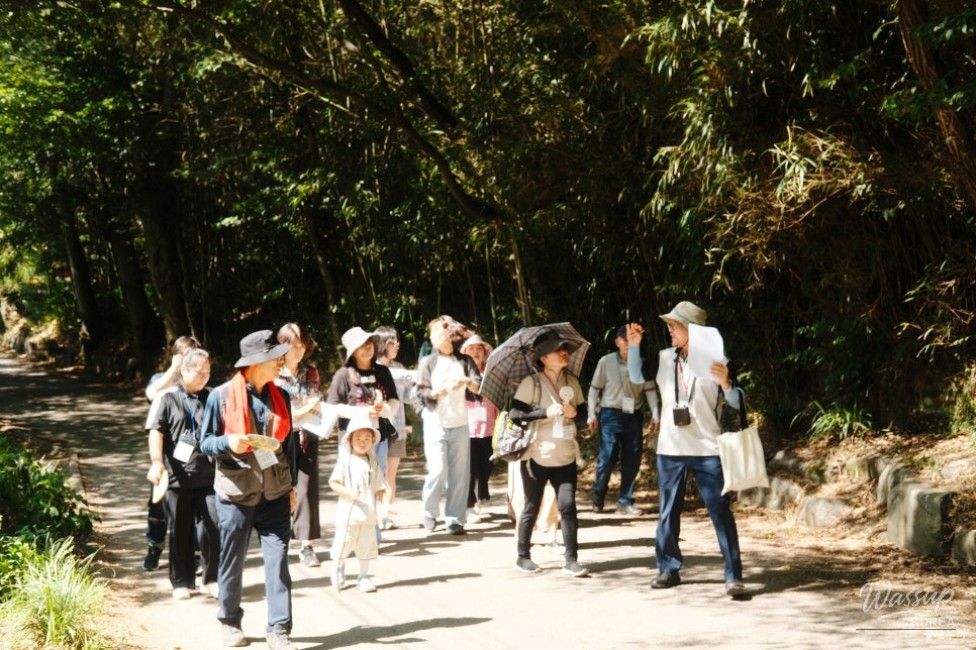
Applause echoed through the Banggu-cheon valley as the youngest participant, who completed over three hours of trekking, shyly smiled, prompting the adults who accompanied him to cheer enthusiastically.
In the sweltering summer heat, with temperatures soaring above 30 degrees, participants continued their trek without hesitation. From six-year-old children to seniors in their seventies, the group followed in the footsteps of those who walked this land thousands of years ago, slowly embarking on a journey through time.
This day’s program was operated by HeePum Company, featuring 'Uljoo Dol Banggu Cultural Experience and Time Travel.' Selected as part of the '2026 Together Village Travel Uljoo Tourism Project,' it was a stay-type journey that allowed participants to walk the UNESCO World Heritage Banggu-cheon Petroglyphs and Banggu-gugok while experiencing Uljoo's history, nature, culture, and food.
“It was hot, but I really got to know Ulsan well,” said one participant, who was fanning herself while smiling brightly. “The weather was scorching, but I learned a lot about the world heritage in Ulsan. I feel like I spent today meaningfully.”
Another participant mentioned, “I came with my child, and it felt more like a picnic in the forest and valley than a history lesson. There were many stories that even the adults didn’t know, creating wonderful memories for the whole family.”
Despite the heat, walking along the waterway of Banggu-cheon brought occasional breezes. The leaves of silver birch shimmered in the sunlight, while oak, bamboo, and chestnut trees created layers of green shade. Various unknown grasses and summer flowers filled the path like paintings.
On this day, the guide was Dr. Jang Seok-ho, who has studied rock art from various regions around the world. Participants began to see the petroglyphs not merely as 'old drawings,' but as records of life left by prehistoric people.
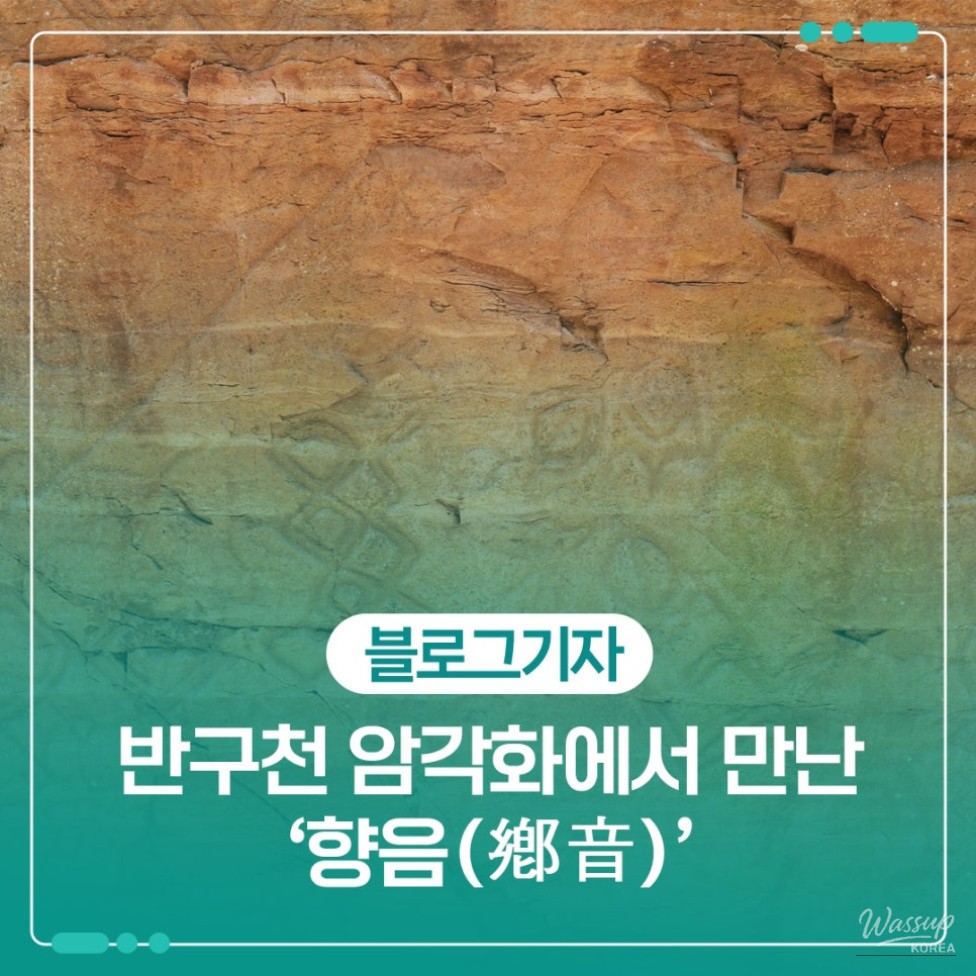
Dr. Jang pointed to the whale drawing on the Daegok-ri petroglyphs, explaining that it accurately reflects the proportions of the whale's mouth, fins, and body. The depiction of a scene where people hunt whales from a boat and the whale thrashing after being speared tells a narrative, showing events before and after.
“Rock art is not just graffiti left by prehistoric people. It conveys the oldest pictorial language that tells us what people of that time saw, how they lived, and what they valued.”
After hearing the explanation, participants began to notice shapes in the rocks that they hadn’t seen before. As the saying goes, 'You see as much as you know.' Even cliffs, waterways, and rock formations that could easily be overlooked became cultural landscapes rich with stories spanning thousands of years.
Dr. Jang interpreted the Banggu-cheon petroglyphs as records created by nature and humans together. The whale, deer, tiger, and hunting scenes symbolize the ecological environment, communal life, beliefs, and rituals of the time, emphasizing that the natural scenery in the Banggu-cheon area is an inseparable heritage from the petroglyphs.
Participants nodded and leaned towards the rocks, eager not to miss any explanation. What made them forget the heat was not just the cool breeze but the power of stories that vividly revived thousands of years of history.
As they reached the Jipcheongjeong, the magnificent cliffs and winding waters of Daegokcheon came into view. The landscape depicted in Jeong Seon Gyeomjae's painting 'Banggu' revealed itself in reality.
The rock cliffs cast deep shadows over the water, and the old roof tiles of Jipcheongjeong led travelers back to the time when scholars enjoyed leisure. Participants who faced the landscape they had only seen in paintings paused for a moment and took out their phones.
“The view I only saw in paintings is right here. It's a strange feeling to think that people from long ago stood here and looked at the same mountains and waters.”
As one participant noted, this path intertwines the time of prehistoric people, records from the Silla period, and the scholarly leisure of the Joseon era.
Following the newly renovated deck path of Daegokcheon towards Cheonjeon-ri and the petroglyphs, white water lilies and red crape myrtle flowers bloomed. Participants took a moment to sit in the shade, drink water, and regain their strength.
The 'Hyang-eum' program does not end with walking. Participants listen to the old stories of Uljoo while following the Banggu-cheon petroglyphs and Banggu-gugok, and they create their own drawings of whales and deer, completing them with glass cups and picture books.
They then expand their journey to include the Unyangseong Fortress, Bangcheon-gil, Unyang Dolmen, Oyoung Literary Museum, and Unyang Cathedral, experiencing the alleys, people, and local cuisine of Unyang.
This is not a sightseeing trip that simply passes by with the eyes but a journey of listening, walking, creating, and tasting. For children, it becomes a living history lesson, while for adults, it is a time to reconnect with memories of their hometown and nature.
Park Min-ryang, the CEO of HeePum, stated, “I wanted to create a journey that doesn’t just visit one petroglyph but remembers the history, nature, food, and lives of people in Ulsan.” He expressed hope that the impact of the world heritage would linger in the Unyang region.
The petroglyphs of Banggu-cheon, inscribed as a UNESCO World Heritage in 2025, encompass the Daegok-ri and Cheonjeon-ri petroglyphs. In this area, one can encounter the lives and thoughts of people from prehistoric times to historical periods through the accumulated rock art and written records over a long time.
However, the value of world heritage does not remain solely on the rocks. It comes alive in the memories of the waterways, forests, village history surrounding the heritage, and the travelers who walk this path today.
Participants who completed the path of prehistoric people, forgetting the heat, encouraged one another until the end. The small steps of a six-year-old and the steady strides of a participant in their seventies met on the same path.
The sounds of water from Banggu-cheon, the winds of the forest, and the ancient pictorial language engraved on the rocks became one 'Hyang-eum' in their hearts. This summer, the oldest stories of Uljoo began anew as the most vivid journey.


Source :https://blog.naver.com/ulsan_nuri/224361408901
No comments yet.