A Journey Through Haman: Exploring History and Nature at Yeongdong Village



SNS Reporter 14th Term Choi Hongdae
Haman-gun, aspiring to be the ancient capital of Ar Gaya where a millennium of time resides, is known as a historical and cultural tourist destination where the breath of ancient history and the beauty of nature harmonize. This includes the Marisan Tumuli, which was listed as a UNESCO World Heritage Site in 2023. According to the results of a reader survey and expert evaluations conducted by SRT Magazine over the month of September this year, Haman-gun was selected as one of the 'Top 10 Travel Destinations in Korea for 2025', along with Goheung, Mokpo, Andong, Yeongju, Ulju, Iksan, Chuncheon, Gongju, and Haenam, winning the grand prize.
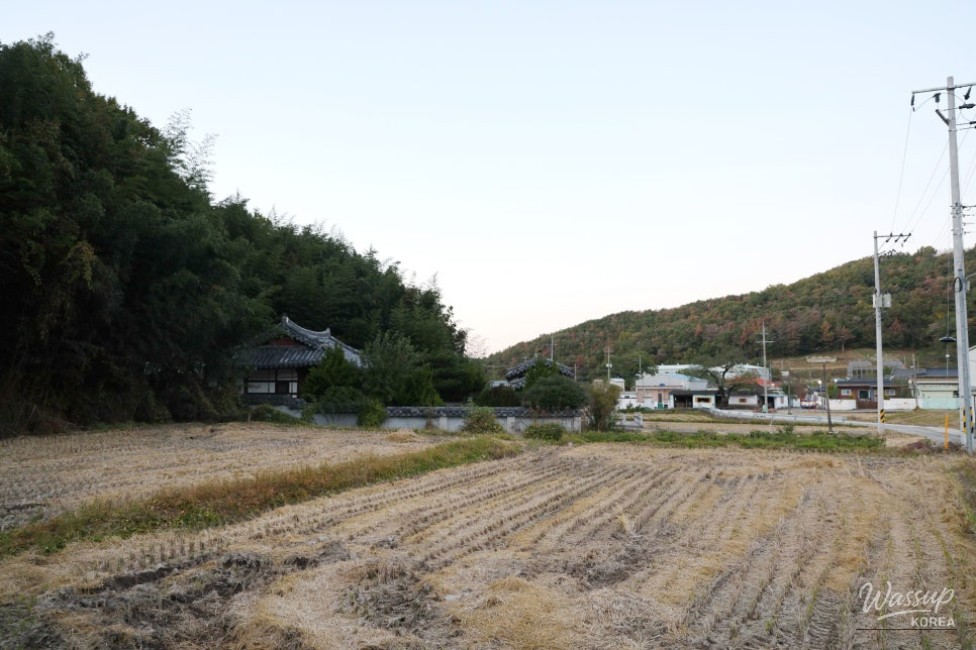
Haman-gun has several villages, each with its own unique characteristics. In Yeongdong Village in Haman-gun, there is a Chinese scholar tree designated as a natural monument. Located at 901 Yeongdong-ri, Chilbuk-myeon, Haman-gun, this tree has grown under the care and attention of the villagers for a long time.
The Chinese scholar tree is estimated to be about 500 years old. Its dimensions are: height of 26m, chest height circumference of 5.82m, circumference near the roots of 8.45m, height under the branches of 4m, and branch lengths of 9.6m to the east, 12.76m to the west, 11.00m to the south, and 12.00m to the north.
The village atmosphere feels similar to any other rural village, but the Chinese scholar tree located at the entrance of the village gives it a slightly different feel. It is said that the Yeongdong-ri Chinese scholar tree was planted in 1482 by An Yeo-geo, the 17th generation ancestor of the Gwangju An clan and a Sungkyunkwan instructor, when he settled in Yeongdong-ri.
The villagers believe that this tree is a sacred tree that protects the village, and they have been holding a village ritual every year on the 1st day of the 10th lunar month, offering sacrifices.
The bark is grayish-brown and vertically split. The Chinese scholar tree, which blooms with a large number of yellowish-white flowers covering the entire tree in midsummer, is known for its beautiful shape, growing straight with thick branches and creating a large crown.
Nationwide, the 500-year-old Chinese scholar tree in Sinhyeon-dong, Incheon, Gyeonggi-do, is designated as Natural Monument No. 315, the 700-year-old Chinese scholar tree in Samwol-ri, Songsan-myeon, Dangjin-gun, Chungcheongnam-do, is designated as No. 317, the 400-year-old Chinese scholar tree in Yuktong-ri, Angang-eup, Gyeongju, Gyeongsangbuk-do, is designated as No. 318, and the Chinese scholar tree in Yeongdong-ri, Chilbuk-myeon, Haman-gun, Gyeongsangnam-do, is designated as No. 319 and protected.
If you go a little further past the Chinese scholar tree, you will find the Uihakseodang, a former educational institution. The Gwangju An clan of Yeongdong Village and Heejae An Jung-chang, based on the medical community, established Uihakseodang in 1917. After Taeyangseowon, an educational institution during the Joseon Dynasty, was abolished by Heungseon Daewongun's Seowon abolition order, it has served as an important educational institution in Yeongdong Village.
At Uihakseodang, Dogok, Anjeong, Gwangju An clan, and Dongmonggyogwan, who were enshrined in Taeyangseowon, were worshiped and fostered future scholars. So and An Byung-won donated money and grain to form the medical community, and his younger brother, Gu-eum An Gi-won, created rules for the studying students to educate them systematically.
Although it is a small village, after four brothers who studied here passed the civil service examination, students flocked from all over the country. Although some of this building has been repaired, it generally retains the appearance of the time of its construction, and you can see the characteristics of modern Korean houses in the transition period from the Joseon Dynasty to the modern era.
In Haman-gun, there is Ipgok County Park, a healing destination where you can enjoy the history of Haman-gun and enjoy relaxation and sensibility in nature with pink muhly grass, cosmos, and beautiful views, but it was also fun to look at the small stories of the village.





Source :https://blog.naver.com/arahaman/224078953755
No comments yet.