Understanding Cultural Heritage Regulations in Jongno District


Did you know that when building, modifying the exterior, or even installing signs in Jongno District, you may need to go through not only the district office's building department but also the Cultural Heritage Administration?
Hello, I am Kim Seong-guk, the representative administrative agent of Aurum Administrative Office. Obtaining construction-related permits is one of our strengths at Aurum.
Jongno District is the heart of Seoul, rich in history. With numerous national designated cultural heritage sites like Gyeongbokgung Palace, Changdeokgung Palace, and Jongmyo Shrine, it holds a serene charm. However, it also imposes strict regulations for those planning construction or remodeling.
Today, we will take a closer look at the biggest challenge in Jongno District construction: the permit for changes to national designated cultural heritage.
1. What is a permit for changes to national designated cultural heritage?
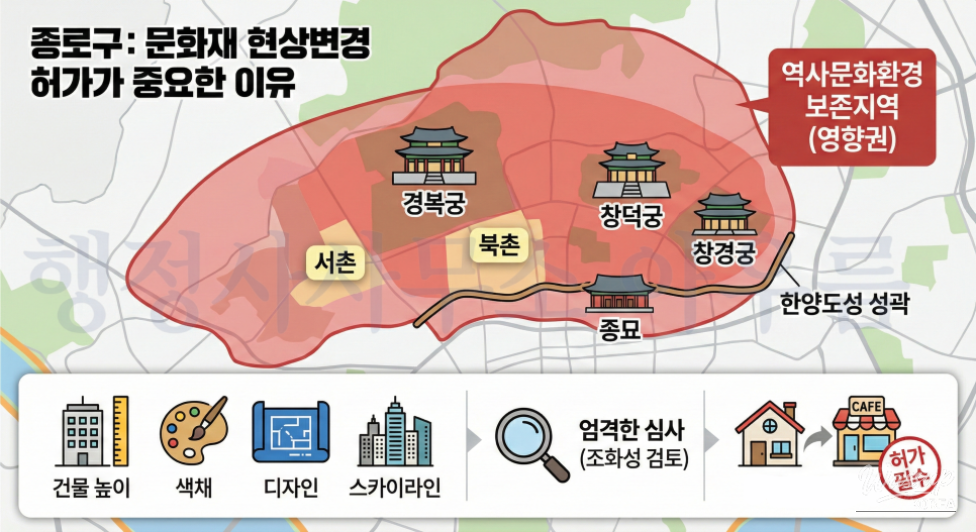
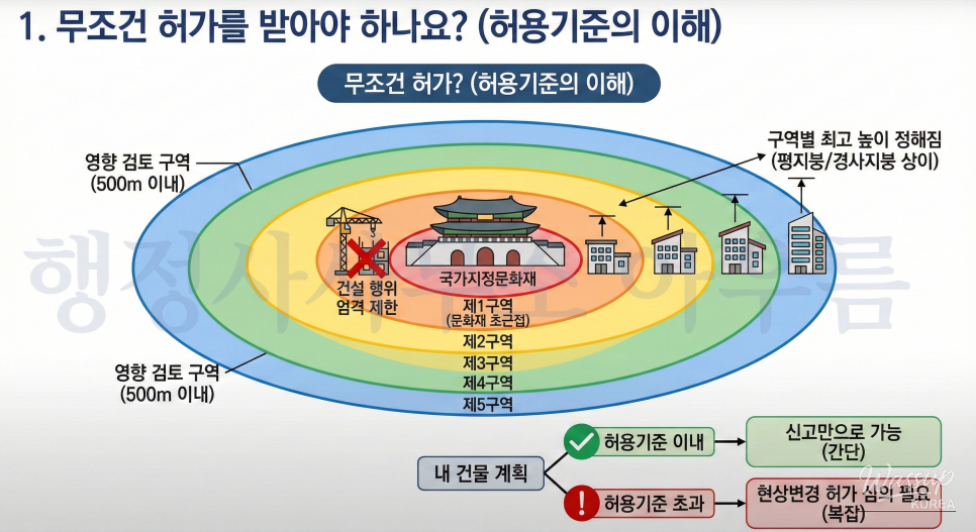
According to the Cultural Heritage Protection Act, areas within 500 meters of designated cultural heritage sites (treasures, historic sites, scenic areas, etc.) are designated as 'Historical and Cultural Environment Preservation Areas.'
Any construction that may affect the landscape of cultural heritage or preservation must be approved in advance. This is known as the permit for changes.
In simple terms, even if it's your land, you cannot freely build or sell it if it's next to a cultural heritage site.
2. Why is it particularly important in Jongno District?
Most of Jongno District falls under the influence of cultural heritage.
Areas like Seochon and Bukchon, near Gyeongbokgung, Changdeokgung, and the Hanyangdoseong Fortress, are predominantly designated as Historical and Cultural Environment Preservation Areas. Here, the height, color, design, and skyline of buildings are strictly reviewed to ensure harmony with cultural heritage. Even simple home renovations or small café interiors often require this permit.
3. Key criteria for permit review (differences by zone)
Areas around cultural heritage are subdivided into zones from 1 to 5 based on distance. Zone 1 (closest to cultural heritage): the regulations are the strictest, often prohibiting new constructions or only allowing low-rise Hanok styles. Zones 2 and beyond: the maximum allowable building height varies by distance.
The most crucial factors are the angle of view regulations and whether the new building obstructs the landscape. If a new building blocks the view from within the cultural heritage site or has a design that clashes with the surroundings, the permit is likely to be denied.
4. Application process and timeline
The process may be conducted separately from general construction permits or handled as a deemed process. Steps include: [1] Application submission (via the Jongno District Cultural Department) [2] Site investigation (by officials and experts) [3] Cultural Heritage Committee review (typically held once a month) [4] Notification of approval or denial.
The processing period is subject to legal deadlines, but typically takes about 30 to 45 days after submission. If a re-evaluation or additional requirements arise, the timeline may extend indefinitely.
In conclusion, construction activities in Jongno District, especially in areas like Bukchon and Seochon, can be like walking through a minefield. It is vital to thoroughly assess whether the land is subject to cultural heritage change permits and the likelihood of obtaining approval before purchasing.




Source :https://blog.naver.com/aurum_admlaw/224149558550
No comments yet.