Rice Included as a Strategic Crop from 2026
1 Muan-ro, Muan-eup, Muan-gun, Jeollanam-do
무안군청


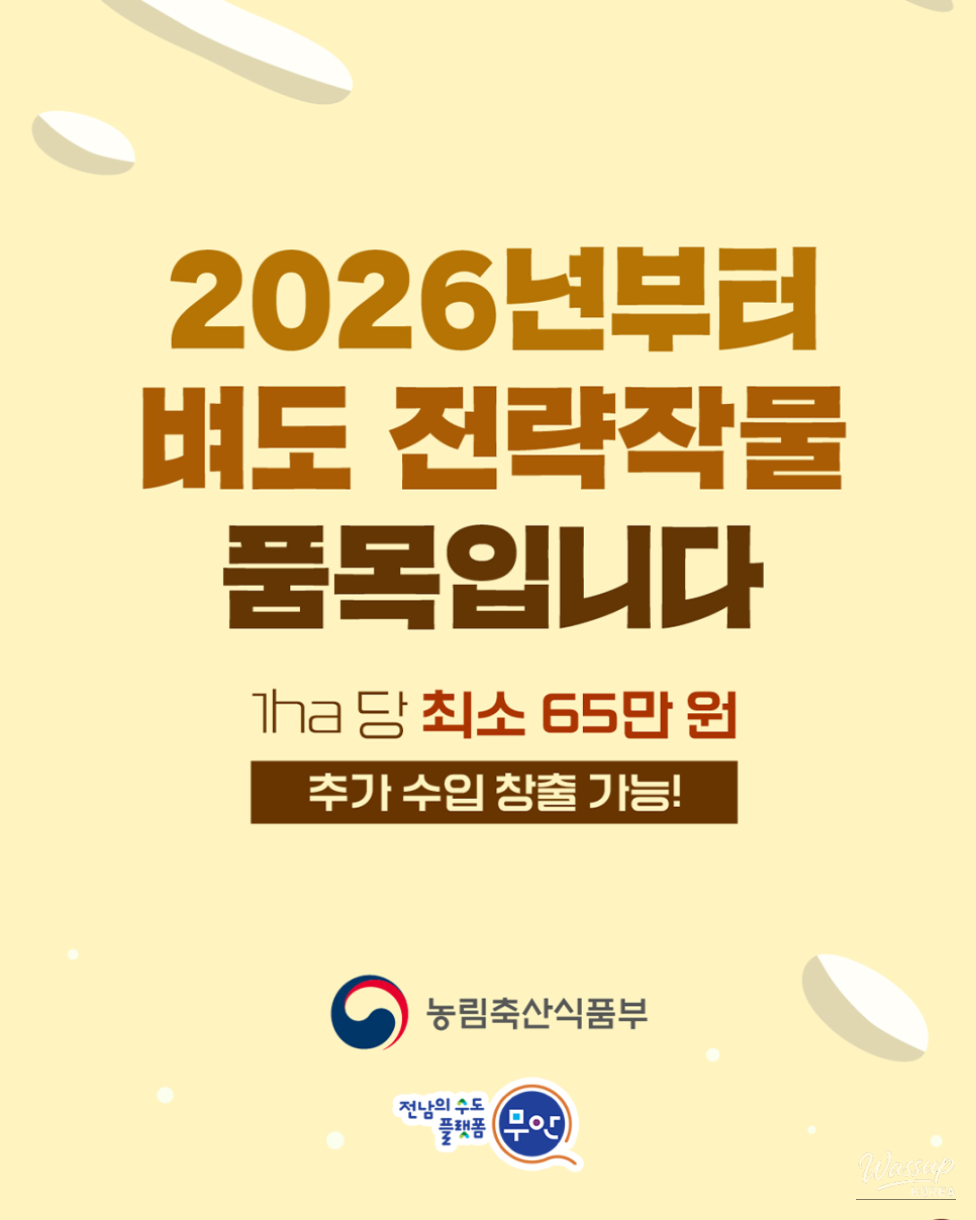
Beginning in 2026, the agricultural landscape in Muan County is set for a significant shift as "rice" is officially classified as a strategic crop under the national supply adjustment program. This new policy is designed to stabilize the rice market by encouraging the production of "supply-adjustment rice," which is primarily used for processing during stable periods but can be diverted to the table rice market during national shortages. For local farmers, this transition offers a powerful new way to secure steady income while contributing to national food security.
By participating in this strategic crop initiative, farmers can generate an additional income of at least 650,000 won per hectare. This program operates through a contract cultivation system, ensuring that farmers have a guaranteed outlet for their harvest. Whether the crop remains designated for processing or is converted back to table rice during poor harvests, the system is designed to protect the livelihoods of Muan's agricultural community. Here is a detailed look at how the program works and what it means for your 2026 farming plan.
Understanding the Rice Supply Adjustment Program
What is Supply-Adjustment Rice?
Supply-adjustment rice refers to high-quality rice specifically grown under contract for processing industries (such as flour or snacks) during normal market conditions. However, its true value lies in its flexibility; in the event of a national supply shortage or a poor harvest, this rice is reclassified and distributed as standard table rice to stabilize consumer prices and ensure food availability.

How the Conversion System Works
The final decision on how the rice will be used is made during the peak harvest season in October. If the market is stable, it goes to processing plants as planned. If the harvest is poor, the usage restriction is lifted. Once these restrictions are removed, farmers can deliver their rice to Rice Processing Complexes (RPCs) as table rice, just as they would with a traditional crop.
Financial Benefits and Participation Rules
Generating Additional Farm Income
The primary incentive for joining the strategic crop list is the financial payout. Farmers who successfully maintain their contract for supply-adjustment rice receive a direct payment, which can amount to an extra 650,000 won or more per hectare. This acts as a safety net and a bonus for following the government's supply-demand guidelines.

Important Conditions for Payment
It is important to note that the strategic direct payment is only provided if the rice is actually used for its intended "supply-adjustment" purpose (processing). If the government lifts usage restrictions and allows the rice to be sold as table rice due to a shortage, the direct payment is not issued. In that scenario, farmers benefit from the typically higher market prices of table rice at RPCs and processing companies.
Planning for a Prosperous 2026
Preparing Your Farming Strategy
Muan County encourages all local rice farmers to consider these changes when planning their acreage for the 2026 season. By shifting a portion of your land to strategic crop cultivation, you can diversify your income sources and reduce the risk associated with market price fluctuations. The goal is a balanced agricultural economy where Muan's rice remains a competitive and vital part of the national diet.
The inclusion of rice as a strategic crop is a landmark move for the stability of our local farming community. Are you planning to adjust your cultivation area to take advantage of this new 650,000 won incentive, or do you have more questions about how the RPC delivery process works under this new contract? If you need more information, would you like me to find the contact details for the Muan County agricultural department or the nearest Rice Processing Complex?
Photo Gallery


No comments yet.