Exploring the Ecological Park at the Source of the Mangyeong River



The Source of the Mangyeong River, Bamsaem, is located in the Dong-sang-myeon of Wanju County.
Recently, Wanju County has developed an ecological park to enhance the significance and value of the Mangyeong River's source.
We explored how the Mangyeong River Source Ecological Park was created, accompanied by members of the Wanju County Ecological Club.
The Mangyeong River originates from Bamsaem in Sabong-ri, Dong-sang-myeon, Wanju County, and flows through Gosan, Bongdong, and Samnye before reaching the Yellow Sea.
The starting point of the 200-ri waterway of the Mangyeong River is right here at Bamsaem in Dong-sang-myeon, Wanju County.
The source of a river refers to the furthest point when tracing the water upstream from the estuary. It must also possess sustainability, meaning it should not dry up even during droughts. Bamsaem meets these criteria as the source of the Mangyeong River.
The river has played a crucial role in the birth of ancient civilizations. For settled life and food production, water was absolutely necessary.
The area surrounding the Mangyeong River also provided favorable conditions for habitation, evidenced by archaeological findings indicating human settlement since ancient times. The Wanju County Sangun-ri site exemplifies this fact.
Thus, the Mangyeong River has left a significant mark on the history of Wanju County. Recognizing the importance of the river, Wanju County continues various activities to enhance its value, one of which is the creation of the Mangyeong River Source Ecological Park.
This project aims to promote ecotourism by utilizing local ecological resources. The park stretches from Bamtima Village in Sabong-ri to Bamsaem.
Within the park, visitors can find the Welcome-Bamsaem Lounge, a clay-paved walking trail (1.2 km), a forest playground, flower gardens, and traditional resting pavilions.
The exploration group gathered at the Welcome-Bamsaem Lounge, which features ample parking, restrooms, and an outdoor stage, making it a great meeting spot for visitors.
From the lounge, we walked along the existing path, which is a paved road accessible to vehicles due to the residents living above.
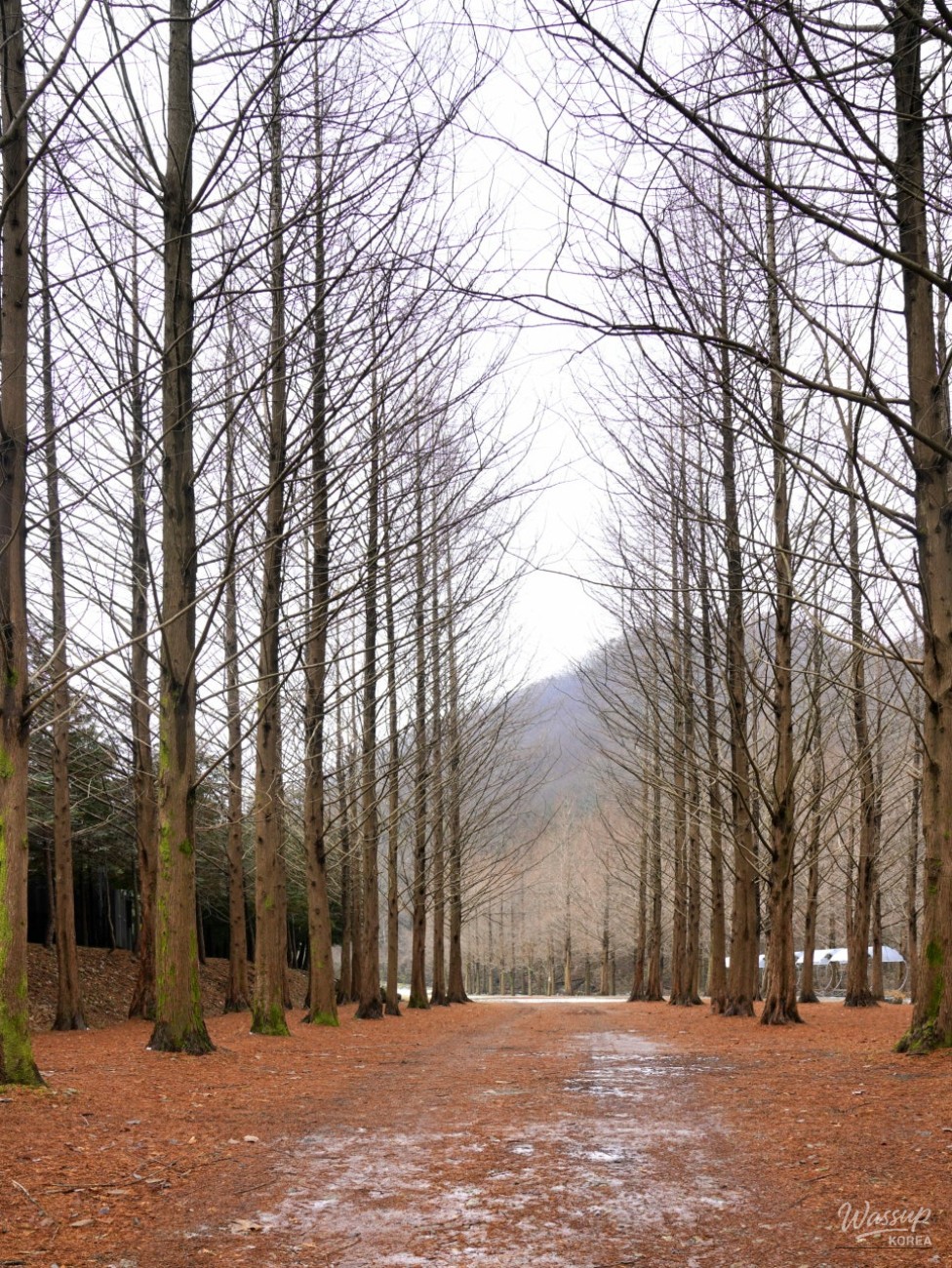
Along the way, we noticed a grove of trees standing tall towards the sky—this is the Metasequoia forest, which serves as a cultural space for summer water play and autumn concerts.
The forest touches our hearts in various ways.
Before reaching Bamsaem, we passed by the last house, which is quite isolated from the village. While we do not know the owner, it is clear that they must love the forest.
Next to the gate, red honeysuckle flowers bloom. True to their name, these climbing plants endure winter and bloom even in the coldest months.
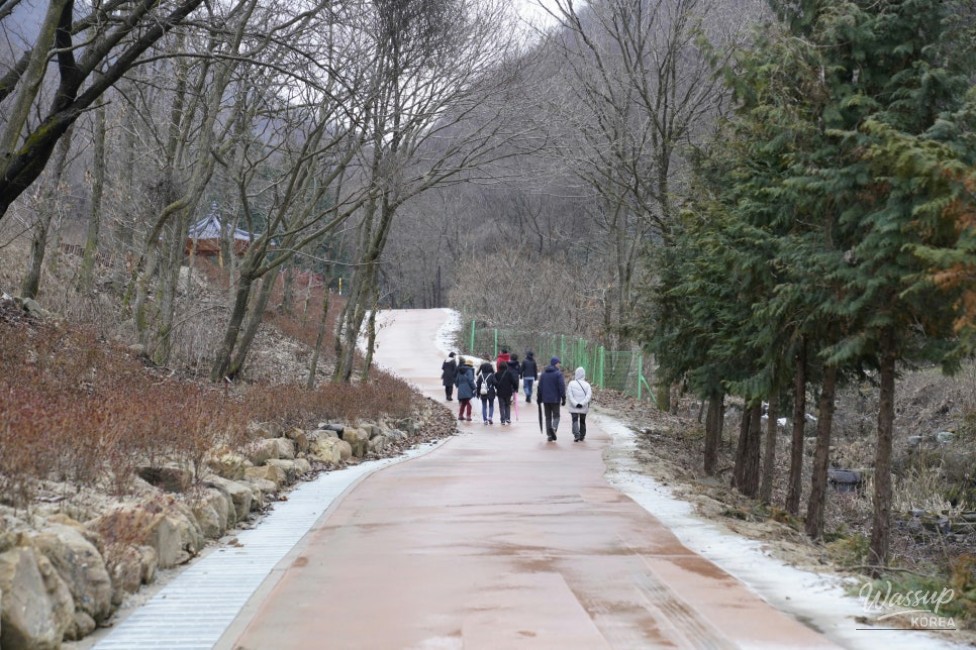
After passing the last house, the color of the walking path changes to a clay hue, marking the beginning of the clay-paved walking trail (1.2 km). While it is more comfortable to walk on compared to the previous unpaved trail, it feels somewhat less natural. Care should be taken for slippery surfaces when wet.
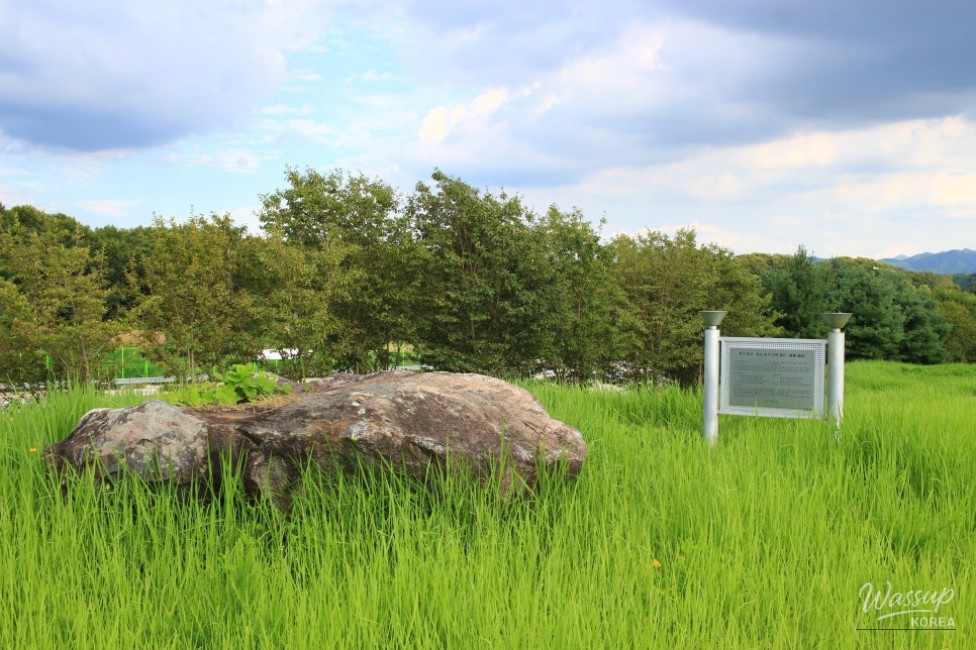
Just before entering the Bamsaem forest, a large pavilion comes into view. Next to it is a signboard containing information related to the Mangyeong River Source, telling the stories of the river, Bamsaem, and Bamtima Village, along with introducing the Eight Scenic Spots of Mangyeong.
Around the pavilion, there is also a children's playground, making the forest a wonderful play area for kids.
Observing plants and animals teaches the value of life and can positively impact emotional well-being. This is a great space to visit with children.
After passing the pavilion, the real Bamsaem forest trail begins. The Bamsaem forest is primarily composed of deciduous trees rather than pines, giving it a somewhat empty appearance in winter. However, this has its advantages.
The sounds of birds in the forest are clearer, and the sound of flowing water in the valley is more pronounced.
This path is perfect for walking while listening to nature's sounds. Taking a moment to stop and gaze at the forest can be refreshing.
There are benches along the path for convenient resting.
There are also small resting spots and pavilions. Sitting quietly and listening to the forest's stories can be a unique experience.
You don’t have to engage in conversation; simply listening to the sounds of the forest is enough.
After a while, you will feel a sense of relaxation.
The walk from the parking lot to Bamsaem takes about 30-40 minutes. It is recommended to walk slowly, relax your body, and absorb the forest's energy. Before you know it, you will encounter a sign indicating your arrival at Bamsaem.
Minimal alterations were made to the area around Bamsaem during the ecological park development to preserve its natural state.
The wetland below Bamsaem has also been maintained, serving as a bathing area for wild boars and a habitat for salamanders.
Crossing the bridge over the wetland reveals a small spring at the foot of the mountain—this is Bamsaem.
Here, a slender stream flows gently throughout the four seasons. The source of a great river begins so small and delicate. Yet, as it flows downstream, it merges with other streams to ultimately form a mighty river.
After confirming this small truth, we retraced our steps.
As we descended towards Bamtima Village, we passed the 'Chinese Restaurant' on the right, known for its delicious seafood jjambbong, making it a great dining option after exploring the Mangyeong River Source Ecological Park.
Further down, on the right side, is the Dream Tree Experience Observation Learning Center, where children can engage with animals and learn through observation and experience. Reservations are required for use.
We explored the Mangyeong River Source Ecological Park with members of the Wanju County Ecological Club. The facilities, including the parking area, are well-equipped, making it a pleasant place for a stroll. It was a wonderful opportunity to see the source of the Mangyeong River, Bamsaem, and enjoy the fragrance of the forest.
I encourage you to take the time to walk through the Mangyeong River Source Ecological Park with your loved ones.










Source :https://blog.naver.com/wanjugun/224194668335
No comments yet.