Exploring the Beauty of Duiungbak Village
90-43 Baeil-gil, Jeondong-myeon, Sejong-si
뒤웅박고을


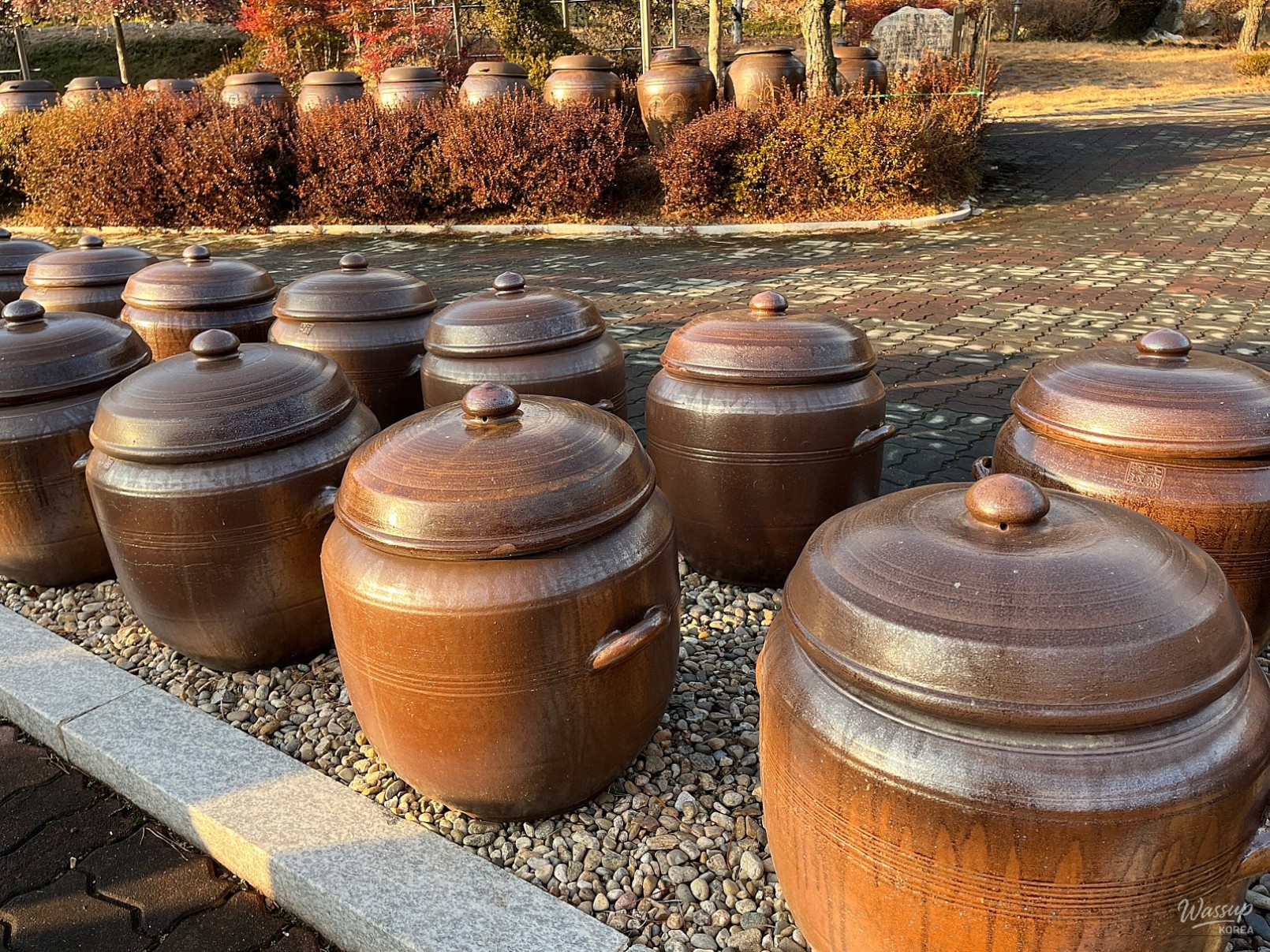
Nestled at the foot of Unju Mountain in Sejong City, Duiungbak Village (뒤웅박고을) is a stunning tribute to Korea's traditional fermentation culture. The village is famously adorned with over a thousand meticulously cared-for clay jars, known as 'onggi,' which create a landscape that is both humble and grand. The name 'Duiungbak' itself refers to a traditional seed storage container, symbolizing the wisdom of ancestors who lived in harmony with nature.
Visitors are greeted by a serene harmony of hanok houses, ancient pine trees, and endless rows of jars that shine under the sun. This cultural space offers more than just a visual spectacle; it is a place to reminisce about childhood memories of a mother's yard and to appreciate the scientific ingenuity behind Korea's ancient storage methods.
The Wisdom and Art of Korean Fermentation Jars
In Korea, fermentation jars are far more than mere storage. They are ingenious tools that regulate air and moisture through microscopic pores, allowing sauces to ferment perfectly through the scorching summers and bitter winters. Walking through the village, you can see jars of all sizes, including massive ones capable of holding several gongs of rice, showcasing the practical diversity of these vessels.
The sight of these jars, polished daily to a bright shine, evokes the image of a mother's dedicated care. The rows are arranged so beautifully that they resemble a carefully curated collection, offering a sense of stability and warmth to anyone who wanders through the paths. It is a living exhibition of the lifestyle of past generations.
Cultural Sculptures and the Essence of Motherly Love
Beyond the jars, Duiungbak Village is filled with sculptures that reflect traditional Korean life. From figures of children playing to elderly men lost in a game of Go, each piece adds a layer of storytelling to the landscape. A particularly moving feature is the collection of sculptures dedicated to mothers, capturing their lifelong devotion to their families and their cherished jars.

Exploring the Scenic Trails and Themed Gardens
Duiungbak Village offers a variety of attractions that extend into the surrounding nature. Visitors can explore the Paldo Fermentation Jar Exhibition, which showcases regional jar styles from across the country. The village also features a beautifully arranged tree garden, a columnar joint park, and a salt gorge, all connected by peaceful walking paths perfect for a leisurely afternoon.
For those seeking a bit more adventure, a trail leads directly from the village up toward Unju Mountain. Along the way, you might encounter the charming local cats that call this village home. Even if indoor facilities like the fermentation sauce museum are temporarily closed, the outdoor scenery of the hanok and gardens is more than enough to fill your heart.
A Place for Prayer and Reflection at Dongwoljeong
The village includes resting areas like Dongwoljeong, where you can pause and reflect. Historically, mothers would place a bowl of pure water atop the jars at dawn to pray for their family's health. This spirit of prayer is still felt throughout the village, inviting visitors to take a moment of silence for the well-being of their own loved ones.
A Cultural Education for the Whole Family
Duiungbak Village serves as a bridge between generations. While parents can indulge in nostalgia and reminisce about the past, children can experience firsthand the traditional culture that is often lost in modern cities. It is a quiet, profound space near Sejong City that proves how beauty can be found in the most traditional and humble objects.
Photo Gallery: The Many Faces of Duiungbak


Walking through the forest of thousands of jars, did you find yourself thinking of your own family's health and happiness? Duiungbak Village is a place where tradition truly breathes. Would you like to explore more traditional villages in Sejong, or are you interested in a local restaurant recommendation where you can taste the authentic fermented flavors produced right here?
No comments yet.