UNESCO Intangible Cultural Heritage: Kimchi and Kimjang Culture
- Original source
- blog.naver.com


UNESCO Intangible Cultural Heritage is a system that registers the intangible heritage of each country on the Representative List or the Urgent Safeguarding List, in accordance with the 2003 UNESCO Convention for the Safeguarding of the Intangible Cultural Heritage, to ensure that cultural diversity and creativity are maintained.
Its purpose is to raise awareness of the importance of intangible heritage, which is a source of cultural diversity, and to promote national and international cooperation and support for the protection of intangible heritage.
Korea has 23 items on the UNESCO Intangible Cultural Heritage list, including Jongmyo Jerye and Jongmyo Jeryeak (Royal Ancestral Rite and Music) and Korean Jang (Soy Sauce, Soybean Paste, Red Pepper Paste) Making Culture, which was inscribed in 2024. Among them, Kimchi and Kimjang culture were inscribed in 2013.
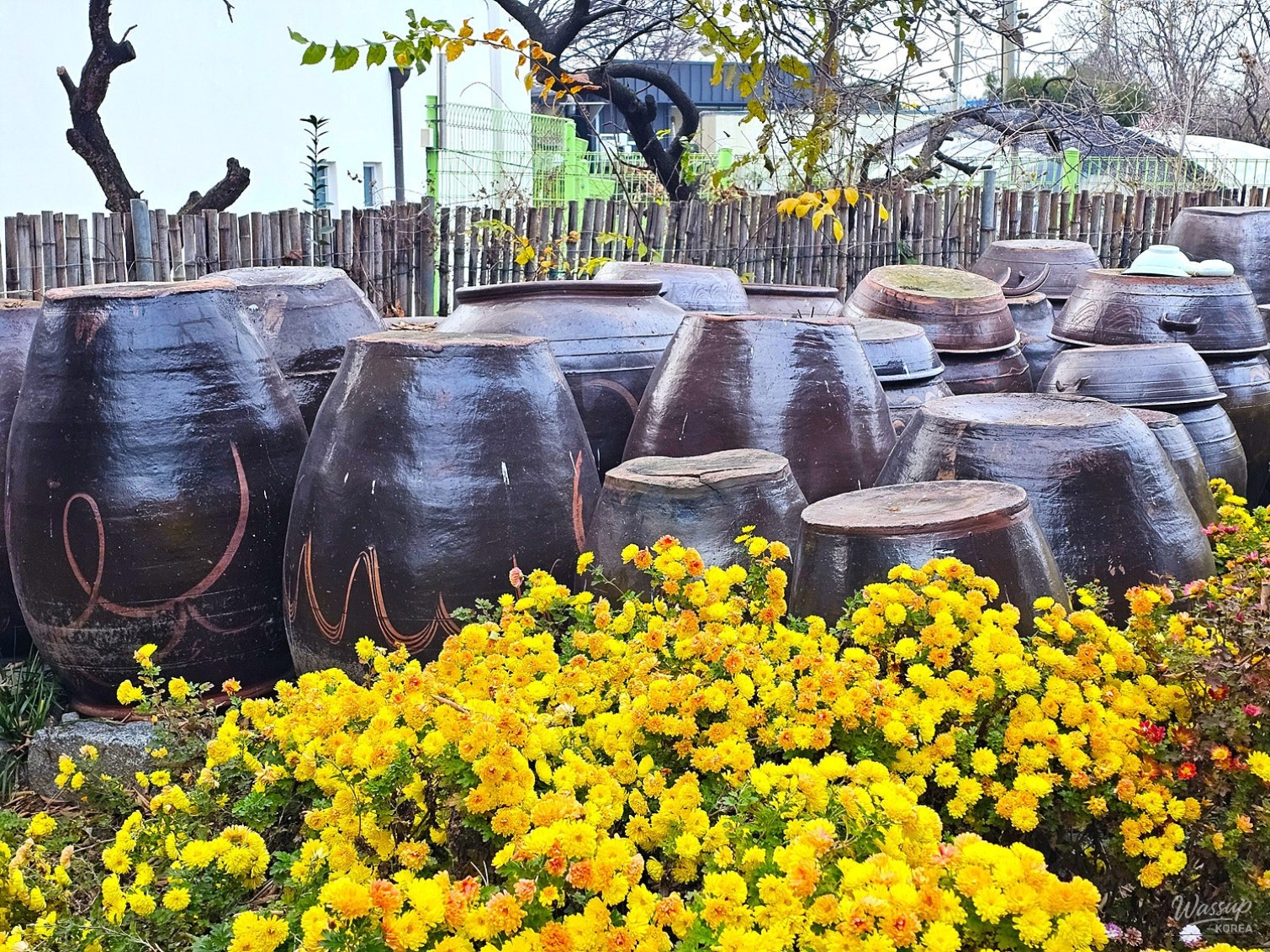
After the rice harvest, which is the main farming event of the year, people prepare for winter by replacing thatched roofs with well-dried rice straw. Nowadays, there are not many opportunities to see thatched roofs, but in the past, kimchi making was an essential part of preparing for winter, along with replacing thatched roofs.
During the Kimjang season, highway traffic increases, which shows a change in the Kimjang culture. Kimjang is a family event where family members gather to make kimchi for the winter, promoting family harmony.
At the Hapdeok Suri Folk Museum's education room, people interested in learning about Kimjang gathered. The Hapdeok-eup Lifelong Learning Center's specialized program, "Kimjang, the Taste of Hapdeok Continuing from Fingertips," was held six times in the second half of 2025.
During the theory sessions, participants learned about the history of kimchi, the meaning of Kimjang culture, and why kimchi has become a symbol of Korean culture. They studied the types of kimchi and how to make them, based on the food and cooking section of Jeongjoji in the Imwon Gyeongjeji, an encyclopedia written by the late Joseon Dynasty scholar Seo Yu-gu.
Participants directly harvested radishes planted in the Hapdeok Suri Folk Museum's garden for Kimjang. It was a novel and fun experience to pull out the well-grown radishes from the field, compared to buying them at the market.
The process starts with trimming the radishes harvested from the field. Making Kimjang is hard work and requires labor, but it is fun when done together. Some participants were making kimchi for the first time, while others, even young mothers, had made it many times.
The Kimjang culture inherited from ancestors contains scientific principles. Delicious kimchi can be enjoyed through the process of aging and fermentation. The radishes freshly picked from the field are fresh and sweet.
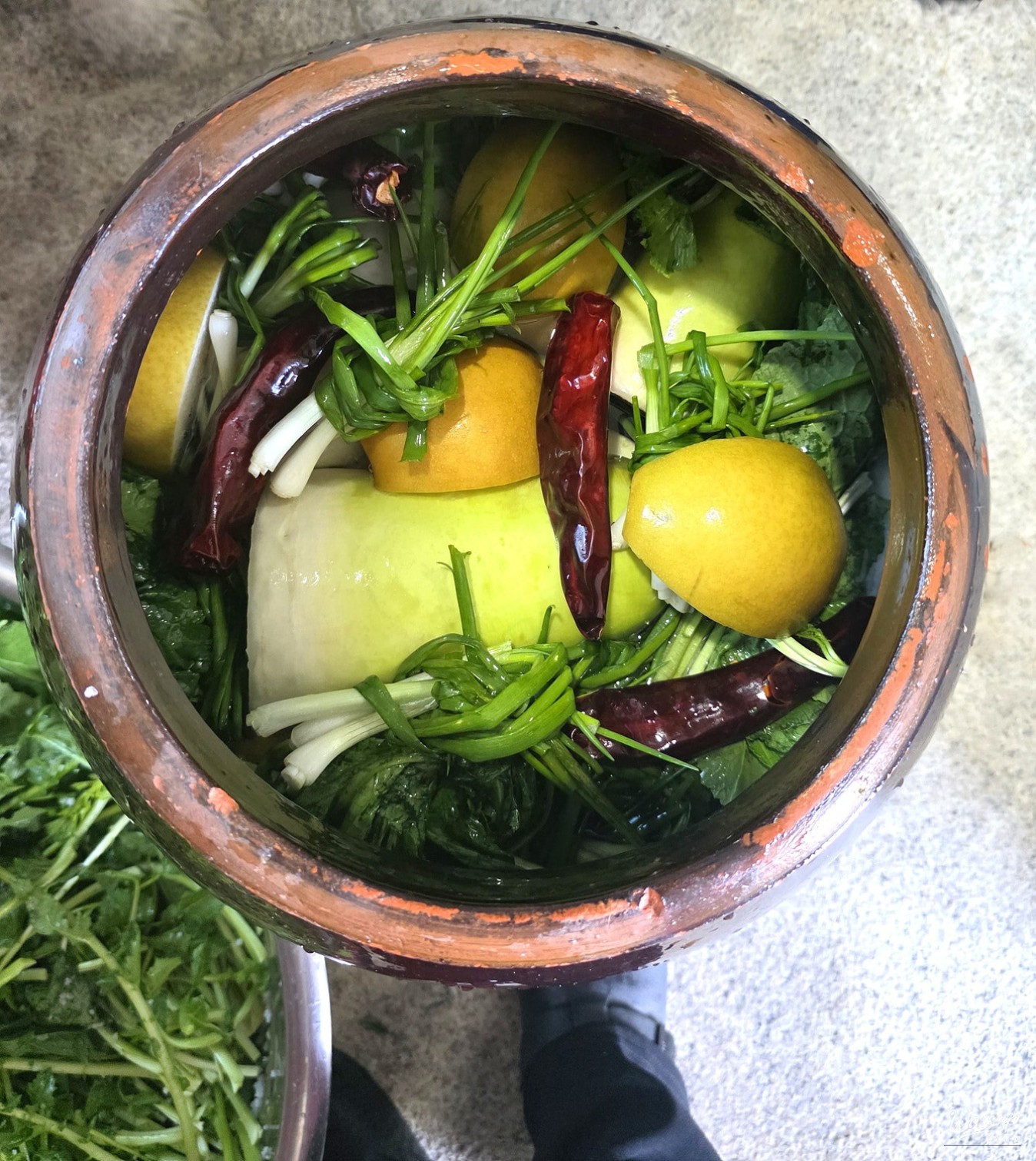
They made Kkakdugi (diced radish kimchi) and Nabak kimchi (water kimchi). The Dongchimi (radish water kimchi), which will be good to eat in winter, is mouth-watering just to look at.
Each participant took home Dongchimi and Nabak kimchi they made in their own kimchi containers. They also learned from each other, listening to various stories from those with a lot of experience as eldest daughters-in-law.
In the next session, they prepared to make cabbage kimchi. The Kimjang making reached its peak as they trimmed and cut the cabbage and salted it.
After salting the cabbage, they prepared the seasonings. They trimmed scallions, washed mustard greens, and shredded radishes to prepare the ingredients. The participants in the Hapdeok-eup Lifelong Learning Center's specialized program had the commonality of living in Hapdeok, but they had slightly different experiences in how to make Kimjang.
Therefore, it was a time for cultural exchange of Kimjang, which they grew up learning in different regions.
Some add raw shrimp, others grind raw shrimp, and some even add hairtail. The stories of different Kimjangs revealed the characteristics of each region and the diversity of kimchi.
The cabbage kimchi is stacked in kimchi containers with the fillings made with various seasonings. It is difficult to do alone, but the process is much easier when done together.
The demand for kimchi has decreased a lot compared to the past, but Kimjang is still essential in winter. The taste of Korean kimchi is well known all over the world, but in reality, the younger generation does not seem to eat much kimchi.
It was an opportunity to rethink the value and meaning of Kimjang culture, such as the history and taste of kimchi passed down traditionally, and the sense of community that comes with it. It was even more meaningful to make Kimjang directly with agricultural products from the region.
It was a valuable program to learn about kimchi and Kimjang culture, which are National Heritage and UNESCO Intangible Cultural Heritage, and to share stories about Kimjang culture.
It seems that we will be able to spend this winter well with Kimjang kimchi that has been well aged in kimchi refrigerators and jars. The six-session Kimjang culture program, which was conducted as a 2025 Hapdeok-eup Lifelong Learning Center's specialized program, was a time to newly recognize Kimjang culture, and we look forward to the opening of a lifelong learning center with another program.







Source :https://blog.naver.com/dangjin2030/224090947046
More from Travel



No comments yet.