Top 20 Historical Sites to Visit on Liberation Day



August 15th, Liberation Day, is a perfect occasion to view familiar travel spots from a different perspective.
This year marks the 81st anniversary of liberation, and we present 20 historical sites across the nation that bear the traces of our painful past, from the annexation to the resistance for independence.
- Table of Contents -
Top 20 Historical Sites to Visit on Liberation Day 2026
1. Top 20 Historical Sites to Visit on Liberation Day 2026
2. Recommended Special Exhibitions for the 81st Anniversary of Liberation 2026
1. Top 20 Historical Sites to Visit on Liberation Day 2026
The Namsan Gukchi Road in Seoul allows visitors to walk along the site of tragic history where national sovereignty was lost. It is a historical site that thoughtfully reflects on the meaning of Liberation Day, as it features remnants of the Japanese colonial period and memorials for comfort women.
The Daejeon Modern History Exhibition Center offers insights into the modern history of Daejeon, which transformed into a planned city under Japanese colonial rule. Visitors can explore the historical context behind the development of present-day Daejeon.
The Gunsan Modern History Museum examines the history of Gunsan, which became a major route for rice exploitation during the Japanese occupation. It showcases the changes the port city underwent and its painful history through various materials.
The Mokpo Modern History and Culture Space allows visitors to explore the history of Mokpo during the Japanese occupation through modern streets and architecture formed after the opening of the port. The traces of local residents who resisted exploitation can still be found throughout the city.
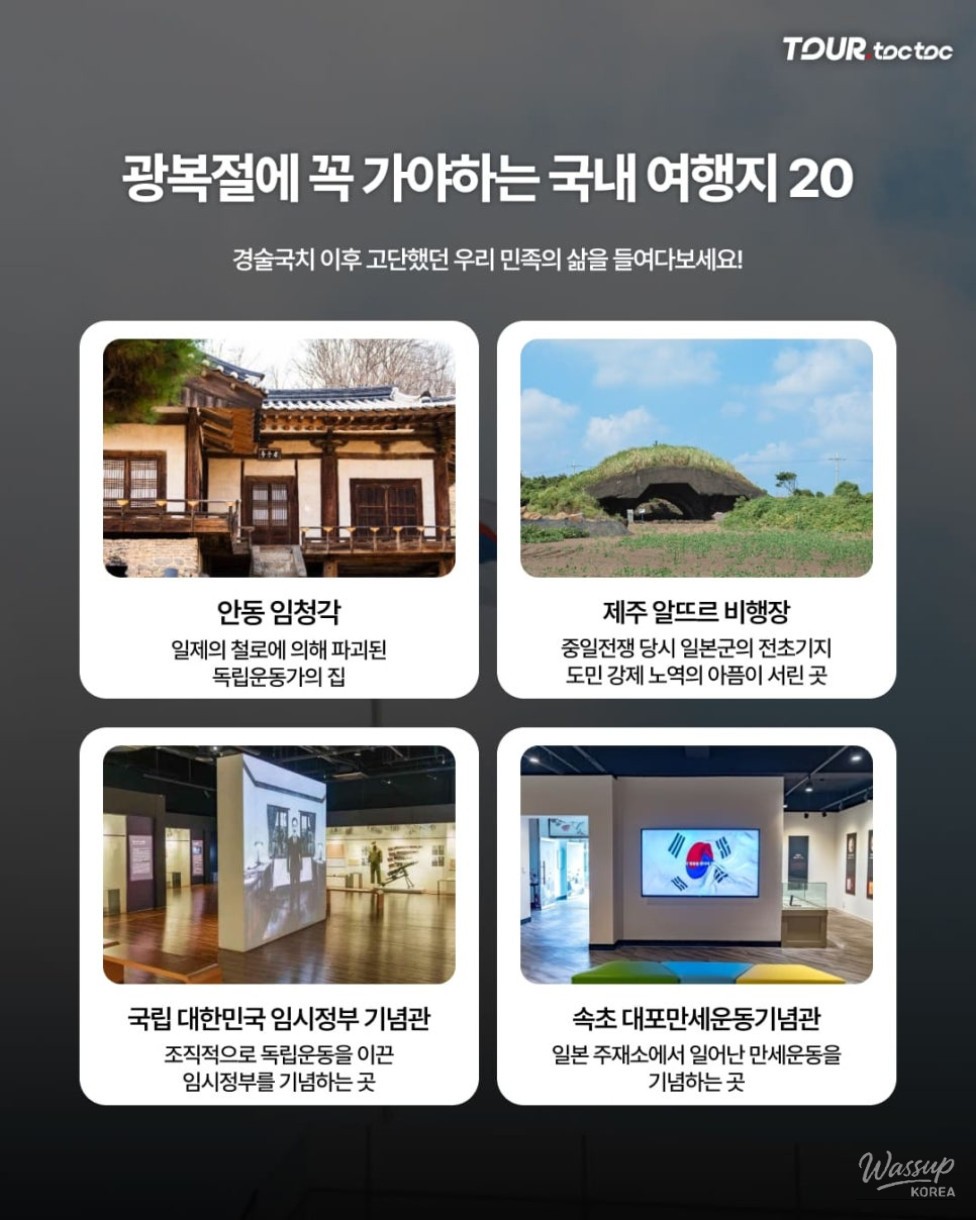
The Andong Imcheonggak is a significant site for independence movements that produced notable independence activists. It is also known for the damage it suffered during the construction of railroads in the colonial period, making it a must-visit during the Liberation Day holiday.
The Jeju Alttreu Airport has remnants from when the Japanese military utilized it as a military base during the Sino-Japanese War. The facilities around the airport reveal the history that Jeju faced during its militarization under Japanese rule.
The National Memorial Hall of the Provisional Government of the Republic of Korea is a space to learn about the organized independence movements of the Provisional Government. It provides a comprehensive understanding of the flow from the establishment of the Provisional Government to domestic and international independence movements and preparations for liberation.
The Sokcho Daepo Manse Movement Memorial Hall commemorates the history of the Manse movement that took place in the Daepo area. Visitors can see how the spirit of independence spread across the country through this movement.
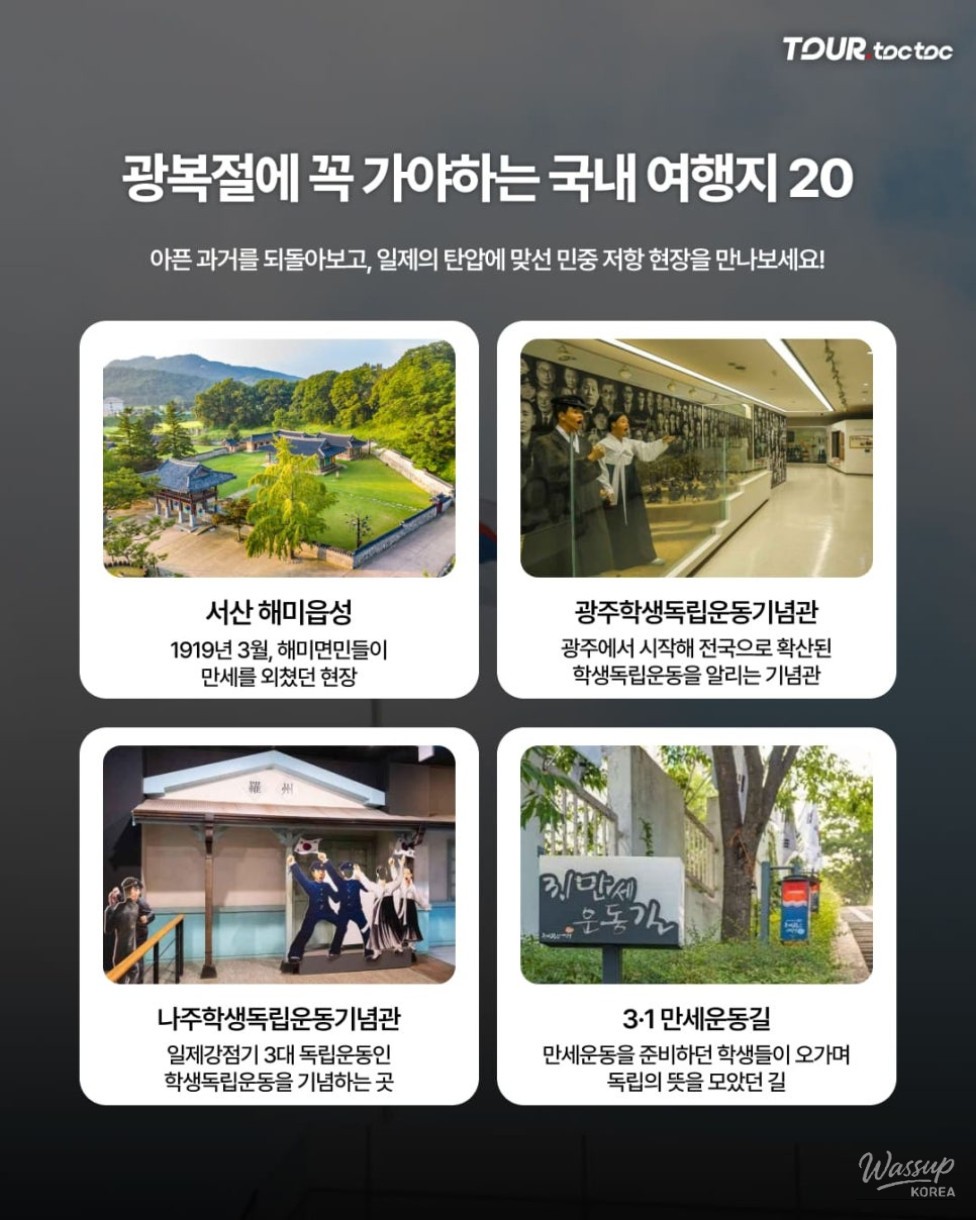
The Seosan Haemi Eupseong is a historic fortress that was also the site of the independence movement when residents shouted for independence in 1919. Walking through its tranquil walls reveals a deeper modern history intertwined with the cultural heritage we are familiar with.
The Gwangju Student Independence Movement Memorial Hall highlights the student independence movement that began in Gwangju and spread nationwide. It examines the actions taken by students against discrimination and oppression during the Japanese occupation.
The Naju Student Independence Movement Memorial Hall allows visitors to revisit the history of the student independence movement and its origins. It explores how the incidents surrounding students traveling between Gwangju and Naju escalated into a massive anti-Japanese movement.
The Daegu 3.1 Manse Movement Road is where students who were preparing for the Manse movement gathered to express their desire for independence. Visitors can still walk along the historical traces of the 3.1 Movement that took place in Daegu.
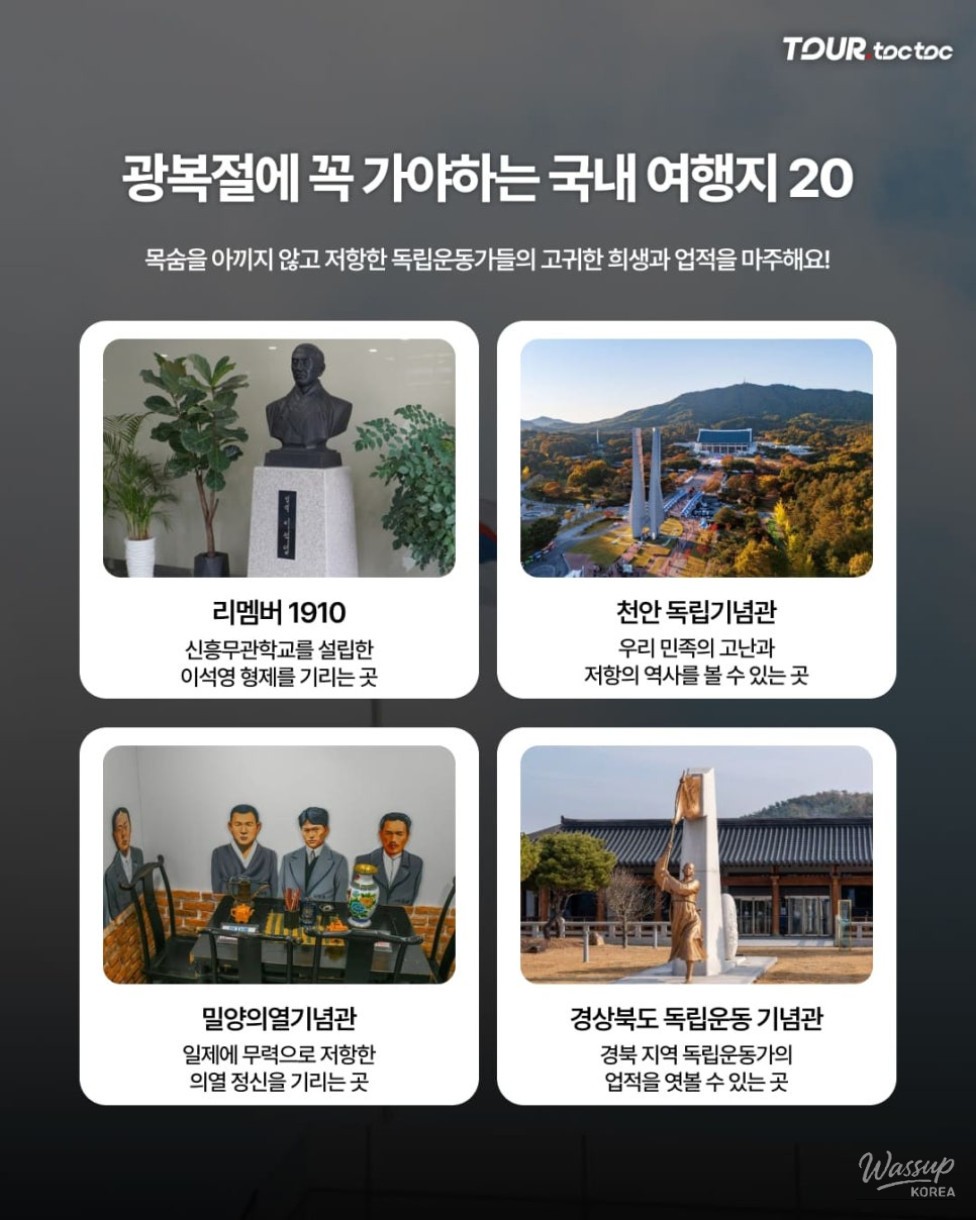
The Namyangju Remember 1910 commemorates the stories of independence activists, including the Lee Seok-young brothers, who contributed to the establishment of the Sinheung Military School. The name '1910' evokes the history of those who left their homes in pursuit of independence after the annexation.
The Cheonan Independence Hall is a representative historical space that broadly examines the national hardships faced by our people and the ongoing independence movements. It provides a comprehensive overview of significant events, figures, and the journey towards liberation.
The Miryang Heroic Memorial Hall honors the spirit of armed resistance against Japanese rule and the independence activists. It showcases various forms of independence movements through the activities of those who engaged in armed struggle during the colonial period.
The Gyeongsangbuk-do Independence Movement Memorial Hall sheds light on the history of independence activists in the Gyeongbuk region. It allows visitors to explore the significance of Gyeongbuk in our independence history through the records of individuals who dedicated their lives to the cause.
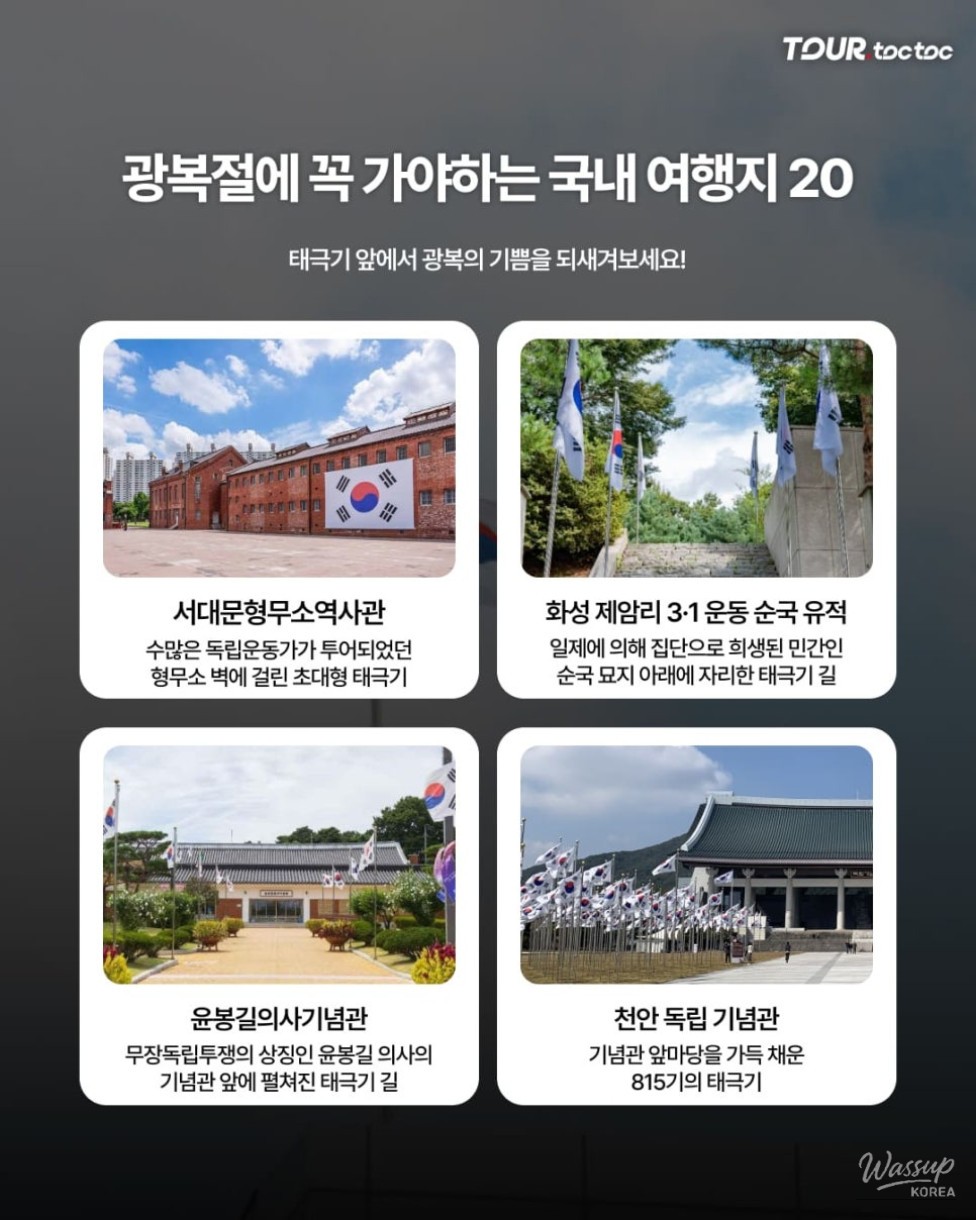
The Seodaemun Prison History Hall is the site where many independence activists were imprisoned and faced hardships during the Japanese occupation. Visitors can directly confront the oppression and sacrifices endured by these activists by exploring the prison and exhibition spaces.
The Hwaseong Jeam-ri 3.1 Movement Martyr Site holds a tragic history where civilians were collectively sacrificed by the Japanese. Here, visitors can learn about the brutal repression of the Manse movement and the stories of the residents who perished in the process.
The Yoon Bong-gil Memorial Hall in Yesan allows visitors to reflect on the life of Yoon Bong-gil, a symbol of the armed independence struggle. In his hometown of Yesan, visitors can explore his birthplace and the Chungui Shrine to gain a more comprehensive understanding of his life.
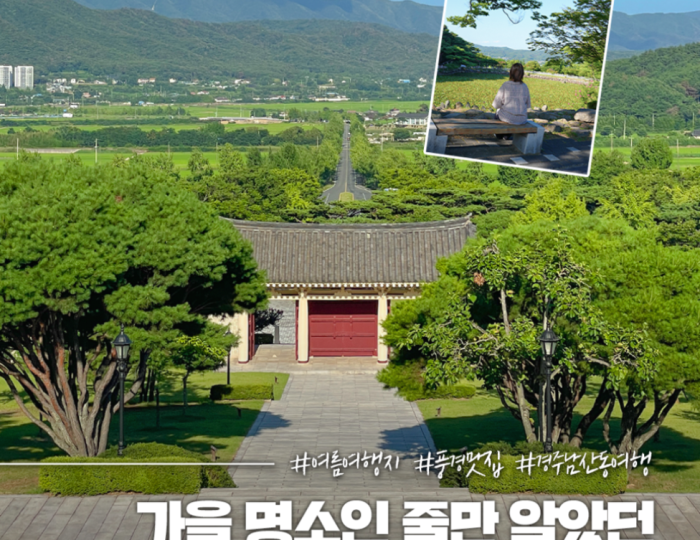
One of the most symbolic scenes of Liberation Day can be found at the Taegukgi Plaza in the Cheonan Independence Hall. This space, leading to the House of the Nation, is adorned with the 815 Taegukgi, symbolizing liberation, creating a magnificent sight.
2. Recommended Special Exhibitions for the 81st Anniversary of Liberation 2026
If you are preparing for a historical trip on Liberation Day, consider checking out the special exhibitions currently being held at national memorial sites.
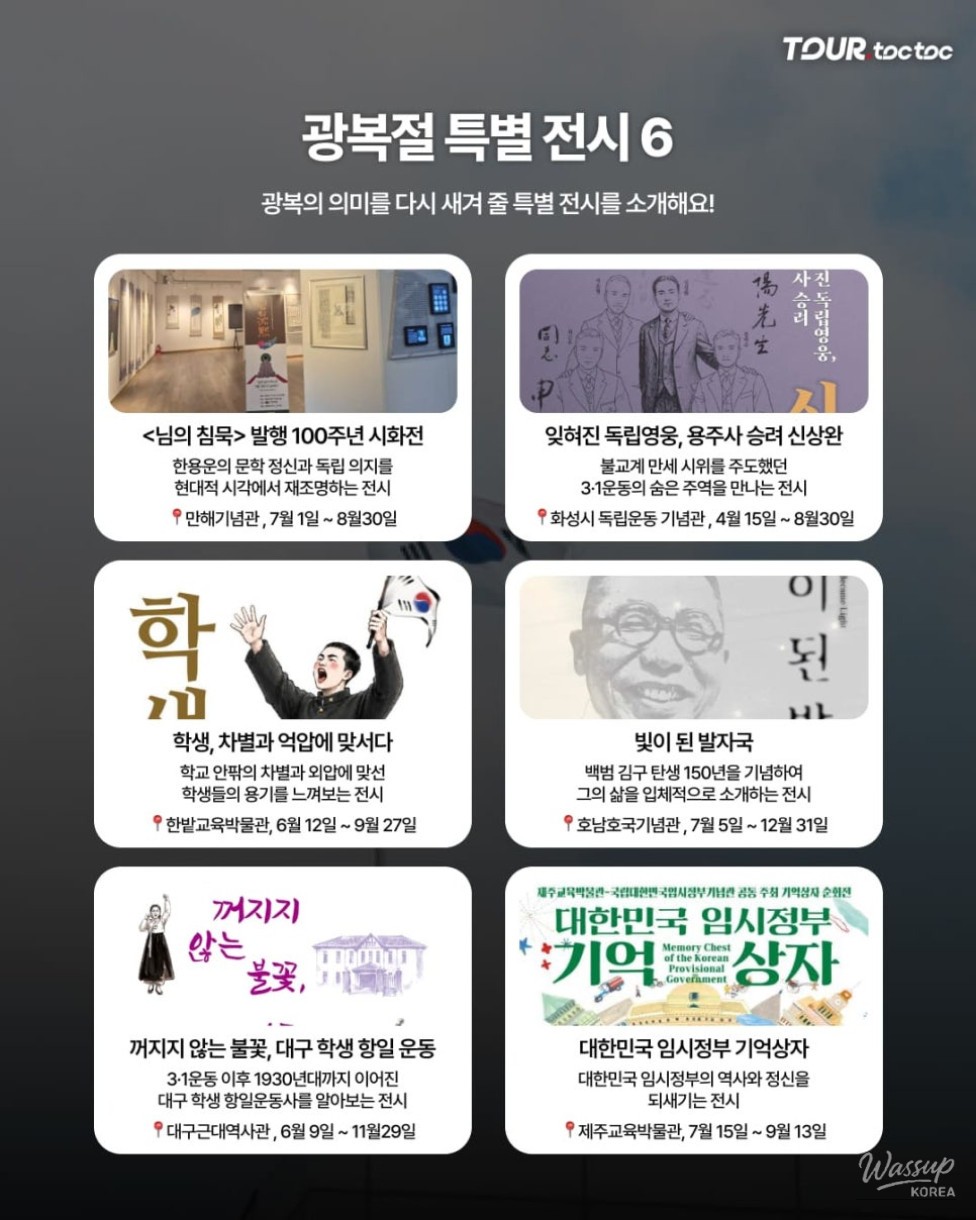
The 100th Anniversary Poetry Exhibition of Silence of My Beloved
This year marks the 100th anniversary of the publication of Han Yong-woon’s poetry collection Silence of My Beloved. From July 1 to August 30, 2026, a poetry exhibition reflecting on Han Yong-woon’s literary spirit and independence will be held at the Manhae Memorial Hall in Gwangju.
The Forgotten Independence Hero, Monk Shin Sang-wan
From April 15 to August 30, 2026, a special exhibition highlighting the life and independence movements of Monk Shin Sang-wan, who led the Buddhist community's 3.1 Movement, will take place at the Hwaseong Independence Movement Memorial Hall.
Students, Resisting Discrimination and Oppression
From June 12 to September 27, 2026, a special exhibition in Daejeon will showcase the anti-Japanese movements of students in the region, commemorating the 100th anniversary of the June 10th Manse Movement.
The Footprints that Became Light
From July 5 to December 31, 2026, a special exhibition at the Honam National Defense Memorial Hall in Suncheon will commemorate the 150th anniversary of Kim Gu’s birth, reflecting on his life and legacy.
The Unquenchable Flame: The Anti-Japanese Movement of Daegu Students
From June 9 to November 29, 2026, a special exhibition at the Daegu Modern History Museum will highlight the anti-Japanese movements conducted by students in Daegu during the Japanese occupation.
The Memory Box of the Provisional Government of the Republic of Korea
From July 15 to September 13, 2026, a traveling exhibition organized by the National Memorial Hall of the Provisional Government and the Jeju Education Museum will present the history of the establishment and activities of the Provisional Government and the independence movement.
Historical travel on Liberation Day is more than just visiting old places; it is a process of confronting the layers of time embedded in the streets and familiar cities we walk through today. As we celebrate the 81st anniversary of liberation in 2026, take the time to explore the historical sites that shaped the Republic of Korea, from the Independence Hall filled with Taegukgi to the memorials and streets that carry the legacy of independence activists.


Source :https://blog.naver.com/tour_toctoc/224377442615
No comments yet.