The Story of Nuri Farm's Traditional Fermented Sauces



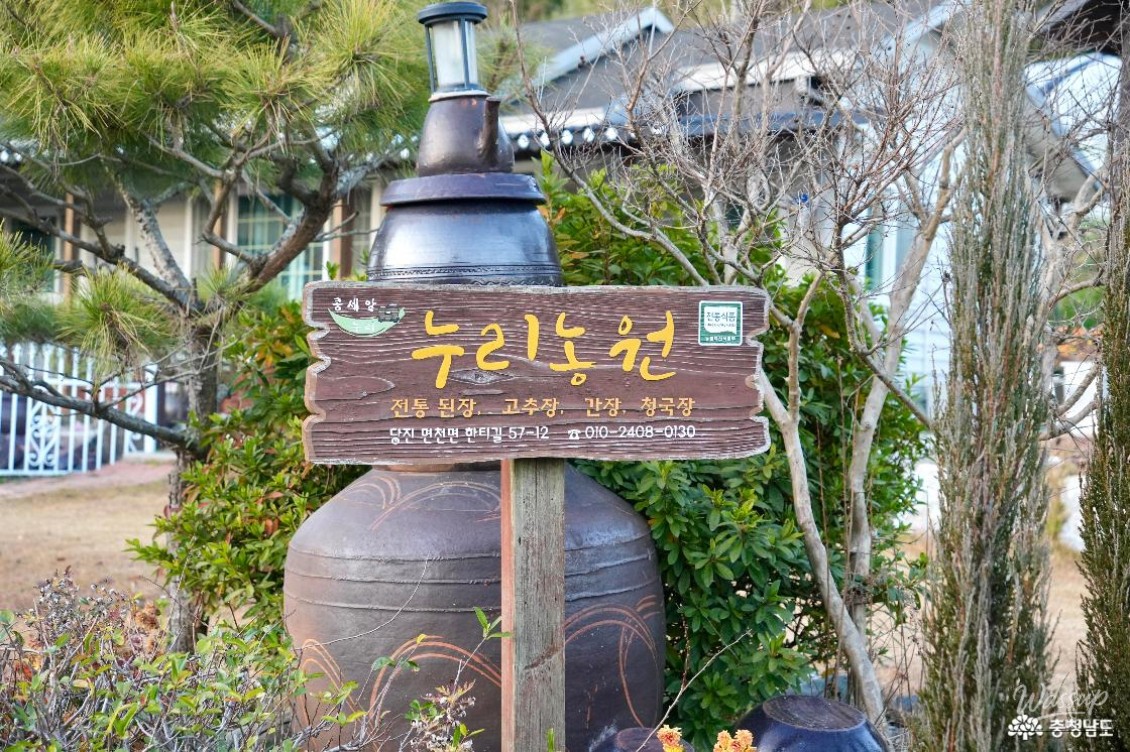
Located at 57-12 Hanti-gil, Myeoncheon-myeon, Dangjin, Nuri Farm is more than just a place to make sauces; it is a well-organized establishment that embodies the essence of time.
From the moment you step in, you can feel that this farm captures time itself.
At Nuri Farm, the traditional processes of boiling soybeans, fermenting, and storing sauces in earthenware jars are all done by hand. While many sauces today are mass-produced in factories, Nuri Farm insists on using only domestic soybeans and sticking to the old methods, which adds to its credibility.
It feels more like a 'food workshop and farm-based production facility' that continues the local food culture rather than just a place for home-made sauces.
The owner emphasized the importance of consumers understanding the difference between domestic soybeans and genetically modified organisms (GMOs). Each soybean carries the heart of its producer and farmer, and changes in ingredients can alter not just the taste and health benefits but the very nature of the sauce.
Nuri Farm ensures a stable supply of high-quality soybeans, as the essence of good sauce lies in the soybeans themselves.
As I looked at the rows of fermentation jars, I thought, “Each of these jars is fermenting at different times and temperatures…”
This process of waiting, observing, and nurturing without going against the natural flow seems to be the greatest force behind creating good flavors.
Through conversations with the owner, it became clear that running a farm is not just about producing products but is a heartfelt business that lasts alongside the local community.
The mission to continuously connect with local farmers to maintain domestic soybeans and pass on our sauce culture to the next generation was evident throughout the farm.
While it is difficult to grasp everything in just one visit, I experienced firsthand why Nuri Farm's sauces are loved by many and why the insistence on domestic soybeans is crucial.
The traditional method of extracting special flavors from ordinary ingredients left me curious about the rich and honest taste.
As I passed through the picturesque landscape of mountains and rice fields, I was greeted by the expansive rows of fermentation jars and neatly arranged fermentation spaces—this is Nuri Farm, where traditional sauces have been made consistently.
One of the reasons Nuri Farm's sauces are special is that they produce their own meju (fermented soybean blocks). The process involves more than just steaming soybeans; it requires careful selection of quality soybeans, as they influence over 70% of the sauce's flavor.
Even though imported soybeans are much cheaper, the owner firmly believes in making sauces that can be safely fed to children, refusing to compromise on the quality of domestic soybeans.
The meticulous process includes washing the soybeans, steaming them for over three hours, and ensuring they are evenly cooked. If the outer layer is soft but the inside is undercooked, the meju will not ferment properly.
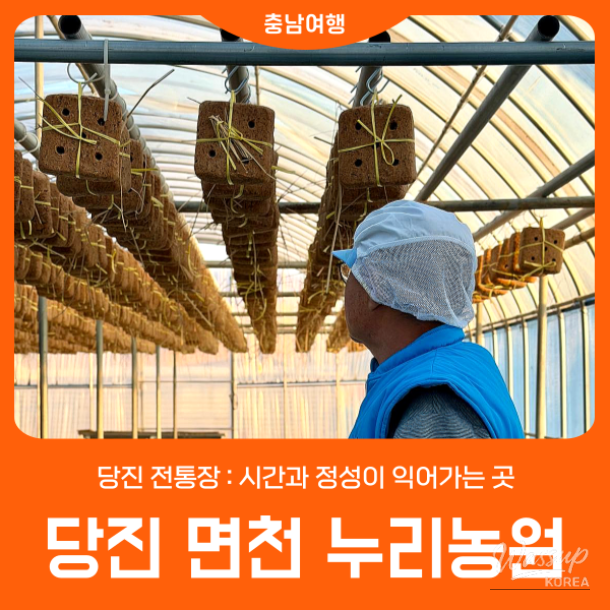
After steaming, the soybeans undergo several resting periods before being shaped by hand and having five holes punched in the center to aid in airflow during fermentation.
They are then naturally dried for 30 to 40 days, where wind and sunlight contribute to the color and aroma of the meju. Managing humidity during this phase is crucial, and the owner closely monitors this space daily.
Using straw to tie the meju for indoor fermentation allows natural lactic acid bacteria and molds to settle on the surface, enhancing the fermentation process.
The use of sun-dried salt that has been aged for 3 to 5 years is another key element in the flavor of the sauces. This salt helps eliminate bitterness while enhancing sweetness and ensures a clean fermentation process.
While many factories produce sauces rapidly with added enzymes or artificial flavors, Nuri Farm adheres to the basics of soybeans, water, and salt, allowing nature's temperature, humidity, and wind to facilitate the fermentation process honestly.
Nuri Farm is not just a small-scale operation; it has the facilities, drying spaces, fermentation rooms, and storage for proper production and management of traditional sauces.
Beyond just making sauces, Nuri Farm plays a role in connecting local culture. It has expanded into a tourism initiative called 'Hanti,' based on its traditional sauces, offering various programs such as regular sauce subscription services, meju and sauce-making experiences, wellness programs, and cooking classes using local produce.
Listening to the stories from Nuri Farm reveals that it was not built overnight. The owner has been dedicated to this journey since 2008, visiting renowned sauce-making families, comparing flavors across the country, sharing homemade sauces with neighbors for feedback, and researching meju shapes, fermentation temperatures, humidity, and salt ratios for over five years.
The results of this dedication led to the official opening in 2013 and the establishment of Nuri Farm as we know it today.
What I learned at Nuri Farm is that 'good flavors do not betray time.' Standing in front of the fermentation jars, you can feel the values that Nuri Farm upholds.
Domestic soybeans, proper ingredients, traditional fermentation methods, nature's time, and human care come together to create the sauces of Nuri Farm. In a world accustomed to speed, there are moments here where slowness becomes strength.
Through the long process of washing, cooking, shaping, drying, and fermenting soybeans, there are times when nature's timing cannot be rushed. Respecting that time is essential for producing quality sauces, and this philosophy permeates throughout the farm.
Therefore, the taste of Nuri Farm's sauces transcends mere deliciousness; it embodies long waits, care, and the flow of nature.
Nuri Farm
Location: 57-12 Hanti-gil, Myeoncheon-myeon, Dangjin, South Chungcheong Province
Parking: Free
Visit Nuri Farm to experience this dedication to traditional sauces and local culture.

No comments yet.