Revamped Jincheon Bell Museum Welcomes Visitors


The Jincheon Bell Museum is currently hosting a richer exhibition following its renovation.
Located within the Jincheon Historical Theme Park, the museum has been open since its establishment in 2005.
With a recent extensive remodeling, the exhibition space has become cleaner and offers a variety of experiences.
Let me share the latest updates about the reopened Bell Museum.
The architecture of the Bell Museum is also unique.
The two-story building features a large bell-shaped sculpture at the entrance, giving visitors the feeling of entering a bell.
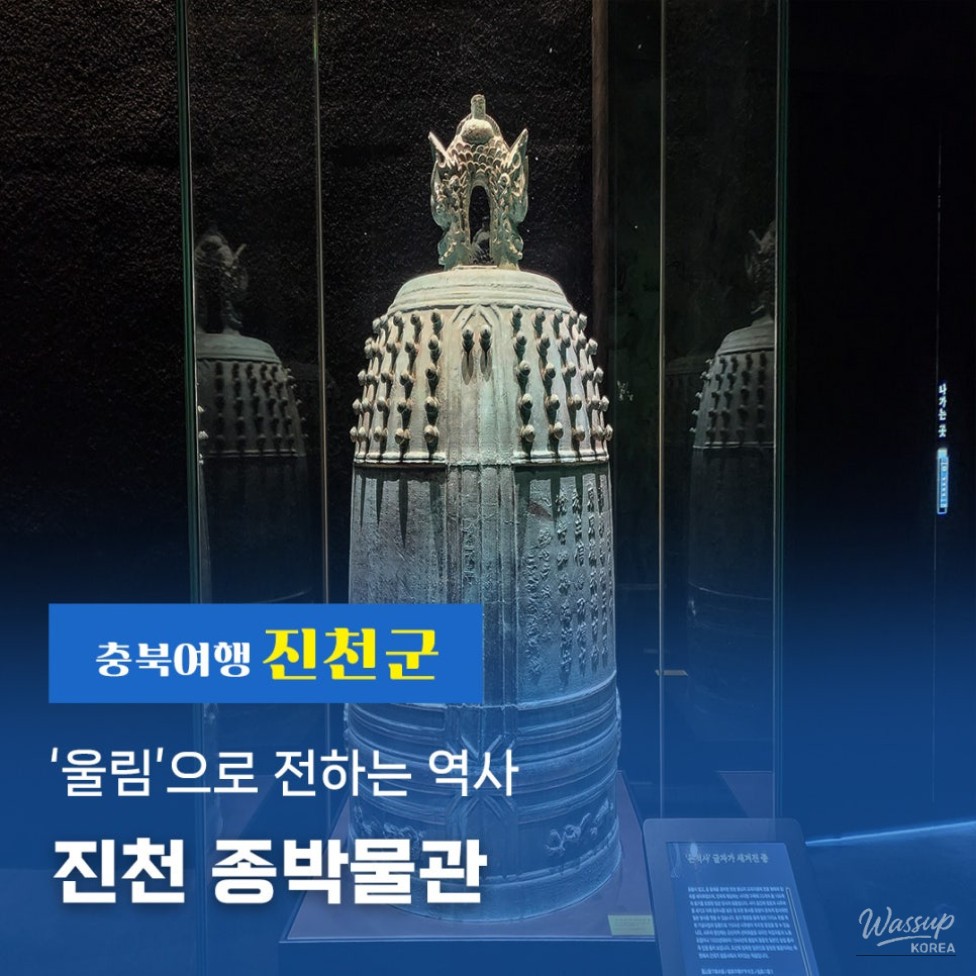
As we explore the first exhibition hall, we encounter the Seondeok Great King's Bell.
This bell was created by King Gyeongdeok of Unified Silla for his father, King Seongdeok.
It holds significant historical, artistic, technical, and religious value, enhanced by media art that showcases its splendor.
The museum features an exhibition on Korean bells.
Bells are used in temples to gather people, signal time, and conduct ceremonies.
A cultural interpreter provides engaging explanations, allowing visitors to learn about the characteristics of bells from different eras.
The bell inscribed with 'Eunjeoksa' was cast in 1924 and is a bell originating from Japanese settlers in Joseon.
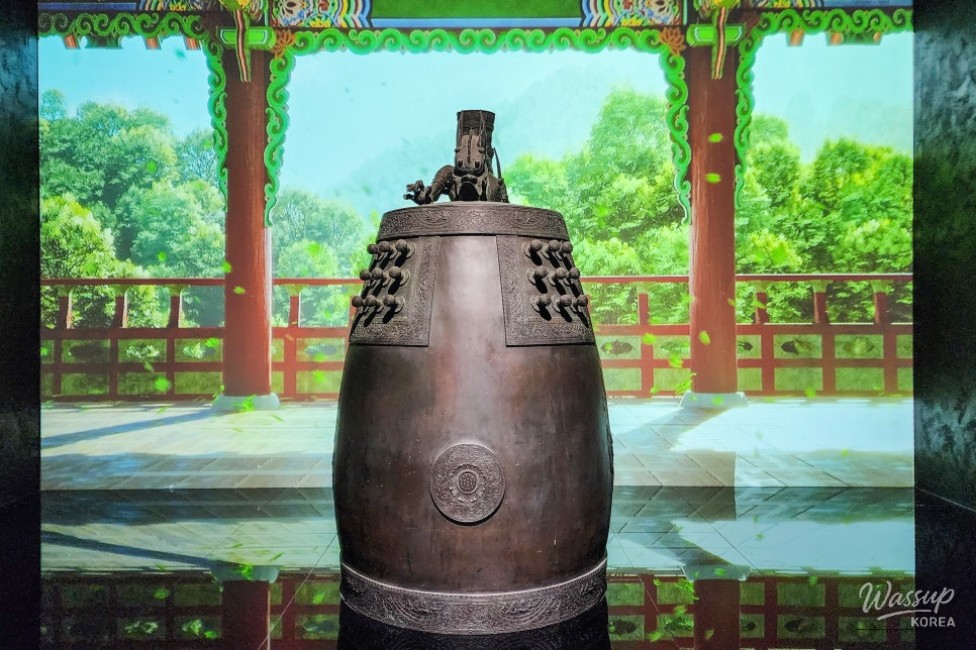
The Sangwon Temple Bell is a precious heritage that has survived for over a millennium and was featured in the opening ceremony of the 2018 PyeongChang Winter Olympics.
It plays a video showcasing the beauty of Korea, amplifying the charm of the bell.
In the sensory exhibition space, visitors can touch model bells and experience engraving bell patterns onto paper.
The second exhibition hall explores the elements that influence bell sounds and the unique sound principles of Korean bells.
It highlights the differences between Eastern and Western bells, as well as allows comparisons among Korean, Chinese, and Japanese bell forms.
The 'Eumtong' and 'Myeongdong' are structures unique to Korean bells.
The Eumtong at the top of the bell helps transmit the internal sound outward, while the Myeongdong, an earthen vessel shape dug out beneath the bell, amplifies and prolongs the sound.
Visitors can experience the difference in sound when the resonance chamber is closed versus when it is open.
There is a space to comfortably sit and listen to the sounds of the Sangwon Temple Bell, Bosingak Bell, and Gapsa Bell.
Additionally, when a bell's specific frequency vibrates a metal plate, water on the plate collects in areas without vibrations, creating various shapes.
Visitors can also appreciate the geometric art created by the sounds of the bells.
The third exhibition hall showcases the wax casting techniques restored and inherited through Master Won Kwang-sik, a national intangible heritage artisan.
The immersive video room features media art that conveys the beauty of Jincheon's nature and temples.
The children's experience room allows kids to rediscover the lost sounds of bells alongside characters like Unyi, Yongyi, and Maekyi.
The wind chime bell is an instrument that produces sound by either being touched or blown by the wind, creating clear sounds when interacted with.
There is also a space to experience making bronze bells using the wax casting method.
After selecting the desired shape of the bell, coloring it, and pouring in the molten metal, visitors can complete their own bronze bell.
The finished bell appears on the screen.
What does my voice look like? When visitors speak into a microphone, the frequency is recognized, and various insect shapes appear on the screen.
Just as each person has a unique fingerprint, visitors can encounter insects created from their own voices.
The 'Rickybium' is a space to gather information about bells from around the world.
Visitors can see the exhibited bells and browse books.
Additionally, monitors provide insights into bells worldwide and specifically Korean bells.
The first-floor exhibition hall is currently hosting a special exhibition titled '' to celebrate the 20th anniversary of the museum.
Visitors can view the collections of renowned bell collectors Lee Deok-sil, Lee Jae-tae, and Won Cheon-su.
Outside, there is a bell ringing experience area where anyone can freely try ringing a bell, allowing visitors to feel the deep resonance of Korean bells.
There is also a play area for children to freely bang on instruments and enjoy themselves.
The reopened Jincheon Bell Museum is filled with sights and experiences, making it a fantastic place to visit with children.
This is not just an exhibition to see; it's a place to experience and learn about Korean bells. If you're curious about them, be sure to visit the Jincheon Bell Museum.


Source :https://blog.naver.com/cbkb21/224198351264
No comments yet.