Introduction to Seokjangri Museum



▲ Overview of Seokjangri Museum
1. What is Seokjangri Museum?
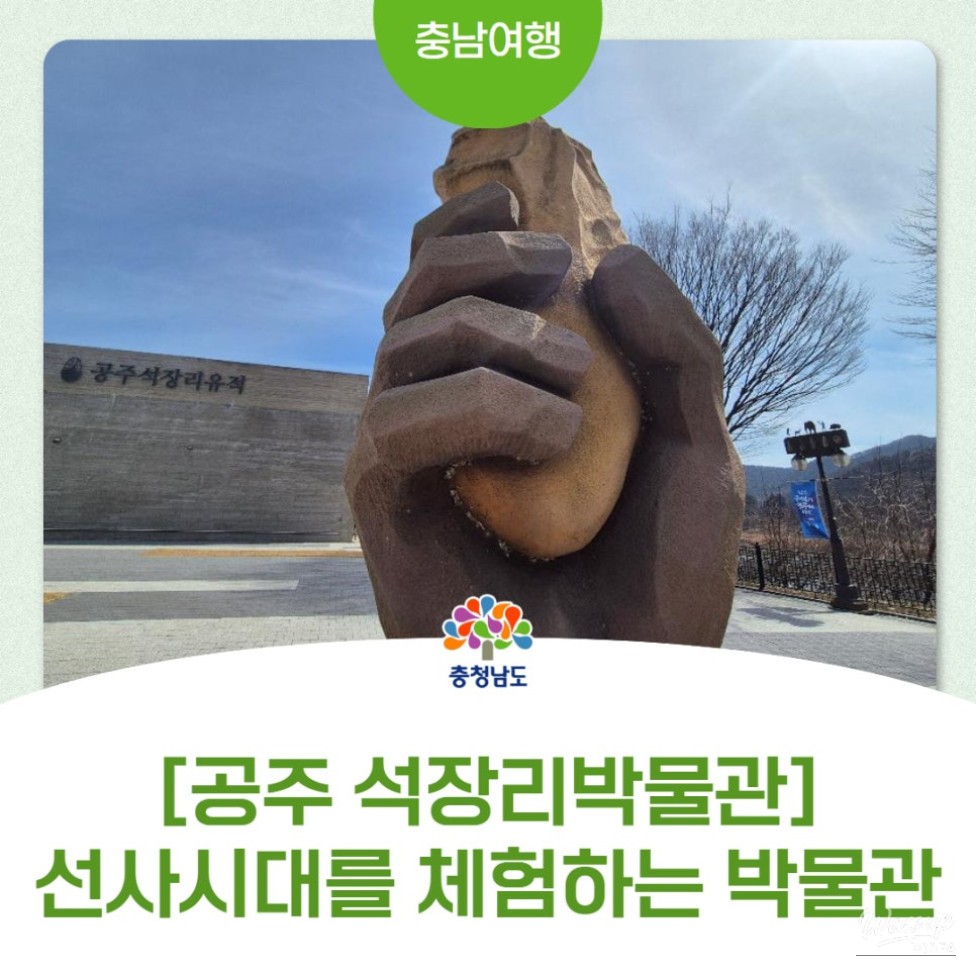
Located in Seokjangri-dong, Gongju, Chungcheongnam-do, Seokjangri Museum is a historical education site representing Korea's prehistoric culture.
The museum is centered around the Seokjangri site, known as the starting point for research on the Paleolithic era in the Korean Peninsula.
Visitors can vividly explore the lifestyle of prehistoric people through artifacts and exhibitions from a time when written language did not exist.
The museum provides insights into the lives and cultures of ancient humans through excavated stones and traces of daily life.
It also offers various experiential programs, making it a meaningful space for family visitors.
▲ Visitors looking at the museum guide map
▲ Marker indicating prehistoric sites
2. When did it open?
Seokjangri Museum opened in 2006 to preserve Paleolithic sites in the Gongju area and widely share research achievements.
The museum was completed after about ten years of preparation, starting construction in March 1997.
It serves as a historical and cultural space in the area of the famous Paleolithic site in Jangam-ri, Gongju, and plays a key role in prehistoric culture research and education.
▲ Direction sign installed at the museum entrance
3. What are the unique features of Seokjangri Museum?
The Seokjangri site is historically significant as it was the first place in Korea where Paleolithic excavations began in 1964.
Through these excavations, it was academically confirmed that Paleolithic culture existed on the Korean Peninsula.
The Paleolithic era refers to the period when humans used stone tools for hunting, fishing, and gathering.
Seokjangri Museum exhibits various artifacts and research materials that showcase life during this era, holding significant meaning in the study of the Paleolithic period.
4. How is the museum structured?
Seokjangri Museum consists of the Sonboogi Memorial Hall, permanent exhibition hall, experiential learning center, outdoor prehistoric park, and the first excavation site.
The indoor exhibition hall allows for a systematic exploration of the lives and cultures of prehistoric humans.
Outside, there are sculptures depicting Paleolithic people making stone tools and recreating hunting scenes, providing a three-dimensional experience of the living environment of that time.
▲ Entrance to Exhibition Hall 2
5. How is the permanent exhibition hall organized?
The permanent exhibition hall is organized around five themes: nature, humanity, lifestyle, culture, and excavation.
It consists of seven exhibition halls, including Hall 1 (Beginning of Korean Paleolithic Research), Hall 2 (Story of Seokjangri Excavation), Hall 3 (Understanding Paleolithic Stone Tools), Hall 4 (Experience Video Room), Hall 5 (Paleolithic Worldwide), and Hall 6 (Korean Paleolithic).
Visitors can see stone tools used by Paleolithic people, everyday items made from animal hides after hunting, pigments and materials used for cave paintings, and even exhibits showing that music existed during the Paleolithic era.
6. What about the outdoor exhibition area?
In the outdoor exhibition area, visitors can explore the prehistoric park and actual Paleolithic sites.
Exhibits recreate the lifestyle of Paleolithic people hunting animals or gathering plants, along with reconstructed huts.
The Seokjangri site underwent a total of 13 excavations from 1964 to 1992 by Yonsei University Museum, the Korean Prehistoric Culture Research Institute, and the Chungcheong Cultural Heritage Research Institute.
7. Is there a guided tour service available?
Seokjangri Museum offers a professional guide service throughout the year to assist visitors with their understanding.
The guide service can be requested at the information desk located at the entrance of the exhibition hall.
Guided tours are not available on January 1, Lunar New Year, Chuseok, and during training or field trip days for the guides.
Operating hours vary by season.
For group tours, reservations can be made through the Gongju City Hall website, and groups of over 20 can also reserve by contacting the designated reservation manager.
▲ Outdoor exhibition area with reconstructed huts

Source :https://blog.naver.com/sinmunman/224221587293
No comments yet.