Gwaebangnyeong: A Pass of Scholarly Aspirations in Yeongdong, South Korea



Yeongdong-gun, located in the southernmost part of Chungbuk Province, borders Muju in Jeonbuk Province and Sangju and Gimcheon in Gyeongbuk Province.
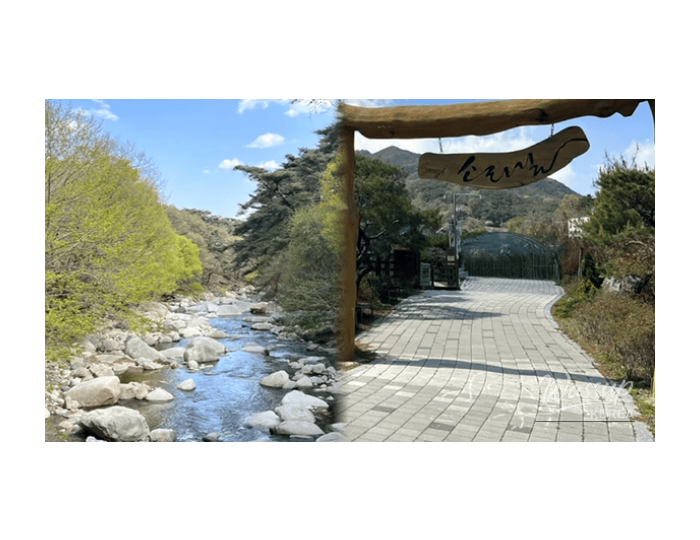
In Maegok-myeon, a township in Yeongdong-gun, lies Gwaebangnyeong Pass, connected to Gimcheon City in Gyeongbuk Province by National Route 906 (Local Route).
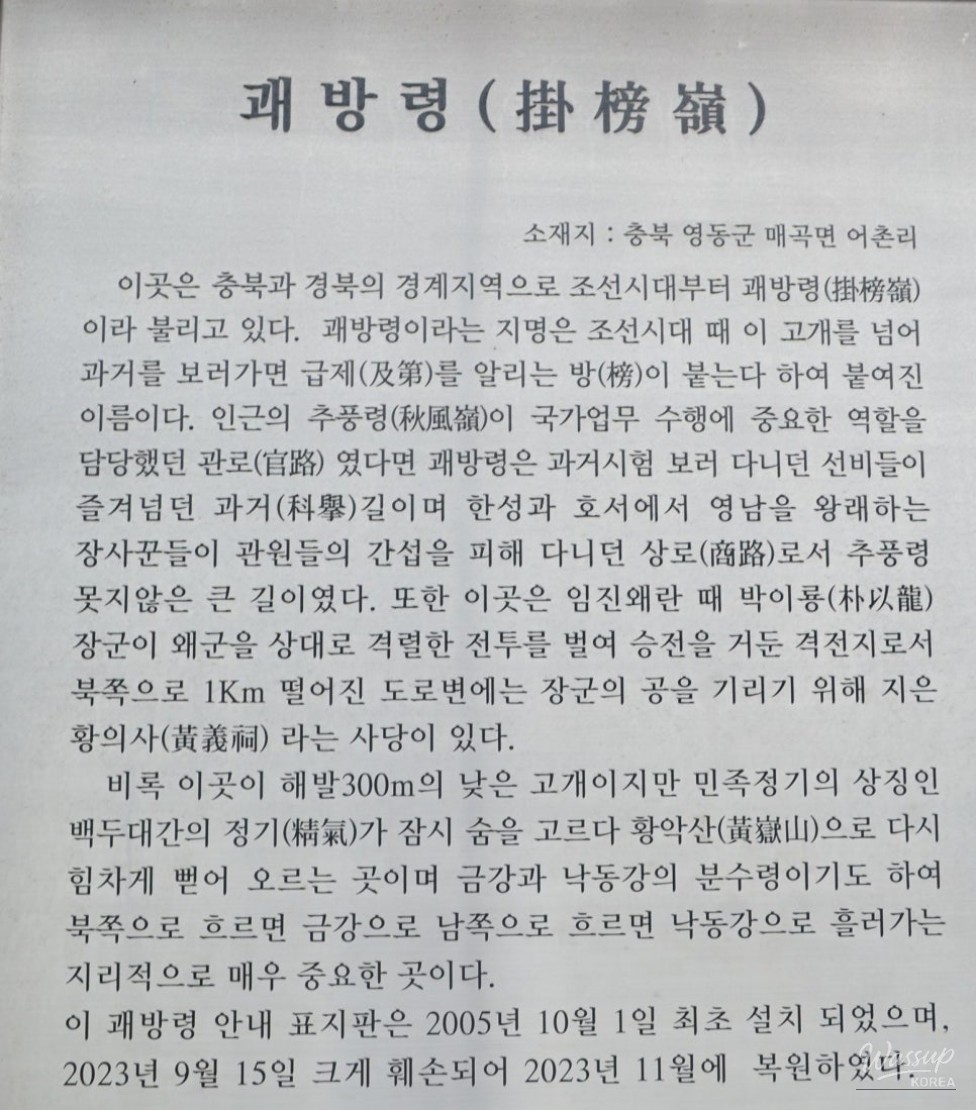
Gwaebangnyeong, situated in Eochon-ri, Maegok-myeon, Yeongdong-gun, Chungbuk Province, has been known by this name since the Joseon Dynasty.
According to information, the name originated from the belief that if one crossed this pass to take the civil service examination (Gwageo) during the Joseon Dynasty, news of their successful passing would be posted.
While Chupungnyeong Pass nearby served as an official route for state affairs, Gwaebangnyeong Pass was used by scholars traveling to take the Gwageo and by merchants seeking to avoid the interference of government officials.
It is also said that officials newly appointed to nearby towns would try to cross this pass, hoping to receive good fortune.
The reason why this pass became a route for scholars taking the Gwageo was that Chupungnyeong Pass was avoided because its name, meaning "autumn wind pass," was associated with falling like autumn leaves.
However, because Gwaebangnyeong Pass was a detour, many scholars preferred to use Mungyeong Saejae Pass, which is more widely known.
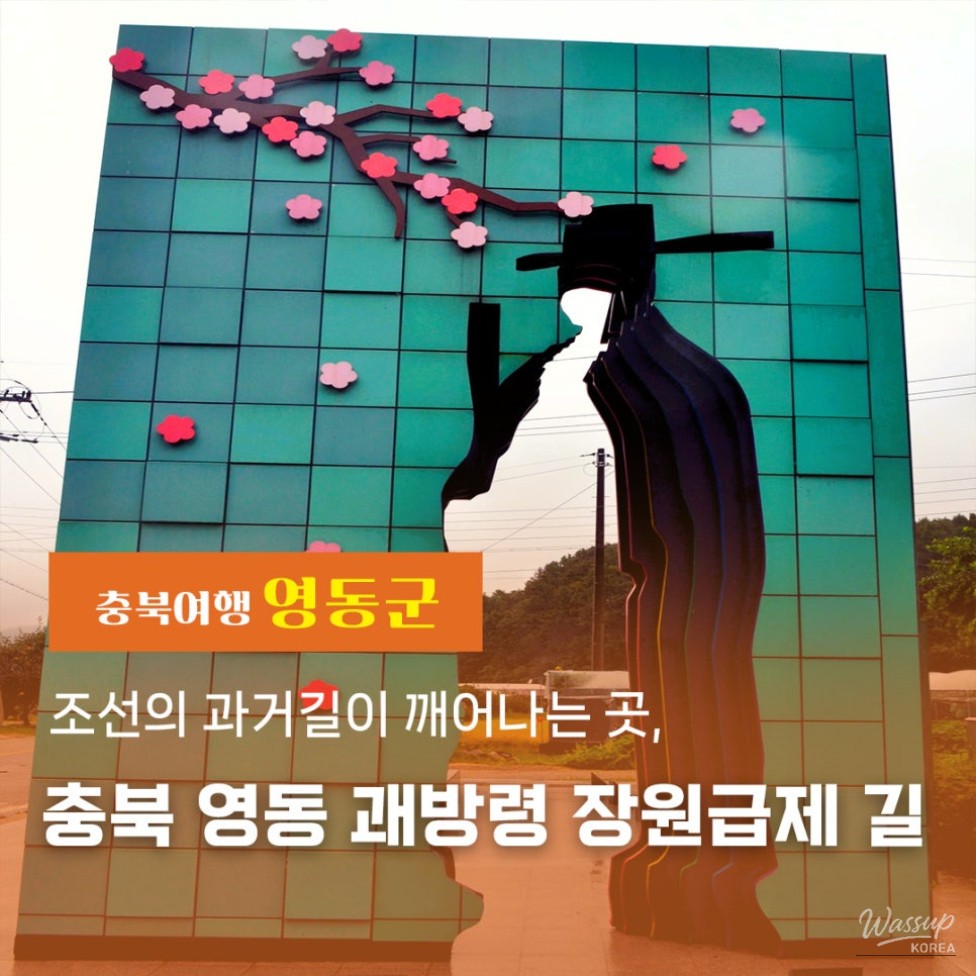
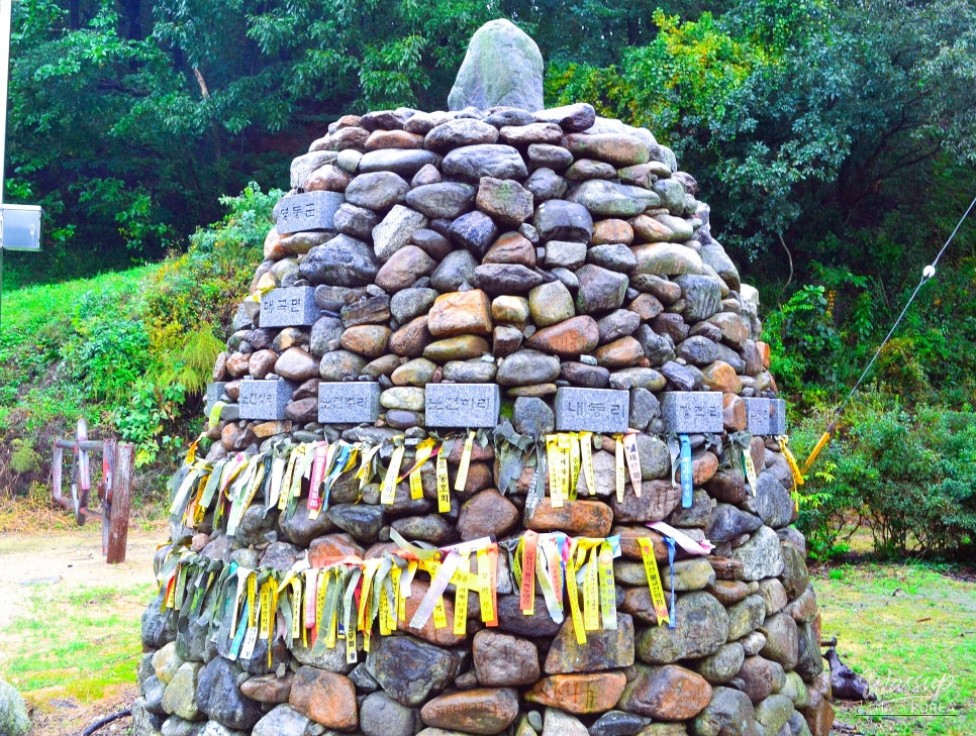
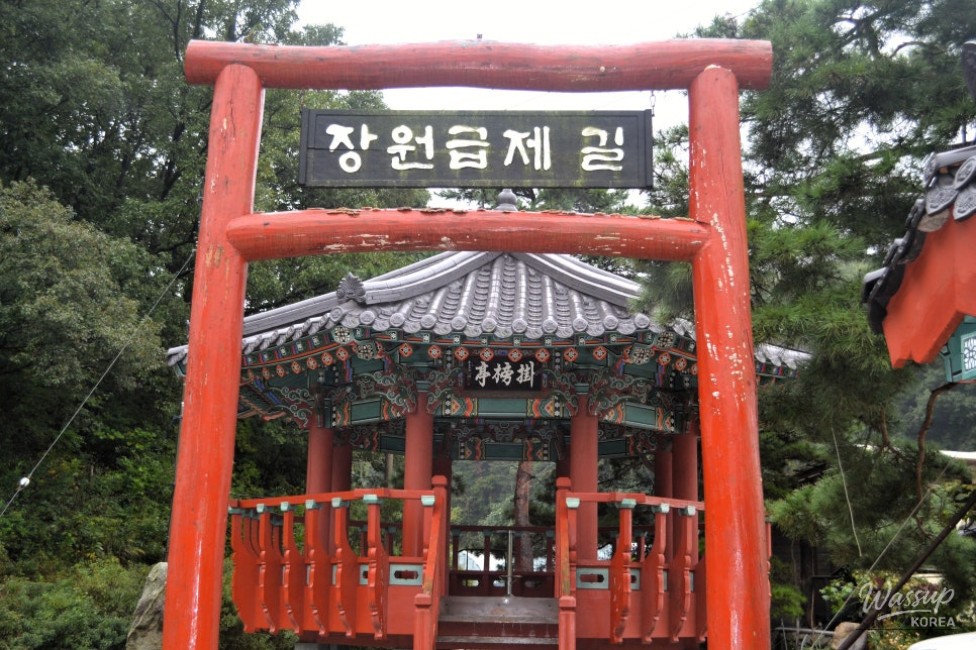
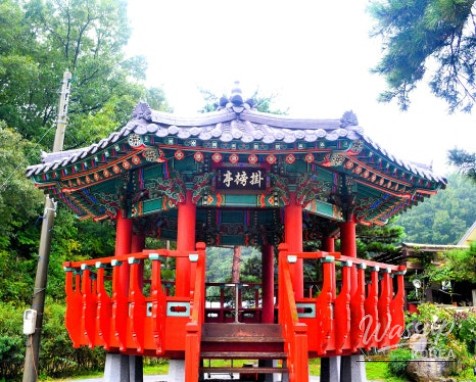
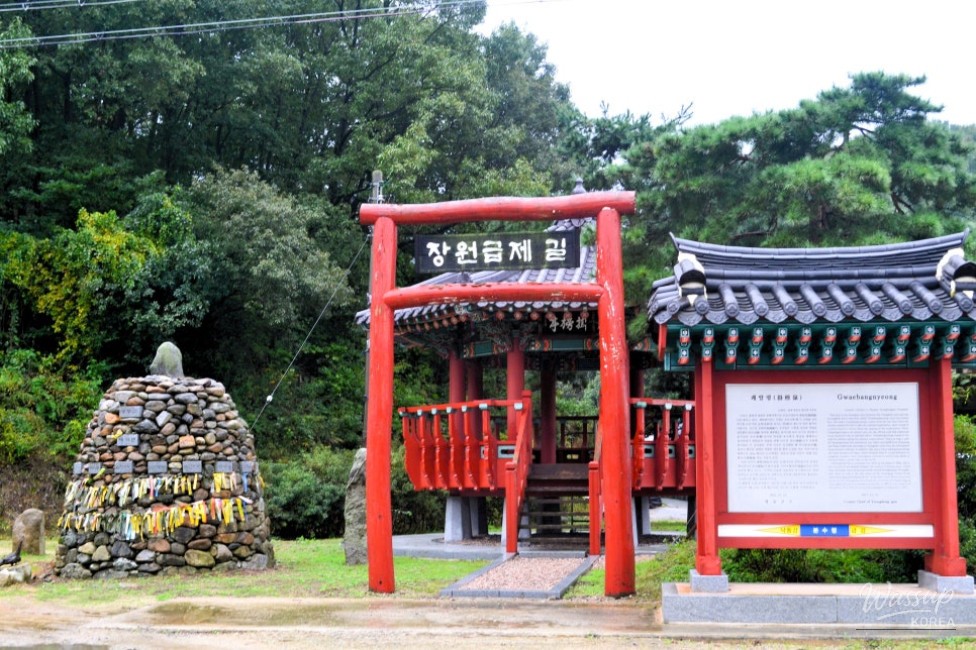
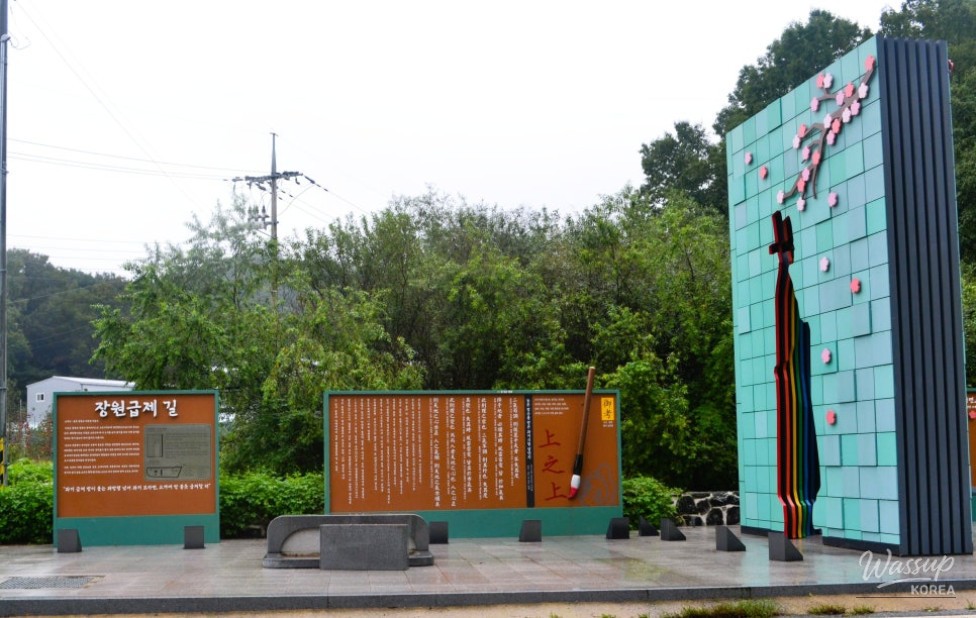
Along the Gwaebangnyeong road, there are several sculptures. On the right side, along the "Jangwon Geupje Trail" (top scorer on the exam), there is a tower dedicated to the peace of the village, an explanation of Gwaebangnyeong, and Gwaebangjeong Pavilion.
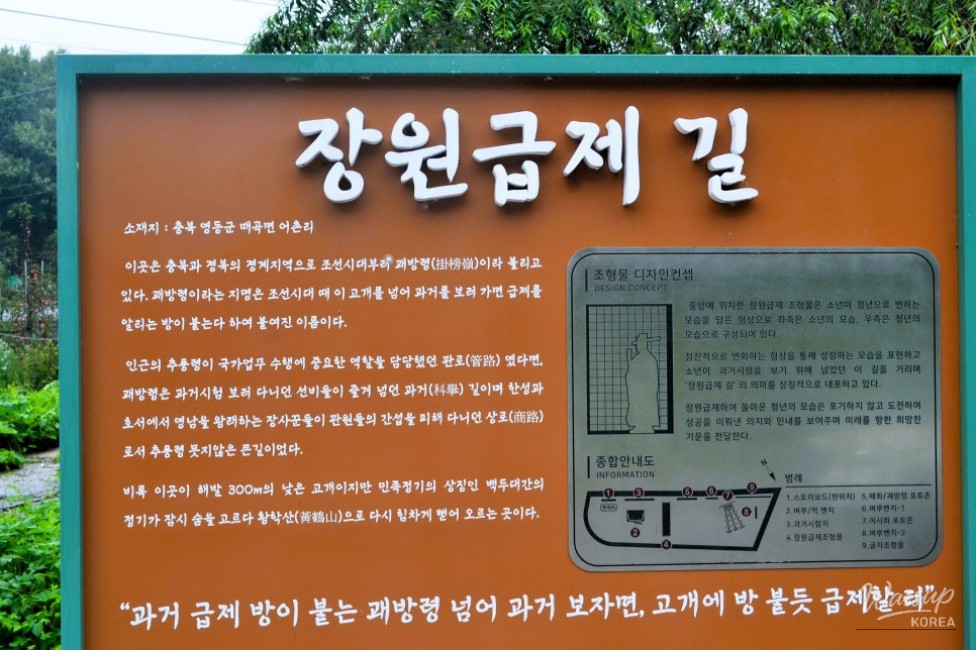
The information sign for Gwaebangnyeong explains that the name uses the characters ‘Gwae (掛),’ meaning ‘to hang,’ and ‘Bang (榜),’ meaning ‘posting (of the list of successful candidates).’
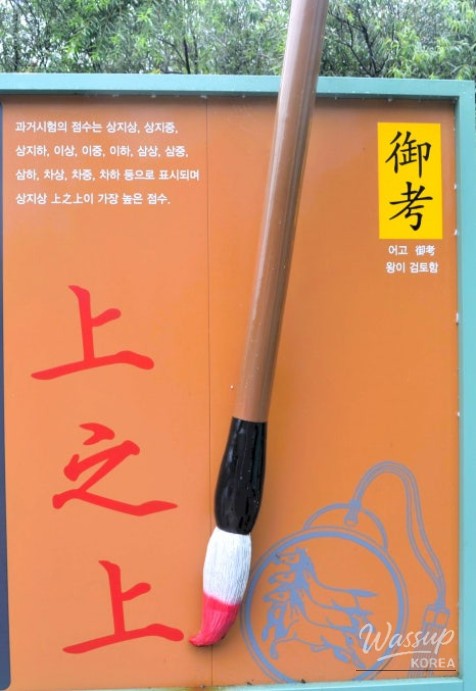
Jangwon Geupje refers to passing the Gwageo with the highest score during the Joseon Dynasty. The literary examination was divided into Daegwa (major exam) and Sogwa (minor exam). One had to pass the Sogwa (Saengwon-gwa and Jinsa-gwa) to qualify for admission to Sungkyunkwan (Royal Academy).
After that, one could apply for the Daegwa, which involved three exams. The final, third exam was called Jeonsi, a test taken in the presence of the king. Successfully passing this exam was called Geupje, and achieving the top score was called Jangwon Geupje, a complex and time-consuming process.
Since this area was established, parents of students preparing for the College Scholastic Ability Test (CSAT) visit, so it is also called a CSAT prayer spot.
Gwaebangnyeong, marked on Kim Jeong-ho's Daedongyeojido map, is part of the Baekdu-daegan mountain range trail, so you might see people hiking the trail.
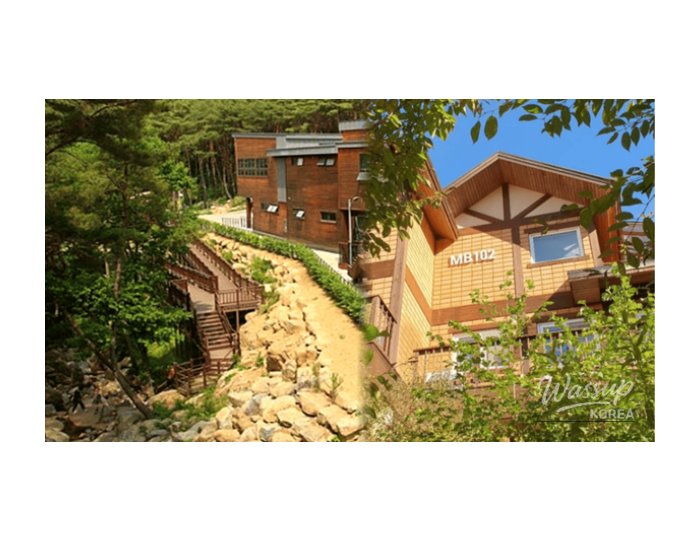
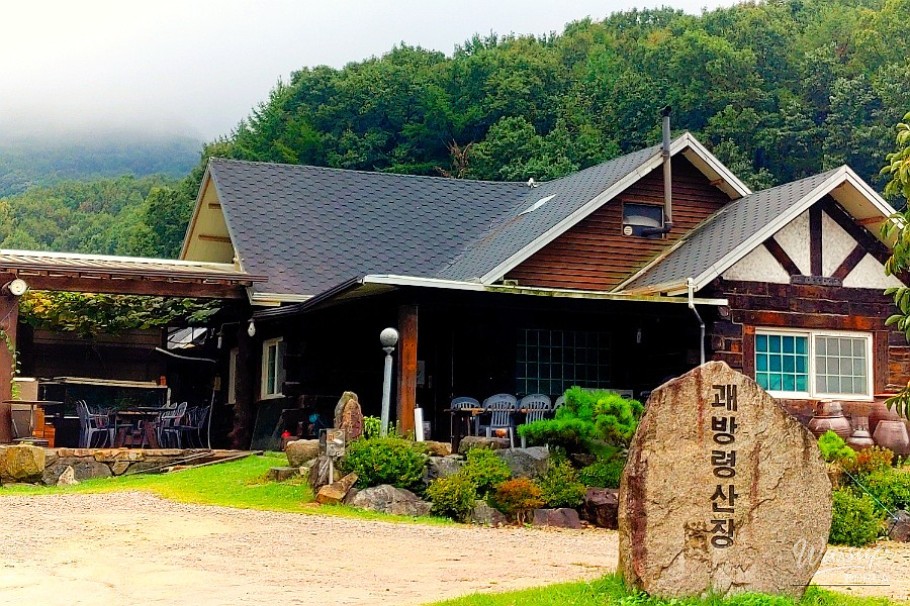
Although Gwaebangnyeong is a low pass at an altitude of 300 meters, according to the information sign, it is also a "watershed between the Geum River and the Nakdong River" and has a mountain lodge famous as a resting place and accommodation for those hiking the Baekdu-daegan.
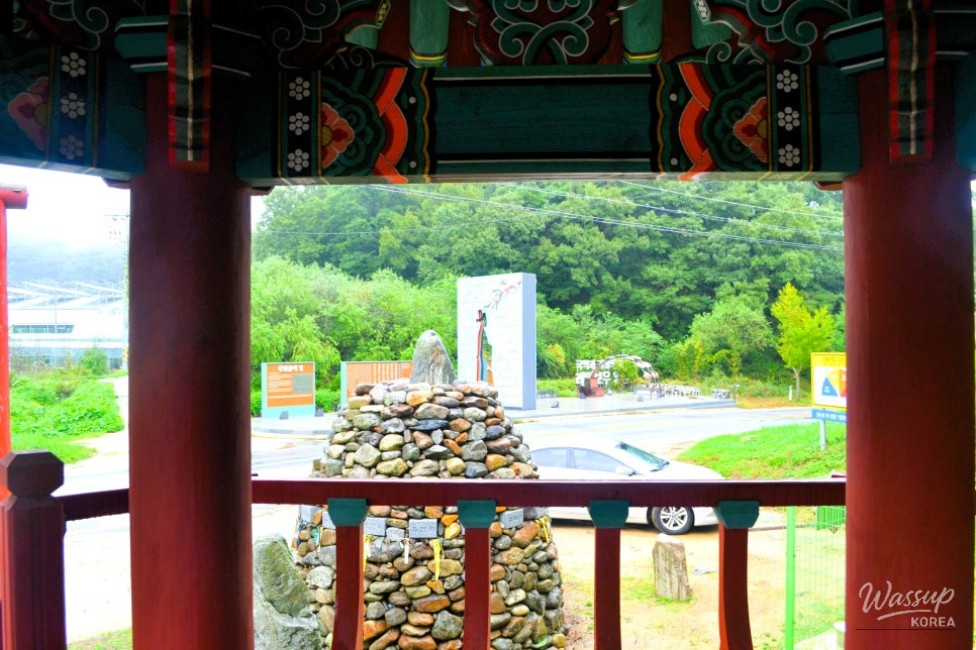
From Gwaebangjeong Pavilion, there are many interesting things to see on the opposite side.
The Jangwon Geupje Trail information sign reads, "Cross Gwaebangnyeong, where the list of successful candidates is posted, and you will pass the Gwageo as if your name is posted on the pass."
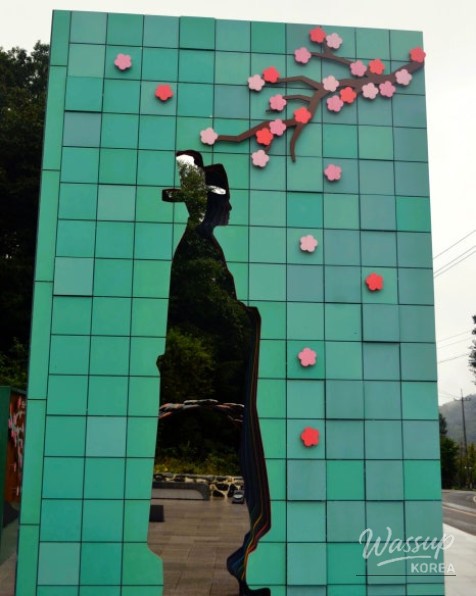
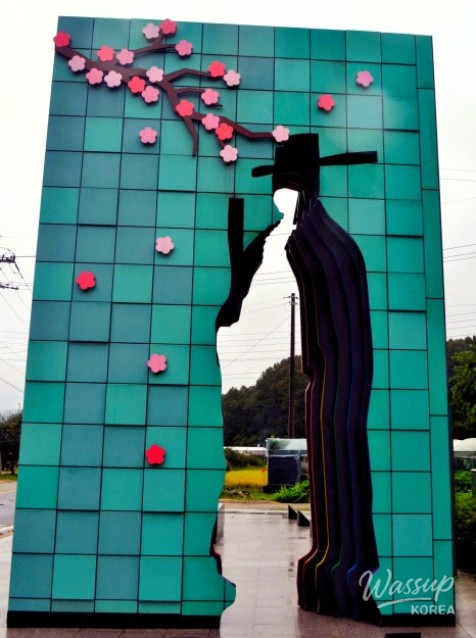
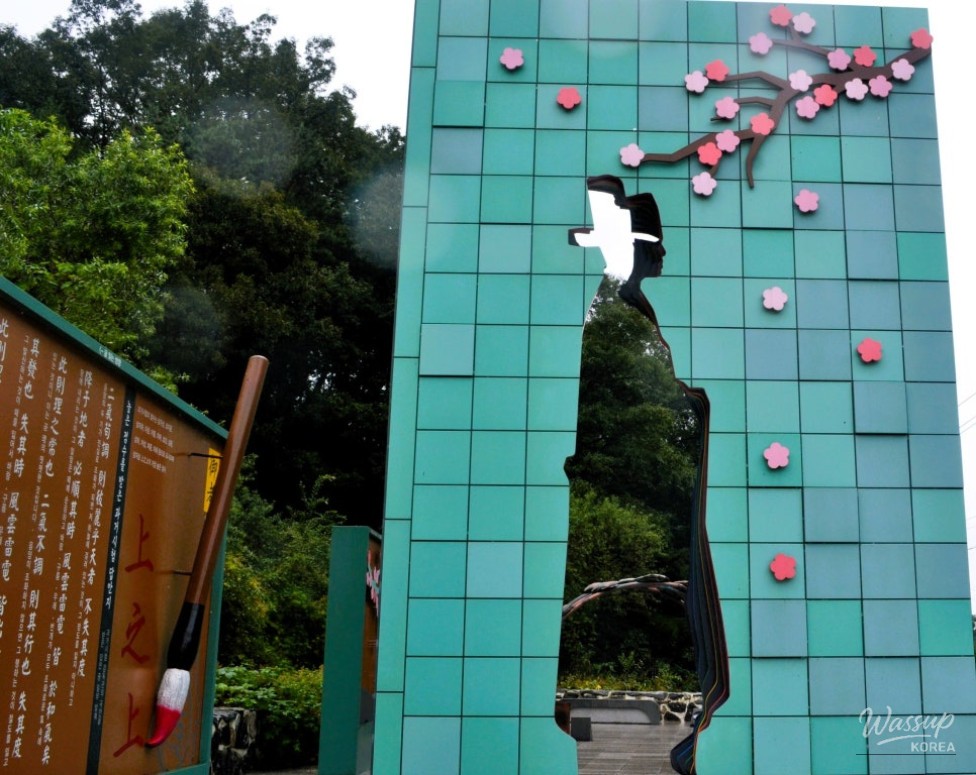
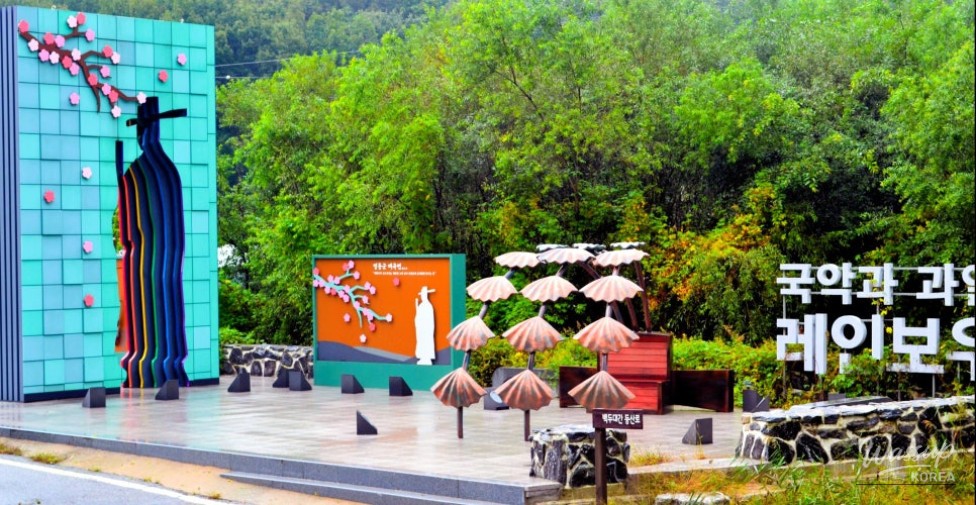
According to the information sign, the Jangwon Geupje sculpture in the center represents "a boy transforming into a young man, with the left side representing the boy and the right side representing the young man growing up."
The length of the feathers on the hat, which appears to be a Gwanmo (official hat), also indicates the status or rank of the official. The fact that the feathers on the right side of the sculpture's hat are longer than those on the left suggests a higher status.
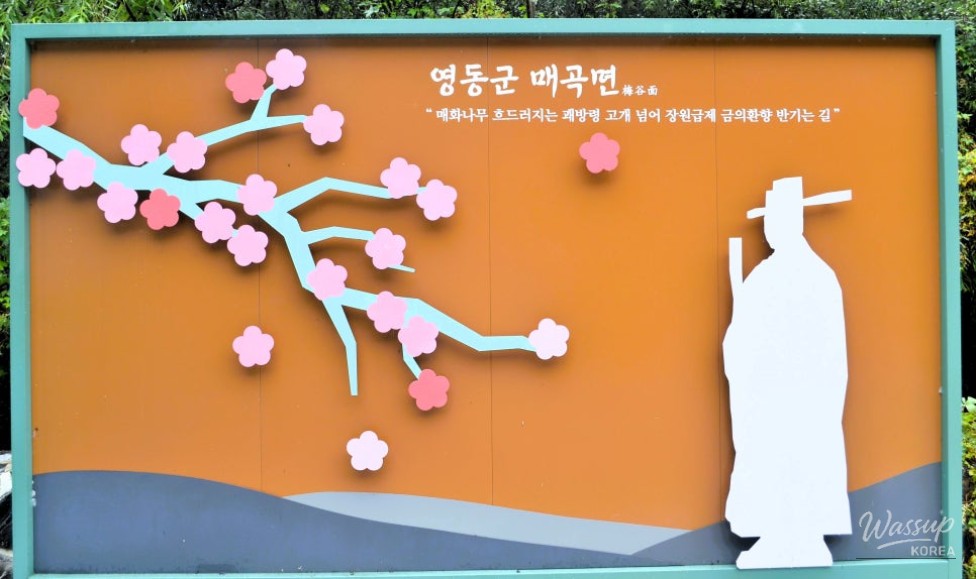
In addition to the Jangwon Geupje sculpture, there are benches representing an inkstone and ink stick, a plum blossom/Gwaebangnyeong photo zone, an royal inspector photo zone, and a sculpture of Chungbuk Yeongdong. Next to the sculptures, there is information about the scoring system for the Gwageo, with Sangjisang (上之上) being the highest score.
The Gwageo in the Joseon Dynasty was highly difficult, with many essay-based questions rather than simple memorization.
The answer sheet on the wall is the best answer sheet submitted by Yulgok Yi I, and there is also a comment from the examiner who was impressed by the 2,500 characters in a short time.
This is part of Yulgok Yi I's answer, 'Cheondochek (天道策),' from the special Gwageo in 1558.
The plum blossom, which blooms first in the winter cold and is called the herald of spring, is said to be a flower favored by scholars, and this is the plum blossom photo zone.
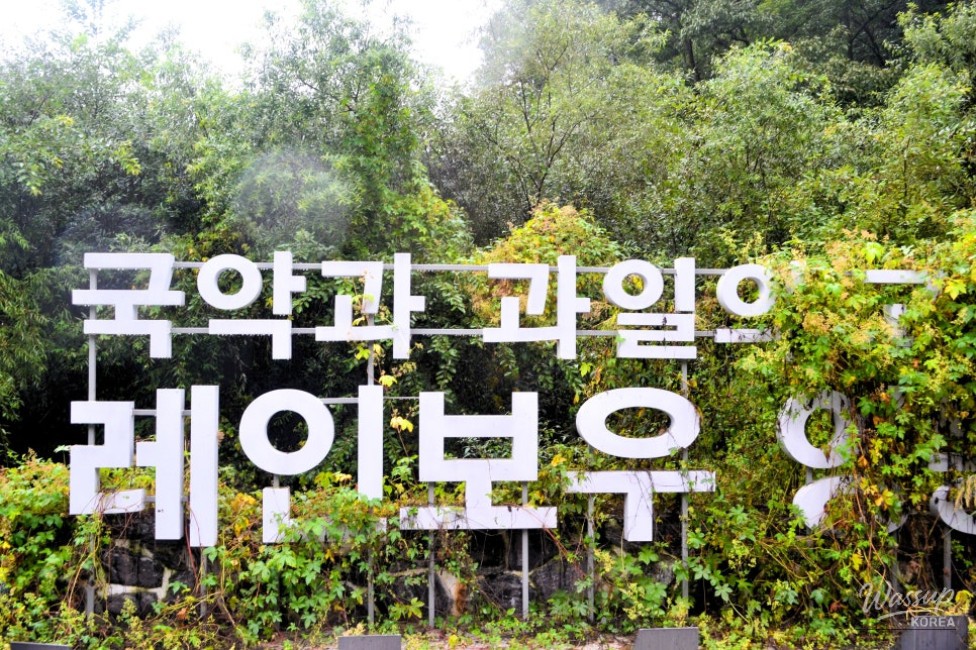
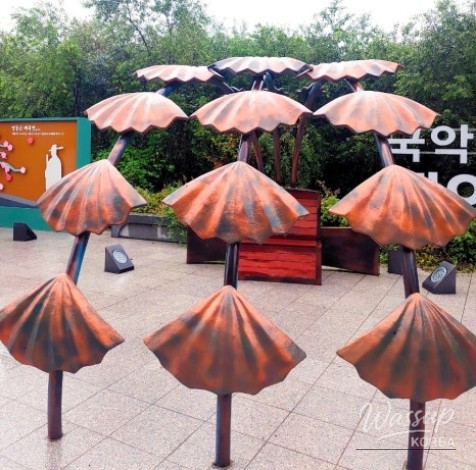
Rainbow Yeongdong sculpture, the home of Korean traditional music and fruit.
This includes a photo zone of the royal award that the king bestowed on those who passed the literary and military examinations in the Joseon Dynasty.
Gwaebangnyeong in Chungbuk Yeongdong is a hidden gem filled with the energy of success and passing, worth visiting with a light heart.







Source :https://blog.naver.com/cbkb21/224049966285
No comments yet.