Exploring the Tomb of King Muryeong and Royal Tombs in Gongju
충청남도 공주시 왕릉로 35
무령왕릉


Overview of the Royal Tombs in Gongju
Today, I would like to introduce the Tomb of King Muryeong and the Royal Tombs in Gongju, where you can experience the splendid history and royal culture of Baekje most vividly.
Located in Gongju, Chungcheongnam-do, the Tomb of King Muryeong and the Royal Tombs served as the royal burial site during the Baekje Ungjin period. Discovered in 1971 in a perfectly preserved state without looting, the site revealed enormous archaeological value and was later designated as a UNESCO World Heritage Site.
Parking and Visitor Preparation
The parking lot is conveniently located, and an additional temporary parking area is available across the road. Parking is free, though visitors must walk approximately 200 meters along the road to reach the ticket office.
Before entering, it is helpful to review the site map and information boards located near the parking area. The overall site is not overly large, making it suitable for a relaxed visit without feeling rushed.

Entering the Heritage Area
Visitors proceed along a well-maintained walking path toward the ticket office. As this is a nationally protected heritage area, pets, bicycles, drones, and food are prohibited to preserve the site.
Entrance Landmark
At the entrance, visitors are greeted by a statue of Jinmyeongsu, a mythical guardian creature recreated at three times the size of the original national treasure found near the tomb.
Admission Information
Admission fees are 3,000 won for adults, 2,000 won for teenagers, and 1,000 won for children. While the price may seem modestly high at first, the historical depth and preservation of the site make it worthwhile. Residents of Gongju and Buyeo, children under six, and visitors on the last Wednesday of each month are granted free admission.
Atmosphere and On-Site Facilities
Once inside, the clean and open scenery immediately creates a calm and healing atmosphere. A resting area is available near the entrance for visitors who wish to pause before exploring further.

Exhibition Hall and Learning Experience
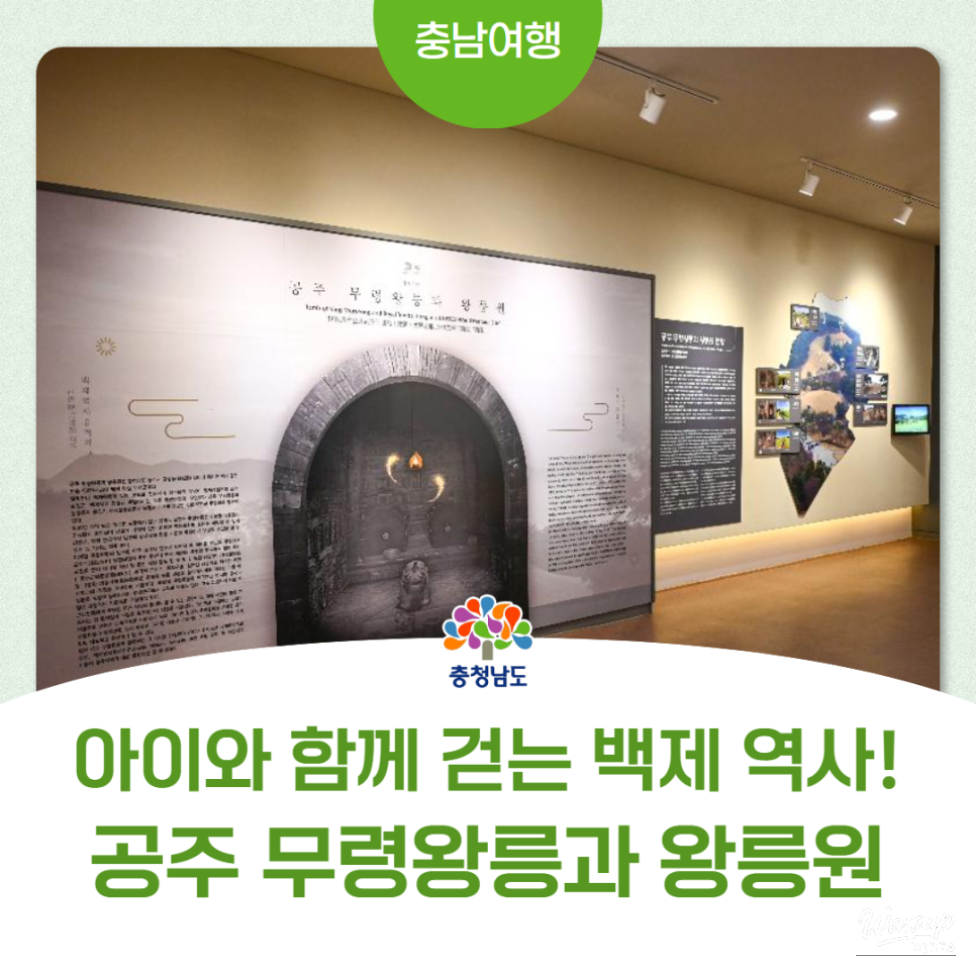
The exhibition hall is the starting point of the tour and leads visitors toward the tomb area. Inside, a video room introduces the historical background of the Baekje royal tombs, followed by detailed displays explaining the structure, excavation, and significance of the site.
Replica Tomb and Interpretation Sessions
A replica of Tomb No. 5 allows visitors to experience the narrow entrance and stone chamber structure characteristic of Baekje-era tombs. Cultural interpretation sessions are held hourly from 10 AM to 4 PM, lasting about 20 minutes, with the final session ending at 3 PM during winter.
Royal Tomb Complex Highlights
The royal tomb complex contains seven tombs in total. Tombs No. 1 through No. 6 are stone chamber tombs, while Tomb No. 7, the Tomb of King Muryeong, is a brick tomb—highlighting architectural diversity and advanced construction techniques of the era.
One of the most striking displays includes the gold crowns of King Muryeong and his queen, offering insight into royal authority, burial customs, and international exchanges with the Southern Dynasties of China.
Brick Tomb Experience Area
The experience area inside the Tomb of King Muryeong allows visitors to appreciate the grandeur of the brick structure. The lotus and geometric patterns engraved on the bricks symbolize royal power, while inscriptions on the tombstones record the year of death, burial dates, and royal status.
Preservation and Access Restrictions
The actual Tomb of King Muryeong, located beyond the exhibition hall, has been permanently closed to the public since July 15, 1997, to ensure preservation. While direct entry is no longer possible, the replica and exhibition effectively convey the original structure.
Exit Area and Future Additions
At the exit, visitors can find a cafe and souvenir shop. The Baekje Sensory Experience Center is currently under construction and will further enrich the visitor experience upon completion.
Closing Thoughts
The Tomb of King Muryeong and the Royal Tombs are not merely ancient ruins but living proof of Baekje’s artistic sophistication and royal culture. A quiet walk through this site allows visitors to experience 1,500 years of history in an intimate and meaningful way.
Visitor Information
Location: 37 Wangneung-ro, Gongju, Chungcheongnam-do
Summer Hours (Mar–Oct): 9 AM – 6 PM
Winter Hours (Nov–Feb): 9 AM – 5 PM (last entry 30 minutes before closing)
Parking: Free
Admission: Adults 3,000 won / Teenagers 2,000 won / Children 1,000 won
No comments yet.