Exploring the Historical Significance of Yeonpung Hyanggyo
40-2 Hyanggyo-ro, Yeonpung-myeon, Goesan-gun, Chungcheongbuk-do
괴산 연풍향교


Located in Yeonpung-myeon, Goesan-gun, Yeonpung Hyanggyo(괴산 연풍향교) is a historic Confucian academy that preserves the educational and ethical spirit of the Joseon Dynasty.
Once a core institution for local education and community order, the hyanggyo played a vital role in shaping scholarship, etiquette, and Confucian values in the region.
Today, its calm courtyard and preserved buildings offer visitors a meaningful space to reflect on traditional culture, history, and the quiet rhythm of scholarly life.
A Confucian academy rooted in Joseon history
Yeonpung Hyanggyo is located at 40-2 Hyanggyo-ro, Yeonpung-myeon, Goesan-gun, Chungcheongbuk-do.
As a state-established Confucian school, it worked alongside the central Sungkyunkwan to educate local scholars and spread Confucian ideals throughout the region.
Education and order in rural society
The hyanggyo functioned not only as a school but also as a spiritual and ethical center that helped maintain social order.
Historical records and restoration
Yeonpung Hyanggyo is designated as Chungcheongbuk-do Cultural Heritage No. 103, highlighting its historical importance.
Historical documents such as Sinjeung Dongguk Yeoji Seungnam and Hoseo Seungnam record its location and role during the Joseon period.
From foundation to rebuilding
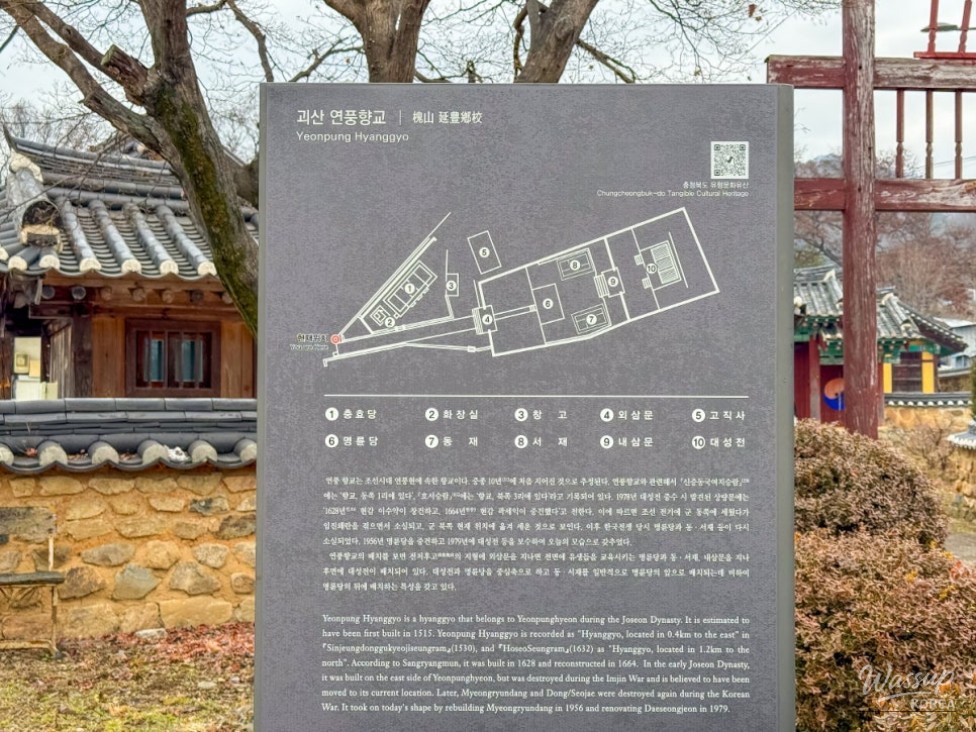
Beam inscriptions show that it was founded in 1628 by Governor Lee Su-yak and rebuilt in 1664 by Governor Kwak Se-ik.
After destruction during wars, including the Imjin War and the Korean War, major restorations were completed in 1978 and 1979.
Traditional hyanggyo architectural layout
The complex follows the typical Jeonhakhu-myo layout, with educational spaces in front and ritual spaces behind.

Myeongnyundang, the lecture hall, stands at the front, while Daeseongjeon, the shrine housing Confucian sages, is located at the rear.
Order reflected in space
This arrangement symbolizes the Confucian emphasis on learning first, followed by reverence and moral cultivation.
Myeongnyundang, the place of learning
Myeongnyundang was where students studied classical texts and discussed Confucian teachings.

Its simple and orderly structure reflects the disciplined values and humility emphasized by Joseon scholars.
A space shaped by study and dialogue
The calm design encourages quiet focus, mirroring the academic life once led here.
Daeseongjeon and Confucian rituals
Daeseongjeon houses the spirit tablets of Confucius and other major Confucian sages.

Seasonal rites are still performed in spring and autumn, continuing centuries-old traditions.
Rituals that connect past and present
These ceremonies preserve Confucian values of respect, continuity, and communal memory.
A center for ethics and community life
Beyond education, Yeonpung Hyanggyo helped establish moral standards such as loyalty, filial piety, propriety, and trust.
Traditional ceremonies once strengthened community bonds and shared values among local residents.
Cultural influence beyond the classroom
Although formal education has diminished, these values continue through cultural events and heritage activities.
A quiet heritage space today
Today, the hyanggyo is preserved as a cultural heritage site and used for traditional cultural education.
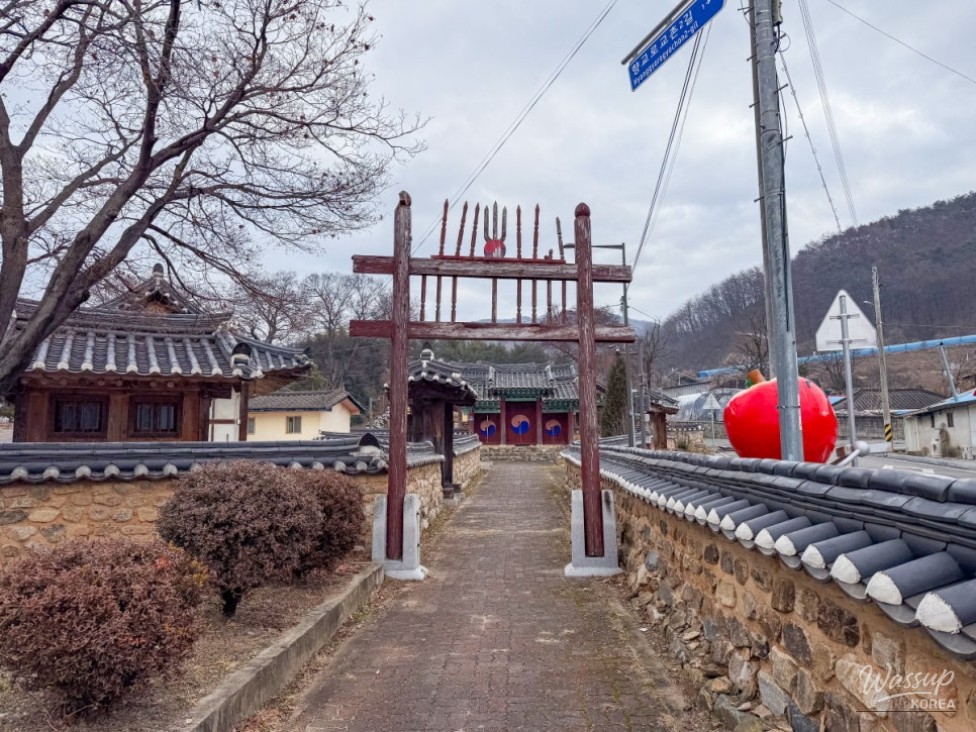
The serene courtyard and aged wooden buildings convey the calm atmosphere of a Joseon-era scholarly space.
A place for reflection and rest
Visitors often find this setting ideal for quiet contemplation away from daily routines.
Planning a visit
Public access may be limited, so checking in advance before visiting is recommended.
Rather than a simple historical site, Yeonpung Hyanggyo remains a living cultural heritage that embodies the region’s intellectual and spiritual history.
Understanding tradition through place
Visiting here offers a chance to reflect on Joseon scholars’ ideals and the enduring values of traditional Korean culture.




No comments yet.