Exploring the Historic Dangjin Hyanggyo


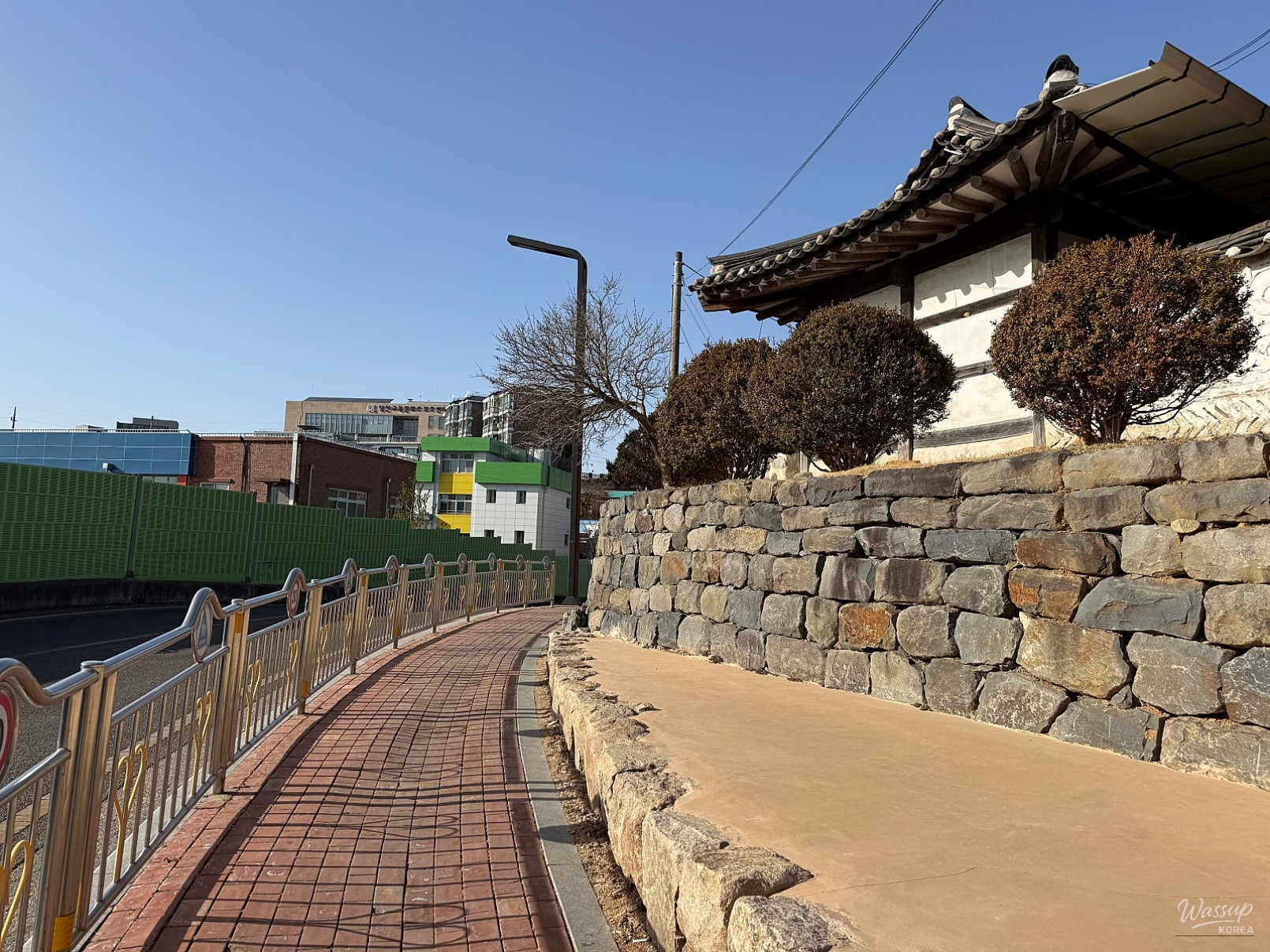
Stepping slightly away from the famous tourist spot in Dangjin, I walk along the alley to visit the humble yet significant Hyanggyo.
As I stroll, I feel the slow arrival of spring, and soon a space captivates my attention with its dense trees and ancient tiled roofs.
When it comes to cultural heritage, there's a tendency to think it should only be viewed from beyond the walls, but the entrance to Dangjin Hyanggyo stands wide open, as if waiting for visitors.
There are two entrances that allow anyone to enter the Hyanggyo.
Once I step inside the walls, I can feel the air change. Despite being in the city, the old wood and buildings provide a sound barrier.
It is believed that Dangjin Hyanggyo was established during the late Goryeo to early Joseon periods, and it has undergone several reconstructions and restorations to take its current form.
During the Joseon Dynasty, every district was required to have a Hyanggyo to oversee local education and Confucian rituals. For hundreds of years, Dangjin Hyanggyo has served as a center for education and ceremonies in the Dangjin area.
It is currently designated as a provincial cultural property and is considered one of the representative historical artifacts of Dangjin.
This site was not designated as a cultural property simply because of its age. It stands as a tangible evidence of the local education system during the Joseon Dynasty, embodying the architectural beauty and spatial philosophy of Confucianism, which is why it has long been recognized as a provincial cultural monument.
Within the Hyanggyo grounds, there are the Daejeong Hall, which enshrines Confucius and other Confucian sages, the Myeongryundang where students studied, and the East and West dormitories.
The layout of these spaces itself expresses the educational philosophy of Confucianism, with the learning areas in the front and the ritual spaces in the back, showcasing the traditional arrangement of teaching and worship.
As I explore the Hyanggyo, a natural question arises: How does it differ from a Seowon?
Many people often confuse Hyanggyo with Seowon due to their similar appearances and connections to Confucianism. However, they are quite distinct in nature.
A Hyanggyo is a public educational institution established by the state in various districts, akin to a local national school.
The Joseon Dynasty mandated that each district have a Hyanggyo, with operational expenses supported by the government. In contrast, Seowon were often led by local scholars and closely associated with specific schools of thought or clans.
Inside the Daejeong Hall, tablets of Confucius and other sages from China and Korea are enshrined.
During the Joseon period, the government provided land, slaves, and books to support education, but now the educational function has ceased, leaving only the ritual activities.
The uniqueness of Dangjin Hyanggyo lies in its openness. While many perceive Hyanggyo as a restricted area, Dangjin Hyanggyo allows anyone to freely explore its interior.
Keeping a historical site open to the public is not an easy decision; it carries risks of damage and requires careful management.
Nevertheless, opening the Hyanggyo to citizens and travelers reflects the belief that this space belongs to all of us living in the present, not just to the past.
I hope families visiting on weekends can share in the culture of the Hyanggyo and create wonderful memories together.


Source :https://blog.naver.com/dangjin2030/224235481678
No comments yet.