Exploring the Historic Baekje Cultural Space: Buyeo Jeongnimsa Site Museum
충청남도 부여군 부여읍 정림로 83
정림사지박물관


The Jeongnimsa Site Museum(정림사지박물관) in Buyeo is a key place to understand Baekje Buddhism, urban planning, and architectural aesthetics in one coherent flow.
Located next to the Jeongnimsa ruins, the museum connects indoor exhibitions with outdoor exploration, allowing visitors to experience history both intellectually and physically.
Through artifacts, excavation records, and spatial explanations, the museum calmly reveals why Jeongnimsa stood at the heart of Baekje’s Sabi capital.
Jeongnimsa and the Birth of Baekje’s Sabi Capital
The Jeongnimsa Site Museum is located in Buyeo, Chungcheongnam-do, a region long regarded as the center of Baekje culture.
Jeongnimsa was established as a central temple after Baekje moved its capital from Gongju to Sabi, becoming a core space for politics, religion, and culture.

The museum explains how the temple was not simply a religious facility, but a symbolic structure representing national authority and order.
Through this lens, Jeongnimsa is presented as a planned institution embedded within the capital’s overall urban structure.
First Visit Experience and Family-Friendly Exploration
This visit marked a first encounter with Jeongnimsa, a site previously known only by name.
Despite the cold weather, the museum visit felt comfortable and rewarding, making it a satisfying destination even for a family trip.

The museum’s proximity to the ruins allows visitors to naturally move between indoor explanations and outdoor observation.
This seamless connection helps historical information settle more clearly, rather than remaining abstract.
Understanding Baekje Buddhism Through Excavation
The exhibitions follow a chronological structure, tracing how Baekje accepted and developed Buddhism.
As temples spread after the official adoption of Buddhism, Jeongnimsa emerged as a representative example.

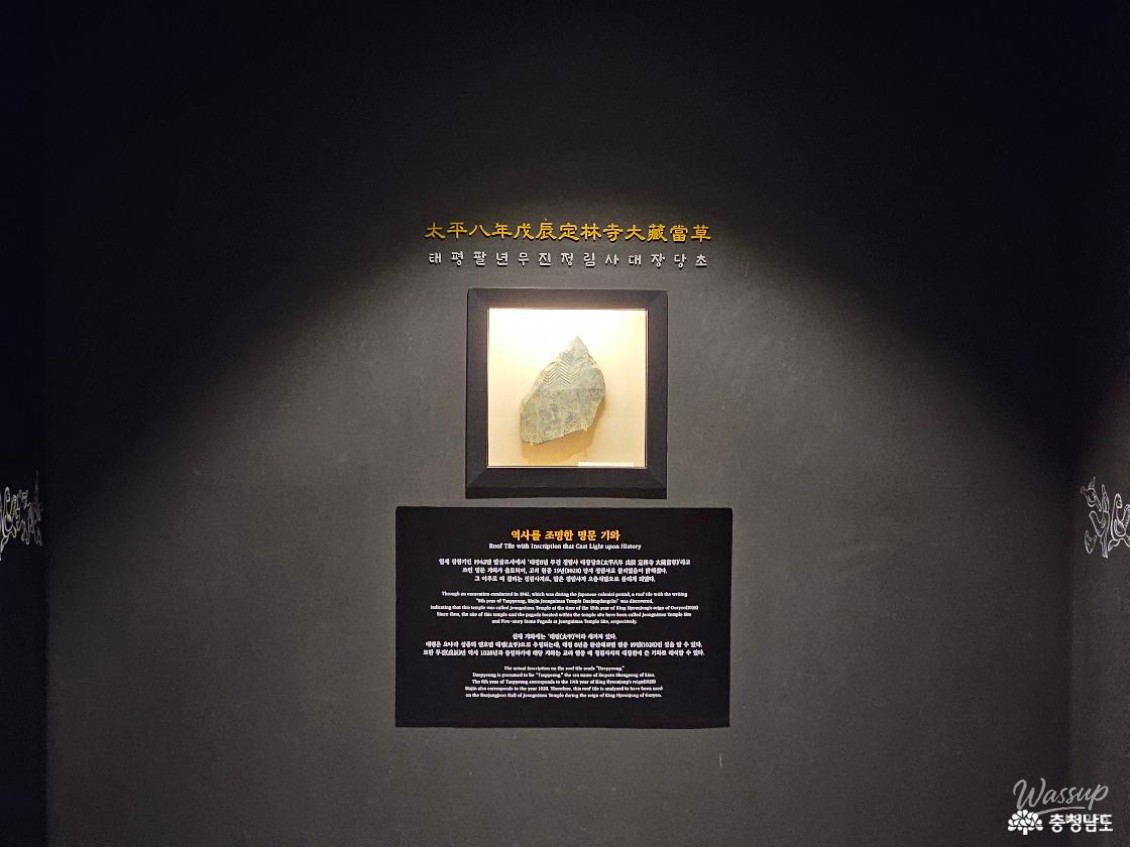
Roof tiles, architectural components, and stone relics excavated from the site are displayed with clear explanations.
The smooth curves and balanced proportions of these artifacts reveal Baekje’s refined and restrained aesthetic.
Baekje Aesthetics Compared to Other Kingdoms
For visitors familiar with relics from other regions, the Baekje artifacts feel distinct.
Compared to the strong linearity and authority often felt in Silla artifacts, Baekje pieces emphasize softness and visual stability.
This contrast makes the Jeongnimsa collection feel fresh, even to visitors with prior exposure to Korean ancient history.
The beauty here lies not in grandeur, but in quiet balance.
Temple Layout Revealed Through Research and Models
The museum goes beyond artifact display by introducing excavation processes and academic findings.
Photos, diagrams, and scale models help visitors understand Jeongnimsa’s overall structure in three dimensions.

The central placement of the five-story stone pagoda becomes a key reference point.
This arrangement reflects Baekje temple planning principles and architectural sophistication.
The Five-Story Stone Pagoda as a Baekje Masterpiece

The five-story stone pagoda at Jeongnimsa is designated as a national treasure.
It represents a transitional stage from wooden pagodas to stone, showcasing Baekje’s advanced stone-working skills.
The restrained decoration, precise proportions, and overall balance convey a sense of elegance and stability.
Seeing the pagoda outdoors after learning its background inside the museum reinforces its historical weight.
Seasonal Atmosphere and Quiet Observation

The Jeongnimsa site is spacious, offering different impressions depending on the season.
From late autumn to early winter, the calm scenery emphasizes presence over visual flamboyance.
This quiet atmosphere subtly reflects Baekje’s philosophy of harmony with nature.
Despite occasional group visitors, the museum itself remains peaceful, allowing focused viewing.
A Hub for Exploring Baekje Culture in Buyeo
The Jeongnimsa Site Museum serves as a central point for understanding Baekje history in Buyeo.
When combined with nearby attractions such as the National Buyeo Museum, Busosanseong Fortress, and Gungnamji, the historical narrative becomes more complete.

The museum avoids overly experiential displays and instead focuses on clearly conveying academic findings.
This approach allows visitors to concentrate on the ruins and artifacts themselves.
Why Jeongnimsa Site Museum Matters Today
Buyeo remains a center of Baekje culture because sites like Jeongnimsa have been preserved.
The museum functions as more than an exhibition space, acting as a bridge between ancient history and the present.
For anyone interested in Baekje Buddhism, urban planning, or architectural techniques, this museum offers essential insight.
The Jeongnimsa Site Museum stands as a place where the quiet beauty and historical depth of Baekje can still be clearly felt.




No comments yet.